 Burlington
 Clear Lake's Particular Mix of Weather
Clear Lake sits in that stretch of Skagit County where the marine air off Puget Sound and Samish Bay meets the forested, low-lying terrain around Burlington and Sedro-Woolley. It's not coastal in the way Anacortes or Whidbey Island are, but salt-laden air still moves through the valley, especially on the wetter, windier months, and it settles onto siding, trim, and roofing in ways homeowners further inland don't have to think about. Add in the driving rain that comes sideways off Pacific storms in the fall and winter, and a long, shaded moss season that can run from October through April, and you've got a climate that is genuinely tougher on the exterior of a house than the "mild Pacific Northwest" reputation suggests.
Homes around Clear Lake also tend to sit close to trees — a lot of the area is wooded or semi-wooded — which means more shade, slower drying times after rain, and more organic debris landing on roofs and siding. That combination of moisture, shade, and salt air is exactly the environment where cheaper or moisture-sensitive siding products show their weaknesses first.
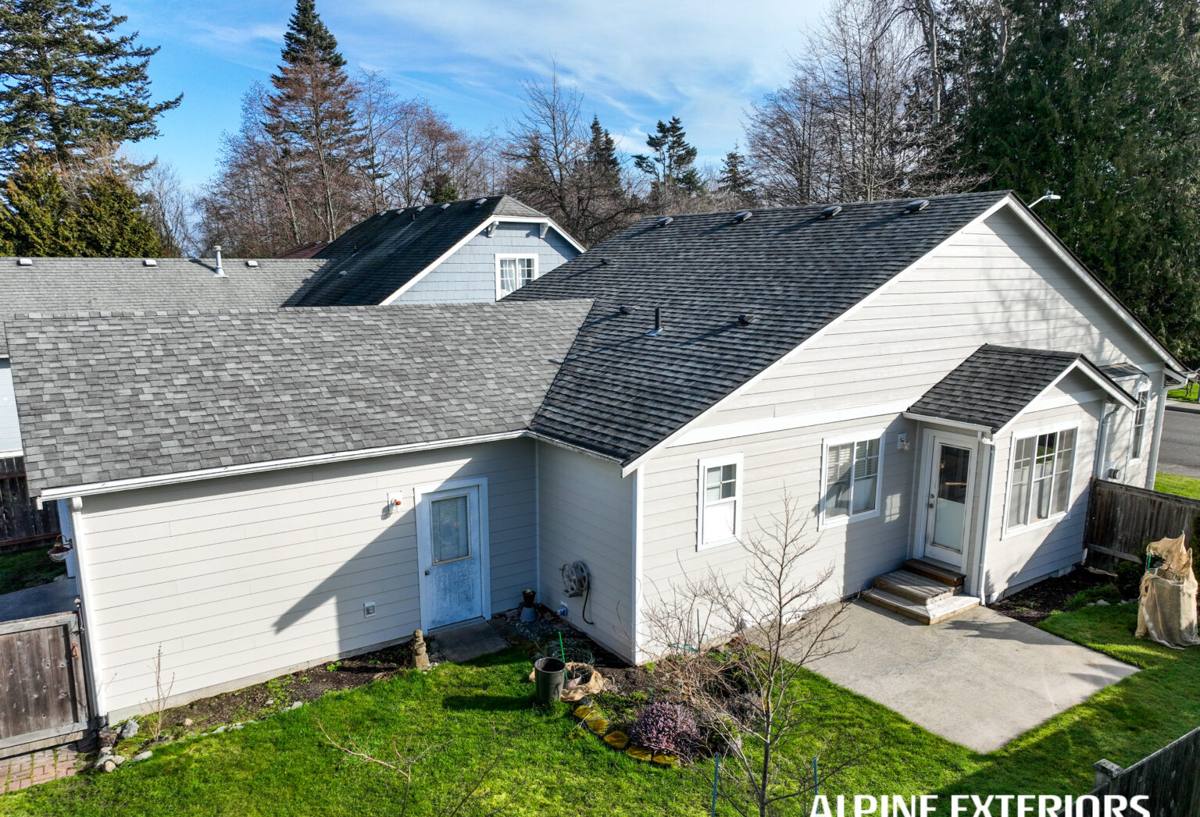
What This Climate Actually Does to Siding
We don't say this to scare anyone — we say it because it's the honest reason our crews get called out to Clear Lake homes more often than homeowners expect for a house that's only 12 to 20 years old.
- Moisture intrusion at seams and butt joints — wood-based and engineered wood sidings absorb water at cut edges and joints faster than they can dry out during our wet season.
- Moss and algae growth — shaded north- and west-facing walls stay damp longer, which feeds moss and mildew growth on porous siding surfaces.
- Paint and finish breakdown — UV exposure combined with driving rain accelerates the failure of field-applied paint, leading to more frequent repainting cycles than manufacturers advertise.
- Swelling, delamination, or soft spots — particularly common on engineered wood and lower-grade composite products once moisture gets behind the surface layer.
- Salt-air corrosion — fasteners, flashing, and trim hardware corrode faster when salt-laden air is a regular part of the weather pattern, which it is for much of the Skagit Valley.
None of this means every siding product is doomed here. It means the products that tolerate moisture poorly, or that depend on perfect field conditions during installation, are a much bigger gamble in Clear Lake than they'd be in a drier climate.
Why We Install Only James Hardie Fiber Cement
We get asked fairly often why we don't offer vinyl, LP SmartSide, or one of the other engineered wood or composite products. The honest answer is that we've made a professional decision to standardize on one product line because it performs consistently in exactly the conditions Clear Lake and the surrounding Skagit County area throw at a house.
What Hardie Gets Right for This Climate
James Hardie fiber cement is non-combustible, dimensionally stable, and doesn't rely on a wood core that can absorb and swell with moisture the way engineered wood products do. Its ColorPlus factory-applied finish is baked on under controlled conditions rather than painted on site after installation, which matters a lot in a climate where field-applied paint has a shorter useful life. Hardie also engineers specific product lines (their "HZ5" designation, for example) for climates with more moisture exposure, which is relevant for a lot of the homes we work on in this area.
Why We Don't Install the Alternatives
Vinyl siding is inexpensive and low-maintenance in the sense that it doesn't need repainting, but it's also more prone to warping in temperature swings, can crack in impacts, and its seams and butt joints are a known path for water intrusion if not installed with real care. LP SmartSide, Cemplank, Allura, and similar engineered wood or lower-tier fiber cement products can perform fine when installation is flawless and the climate is forgiving — but Clear Lake's climate isn't especially forgiving, and installation is never flawless on every single job, on every crew, every time. Primed spruce and raw cedar are beautiful materials, but they demand a maintenance commitment — recoating, caulking, moisture monitoring — that most homeowners underestimate when they choose the product, and that maintenance burden only grows in a climate this wet.
We're not telling anyone those products are junk. We're telling you why, after years of installing and repairing exteriors across Skagit County, we stopped offering them and put our name behind one product system instead.
What a Siding Replacement Project Looks Like
Every project starts the same way: a walk-around of the home, a look at the current siding condition (including anywhere we suspect moisture has already gotten behind it), and an honest conversation about what's actually needed versus what's optional.
The General Sequence
- Removal of existing siding and inspection of the sheathing underneath for rot, soft spots, or prior water damage.
- Repair or replacement of any compromised sheathing or framing before anything new goes up.
- Installation of a weather-resistive barrier and correct flashing details at windows, doors, and penetrations — this is where most siding failures actually originate, not in the siding material itself.
- Installation of James Hardie panels or lap siding per manufacturer spacing, fastening, and clearance specifications.
- Trim, caulking at appropriate joints, and a final walk-through with the homeowner.
That flashing and moisture-barrier step matters more in Clear Lake than it would in a drier region. A lot of the "siding failures" we get called to inspect turn out to be flashing or barrier failures that any siding product would have struggled against — which is part of why installation quality matters as much as the product choice itself.
Beyond Siding: Roofing, Windows, and Decks
Siding rarely fails in isolation. If a roof is shedding water poorly, or if window flashing has failed, the siding below or beside it takes the damage first. Because we handle roofing, windows, and decks in addition to siding, we can look at a Clear Lake home as one connected exterior system rather than patching one component while ignoring the ones feeding it problems.
- Roofing — moss and organic buildup are a constant issue on shaded roofs in this area; roof condition directly affects how much water reaches your siding and trim.
- Windows — failed window flashing is one of the most common hidden causes of siding rot around window openings.
- Decks — ledger board attachment and flashing where a deck meets the house is another common moisture entry point that affects nearby siding.
Cost Factors for a Clear Lake Siding Project
Every home is different, and we don't quote sight-unseen — but these are the variables that most affect project scope and cost.
| Factor | Why It Matters |
|---|---|
| Sheathing condition underneath old siding | Hidden rot or moisture damage found during removal adds repair scope before new siding can go on |
| Home size and wall complexity | More corners, dormers, and trim details mean more labor and material cuts |
| Siding profile chosen | Lap siding, panel siding, and shingle-style Hardie products differ in material and labor cost |
| Trim and accessory scope | Fascia, soffit, and trim replacement alongside siding affects total project size |
| Access and site conditions | Tree cover, slope, and staging space around the home affect labor time |
Why a Local Crew Matters Here
A crew that works Skagit County regularly understands things that don't show up in a spec sheet: which sides of a Clear Lake home tend to hold moss longest, how much clearance moisture-prone areas need versus a drier climate zone, and what the seasonal rain patterns mean for scheduling and drying times during a project. A crew flown in from outside the region, or a national franchise crew rotating through, doesn't carry that local knowledge — and on an exterior project, that knowledge affects real decisions about flashing, ventilation, and product placement.
It also matters for accountability. A local, licensed contractor is easy to reach if something needs a warranty follow-up years down the road — which matters a lot given how long a well-installed Hardie exterior is meant to last.
A Simple Maintenance Checklist for Clear Lake Homeowners
Whether or not you're ready to replace siding this year, these habits go a long way in this climate:
- Trim back tree branches and vegetation that keep any wall shaded and damp longer than necessary.
- Check caulking at window and door trim annually, especially before the wet season starts.
- Look for moss or dark streaking on north- and west-facing walls as an early sign of a moisture problem, not just a cosmetic one.
- Keep gutters clear so water isn't overflowing directly onto siding below.
- Have any soft, bubbling, or discolored siding sections inspected before they spread.
If you're noticing any of these signs on a Clear Lake home, or you're just weighing options for an aging exterior, we're happy to take a look and walk you through what we're seeing — no pressure, no obligation. Use the form below to request a free estimate.