 Burlington
 Conway Sits Where the Skagit River Meets the Sound
Conway is a small community at the low end of the Skagit River delta, close enough to Skagit Bay and Puget Sound that salt-laden air is a real factor for anything on the outside of a house. It's also flat, wet farmland country — fog settles in easily, rain runs long and steady rather than in short bursts, and the ground stays damp for much of the year. That combination is tougher on exterior building materials than people who haven't lived through a Skagit Valley winter tend to expect.
Homes here aren't dealing with hurricane-force weather or extreme temperature swings. The challenge is persistence: months of grey, wet, humid conditions that never really let a house dry out, plus a steady drift of salt and moisture off the water. Siding that looks fine in a showroom in a dry climate can behave very differently after a few Skagit County winters.
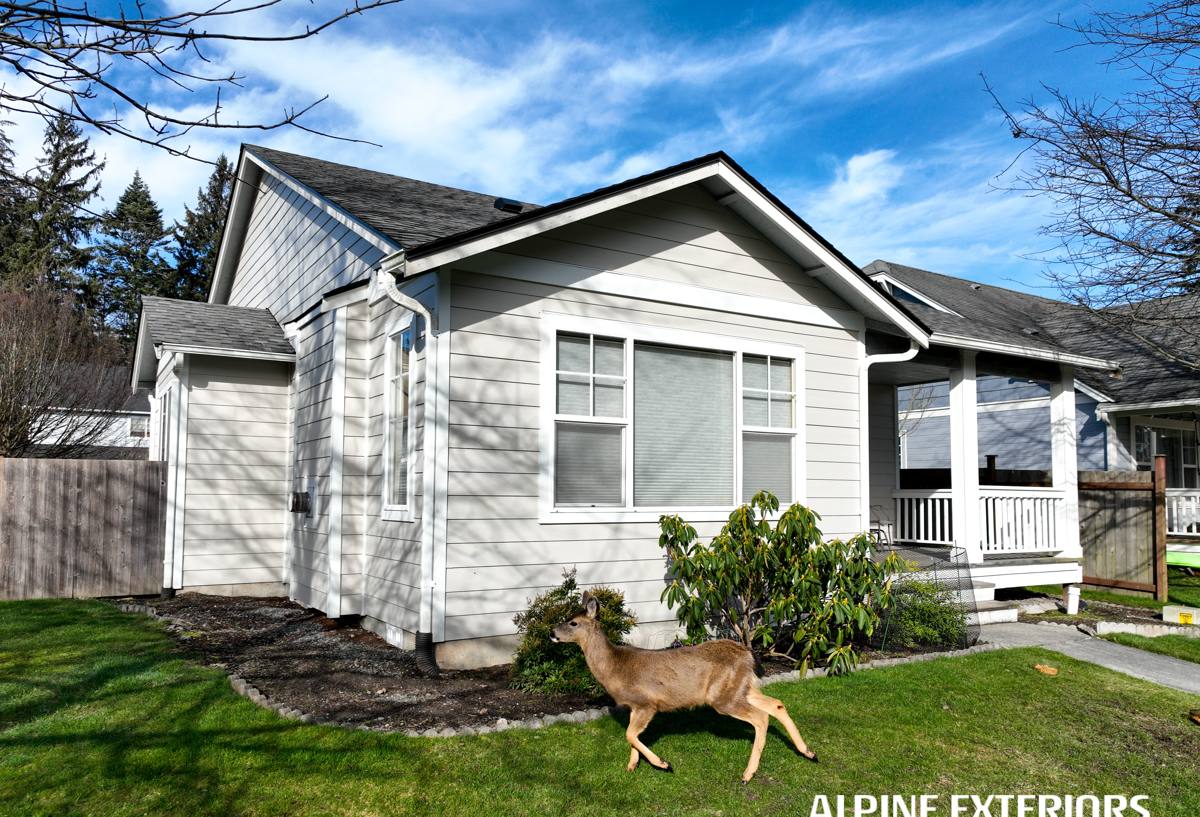
What the Local Climate Actually Does to Siding
Salt Air
Conway's proximity to Skagit Bay means airborne salt is part of the environment, even if the house isn't right on the water. Salt accelerates corrosion of fasteners and metal trim, and it can degrade certain coatings and finishes over time, especially on materials that aren't engineered to handle it. It's a slow, cumulative effect — not something that shows up in year one, but something that shows up eventually.
Driving Rain
Western Skagit County gets long stretches of steady, wind-driven rain rather than isolated downpours. That means water gets pushed sideways into seams, laps, and butt joints far more often than in a climate with occasional heavy but brief storms. Any weak point in the siding system — a poorly sealed joint, a warped panel, a gap where caulk has failed — becomes an entry point for moisture that has months to do damage before a dry spell gives it a chance to escape.
Moss and Sustained Dampness
The flat, low-lying terrain around Conway holds moisture and fog longer than higher or more exposed ground. North-facing walls, shaded siding, and areas near landscaping or tree cover develop moss and algae readily. Beyond the cosmetic issue, moss holds water against the siding surface, which is a problem for any material that isn't dimensionally stable or that can absorb and swell with moisture over time.
Why We Only Install James Hardie Fiber Cement
We made a deliberate decision to install only James Hardie fiber cement siding — not vinyl, not LP SmartSide, not Cemplank, Allura, or primed wood products. That's not a marketing position; it's a standard we hold because of what we've seen exterior materials do in exactly this kind of climate.
Fiber cement is non-combustible and dimensionally stable, meaning it doesn't swell, warp, or rot the way wood-based or engineered-wood siding products can when they stay damp for extended periods. James Hardie's ColorPlus finish is factory-applied and cured under controlled conditions, which gives it more consistent, longer-lasting color performance than field-applied paint — a real advantage in a climate where a house might not get a truly dry week for months at a stretch.
James Hardie also engineers specific product lines (their HZ5 line, for example) for the wetter, more humid climate zones the Pacific Northwest falls into. That's a meaningful distinction from a one-size-fits-all siding product — it means the material was designed with moisture cycling and regional humidity in mind, not just to look good on install day.
None of this means other siding products are without merit. Vinyl is inexpensive and low-maintenance in mild, dry conditions. Engineered wood siding can look good and install efficiently. But we've chosen to build our business around one system we can stand behind fully in this specific climate, install to a consistent spec, and back with a strong transferable warranty — rather than offer a menu of products with very different long-term track records in salt air and sustained moisture.
How We Approach a Conway Project
Every home we work on gets assessed for its actual exposure — how close it sits to open water or tidal flats, how much shade and moisture the walls hold, what condition the existing siding, trim, and water-resistive barrier are in, and whether previous work (patched siding, old caulk, mismatched repairs) needs to be corrected rather than just covered over.
Because Conway is a smaller, spread-out community, a lot of the work we do here is coordinated alongside other jobs in the Burlington and greater Skagit Valley area. That keeps scheduling realistic and keeps a crew that already knows the area's weather patterns and typical house types working on your home, instead of a rotating crew unfamiliar with the region.
What a Typical Siding Project Involves
- On-site inspection of existing siding, trim, flashing, and the condition of the sheathing underneath
- Assessment of moisture damage, especially around windows, doors, and any areas showing moss or staining
- Removal of old siding and correction of any water-resistive barrier or flashing issues found underneath
- Installation of James Hardie fiber cement panels or lap siding, fastened and flashed to manufacturer specification
- Trim, corner, and joint detailing designed to shed driving rain rather than let it collect
- Final walkthrough covering care, warranty registration, and what to expect over the first year
Siding Is Only Part of the Envelope
Siding doesn't work in isolation — the roof, windows, and even decks all affect how much moisture a house is dealing with and where it ends up. We handle all four (siding, roofing, windows, and decks) because in a climate like this, they're connected problems. A roof that's shedding water poorly onto a wall, or a window that's not properly flashed into new siding, can undermine even a well-installed siding job. When we're on a Conway property, we look at the whole exterior, not just the piece we were called for.
Cost Factors for Conway-Area Siding Projects
Every home is different, and we don't quote sight-unseen, but the factors that most often move a project's scope and cost are consistent across this area:
| Factor | Why It Matters Here |
|---|---|
| Extent of moisture damage underneath old siding | Sustained dampness in this climate means sheathing or framing repair is more common than in drier regions |
| House size and wall complexity | More corners, dormers, and trim details mean more joints — and more places for driving rain to find a weakness |
| Siding profile (lap, panel, shingle-style) | Affects material quantity and labor time; some profiles handle wind-driven rain detailing more efficiently |
| Trim and accessory scope | Fascia, corner boards, and window trim are often replaced alongside siding for a consistent moisture barrier |
| Access and site conditions | Rural and low-lying lots can affect equipment access and staging |
Working With a Local Crew Matters
A contractor based elsewhere and passing through Skagit County doesn't have the same read on how a Conway house ages compared to one in a drier part of the state. Knowing which walls take the worst of the wind-driven rain, how quickly moss establishes on shaded siding here, and how salt air factors into fastener and trim choices isn't something you get from a general specification sheet — it comes from doing the work in this specific area, season after season.
We're a Burlington-based crew that works across Skagit County, including smaller communities like Conway that don't always get the same attention from larger regional contractors. That means realistic scheduling, a crew that shows up when they say they will, and a warranty that's backed by a business that isn't going anywhere.
What to Watch For on Your Own Home
- Moss or persistent green staining on north-facing or shaded siding
- Soft or spongy spots when pressing on siding near the ground or under windows
- Visible gaps, cracking, or separated caulk joints at panel seams and corners
- Peeling, bubbling, or chalky paint that keeps returning after repainting
- Rust streaking from fasteners or metal trim, especially on walls facing open water
None of these mean a full replacement is automatically necessary — but they're worth having looked at before they turn into a bigger repair.
Get an Honest Look at Your Home
If you're in Conway or anywhere else in the Skagit Valley and want a straight answer about the condition of your siding, roof, windows, or deck, we're happy to come take a look. There's no pressure and no obligation — just a clear assessment and, if it makes sense, a written estimate for James Hardie siding built for this climate.