 Burlington
 Siding Built for Anacortes' Marine Climate
Anacortes sits out on Fidalgo Island, surrounded by saltwater on three sides, and that location shapes everything about how a home's exterior ages here. Homes in Anacortes deal with a combination that most inland Skagit County towns don't see in the same intensity: salt-laden air rolling off Rosario Strait and the Guemes Channel, wind-driven rain that hits siding at an angle instead of falling straight down, and a moss and algae season that can stretch for most of the year on shaded, north-facing walls. Any exterior product installed here has to hold up to all three at once, not just one of them.
We're based in Burlington and work throughout Skagit County, and Anacortes is one of the areas where the difference between a product that's rated for coastal exposure and one that's merely tolerated becomes obvious within a few years. That's a big part of why we standardized on James Hardie fiber cement siding for every siding job we take on, including the ones out here on the island.
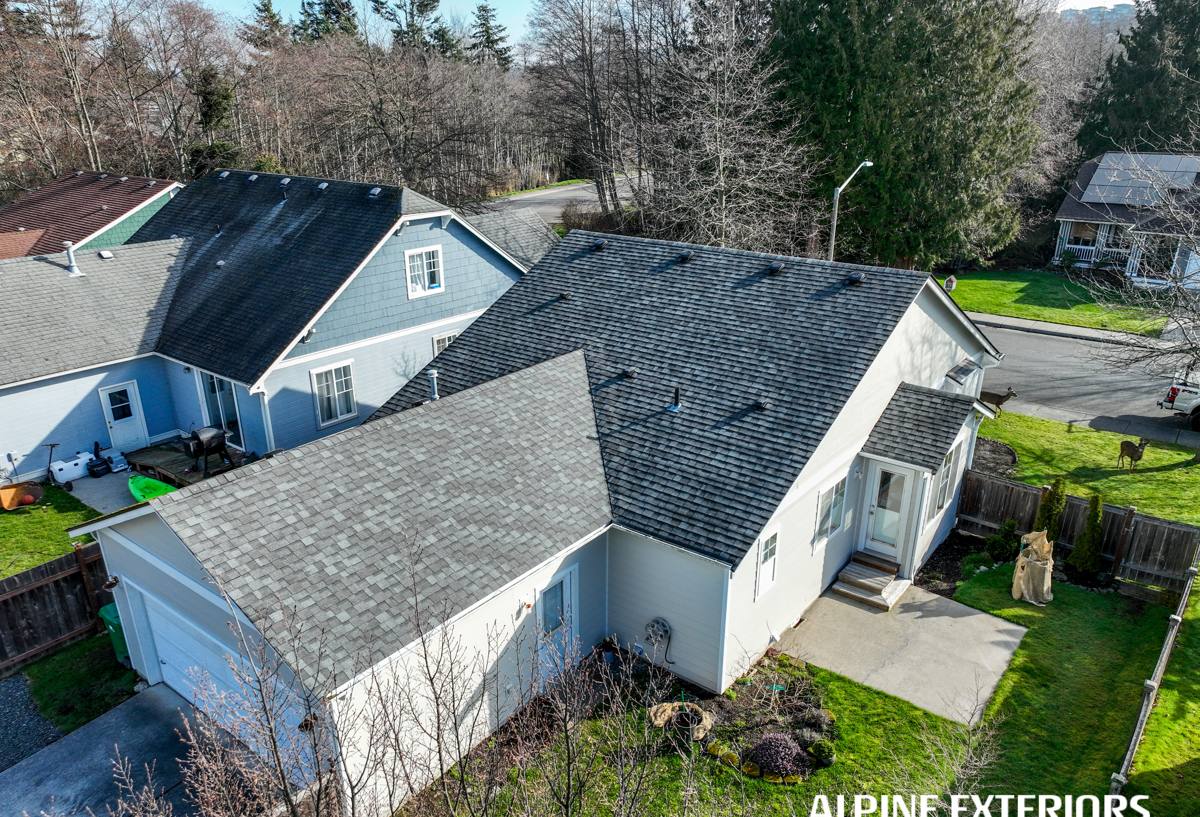
What Salt Air Actually Does to Exterior Siding
Salt air isn't just a smell — it's airborne moisture carrying dissolved salts that settle on every exterior surface, including siding, trim, fasteners, and flashing. Over time this accelerates corrosion of exposed metal fasteners and hardware, and it can degrade certain paint and coating systems faster than the same product would wear in a drier, inland location. Materials that aren't engineered with coastal exposure in mind may show premature fading, chalking, or finish breakdown on the sides of the house that face the water or catch the prevailing wind.
This is one of the reasons fastener selection and flashing details matter as much as the siding material itself. A correctly installed system uses corrosion-resistant fasteners and properly lapped, sealed flashing at every penetration and transition — windows, doors, deck ledgers, roof-to-wall intersections. Skipping these details is invisible on install day and expensive five or ten years later.
Where Salt Exposure Hits Hardest
- Walls facing open water or exposed to prevailing wind off the strait
- Homes on elevated or exposed lots with less windbreak from trees or neighboring structures
- Metal trim, gutters, and fasteners more than exterior cladding itself
- South and west exposures that combine salt air with more direct sun and rain
Driving Rain and Wind-Driven Moisture
Anacortes gets plenty of rain, but the bigger issue for siding performance is often the angle it arrives at. Straight-down rain is relatively easy for any siding system to shed. Wind-driven rain — common on exposed lots near the water — pushes moisture sideways and upward into laps, seams, and butt joints that were never designed to handle water moving in that direction. This is where the quality of the water-resistive barrier behind the siding, the house wrap, and the installation details around openings matters just as much as the cladding itself.
A siding product that absorbs and holds moisture at its edges is going to struggle in this environment regardless of what it looks like on day one. This is one of the practical reasons we don't install primed spruce, cedar, or vinyl siding as a rule — they each have different failure modes tied to moisture, and coastal wind-driven rain tends to expose the weak points faster than a sheltered inland site would.
Moss, Algae, and Shaded North Walls
Between the marine moisture and the tree cover common on many Anacortes lots, north-facing and shaded walls stay damp longer through the year than they would in a drier, sunnier location. That extended dampness is exactly what moss and algae need to establish themselves on siding, trim, and roofing. Once moss gets a foothold on a porous or textured surface, it holds moisture against the material continuously, which speeds up whatever deterioration process that material is already prone to.
James Hardie fiber cement resists this better than wood-based products because it's not an organic material moss can root into the way it can with cedar or engineered wood. It still needs occasional cleaning to keep growth from building up cosmetically, but it isn't feeding a slow-motion moisture problem underneath a coating the way porous wood substrates can.
Why We Install Only James Hardie Fiber Cement
We get asked fairly often why we don't offer LP SmartSide, vinyl, or the lower-cost fiber cement alternatives like Cemplank or Allura. The honest answer is that we standardized on one product because we'd rather be excellent at installing and standing behind one system than average across several. James Hardie makes sense for our climate and our region specifically:
- Non-combustible — fiber cement doesn't burn, which matters more each year as wildfire smoke and dry-season risk become a bigger part of Pacific Northwest summers
- Factory-applied ColorPlus finish — baked-on color that resists fading and holds up to UV and salt exposure better than field-applied paint
- Climate-engineered HZ product lines — Hardie makes region-specific formulations, and the HZ5 line is engineered for the freeze-thaw and moisture patterns of our Pacific Northwest climate zone
- Strong transferable warranty — meaningful backing if you sell the home before the coverage period ends
- Proven track record in wet coastal and marine climates, not just inland suburban conditions
No siding product is maintenance-free, and Hardie still needs proper caulking upkeep, occasional washing, and attention to trim and flashing over time. But it starts from a material base — cement, sand, and cellulose fiber — that doesn't rot, delaminate, or feed moss the way wood-based sidings can, and that's a meaningful advantage in a place like Anacortes.
Comparing Common Siding Options for a Coastal Skagit County Home
| Factor | James Hardie Fiber Cement | Vinyl | Cedar / Primed Wood |
|---|---|---|---|
| Salt air resistance | Engineered for coastal exposure (HZ5 line) | Can become brittle and fade with UV/salt over time | Vulnerable without diligent maintenance |
| Moisture / rot risk | Non-organic, doesn't rot | Low absorption but seams can trap moisture | Higher — organic material prone to rot and moss |
| Fire rating | Non-combustible | Combustible | Combustible |
| Finish durability | Factory-baked ColorPlus finish | Color molded through, but can chalk/fade | Requires repainting/staining on a cycle |
| Typical maintenance | Periodic wash, caulk checks | Low, but cracks/warps are not repairable | Regular repainting, moss and rot monitoring |
Roofing, Windows, and Decks: The Rest of the Exterior Envelope
Siding is only part of what keeps water out of a coastal home. We also handle roofing, windows, and decks, and in Anacortes these all interact with the same climate pressures. A roof with worn or lifted flashing lets water into the wall assembly behind good siding just as easily as bad siding would on its own. Older windows with failed seals or degraded flashing tape are a common source of hidden moisture intrusion around openings, even when the siding around them looks fine. Decks facing open exposure to wind and salt air need fasteners and ledger flashing detailed the same way exterior walls do.
When we look at a home's exterior, we're looking at the whole envelope, not just the cladding, because a weak point in any one of those systems can undermine the others.
What a Site Visit Typically Covers
- Condition of existing siding, trim, and any visible moss, staining, or moisture damage
- Exposure level — which walls face open water or prevailing wind
- Flashing condition around windows, doors, and roof-to-wall transitions
- Whether full siding replacement makes sense or targeted repair and re-flashing is enough
- Roof and deck condition where those systems tie into the wall assembly
Why a Local Crew Matters Here
Anacortes isn't a generic weather zone — it's a specific island microclimate within Skagit County, and the difference between working here and working a few miles inland in Burlington or Mount Vernon is real. A crew that installs siding regularly in this area knows to pay extra attention to fastener corrosion resistance, to flashing details on wind-exposed walls, and to which sides of a house are going to see moss first. That local pattern recognition doesn't come from a manufacturer's install manual alone — it comes from working on homes in this specific area over time.
We're a Skagit County-based crew, not a subcontracted regional outfit passing through, and that matters when you need someone to stand behind the work years down the road, not just on install day.
What to Expect From the Process
For most Anacortes projects, the process starts with an on-site look at the home's exposure, existing siding condition, and any trouble spots around windows, rooflines, or ground-contact areas. From there we'll walk through whether full replacement or targeted repair makes sense, talk through Hardie's plank, panel, and shingle profile options and ColorPlus color choices, and put together a straightforward scope and estimate — no pressure, no inflated urgency tactics.
If you're weighing a siding project, or you've got roofing, window, or deck issues that need a look alongside it, we're happy to come out and give you a straightforward assessment of what your home actually needs. The estimate is free, and there's no obligation attached to it — fill out the form below and we'll get in touch.