 Burlington
 Siding Work in Lyman, Washington
Lyman sits along the Skagit River corridor, tucked between the farmland of the valley floor and the forested foothills that climb toward the Cascades. It's a quieter stretch of Skagit County, but the exterior of a house here works just as hard as one closer to the water. Homes in and around Lyman deal with long stretches of damp weather, heavy tree cover in many yards, and the kind of driving rain that comes sideways off the valley during a fall or winter system. We're based in Burlington and have worked exteriors across this part of the county for years, and Lyman comes with its own particular mix of conditions worth understanding before you replace siding, roofing, windows, or a deck.
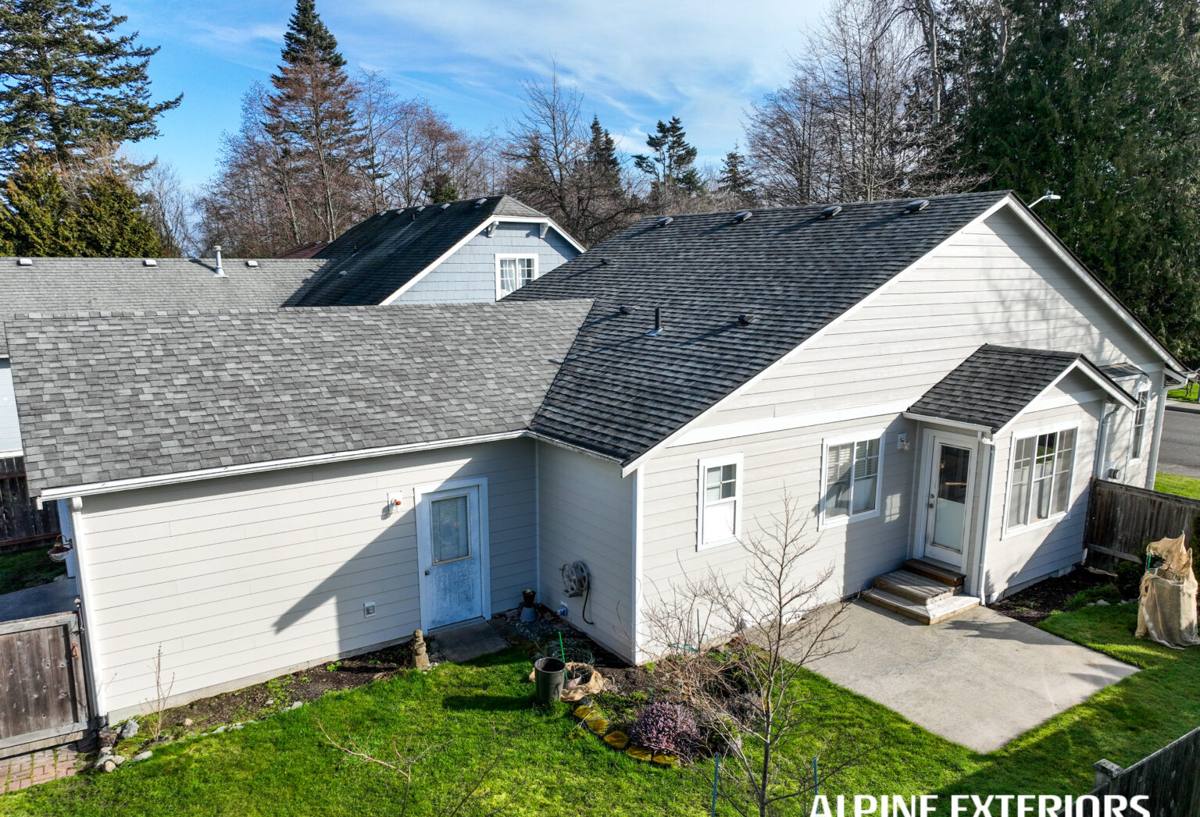
What the Climate Actually Does to a House Here
Western Washington weather gets talked about in generalities — "it rains a lot" — but the specifics matter more than the generality. In the Skagit Valley, moisture doesn't just fall and drain away. It lingers. Humidity stays elevated for long stretches, tree canopy over many Lyman properties keeps siding and roofing shaded and slow to dry, and the valley's own microclimate can trap damp air against a house longer than you'd see on an open, wind-exposed lot.
Moss, Mildew, and Slow-Drying Surfaces
Moss doesn't need much to get established — shade, moisture, and time are enough. On siding, that usually shows up first on north-facing walls, under eaves, and anywhere two surfaces meet and trap water. Once moss or mildew gets a foothold on a material that absorbs moisture, it's a maintenance cycle that never really ends. The material itself becomes part of the problem, holding water against its own surface and feeding the growth it's supposed to shed.
Driving Rain and Wind-Driven Moisture
Storms moving up the valley don't always arrive as a gentle vertical rain. Wind pushes water sideways into wall assemblies, testing every seam, joint, and piece of trim. Siding that isn't installed with the right flashing details, gaps, and fastening pattern will eventually let that moisture find a way in — and the damage often shows up behind the wall long before it's visible on the surface.
Salt Air's Reach Inland
Skagit County's proximity to Puget Sound means salt-laden air reaches further inland than people expect, especially during wind events. Combined with the valley's humidity, it's an environment that accelerates corrosion on unprotected fasteners and metal trim, and it adds another reason why the fastening system and flashing details matter as much as the siding panel itself.
Why Product Choice Matters More in a Climate Like This
Every siding material handles moisture differently, and in a place like Lyman, that difference compounds year after year. We install James Hardie fiber cement siding exclusively — not vinyl, not LP SmartSide, not Cemplank or Allura, not primed spruce or cedar. That's not a marketing position; it's a decision built on what we've seen hold up in this exact climate and what we've seen fail.
Wood-Based and Engineered Wood Products
Primed spruce, cedar, and engineered wood siding like LP SmartSide all share a common vulnerability: they're wood-based, and wood-based products are dimensionally reactive to moisture. In a low-drying, shaded, humid environment like parts of Lyman, that means more swelling, more edge-checking, and a shorter runway before paint and caulk maintenance becomes a recurring cost. Cedar can look excellent, but it demands a maintenance commitment that doesn't fit every homeowner's plans, and engineered wood products rely on factory sealing at cut edges and seams staying intact — a detail that's unforgiving if installation isn't precise.
Vinyl Siding
Vinyl is inexpensive and low-maintenance in the sense that it doesn't need painting, but it's a thin material that expands and contracts significantly with temperature swings, and it's not fire-resistant. In a wildfire-adjacent region like the foothills near Lyman, that's a real consideration, not a theoretical one. Vinyl also tends to show its age faster — fading, warping, and becoming brittle over a couple of decades in a way that fiber cement doesn't.
Other Fiber Cement Brands
Cemplank and Allura are also fiber cement, and fiber cement as a category is the right general direction. But we standardized on James Hardie specifically because of its ColorPlus factory-applied finish, its climate-engineered HZ5 product line built for exactly this kind of Pacific Northwest moisture exposure, and a warranty structure that's transferable and well-documented. We'd rather install one product exceptionally well, understand its installation requirements cold, and stand behind it fully than spread our expertise thin across several similar materials.
James Hardie: What It's Actually Built to Do
Fiber cement is cement, sand, and cellulose fiber, engineered into a board that doesn't absorb water the way wood does, doesn't expand and contract the way vinyl does, and doesn't burn. James Hardie's HZ5 formulation is specifically engineered for regions with sustained moisture exposure — which describes the Skagit Valley well. The ColorPlus finish is baked on in a factory setting under controlled conditions, which gives it a more durable, consistent bond than field-applied paint achieves, and it comes with its own finish warranty separate from the product warranty on the board itself.
None of that replaces correct installation. Fiber cement performs exactly as well as the crew installing it. Gaps at butt joints, missing flashing above windows and doors, incorrect fastener spacing, or siding installed too close to grade or a roofline will undercut even the best material. That's the part of the job that doesn't show up in a product brochure and is where an experienced local crew actually earns its fee.
Comparing Siding Materials for This Climate
| Material | Moisture Behavior | Fire Resistance | Maintenance | Typical Longevity |
|---|---|---|---|---|
| James Hardie Fiber Cement | Dimensionally stable, engineered for wet climates | Non-combustible | Low — occasional wash | 30+ years, often longer |
| Vinyl | Doesn't absorb, but warps/expands with heat | Combustible | Low, but degrades visibly over time | 15-25 years |
| LP SmartSide / Engineered Wood | Sealed edges required; sensitive to moisture intrusion | Combustible | Moderate — edge and seam checks | 20-30 years with upkeep |
| Cedar | Absorbs moisture, needs finish maintained | Combustible | High — refinishing cycle | Variable, upkeep-dependent |
| Primed Spruce | Prone to swelling and paint failure in damp climates | Combustible | High | Shorter without diligent care |
Roofing, Windows, and Decks in the Same Conditions
Siding doesn't work in isolation — the whole exterior envelope has to manage water together. A roof with aging flashing or worn underlayment will send moisture down behind siding no matter how well the siding itself is installed. Windows with failed seals or outdated flashing tape are one of the most common hidden sources of wall-cavity moisture we find on older Lyman-area homes. And decks, especially ones shaded by trees, take on the same moss and slow-drying issues as siding, with the added complication of structural safety over time.
We handle all four — siding, roofing, windows, and decks — because they're genuinely connected systems. A siding replacement is also a good moment to have a roofer's eye look at flashing details, and to check whether window openings are properly integrated with the new water-resistive barrier before panels go back on.
What a Local Crew Changes
A lot of exterior problems in Skagit County aren't material failures — they're installation details that didn't account for local conditions. A crew that works this region regularly knows to pay extra attention to north-facing walls under tree cover, to flash more generously around window and door openings than a spec sheet technically requires, and to recognize where a particular lot's drainage or shade pattern is going to create a moss or moisture problem years down the road. That's knowledge that comes from working here repeatedly, not from a general installation manual.
Being based in Burlington also means we're not driving a crew in from out of the area for a single job and disappearing afterward. If a question comes up two years after installation, we're still local and still reachable.
What to Check Before Hiring an Exterior Contractor
- Ask specifically which siding brand and product line they install, and why — a contractor who installs "whatever the homeowner wants" often hasn't developed real expertise in any one system
- Confirm they carry current Washington contractor licensing and liability insurance, and ask to see proof rather than take it on faith
- Ask how they handle flashing at windows, doors, and butt joints — this is where most fiber cement failures actually originate
- Get a written scope that specifies fastener type, house wrap or water-resistive barrier, and trim details, not just "siding replacement"
- Ask whether the manufacturer's warranty requires their specific installation certification, and whether that applies here
- Get more than one estimate, and be wary of a bid that's dramatically lower than the others without a clear explanation
Planning a Project in Lyman
Timing matters in this climate. Scheduling siding or roofing work during a drier stretch of the year reduces the number of days a wall is open to weather mid-project, and it gives adhesives, sealants, and factory finishes better conditions to cure properly. We plan around Skagit County's weather patterns rather than working around them, which affects both the quality of the finished job and how smoothly the project goes.
If you're weighing a siding, roofing, window, or deck project on a Lyman property, we're glad to walk the exterior with you, point out what the current conditions have already done to it, and lay out honest options — including a straightforward answer on whether James Hardie is the right fit for your specific home. There's no pressure and no cost to have that conversation; use the form below to request a free estimate.