 Burlington
 Big Lake sits in a pocket of Skagit County where the water, the tree cover, and the marine air all work together on a house at once. It's a different exposure than an open field in the valley or a windswept lot closer to Samish Bay. Homes here tend to sit under fir and cedar canopy, close to the water table, and in shade for long stretches of the day during the wetter months. That combination is exactly what wears down the wrong exterior materials faster than homeowners expect.
We work throughout Skagit County out of Burlington, and Big Lake is a community we know well. This page covers what the local climate actually does to siding, roofing, windows, and decks, and how we approach exterior work for houses in this specific setting.
What Big Lake's Climate Does to a House
Western Washington's siding problems rarely come from a single dramatic storm. They come from repetition — the same cycle of wet and dry, shaded and damp, happening hundreds of times a year. Big Lake adds a few local wrinkles to that general pattern.
Shade and Slow Drying
Lakeside lots and tree-lined streets mean less direct sun hitting exterior walls, especially on north- and east-facing sides. Less sun means slower drying after rain, fog, and morning dew. Materials that can tolerate an occasional soaking do fine; materials that stay damp for days at a time start to suffer, whether that shows up as swelling, delamination, or a permanent green or black cast to the surface.
Moss and Organic Growth
Long moss season is a fair description of this area. Moss, algae, and lichen need moisture and shade to establish, and Big Lake offers both in abundance for a good part of the year. On wood-based siding products, sustained moss growth traps moisture against the substrate and accelerates rot. On roofing, moss lifts shingles and shortens their working life. It's a maintenance item every homeowner in this area deals with, not a sign of something being wrong with the house.
Salt Air and Driving Rain
Big Lake isn't directly on Puget Sound, but the broader Skagit County climate carries salt-laden air off the water, and that air moves inland with the weather systems that also bring driving, wind-pushed rain. Rain that comes in sideways finds gaps and laps that would stay dry in a calmer climate. Fasteners, flashing details, and butt joints all take more abuse here than they would in a drier region.
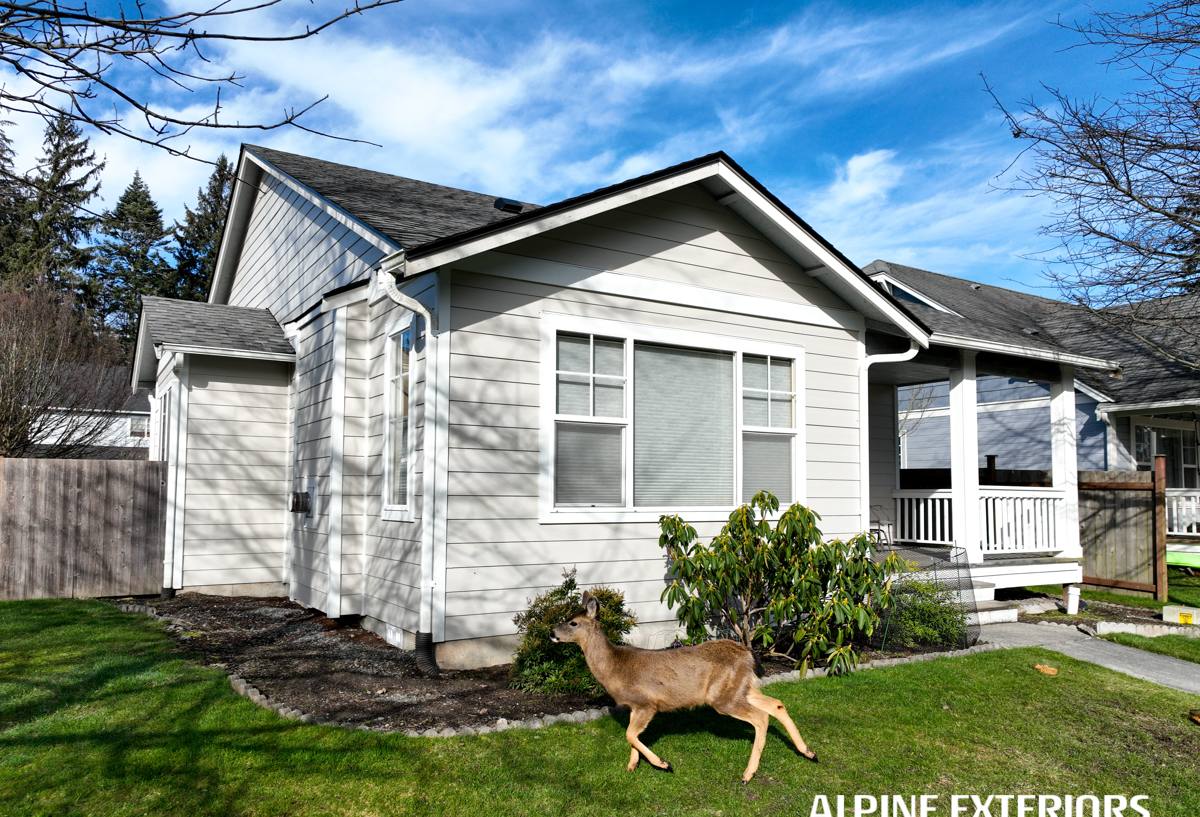
Why Product Choice Matters More Here Than in Some Other Places
A lot of siding failures we get called out to inspect aren't installation failures — they're the wrong material for this climate, installed correctly and still struggling. This is why we made a decision as a company to install only one fiber cement siding line: James Hardie. We don't install vinyl, LP SmartSide, Cemplank, Allura, primed spruce, or cedar lap siding, and in a climate like Big Lake's, that's not a marketing position — it's a practical one.
| Material | How it typically responds to shade, moss, and driving rain |
|---|---|
| Vinyl siding | Doesn't rot, but panels can warp or bow with temperature swings, and moss/algae staining is difficult to fully clean off textured surfaces |
| Engineered wood (e.g. LP SmartSide) | Wood-based core is vulnerable if edges, seams, or fastener holes aren't perfectly sealed and maintained over time; sustained damp shade is a tough environment for it |
| Cedar lap siding | Beautiful when new; requires disciplined refinishing on a strict schedule to resist moisture and moss in low-sun areas |
| Primed spruce/finger-joint siding | Primer is a base coat, not a finish system; moisture intrusion at joints and end cuts is a common failure point in wet climates |
| James Hardie fiber cement | Non-combustible, dimensionally stable, engineered specifically for wet Pacific Northwest conditions in its HZ5 product line |
None of the alternatives are junk products. Each has a place and each has real advantages somewhere. But for a house that sits in shade near water in a marine climate, we'd rather stand behind one system we trust completely than offer five and let the climate sort out which one was the wrong call.
James Hardie in a Big Lake Setting
James Hardie's fiber cement is cement, sand, and cellulose fiber — there's no wood core to rot and no vinyl to warp. The HZ5 formulation is engineered for climates like ours, where moisture exposure is constant rather than occasional. The factory-applied ColorPlus finish is baked on before the boards ever reach a job site, which matters in a shaded, damp environment because it resists the fading and moss-friendly surface breakdown that raw or field-painted materials are more prone to over time.
What Correct Installation Looks Like Here
- Proper rainscreen or drainage gap behind the siding so any moisture that gets past the surface has somewhere to go
- Correct flashing above windows, doors, and any horizontal trim, sized for wind-driven rain, not just vertical rain
- Manufacturer-specified fastener spacing and clearance from the ground, especially important on lots with limited sun exposure
- Caulked and sealed joints using products rated for sustained moisture, not just standard exterior caulk
- Attention to grade and drainage around the foundation, since a lakeside lot often has less natural runoff than a hillside home
Hardie siding installed without these details will still underperform. The product is engineered for this climate, but the installation has to respect that engineering.
Roofing for Shaded, Moss-Prone Lots
Roofs in the Big Lake area deal with the same shade and moss pressures as siding, often worse, since a roof has less airflow and more direct exposure to falling debris from overhanging trees. We look at a few things specific to this kind of lot when we're up on a roof:
- Moss growth patterns on north-facing slopes and valleys where sun rarely reaches
- Gutter and downspout capacity for the volume of needle and leaf debris that comes off surrounding trees
- Flashing condition around any skylights, chimneys, or roof penetrations, where driving rain finds its way in first
- Ventilation, since a poorly ventilated attic traps moisture that has nowhere to go in a shaded, humid setting
Moss treatment and gutter maintenance help, but they're not a substitute for a roofing system installed with this specific exposure in mind from the start.
Windows in a Marine, Shaded Climate
Older windows in this area often show their age through condensation between panes, foggy glass, or soft trim around the frame — signs that seals have failed and moisture has been working its way in over years of damp shade. Replacement windows we install are matched to the exposure of each wall: more weather-resistant detailing on faces that catch driving rain, and attention to flashing integration with the surrounding siding so the two systems work together instead of leaving a gap where water can collect.
Decks Built for Wet, Shaded Ground
A deck near Big Lake often sits in more shade and closer to damp ground than a deck out in the open valley. That combination is hard on structural framing and decking boards alike. We pay particular attention to ledger board flashing, joist protection, and gap spacing between deck boards so the structure can dry out between rain events instead of holding water against the wood or composite surface. Composite decking with a proper moisture barrier tends to perform better than untreated wood in these specific conditions, though the right choice depends on the deck's sun exposure and how it's used.
Why a Local Crew Matters for This Address
A contractor who mostly works drier, sunnier lots elsewhere in the county can still do a technically fine installation and still get it wrong for a shaded, lakeside property, simply because the failure points are different here. We're based in Burlington and work Skagit County regularly, which means we've seen how siding, roofing, and decks actually age on lots like this one — not just how they look the day the job wraps up.
What That Looks Like in Practice
- Recommending drainage and ventilation details appropriate to a shaded lot, not a one-size-fits-all spec
- Being upfront when a repair, not a full replacement, is the honest answer
- Standing behind the work with a crew that's still local and reachable years later
- Knowing which products hold up in this exact climate and refusing to install the ones that don't
Cost Factors for Big Lake Properties
Every home is different, but a few factors specific to this area tend to move a project's scope and cost more than they would elsewhere in the county.
| Factor | Why it matters here |
|---|---|
| Existing moss/moisture damage | Shaded lots often have more hidden sheathing or trim damage discovered once old siding comes off |
| Tree clearance and access | Dense tree cover near the house can require extra care or clearance work before crews can safely access walls or roof edges |
| Drainage and grading | Lakeside lots sometimes need additional grading or drainage attention as part of a siding or deck project |
| Scope of trim and flashing detail | A wet, shaded climate calls for more thorough flashing work, which affects labor time more than material cost |
We give straightforward, itemized estimates so you can see exactly where the money is going and why.
Getting Started
If you're in the Big Lake area and dealing with moss buildup, aging siding, a roof that's seen too many wet winters, or windows that fog up every fall, we're happy to take a look and tell you honestly what's going on and what your options are. There's no pressure and no obligation — just a straight assessment from a crew that knows this climate. Fill out the form below to schedule a free estimate.