 Burlington
 Why Clear Lake Homes Need Siding Built for This Climate
Clear Lake sits along the Highway 9 corridor in Skagit County, a part of Washington that gets a real workout from the weather. Homes here deal with long stretches of wet, overcast months, driving rain that comes sideways off the valley winds, and enough shade and moisture in the wrong spots to grow moss on almost anything that sits still long enough. Add in the salt-tinged air that moves inland off Puget Sound and Samish Bay on a regular basis, and you've got a climate that's genuinely hard on exterior building materials.
Siding in this area isn't just a cosmetic choice. It's the first line of defense against moisture intrusion, and it takes on more punishment here than it would in a drier part of the state. Products that perform fine in Eastern Washington or inland California often struggle in Skagit County within a decade or two.
Moss and Moisture Are the Real Enemy
Moss doesn't just look bad — it holds moisture against a wall surface for weeks at a time. On siding that can absorb or swell with water, that constant dampness accelerates rot, delamination, and paint failure. Clear Lake's tree cover and lake-adjacent humidity make it a particularly favorable environment for moss growth on north-facing and shaded walls.
Wind-Driven Rain Finds the Gaps
Rain that falls straight down is manageable. Rain that gets pushed sideways by wind works its way behind trim, into laps, and through poorly flashed penetrations. A siding system that isn't installed with the right gaps, flashing, and water-management details will eventually let that moisture in, no matter how good the material itself is.
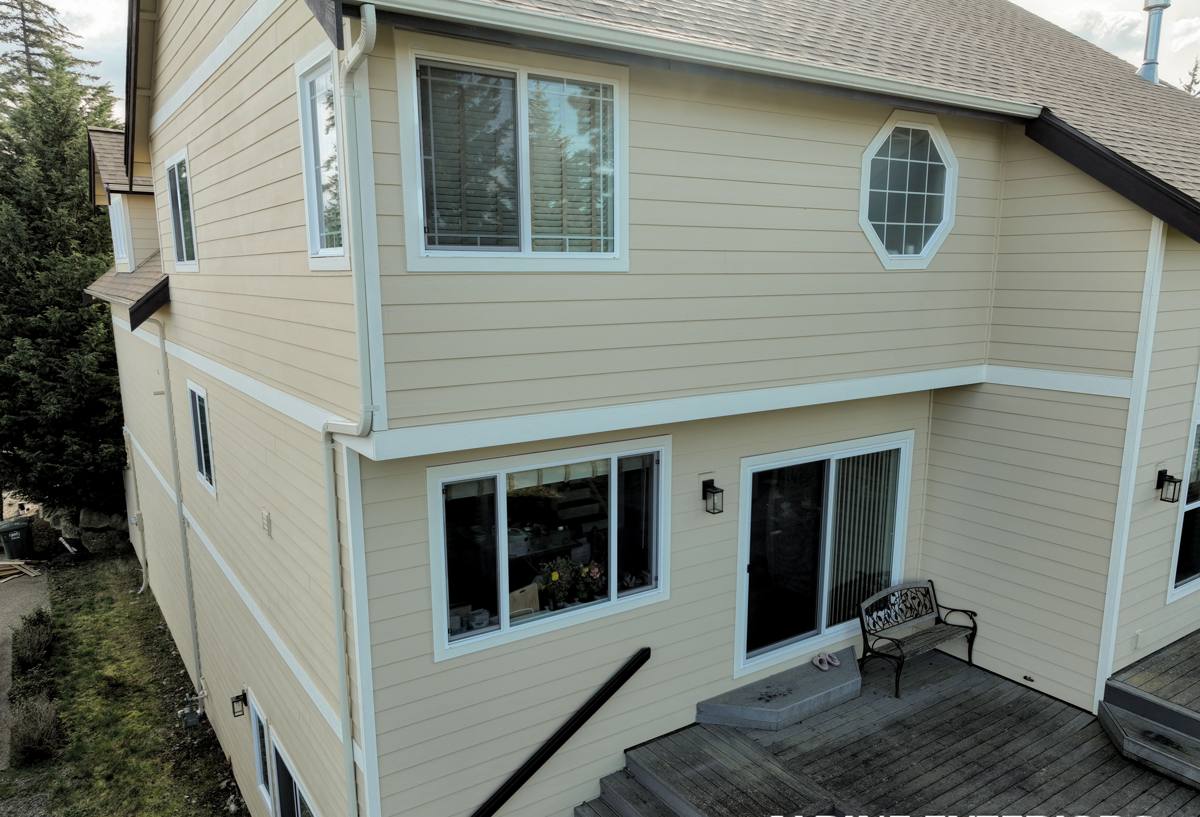
Why We Install Only James Hardie Fiber Cement
We made a decision early on to install one siding product, and one product only: James Hardie fiber cement. We don't install vinyl, LP SmartSide, Cemplank, Allura, or unprimed wood siding like cedar or spruce — not because those products have no place in the market, but because after years of working on homes in this climate, we didn't feel comfortable standing behind them long-term.
Vinyl can warp and fade under UV exposure and doesn't hold paint if a homeowner ever wants to change the color. Engineered wood products like LP SmartSide use wood strand cores that are vulnerable if moisture gets past the finish, which is a real risk in a climate this wet. Cedar and unprimed wood look beautiful on day one but demand a maintenance schedule — restaining, resealing, checking for rot — that most homeowners underestimate. James Hardie fiber cement is cement, sand, and cellulose fiber. It doesn't rot, it doesn't feed pests, and it isn't fuel for fire. It holds paint far better than wood, and it doesn't warp or buckle the way vinyl can in temperature swings.
That's the whole reason we standardized on it: fewer callbacks, fewer surprises, and a product that's engineered specifically for the kind of moisture load Skagit County throws at it.
The Right Hardie Product Line for a Clear Lake Home
James Hardie makes several distinct product lines, and part of doing this job correctly is matching the right one to the home. All Hardie products sold in our region are manufactured to the HZ5 specification, which is engineered for the Pacific Northwest's freeze-thaw cycles and moisture exposure — that's a meaningful difference from siding rated for warmer, drier climates.
| Product Line | Best Use | Why It Fits Clear Lake |
|---|---|---|
| HardiePlank lap siding | Most single-family homes | Traditional lap look, factory-primed edges resist moisture wicking |
| HardiePanel vertical siding | Accent walls, gables, garages | Clean modern look, fewer horizontal laps for water to catch on |
| HardieShingle siding | Accent areas, craftsman-style homes | Textured look without the maintenance of real cedar shingles |
| HardieTrim boards | Corners, window and door trim | Won't rot or split like wood trim exposed to driving rain |
ColorPlus factory-applied finish is worth calling out specifically for this area. It's baked on at the factory under controlled conditions, which gives it better fade and moisture resistance than field-applied paint — and it comes with its own finish warranty separate from the substrate warranty. For a home that's going to sit under overcast skies and damp air most of the year, that extra layer of factory finish quality matters.
What a Correct Installation Actually Involves
Fiber cement siding is only as good as its installation. A large share of the siding failures we get called out to inspect aren't a material problem — they're an installation problem. The product was rated to handle the climate; it just wasn't installed to spec.
- Correct nailing pattern and fastener type — the wrong nails or over-driven fasteners crack the board or void the warranty
- Proper gap and clearance at the bottom of the wall, away from grade, decks, and patios
- Weather-resistant barrier installed and lapped correctly behind the siding, not just stapled up
- Flashing at every window, door, and penetration — not caulk used as a substitute for flashing
- Correct lap and overlap spacing so water sheds outward instead of wicking upward
- Painted or factory-finished cut edges, especially at field cuts made on site
- Ventilation gap maintained where siding meets trim, soffits, and rooflines
Skip any one of these steps and you can end up with moisture problems within a few years, even though the siding itself is rated to last decades. This is why we treat installation detail as seriously as the product choice.
Our Process, Start to Finish
Every Clear Lake project starts with an on-site walkthrough — we look at the current siding condition, check for existing moisture damage behind it, and evaluate trim, flashing, and any problem areas like shaded walls or spots where sprinklers or downspouts hit the siding directly. From there we put together a scope that covers the full wall system, not just the visible siding panels.
During installation, we remove old siding down to the sheathing so we can inspect for hidden rot before anything new goes up — this is a step some crews skip to save time, and it's the single biggest source of surprises down the road. Once the wall is confirmed sound, we install house wrap, flashing, and the Hardie product itself according to manufacturer specifications, then finish with trim and caulking at the appropriate joints only.
We walk the finished job with the homeowner before we consider it complete, and we go over care and maintenance specific to a Skagit County exterior — mainly how to keep moss from re-establishing on shaded sections of wall.
Common Trouble Spots on Older Clear Lake Homes
Homes in this area that are a couple of decades old or more tend to show the same handful of issues when we open up the walls. Trim boards at window sills and corners are frequently the first thing to fail, since end grain absorbs water fastest. Lower courses of siding near grade, decks, or downspouts often show the most moss and moisture staining because they stay damp longest. And older wood or hardboard siding that's been repainted multiple times can be hiding rot underneath a coat of paint that looks fine from the street.
None of this is unique to any one home — it's just what happens to exterior wood-based materials over enough wet Skagit County winters. It's also exactly the kind of damage James Hardie siding, installed correctly, is designed to avoid.
Cost Factors for a Clear Lake Siding Project
Every home is different, but the same handful of factors drive most of the cost variation we see on projects in this area.
| Factor | Why It Matters |
|---|---|
| Amount of hidden rot found under old siding | Sheathing repair adds cost but is essential to a lasting install |
| Home size and wall complexity | More corners, gables, and trim details mean more labor |
| Product line and finish selection | ColorPlus finishes and specialty textures cost more than base products |
| Trim and accent work | Full trim replacement adds cost but improves long-term durability |
| Site access | Steep lots or tight setbacks near the lake can affect staging and labor time |
We give a firm, itemized quote after the walkthrough rather than a rough phone estimate, since the condition of what's underneath the existing siding is often the biggest swing factor.
Why Hiring a Crew That Already Works in Clear Lake Matters
A crew that regularly works in the Clear Lake area already knows what to expect before they pull the first piece of old siding off — where moisture tends to collect, how the local moss and mildew pattern behaves, and how the valley's wind-driven rain typically finds its way into a wall system. That familiarity shows up in fewer surprises mid-project and a finished install that's set up to handle another twenty or thirty years of this specific climate, not a generic one.
If your Clear Lake home needs new siding, or you're just trying to figure out whether what you have is holding up, we're happy to take a look and walk you through what we find. There's no pressure and no obligation — just a straightforward estimate and an honest read on your home's exterior.