 Burlington
 Exteriors Built for La Conner's Waterfront Climate
La Conner sits where the Swinomish Channel meets the tidal flats of Skagit County, and that location shapes what happens to a house over time. Homes here take on a combination most inland Skagit properties don't deal with in the same way: salt-laden air off the channel and Sound, driving rain that comes in sideways during winter storms, and a moss season that can stretch for most of the year on shaded, north-facing walls and rooflines. None of that is dramatic on any single day. It's the slow, cumulative effect that causes problems — and it's why exterior materials and installation details that work fine in a drier climate can fall short here.
Burlington Siding works throughout Skagit County, and La Conner's mix of older waterfront homes, newer construction, and everything in between gives us a good feel for what actually holds up in this specific environment versus what looks fine for a few years and then starts showing its age.
What Salt Air and Driving Rain Actually Do to a House
Salt Air and Metal Components
Salt air accelerates corrosion on anything metal — fasteners, flashing, hose bibs, light fixtures, even the staples or nails holding siding and roofing in place. On a house close to the channel, standard fasteners can start showing rust streaks years before they would inland. This matters more than it sounds like it should, because a corroded fastener eventually loses its grip, and a siding panel or shingle held by weakened fasteners is a wind and water problem waiting to happen.
Driving Rain and Wall Assemblies
Skagit County storms often bring rain on a strong wind, which pushes water horizontally into wall surfaces instead of letting it run straight down. Siding systems depend on lapped joints, proper flashing, and a drainage plane behind the cladding to manage that kind of exposure. When those details are rushed or the underlying material can't handle repeated wetting, water finds its way behind the siding — and once it's in the wall assembly, the damage is often invisible until it's serious.
Moss, Shade, and Moisture
La Conner's tree cover, marine layer, and mild year-round temperatures create ideal conditions for moss and algae growth on north-facing walls, roof valleys, and anywhere shade keeps a surface from drying out between rains. Moss holds moisture against the material underneath it far longer than open air ever would, which is a bigger deal for wood-based products than for materials that don't absorb water in the first place.
Why We Install James Hardie Fiber Cement — and Nothing Else
We made a decision as a company to install only James Hardie fiber cement siding. We don't install vinyl, LP SmartSide, Cemplank, Allura, primed spruce, or cedar. That's not a marketing position — it's a practical one, built around what actually holds up in a climate like this one.
Vinyl is affordable and low-maintenance in a general sense, but it expands and contracts with temperature swings, can crack in cold snaps, and its seams and J-channels give wind-driven rain more opportunities to work its way behind the panel over time. Wood-based products like LP SmartSide, primed spruce, and cedar have real strengths — cedar in particular has a genuine, long-standing appearance that some homeowners specifically want — but any wood-based substrate is vulnerable to moisture intrusion, and a climate with a long moss season and frequent wetting is a tough proving ground for that vulnerability. Once water gets into an engineered wood or solid wood panel, especially at cut edges or fastener penetrations, rot can start before it's visible from the outside.
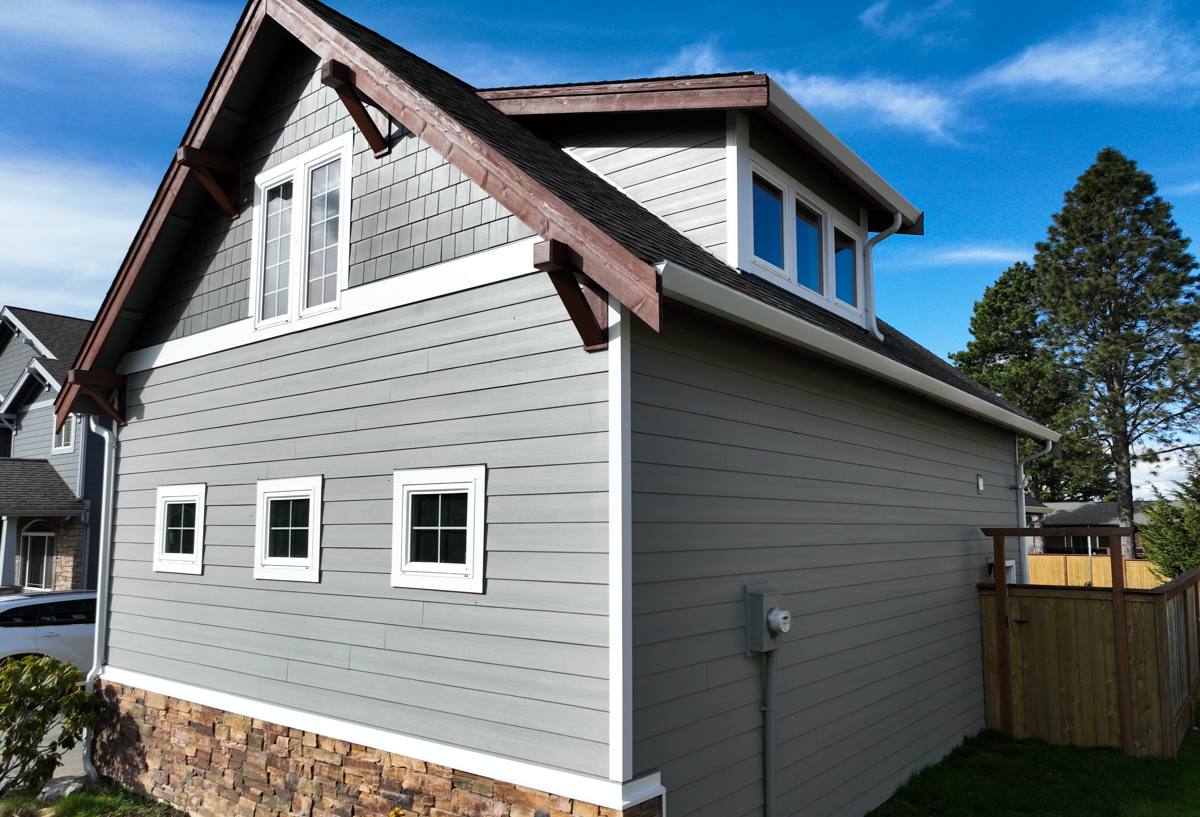
Fiber cement doesn't share that weakness. It's non-combustible, it doesn't swell or rot the way wood products can, and James Hardie's ColorPlus factory-applied finish is baked on under controlled conditions rather than field-applied, which gives it more consistent, longer-lasting color adhesion than site-painted siding. Hardie also engineers specific product lines (HZ5, for example) for wetter, harsher climates, which is directly relevant to a channel-side, salt-air, high-rainfall location like La Conner. The company backs it with a strong transferable warranty — but that warranty is only as good as the installation behind it, which is where a lot of siding jobs actually go wrong.
Siding Comparison at a Glance
| Material | Moisture Behavior | Salt Air / Coastal Fit | Long-Term Maintenance |
|---|---|---|---|
| James Hardie Fiber Cement | Does not absorb and swell; engineered HZ lines for wet climates | Strong — non-combustible, corrosion isn't a material concern | Occasional rinsing; factory finish resists fading |
| Vinyl | Doesn't absorb water, but seams/panels allow water intrusion behind cladding | Can become brittle with temperature cycling; seams add risk | Low, but cracks and fading are common over time |
| LP SmartSide / Engineered Wood | Vulnerable at cut edges and fastener points if moisture gets in | Higher risk in prolonged damp/shade conditions | Requires monitoring for edge swelling and coating wear |
| Cedar / Primed Spruce | Absorbs moisture; prone to rot without diligent upkeep | Demanding in a moss-prone, salt-air environment | Regular refinishing, sealing, and moss/mildew treatment |
Roofing in a Moss-Heavy, Storm-Exposed Area
Roofs in La Conner face the same combination of problems as siding, just with more direct sun and wind exposure and, often, more shade from surrounding trees. Moss on a roof isn't just a cosmetic issue — it lifts shingles, traps moisture against the roof deck, and shortens the life of the roofing material underneath it. Valleys, north-facing slopes, and areas under tree cover need attention more often here than they would on a drier, more open lot.
We look at ventilation, underlayment, and flashing details as closely as the shingles themselves, because a roof that's properly ventilated and flashed handles driving rain and moss pressure far better than one that just has good shingles on top of a weak system underneath.
Signs a La Conner Roof Needs a Closer Look
- Visible moss or dark streaking on north-facing slopes or valleys
- Granules collecting in gutters or downspouts
- Soft spots or sagging along the roofline
- Daylight visible through the attic at roof boards or flashing
- Water stains on interior ceilings near exterior walls
Windows and Decks in a Wet, Salt-Exposed Climate
Windows
Older windows in waterfront and near-waterfront homes often show their age through fogging between panes, drafts, and hardware that's started to corrode from salt exposure. Beyond comfort and energy costs, poorly sealed windows are one of the more common paths for wind-driven rain to get into a wall system, especially on the weather side of a house facing the channel.
Decks
Decks take the moss and moisture problem head-on since they're horizontal, often shaded, and rarely dry out completely between rains for much of the year. Proper spacing, drainage, and material choice matter as much here as the framing underneath — a deck surface that holds water and organic debris will develop moss and slippery surfaces faster than one built to shed water and dry out between storms.
Why a Local Crew Matters Here
A lot of exterior problems in La Conner don't come from bad materials — they come from installation details that weren't adjusted for the location. Flashing details, fastener choices, and drainage planning that work fine forty minutes inland can fall short right on the water. A crew that works this area regularly knows which walls take the worst of the driving rain, where moss pressure is heaviest, and how to detail a job so it's still performing well ten and twenty years out, not just at the final walkthrough.
That local familiarity also means faster, more accurate estimates — we're not guessing at what a La Conner property is up against, we've seen it on the house down the street.
A Simple Maintenance Checklist for La Conner Homes
- Rinse siding and decking surfaces periodically to clear salt residue and organic buildup
- Clear gutters and downspouts before the fall rains, and again mid-winter if trees are nearby
- Check north-facing and shaded roof areas for moss at least once a year
- Inspect window seals and caulking annually, especially on the side facing the channel
- Have flashing around roof valleys, chimneys, and deck ledgers checked every few years
What to Expect When You Reach Out
We'll come look at your home in person — siding, roofing, windows, or decks — and give you a straightforward read on condition and options, including realistic cost factors like square footage, existing damage, and access. We're not going to push a product we don't stand behind, and we're not going to tell you a repair will hold if we don't believe it will.
Rough Cost Factors We Walk Through With Homeowners
| Factor | Why It Matters |
|---|---|
| Extent of existing moisture or rot damage | Hidden damage found during removal changes scope and cost |
| House size and wall/roof complexity | More corners, valleys, and penetrations mean more labor and detail work |
| Access and site conditions | Waterfront lots and tight access can affect equipment and staging |
| Material selection | Fiber cement, roofing type, and window grade all shift the budget |
If your La Conner home is due for new siding, a roof inspection, window upgrades, or deck work, we'd be glad to take a look and give you a free, no-pressure estimate.