 Burlington
 What Primed Wood Siding Actually Is
Primed wood siding — often sold as primed spruce, primed fir, or sometimes marketed under a finger-jointed trim brand — is solid or finger-jointed lumber milled into siding profiles and coated with a factory or job-site primer before installation. It's been a staple of Pacific Northwest construction for generations, and there's a reason it's still on the shelf at every lumberyard from Burlington to Bellingham: it's real wood, it takes paint well when new, and it's relatively inexpensive to buy. Builders like it because it's familiar, easy to cut and nail with standard tools, and doesn't require any special handling on a dry, sunny install day.
The catch is that "install day" is one day, and the siding has to survive several thousand more after that — most of them wet. That's where the conversation changes.
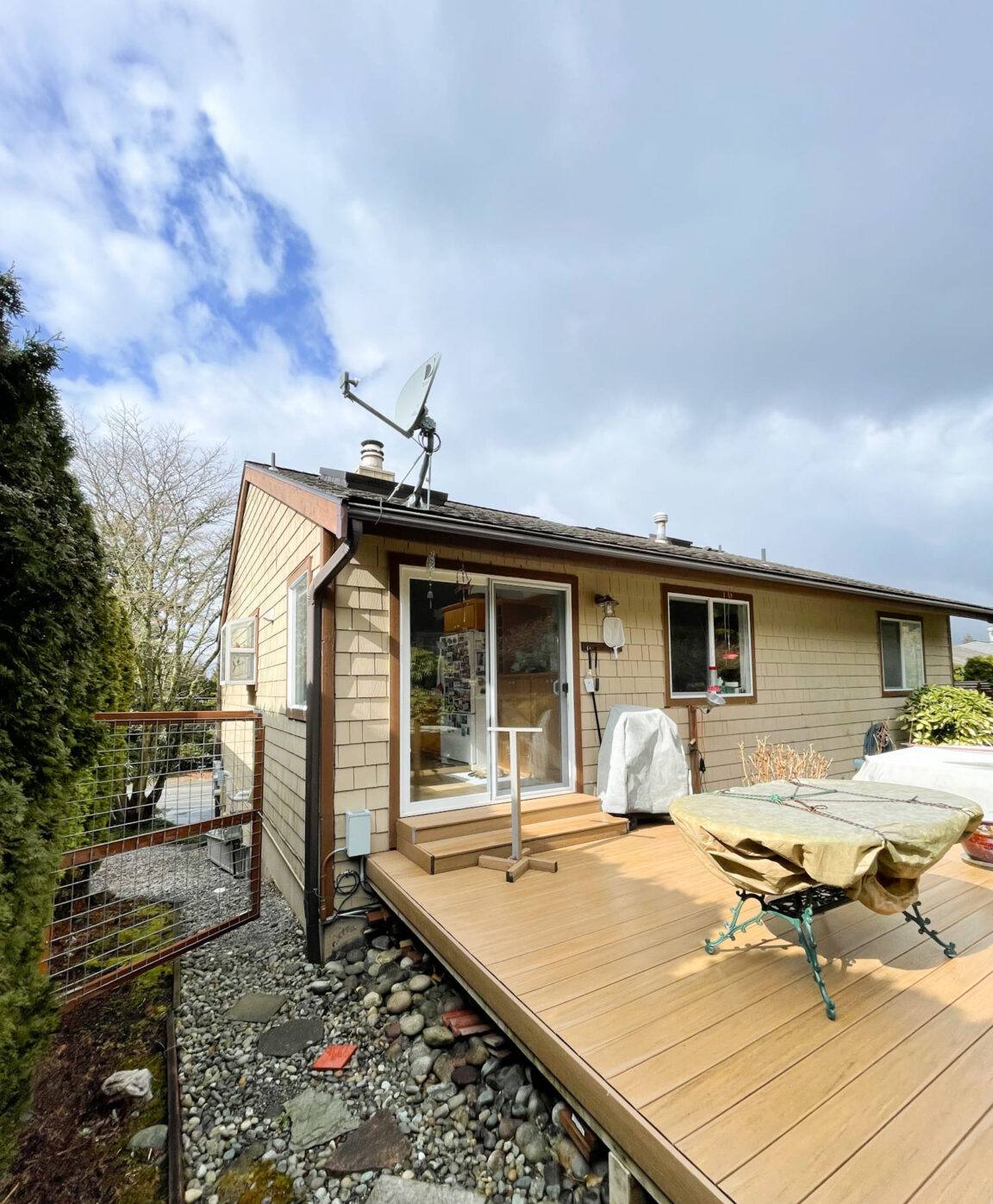
Why We Don't Put It On Skagit County Homes
We're a James Hardie fiber cement installer, full stop. We don't run crews for LP SmartSide, vinyl, Cemplank, Allura, primed spruce, or cedar. That's not because primed wood is a scam or a bad product in the abstract — it's because after years of doing exterior work in this specific climate, we stopped being willing to put our name on a product that performs this inconsistently here. Skagit County sits in a pocket that combines three things wood siding handles poorly: salt-laden air off the Sound and the Skagit delta, long stretches of driving, wind-pushed rain, and a moss and mildew season that can run eight or nine months out of the year in shaded, low-sun exposures.
Wood siding isn't waterproof — it's water-resistant, and only as long as the paint film on top of it stays intact. Primer is not a finish coat. It's a bonding layer meant to be covered promptly by a quality exterior paint, and even then, that paint film is the only thing standing between the wood fiber and the weather. In a drier climate, that system can hold up fine for a long time. In Burlington, where siding faces repeated wet-dry cycling for most of the year, the paint film is under constant stress, and once it fails anywhere — a nail head, a butt joint, a cut end that didn't get re-primed on site — water gets behind it and the clock starts.
The Core Problem: Wood Moves, Water Follows
Solid wood and finger-jointed wood both expand and contract with moisture content. Every cycle of swelling and shrinking works against the paint film, against the caulk joints, and against the fasteners. Over years, that movement telegraphs through as hairline paint cracking, then checking, then open grain that soaks up water directly. Once water is inside the board itself rather than sitting on the painted surface, you're dealing with rot potential, not just a cosmetic touch-up.
None of this is a defect in the product. It's simply what happens to organic wood fiber exposed to a marine, high-rainfall climate over a long ownership timeline — and it's the reason we stopped specifying it.
Where Primed Wood Genuinely Struggles Locally
Salt Air and Metal Fasteners
Proximity to Puget Sound and the tidal reaches of the Skagit River means airborne salt is a real factor for a lot of Burlington-area properties, not just waterfront homes. Salt accelerates corrosion in fasteners and in any exposed metal flashing details. On wood siding, corroding nail heads bleed rust stains through the paint and create small points where the paint film breaks down first — exactly the kind of failure point that lets water start working on the board underneath.
Driving Rain and End-Grain Exposure
Skagit County doesn't just get rain — it gets wind-driven rain that hits siding at an angle instead of running straight down it. That matters because the most vulnerable part of any wood board is the cut end grain, at butt joints and around windows and trim. End grain soaks up water many times faster than the face of the board. Even with careful field-priming of every cut (which not every crew does consistently, and which homeowners often don't realize is required maintenance going forward), those joints are where we've watched wood siding fail first, over and over.
Moss, Mildew, and the Shade Problem
The north and west-facing walls on a lot of homes in this area — especially anything backed by trees or set close to a neighboring structure — stay damp for days after a storm system passes through. That's ideal growing conditions for moss, algae, and mildew on any organic or paint-coated surface. On wood siding, sustained surface moisture from moss growth keeps the substrate wet longer, which shortens paint life and increases rot risk in exactly the areas that are hardest to inspect and maintain.
What Correct Wood Siding Maintenance Actually Requires
To be fair to the product: primed wood siding can last a long time if it's maintained on a strict schedule. That maintenance is the real cost most homeowners don't see when they compare sticker prices.
- Repainting on a cycle — realistically every 5 to 8 years in this climate, sooner on sun-and-weather-exposed elevations
- Caulking inspection and renewal annually, since failed caulk joints are a primary water entry point
- Prompt re-priming and painting of any field cuts made during repairs or additions
- Regular moss and mildew removal from siding surfaces, not just the roof
- Watching for and addressing nail popping, board cupping, and paint checking before they become rot
- Keeping vegetation trimmed back from siding to preserve airflow and drying time
That's a real, ongoing commitment — not a one-time install-and-forget product. For a lot of owners, especially rental property owners or people who'd rather spend weekends doing something other than climbing a ladder to inspect caulk lines, that maintenance load is the deciding factor.
Primed Wood vs. James Hardie Fiber Cement
| Factor | Primed Wood Siding | James Hardie Fiber Cement |
|---|---|---|
| Moisture behavior | Organic fiber, absorbs water once paint film fails | Cement-based, engineered to resist moisture-driven swelling and rot |
| Finish | Field-applied primer, needs top coat and repainting cycles | ColorPlus factory finish baked on, or field-paintable primed option |
| Repaint cycle | Roughly every 5-8 years in this climate | ColorPlus finish typically holds far longer before repaint is needed |
| Combustibility | Combustible | Non-combustible fiber cement |
| Climate engineering | Generic product, not regionally specified | HZ5 product line engineered for Pacific Northwest freeze-thaw and moisture exposure |
| Warranty | Varies by paint manufacturer, workmanship only on install | Manufacturer-backed, transferable product warranty |
| Upfront cost | Generally lower material cost | Higher material cost, offset by lower long-term maintenance |
Why We Standardized on James Hardie Instead
We install James Hardie fiber cement exclusively because it's engineered for exactly the conditions Skagit County throws at a house. The HZ5 product line is formulated for climates with real moisture exposure and seasonal freeze-thaw cycling, which describes Burlington's weather about as well as any spec sheet can. Fiber cement doesn't absorb water into an organic fiber structure the way wood does, so the driving rain and moss season that wear down painted wood aren't attacking the board itself in the same way.
The ColorPlus factory finish is baked onto the board under controlled conditions before it ever reaches the jobsite, which gives it a more consistent, harder finish than a coat of paint applied on-site or in the field. That translates into a much longer stretch before a homeowner has to think about repainting — for a lot of owners, it's the single biggest reason they switch. Hardie is also non-combustible, which matters more every wildfire season, and it carries a strong transferable manufacturer warranty, which means the coverage isn't just tied to our workmanship — it moves with the house if it's sold.
None of that makes wood siding a bad product on principle. It makes it a product whose real-world maintenance demands don't match what we think is fair to promise a homeowner in this specific climate. We'd rather install one product exceptionally well, to spec, every time, than offer six options and have to caveat half of them.
What This Means If You're Planning a Re-Side
If your Burlington home currently has primed wood siding, that's not an emergency — plenty of it is still doing fine, especially on protected elevations that get regular repainting. What it does mean is that when you're budgeting for your next repaint cycle, it's worth pricing that maintenance cost against what a one-time switch to fiber cement would run over the same ownership period. For a lot of Skagit County homeowners, especially those on exposed, shaded, or salt-air-adjacent lots, the math tips toward Hardie faster than they expect.
If you're already looking at a repaint or noticing early paint failure, cupping, or soft spots at butt joints, that's the right time to have someone look at the whole picture rather than just patching the visible symptom.
If you'd like an honest look at your siding's current condition and what your options actually cost over time, we're happy to come out for a free, no-pressure estimate — no scare tactics, just a straight assessment of what's on your house now and what we'd recommend.