 Burlington
 Siding on Guemes Island: A Different Set of Rules
Guemes Island sits just off Anacortes in Skagit County, a short ferry ride from the mainland, and that separation matters more than people think when it comes to home exteriors. Island homes face a combination of exposures that mainland Burlington and Mount Vernon properties don't deal with in the same way: direct salt-laden air off the Salish Sea, wind-driven rain that hits siding sideways instead of straight down, and a shoulder-season damp that lingers under tree cover long after town has dried out. None of this is exotic or rare — it's just Puget Sound island living — but it does mean exterior materials and installation choices matter more here than in a sheltered inland lot.
We work throughout Skagit County, and Guemes Island is part of our regular service area. A ferry crossing doesn't change how we schedule or price a job — it just means we plan logistics (material delivery, crew timing, dump runs) around the ferry schedule rather than treating the island as an afterthought.
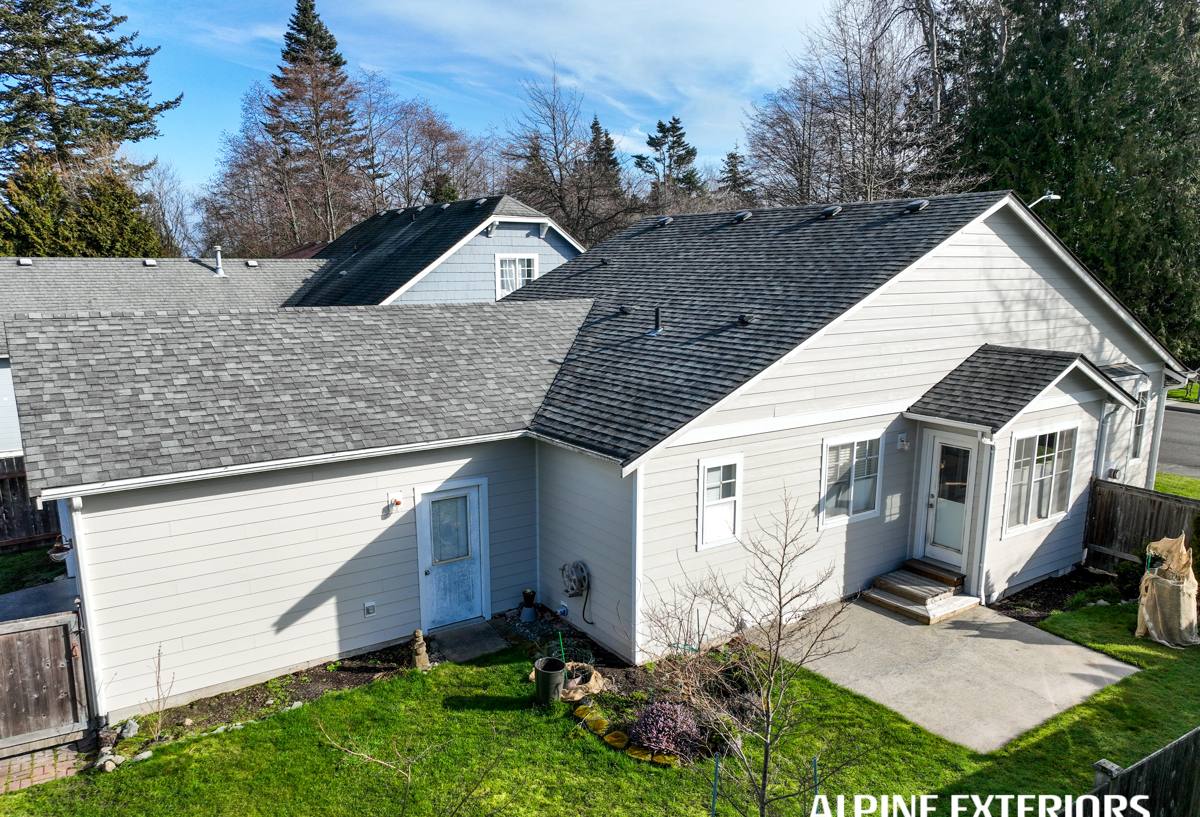
What the Climate Actually Does to Siding Out There
Salt Air and Metal Fatigue
Airborne salt doesn't just affect boats and railings. It settles on exterior surfaces, gets into fastener heads, and accelerates corrosion on anything metal that isn't properly rated or protected — nail heads, flashing, trim fasteners, even some vinyl siding's metal reinforcement pieces. Over years, that corrosion can telegraph through paint as rust streaking or cause fasteners to back out or fail. Homes closer to the shoreline see this faster than those set back in the trees, but no property on the island is fully insulated from it.
Driving Rain and Wind Exposure
Guemes Island is more exposed to open water wind than a lot of inland Skagit County. Wind-driven rain doesn't just run down a wall — it gets pushed sideways and can find its way behind poorly lapped siding, undersized trim gaps, or caulk joints that were never meant to be a home's primary water defense. This is a durability issue, not just a cosmetic one: repeated wetting behind the siding plane is one of the more common paths to rot in walls that look fine from the street.
Moss, Shade, and a Long Damp Season
Much of the island has heavier tree cover than the flatter farmland around Burlington, and shaded, tree-covered siding stays damp longer after every rain. That's ideal moss and algae growing conditions. Moss holds moisture against a wall surface for extended periods, and on materials that aren't dimensionally stable or properly finished, that constant dampness is what eventually causes swelling, delamination, or paint failure.
Why We Only Install James Hardie Fiber Cement
We made a decision as a company to install one siding system: James Hardie fiber cement. We don't install vinyl, LP SmartSide, Cemplank, Allura, primed spruce, or cedar. That's not a marketing angle — it's a standard we hold because of what we've seen play out on real homes in real Pacific Northwest weather, including islands and shoreline properties like Guemes.
Why Fiber Cement Handles Salt Air Better
James Hardie siding is non-combustible fiber cement — it doesn't have the organic wood fiber content that gives moisture a foothold, and it isn't a thin plastic profile that can become brittle with age and UV/salt exposure the way vinyl can. It holds its shape and finish under the kind of humidity and salt cycling that island homes see year after year.
ColorPlus Factory Finish
Hardie's ColorPlus finish is baked on in a controlled factory environment, not brushed or sprayed on site. That matters directly for salt-air environments: a factory-cured finish resists fading and chalking better than field-applied paint, and it means you're not relying on a perfect on-site painting day (which, on an island with its own weather patterns, isn't guaranteed) to get full coverage and adhesion.
Climate-Engineered HZ Product Lines
Hardie makes region-specific "HZ" formulations engineered for different moisture and freeze patterns across the country. The HZ5 line used in our climate zone is built for the wetter, milder Pacific Northwest profile rather than a generic national spec. For a wind-exposed, moisture-heavy island setting, that regional engineering is the whole point — it's not a marketing label, it's a materials decision.
Why We Don't Install the Alternatives
We get asked about other products often, and we'd rather explain our reasoning honestly than pretend we haven't thought about it.
Vinyl Siding
Vinyl is inexpensive and easy to install, and in a lot of climates it does fine. But it's a thin plastic product that expands and contracts with temperature swings, and over time UV and salt exposure can make it brittle, prone to cracking, warping, or fading unevenly on sun-exposed elevations. It also isn't a fire-rated material, which matters to some homeowners weighing risk on a property that may see slower emergency response than an in-town lot.
LP SmartSide, Cemplank, Allura
LP SmartSide is an engineered wood product — it performs reasonably when installation and maintenance are kept up perfectly, but wood-based composites are more sensitive to sustained moisture exposure than fiber cement, which is a real consideration in a damp, shaded, salt-air environment. Cemplank and Allura are both fiber cement competitors to Hardie, and while they're in the same material family, we've standardized on Hardie specifically for its ColorPlus finish system, its HZ regional engineering, and its warranty structure — consistency across our crews and inventory also means better installation quality than juggling multiple systems.
Primed Spruce and Cedar
Real wood siding, whether primed spruce or cedar, has genuine aesthetic appeal that some homeowners specifically want, and we respect that. But wood requires the most ongoing maintenance of any siding option — repainting or restaining on a cycle, vigilant caulking, and prompt attention to any moss or algae growth. In a moss-prone, high-moisture island setting, that maintenance burden is significant, and the consequences of falling behind on it (rot, insect damage) are more serious than with fiber cement.
How Our Process Works for Island Properties
Assessment and Estimate
We start with a walk-around assessment: current siding condition, trim and flashing detail review, any visible moss or moisture staining, and an honest look at what's driving the need for replacement or repair. Estimates are free and no-pressure — we'd rather you have accurate numbers than a rushed sales pitch.
Material Logistics
For island jobs, we plan material delivery and crew scheduling around the ferry, so there's no surprise delay mid-project. Fiber cement siding and trim ship in bulk, so we coordinate delivery timing carefully rather than making multiple small crossings.
Installation to Manufacturer Spec
Correct installation is what actually delivers on fiber cement's durability — proper fastener spacing and type, correct lap and gap dimensions, and flashing details that direct water out rather than trapping it behind the cladding. This is especially important on a wind-exposed site, where the margin for a sloppy water-management detail is smaller than on a sheltered lot.
Cleanup and Final Walkthrough
We do a full site cleanup and walk the finished work with you before calling it done, including a look at trim, caulking lines, and any transitions around windows, doors, and roof lines.
Beyond Siding: Roofing, Windows, and Decks
We're a full exterior contractor, not just a siding crew, which matters on island properties where multiple exterior systems tend to age together. Roofing takes the brunt of driving rain and needs flashing details that work with, not against, new siding. Windows are a common leak point where old flashing or failed seals let moisture behind the wall assembly — something we check whenever we're doing exterior work regardless. Decks in a damp, shaded, salt-air environment face their own moisture and rot pressures, and we look at them as part of the same whole-exterior picture rather than a separate trade.
Comparing Siding Options for a Guemes Island Home
| Material | Salt Air / Moisture Behavior | Maintenance Level | Fire Rating | Typical Lifespan |
|---|---|---|---|---|
| James Hardie Fiber Cement | Strong — non-combustible, dimensionally stable, factory finish resists fading | Low — periodic washing, no repainting cycle needed for ColorPlus | Non-combustible | 30+ years with correct install |
| Vinyl | Fair — can become brittle and fade unevenly with UV/salt over time | Low, but prone to cracking/warping with age | Not fire-rated | 15-25 years typical |
| LP SmartSide / Engineered Wood | Moderate — sensitive to sustained moisture if maintenance lapses | Moderate — needs consistent sealing and inspection | Wood-based | 20-30 years with diligent upkeep |
| Cedar / Primed Spruce | Weaker in constant damp/shade without upkeep | High — repainting/staining cycle, moss vigilance | Combustible | Varies widely with maintenance |
What to Check Before Hiring an Island Job
- Does the contractor have real experience scheduling and delivering materials for island or ferry-access properties?
- Do they inspect and address flashing and water-management details, not just swap panels?
- Are they transparent about which siding brand and product line they install, and why?
- Do they offer a written, transferable manufacturer warranty, not just a verbal promise?
- Will they walk the finished job with you and explain what was done at trim, corners, and penetrations?
- Are they licensed and insured to work in Washington, with references you can actually verify?
A Note on Hiring Local
A crew that regularly works Skagit County and understands island logistics — ferry timing, wind exposure, salt air, moss patterns — is going to make fewer assumptions and fewer mistakes than an out-of-area company doing a one-off job. Local knowledge isn't a slogan; it shows up in small decisions like flashing details oriented for wind-driven rain and scheduling that accounts for a ferry rather than fighting it.
If you're weighing a siding, roofing, window, or deck project on Guemes Island, we're glad to come take a look and walk you through what we see, with a straightforward, no-pressure estimate — no obligation, just an honest read on your home's exterior.