 Burlington
 Building Decks for Clear Lake Homes
Clear Lake sits in a pocket of Skagit County where the ground stays damp longer than it does in town, tree cover keeps decks shaded through wet stretches, and the lake itself adds a layer of humidity that doesn't burn off as fast as it would on an open lot. If you own a home near the lake, you already know your deck sees a different year than a deck three miles away on a dry, sun-exposed street. We build and repair decks for homeowners in this area, and we plan every project around those specific conditions rather than treating Clear Lake like any other Burlington address.
A deck built without accounting for shade, ground moisture, and slow-drying wood doesn't fail right away. It fails in year three or four, when a homeowner who was told "any decking will work" starts noticing soft spots, green film that comes back within weeks of cleaning, or fasteners bleeding rust through the boards. Our goal is to build something that's still solid and low-maintenance a decade out, not just something that looks good at handoff.
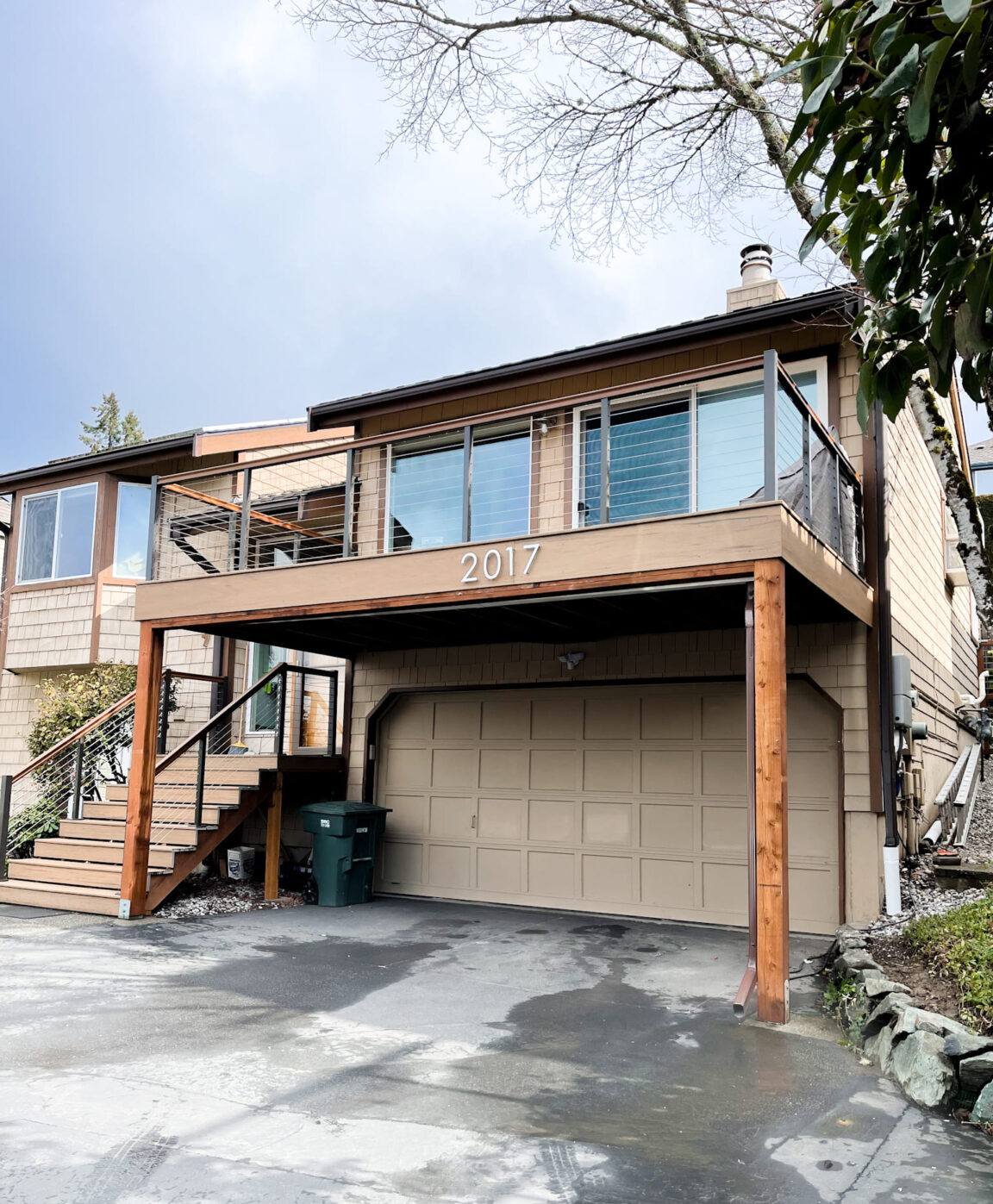
What the Clear Lake Environment Does to a Deck
Shade and Slow Drying
Decks tucked near tree lines or on the shaded side of a home near the lake can stay damp for days after a rain, especially through fall and winter. Wood that doesn't get a chance to dry out between storms is wood that's working overtime to fight rot, mildew, and moss. This isn't a defect in the lumber — it's just physics. Our job is to design and build so the deck sheds water fast and dries as quickly as the site allows.
Moss and Algae Growth
Western Washington's long wet season is moss-friendly everywhere, but low-light, high-moisture spots like many Clear Lake lots are especially prone to it. Moss on a deck isn't just a cosmetic nuisance — it holds moisture against the board surface, and on horizontal wood surfaces that's exactly the kind of prolonged dampness that accelerates decay underneath a surface that still looks fine from a few feet away.
Ground Moisture and Structural Wood
The framing underneath the decking — posts, beams, joists — takes the real long-term risk. Ground near lakes tends to hold moisture longer than well-drained upland soil, which means posts and post bases near grade need real protection, not just a coat of stain. This is where a lot of deck failures actually start: not in the decking boards people see, but in the substructure nobody checks until there's a soft spot underfoot.
What a Correctly Built Clear Lake Deck Includes
- Framing lumber rated and treated for ground contact where it's within the required distance of soil or persistently damp conditions
- Post bases and connectors set above grade and flashed so water sheds away from end grain, not into it
- Joist tape or flashing over framing members to keep fasteners from sitting in standing moisture
- Decking spaced correctly for airflow and drainage rather than tight-fit for looks alone
- Ledger board flashing that actually diverts water away from the house rim joist, since a poorly flashed ledger is one of the most common sources of hidden rot on an attached deck
- Fasteners and hardware rated for treated lumber contact, so you don't get the corrosion streaking that shows up when the wrong screws go into ACQ-treated wood
- A layout that accounts for existing shade and slope on the lot instead of a one-size-fits-all plan
None of this is exotic. It's standard good practice — but it only shows up in the finished deck if it's built in from the start, and it's exactly the kind of detail that gets skipped when a crew is trying to move fast on a job they don't know the neighborhood conditions for.
Decking Material Options for This Climate
There's no single "best" decking material for every home — it depends on budget, how much upkeep you want to do, and how shaded your site is. Here's how the common options actually perform in a damp, low-light setting like Clear Lake.
| Material | Moisture/Moss Behavior | Maintenance | Typical Lifespan |
|---|---|---|---|
| Pressure-treated wood | Holds moisture longer in shade; needs sealing to resist moss and graying | Annual cleaning, periodic sealing | 15–20 years with upkeep |
| Cedar | Naturally rot-resistant but still needs care in shaded, damp spots | Regular cleaning and oiling | 15–25 years with upkeep |
| Composite decking | Won't rot, but can still grow surface moss/algae in low light — needs periodic washing | Occasional washing, no sealing | 25–30+ years |
| PVC/capped composite | Most resistant to moisture absorption; easiest to keep clean in shaded spots | Occasional washing | 25–30+ years |
For heavily shaded Clear Lake lots, we lean toward recommending composite or capped composite decking simply because it removes moisture absorption from the equation — the framing underneath still needs to be built and protected correctly regardless of what decking sits on top. For homeowners who want the look and feel of real wood and are willing to do the maintenance, cedar remains a solid choice as long as expectations about upkeep are honest from the start.
How We Approach a Clear Lake Deck Project
1. Site Walk and Assessment
We look at sun exposure, slope, drainage, and how close the build area sits to grade or standing water after rain. This tells us how aggressive the moisture protection needs to be before we even talk decking material.
2. Design for Drainage First
Layout, joist spacing, and ledger flashing get planned around getting water off and away from the structure as fast as possible — not just around the look of the finished deck.
3. Framing and Substructure
This is where we spend the extra attention that shows up as longevity later: correct post bases, flashing tape on framing, and hardware matched to treated lumber.
4. Decking Installation
Boards go down with proper spacing for airflow and drainage, fastened with hardware rated for the material and treatment type.
5. Walkthrough and Care Guidance
We walk you through what upkeep your specific deck actually needs — cleaning frequency, what to watch for near shaded edges, and what a healthy deck looks like versus early warning signs.
Repair or Rebuild: How We Decide
Not every deck near Clear Lake needs to be torn out. If the framing is sound and the problems are limited to surface wear, moss buildup, or a few compromised boards, targeted repair is often the honest recommendation. But if the substructure has soft spots, the ledger flashing was never installed correctly, or posts show rot at the base, patching the surface just hides a problem that will resurface. We'll tell you plainly which situation you're in rather than defaulting to whichever answer costs more.
Warning Signs Worth a Second Look
- Boards that feel spongy or flex more than neighboring boards
- Persistent moss or dark staining that returns quickly after cleaning
- Rust streaking around fastener heads
- Gaps or separation where the deck attaches to the house
- Visible sagging along a beam or joist line
- Post bases sitting in standing water after rain
Maintaining a Deck in a Shaded, Damp Setting
Even a correctly built deck near Clear Lake needs more attention than one on a dry, sun-exposed lot in town. A simple seasonal rhythm goes a long way: clear leaf litter and debris before it mats down on the boards, rinse or scrub moss buildup before it has a chance to establish, and check the underside and post bases once a year for early signs of moisture trouble. Wood decking will also need periodic sealing to keep performing as designed — skipping that step is the single most common reason a wood deck ages faster than it should in a shaded, wet-climate spot.
Why a Crew That Knows Clear Lake Matters
Skagit County covers a lot of different microclimates, and a deck plan that works fine on a dry, open lot in Burlington proper isn't automatically right for a shaded, low-drainage lot near the lake. A crew that's worked in this specific area knows which details to over-build rather than treat as optional — the ledger flashing, the post base height, the fastener choice — because we've seen what happens when those get skipped on a similarly damp site. That's not marketing; it's just the difference between a deck that's designed for its actual environment and one that was built to a generic spec.
If you're planning a new deck or dealing with an aging one near Clear Lake, we're happy to take a look and give you an honest read on what it needs. Fill out the form below for a free, no-pressure estimate — we'll walk the site, talk through your options, and give you a straightforward plan with no obligation.