 Burlington
 Siding Built for Fir Island's Delta Climate
Fir Island sits low in the Skagit River delta, just west of Burlington, where farmland meets tidal water and the air carries a steady mix of moisture and salt off Skagit Bay. It's a beautiful place to live, but it's a hard place to be a house. The same flat, open geography that makes the tulip fields famous also means homes here take weather head-on, with little in the way of hills or tree cover to slow it down. If you've owned a home on Fir Island for more than a few winters, you already know your siding has a tougher job than siding twenty miles inland.
We're a Burlington-based crew that works this stretch of Skagit County regularly, and Fir Island is part of our normal service area — not a special trip. That matters more than it might sound like, because a lot of exterior problems out here come down to details that only show up when a crew has actually worked on enough homes in this specific microclimate to recognize the pattern.
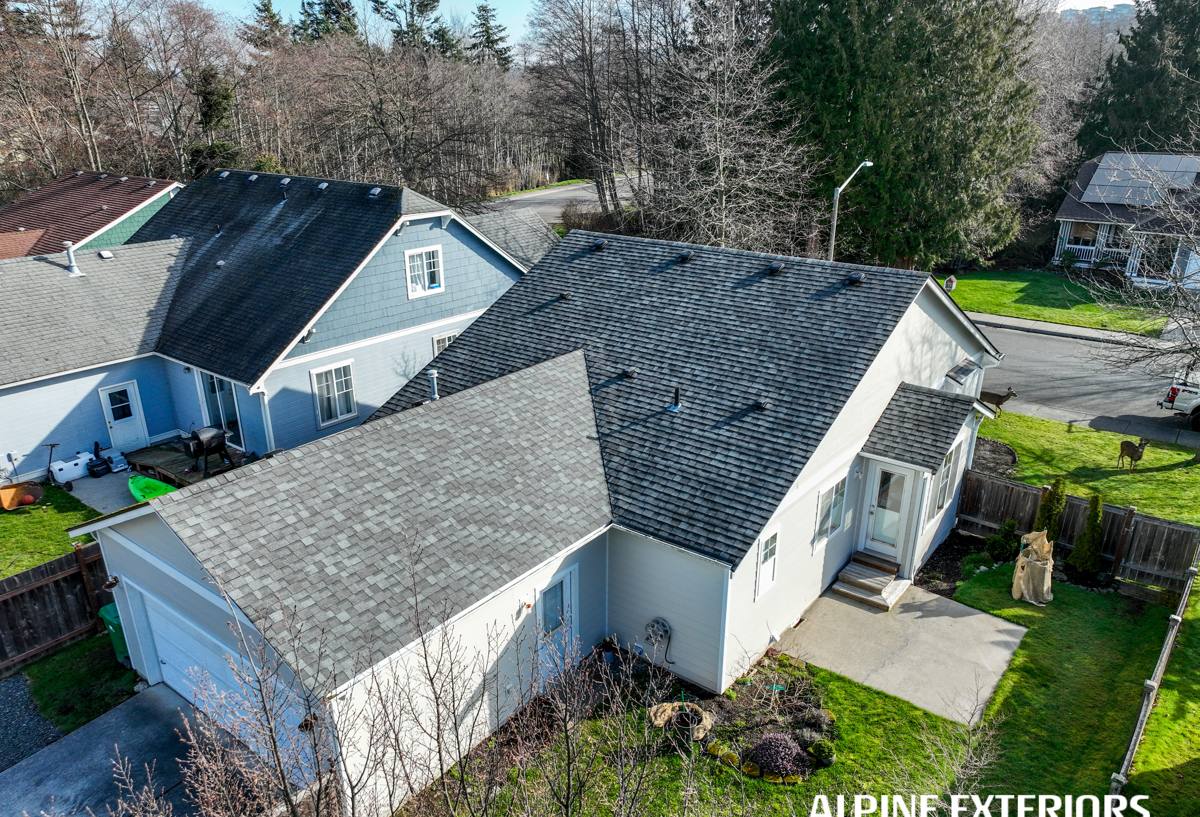
What the Local Climate Does to Siding
Salt Air and Airborne Moisture
Fir Island's proximity to Skagit Bay means a low but constant level of salt-laden air moving across the island, especially with west and southwest winds. Salt air doesn't just affect metal fasteners and flashing — it accelerates the breakdown of paint films and lower-grade siding materials, and it keeps exterior surfaces from ever fully drying out between rain events. Over years, that persistent dampness is what separates siding that holds up from siding that doesn't.
Driving Rain
Storms coming off the water often arrive with real wind behind them, driving rain sideways into wall assemblies rather than just falling straight down. That matters a lot for how siding is installed — lap spacing, caulking choices, and flashing details that would be fine in a calmer climate can let water in in a wind-driven rain event. This is an installation issue as much as a material issue.
Moss and Extended Damp Season
Skagit County's siding season is short and the damp season is long. North-facing walls, areas shaded by outbuildings or trees, and low spots near grade are where we consistently see moss and algae growth on Fir Island homes. Moss holds moisture against a wall surface for extended periods, which is a slow but real threat to any material that isn't dimensionally stable and resistant to moisture absorption.
Why We Only Install James Hardie Fiber Cement
We made a decision, as a company, to install only James Hardie fiber cement siding — not vinyl, not LP SmartSide, not Cemplank or Allura, not primed wood. That's a narrower lineup than most contractors offer, and we think it's the right call for homes in this climate specifically.
Vinyl siding is affordable and low-maintenance in a lot of the country, but it's a poor match for a windy, salt-air environment: it can warp or crack in temperature swings, its seams and J-channels are more vulnerable to wind-driven rain intrusion, and it fades over time under sustained UV and moisture exposure. LP SmartSide and similar engineered wood products use a wood-strand core that, however well it's treated, is still an organic material — if moisture gets past a compromised seam, caulk joint, or damaged edge, that core can swell and deteriorate, and repairs are rarely invisible. Primed wood and cedar require ongoing maintenance — recoating, caulking, moisture monitoring — that most homeowners don't want to keep up with for the life of the house, especially in a climate this damp.
James Hardie fiber cement is cement, sand, and cellulose fiber — it doesn't absorb water the way wood-based products do, it won't warp or crack from moisture cycling, and it's non-combustible, which matters increasingly for insurance considerations in Washington. The factory-applied ColorPlus finish is baked on under controlled conditions, so it holds color and resists the kind of premature fading and peeling that field-applied paint struggles with in a salt-air environment. Hardie's HZ5 product line is engineered specifically for freeze-thaw and moisture-heavy climates like ours.
Product Comparison for a Fir Island Home
| Material | Salt Air / Moisture Resistance | Maintenance | Typical Lifespan Here |
|---|---|---|---|
| Vinyl | Fair — seams and edges vulnerable to driving rain | Low, but limited repair options if damaged | 15-25 years, often less with UV/wind exposure |
| LP SmartSide | Fair — wood-strand core sensitive to sustained moisture | Moderate — seams and cut edges need monitoring | 20-30 years with diligent upkeep |
| Cedar / Primed Wood | Poor without consistent recoating | High — regular painting and caulking | Highly variable, maintenance-dependent |
| James Hardie Fiber Cement | Strong — dimensionally stable, doesn't absorb water like wood | Low — factory finish, periodic caulk checks | 30+ years when installed to spec |
How We Approach Installation on Fir Island
Material choice is half the story. The other half is installation, and this is where a lot of siding failures actually originate — including failures on fiber cement that wasn't installed correctly. On a delta property exposed to wind-driven rain, we pay particular attention to:
- Proper weather-resistive barrier and flashing integration behind the siding, not just at the surface
- Correct lap and fastener spacing per Hardie's published installation specs, which are stricter than generic siding guidance
- Flashing and sealing at every penetration — light fixtures, hose bibs, vents — since these are common entry points for wind-driven moisture
- Adequate clearance between siding and grade, decking, and roof lines to avoid trapping moisture against the bottom edge
- Ventilation behind the cladding where the wall assembly calls for it, so any incidental moisture can dry out rather than sit
James Hardie's warranty coverage depends on installation meeting their published specifications, so cutting corners here isn't just a quality issue — it can void the very warranty that's part of why homeowners choose Hardie in the first place.
Beyond Siding: Roofing, Windows, and Decks
Siding doesn't work in isolation. On Fir Island homes we often find that the same moisture pressure affecting siding is also showing up in roofing and window flashing, and a full exterior review usually turns up more than one thing worth addressing at the same time. We handle roofing, window replacement, and deck work as well, which means we can look at a home's whole exterior envelope rather than just the wall cladding — a leaking window flashing detail or a roof-to-wall transition that's letting moisture in behind the siding won't get fixed by new siding alone.
Decks in this climate face their own version of the same problem: constant damp, moss, and UV exposure that ages materials faster than they would inland. If you're already planning a siding project, it's worth a conversation about whether your deck, roof edges, or window flashing are pulling their weight too.
Why a Local Skagit County Crew Matters
A contractor who mostly works drier, more sheltered areas can install siding correctly by the book and still miss the details that matter specifically here — where to add extra flashing attention, which wall orientations need closer inspection for moss and algae staining, how much clearance to leave near grade given how wet Fir Island's soil can stay through the winter. We're in Burlington, we work this part of Skagit County regularly, and we've seen what actually happens to different siding materials and installation approaches after a few Fir Island winters, not just what the spec sheet promises.
Being local also means being reachable. If a question comes up during the project, or you want someone to look at a detail a year or two after installation, you're not calling a call center or waiting on a crew that's three counties away.
What to Expect From a Siding Project
Typical Process
- An on-site assessment of your current siding, wall assembly, and any moisture or moss issues we can identify
- A written estimate covering material, labor, and any flashing or sheathing repairs the assessment turns up
- Removal of old siding and inspection of the underlying sheathing and weather barrier before anything new goes up
- Installation of James Hardie fiber cement to manufacturer specifications, including flashing and fastening detail
- A final walkthrough so you understand what was done and what maintenance, if any, is expected going forward
Questions Worth Asking Any Siding Contractor
- What siding materials do you install, and why did you choose that lineup?
- Are your installers factory-trained on the specific product going on my home?
- What does the manufacturer's warranty actually require to stay valid?
- Will you inspect the sheathing and weather barrier before installing new siding, not just cover what's there?
- How do you handle flashing at windows, doors, and other penetrations?
Cost Factors for a Fir Island Project
Every home is different, but the main variables that drive siding project cost are consistent: total square footage, the number of corners, windows, and other penetrations that need flashing and trim work, whether existing siding needs to be removed versus sided over, and whether the assessment turns up sheathing or moisture damage that needs to be addressed before new siding goes on. We'll walk through all of this during a free estimate so there are no surprises once work starts.
If your siding is showing moss staining, chalky or peeling paint, or you've just noticed it's due for a look after a few too many wet Skagit winters, we'd be glad to come take a look. Reach out for a free, no-pressure estimate — we'll tell you honestly what we see and what we'd recommend.