 Burlington
 Siding in Avon: What Skagit Valley Weather Does to a House
Avon sits low in the Skagit Valley, close to the river and not far from the marine air that rolls in off Padilla Bay and the Salish Sea. That combination — flat, moisture-holding ground and a steady flow of damp coastal air — makes the exterior of a home work harder here than it does in drier parts of the state. If you've owned a house in this area for more than a few winters, you've probably already noticed it: siding that stays damp longer after a storm, north-facing walls that never quite dry out, and a green tinge on trim and fascia boards that seems to come back no matter how many times you pressure wash it.
None of that is unusual for Skagit County. It's just the reality of building in a river valley that sits between saltwater and the Cascade foothills. The materials that go on a house here need to be chosen with that reality in mind, not just picked because they're common elsewhere in the country.
Moisture That Doesn't Leave in a Hurry
Low elevation and proximity to the river mean humidity lingers in Avon longer than it does on higher, better-drained ground. Wood-based siding products absorb that ambient moisture even without direct rain contact, which is part of why swelling, cupping, and paint failure show up faster here than the manufacturer's literature usually suggests.
Wind-Driven Rain and Salt-Tinged Air
Storms moving through the valley often bring rain sideways, not straight down. That drives water into laps, seams, and fastener points that a calmer rain would never reach. Add in trace salt content carried on the marine air, and you've got a slow, steady source of corrosion risk for exposed fasteners and lower-grade trim.
A Long Moss and Mildew Season
Between fall and late spring, siding in this area rarely gets a long enough dry stretch to fully shed moisture. That extended wet window is exactly what moss, algae, and mildew need to take hold on porous or textured surfaces — and once established, they're a maintenance problem for the life of the siding, not a one-time cleaning job.
Why Some Avon Homes Age Faster Than Others
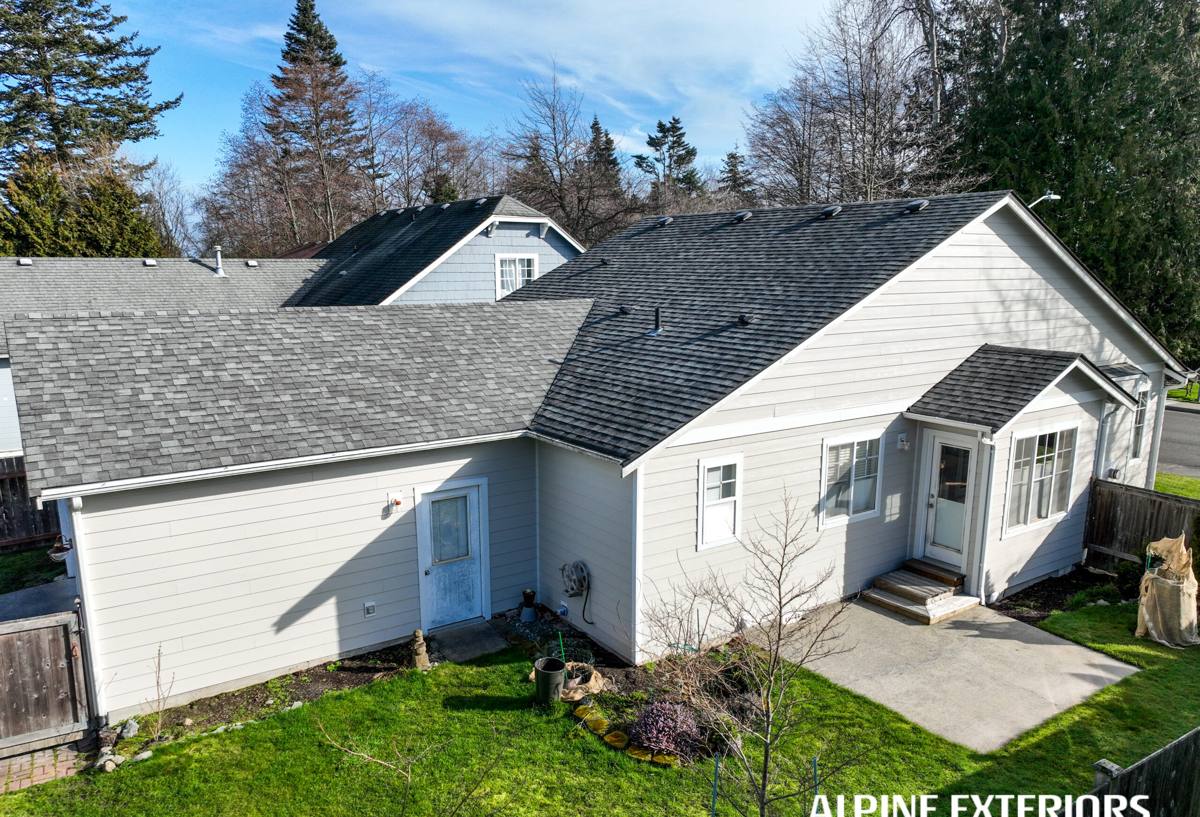
Walk a few streets in and around Burlington and you'll see the pattern: some houses from the same era still look tight and clean, while others a block away show soft trim, peeling paint, or streaked siding. The difference is rarely bad luck. It's almost always the combination of what material was installed and how carefully it was installed — flashing detail, caulk joints, ground clearance, and whether the siding itself was engineered to handle sustained moisture rather than just resist an occasional rain.
That's the lens we use on every Avon project. It's not enough to pick a siding product that looks good on day one. It has to hold up through a Skagit Valley winter, and then another, and another.
What We Install: James Hardie Fiber Cement
We install James Hardie fiber cement siding exclusively. That's not a marketing preference — it's a standard we hold because of what we've seen fail and what we've seen last in this specific climate.
A Non-Combustible Core
Hardie siding is made primarily from cement, sand, and cellulose fiber. It doesn't provide fuel to a fire the way wood-based products do, which matters for insurance conversations and for simple peace of mind.
Factory-Applied ColorPlus Finish
Rather than relying on field-applied paint that has to cure correctly in variable weather, Hardie's ColorPlus finish is baked on under controlled factory conditions. It resists fading and holds its bond to the substrate better than most site-applied coatings, which matters a great deal in an area where painters don't always get long dry windows to work with.
HZ5 Engineering for Our Region
Hardie manufactures its products in different formulations for different climate zones. The HZ5 line is engineered for regions with more freeze-thaw cycling and moisture exposure — a closer match to Skagit County conditions than a generic, one-size-fits-all product.
Why We Don't Install Vinyl, LP SmartSide, or Wood Siding Here
We get asked about these products regularly, and we're straightforward about why we've standardized on Hardie instead.
Vinyl siding is inexpensive and low-maintenance in the sense that it doesn't need repainting, but it's a petroleum-based product that expands, contracts, and can warp or crack in temperature swings — and it offers essentially no fire resistance. In a valley with driving rain, its seams and J-channels are also more prone to water intrusion behind the panel than a properly installed fiber cement system.
LP SmartSide and other engineered wood products have improved a lot over the years and hold paint reasonably well when installed and maintained correctly. But they're still wood-based at the core, which means sustained moisture exposure — exactly what Avon's climate delivers for months at a stretch — is their biggest long-term risk. Cut edges and fastener penetrations need diligent sealing, and that's a maintenance burden we don't want to hand a homeowner in this environment.
Primed spruce and cedar are traditional and can look beautiful, but they demand the most upkeep of any option: regular repainting or staining, careful caulking, and vigilance against rot in exactly the low, damp conditions that describe Avon. We're not saying these products are worthless — we're saying we've chosen not to put our name behind an install that we know will need more attention than a homeowner is usually told to expect.
| Material | Moisture Tolerance | Maintenance Burden | Fire Resistance |
|---|---|---|---|
| James Hardie fiber cement | High — engineered for wet climates | Low — factory finish, no repainting cycle | Non-combustible core |
| Vinyl | Moderate — seam intrusion risk | Low, but limited repair options | Poor — melts/ignites |
| LP SmartSide / engineered wood | Moderate — vulnerable at cut edges | Moderate — sealing and paint upkeep | Combustible |
| Primed spruce / cedar | Low in sustained damp conditions | High — regular repainting/staining | Combustible |
Roofing, Windows, and Decks: The Rest of the Building Envelope
Siding doesn't work in isolation. A house is a system, and water finds the weakest link. Alongside siding, we handle roofing, windows, and decks — the other components that determine whether moisture stays outside the house or finds its way in.
- Roofing: a roof in poor condition sends water down behind siding and trim long before it shows up as a visible leak inside.
- Windows: flashing and sealing around window openings is one of the most common failure points we find during siding tear-off — old or poorly flashed windows undermine even a well-installed siding job.
- Decks: ledger board attachment and deck-to-house flashing are frequent sources of hidden rot, especially on homes that see this much seasonal rain.
When we're on an Avon property for a siding project, we look at the whole envelope, not just the walls.
What a Siding Project Looks Like for an Avon Home
Every house is different, but the general process for a full siding replacement follows a consistent sequence:
- On-site inspection of existing siding, trim, and any visible moisture or rot damage
- Removal of old siding and inspection of the sheathing underneath
- Repair of any damaged sheathing or framing found during tear-off
- Installation of a weather-resistive barrier and correct flashing at every penetration
- Installation of James Hardie panels or lap siding per manufacturer specification
- Trim, caulking, and factory-matched touch-up where needed
- Final walkthrough with the homeowner
The step people underestimate most is what's underneath the old siding. In an area like Avon, where moisture has had years to work on sheathing and framing, that inspection step often matters more than the siding brand itself.
Questions Worth Asking Before You Sign a Contract
- Will you inspect and repair sheathing before new siding goes on, or just cover what's there?
- What flashing details do you use at windows, doors, and deck ledgers?
- Is the crew doing the install your own employees, or subcontracted labor?
- What does the manufacturer's warranty actually cover, and what voids it?
- Can you walk me through why you'd recommend one Hardie product line over another for my house?
Why a Local Crew Matters
A lot of siding problems in this region trace back to installation, not the product itself. Crews that don't work in Skagit County regularly sometimes apply the same flashing and clearance details they'd use in a drier climate — details that aren't wrong everywhere, just not enough here. A crew that works Burlington, Avon, and the surrounding valley on a regular basis knows how much ground clearance to leave, how aggressively to flash a deck ledger, and which walls take the worst of the wind-driven rain each winter.
That local familiarity doesn't show up on a spec sheet, but it shows up in how the house performs five and ten years down the line.
Get a Straight Answer for Your Home
If you're weighing a siding, roofing, window, or deck project for a home in Avon, we're happy to take a look and give you an honest read on where things stand — no pressure, no inflated quote to "leave room to negotiate." Fill out the form below for a free estimate, and we'll walk the property with you.