 Burlington
 Siding Built for Oak Harbor's Marine Climate
Homes in and around Oak Harbor sit close enough to the water that the weather isn't quite like the rest of the Skagit County mainland. Salt-laden air, wind-driven rain off the Sound, and a moss season that can run half the year all put extra demand on exterior materials. Siding that performs fine forty miles inland can fail early here — not because it's poorly made, but because it was never engineered for this specific combination of moisture and salt exposure.
We install exterior siding, roofing, windows, and decks for homeowners throughout the region, and we've built our siding practice around one product: James Hardie fiber cement. That's not a marketing angle — it's a decision we made after watching how different materials actually hold up on coastal and near-coastal homes over years, not just in a showroom.
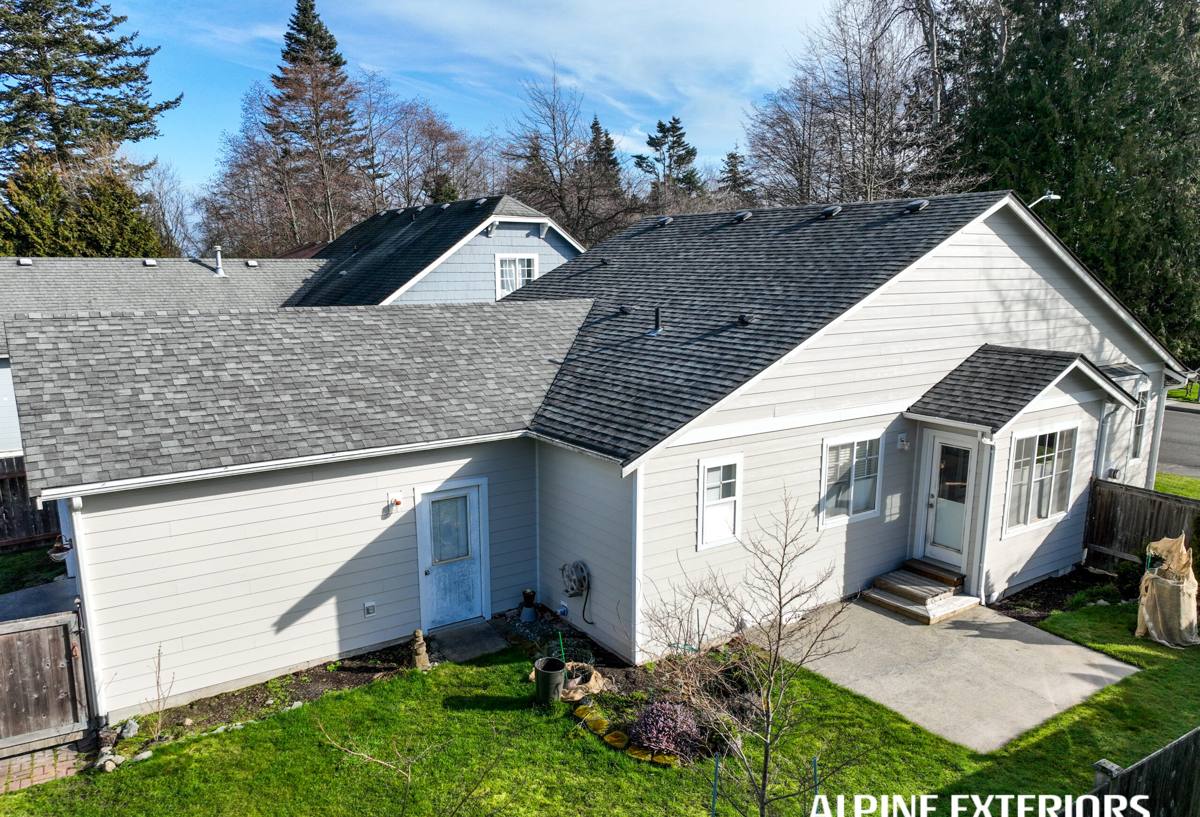
What Oak Harbor's Climate Actually Does to Siding
Salt Air and Corrosion
Airborne salt doesn't just affect metal fasteners and flashing — it accelerates the breakdown of paint films and can work into seams and fastener heads on lower-quality siding materials. Over time, salt exposure shows up as chalking, fading, and premature caulk failure at joints, well before a home's siding would normally be due for attention.
Driving Rain and Wind-Driven Moisture
Storms coming off the water don't just fall straight down — wind pushes rain sideways into wall assemblies, especially on west- and south-facing elevations. Siding materials that rely on tight seams and consistent caulking to stay watertight are more exposed here than they would be in a sheltered inland lot. Any weak point in the water-resistive barrier or flashing detail gets tested far more often in a place like this.
The Long Moss Season
Cool, damp air and limited direct sun on north-facing walls create ideal conditions for moss and algae growth for a large part of the year. Materials that absorb moisture or have porous surfaces give moss more to hold onto. Left unaddressed, moss retains water against the siding surface, which shortens the life of paint, sealants, and in some cases the substrate underneath.
Why We Install Only James Hardie Fiber Cement
We don't install LP SmartSide, vinyl, Cemplank, Allura, or primed wood siding — not because those products have no place in the market, but because we've standardized our crews, our warranty process, and our reputation around one system we trust in this climate. A few of the reasons:
- Non-combustible core: Hardie's fiber cement doesn't feed a fire the way wood-based or vinyl products can, which matters for insurance and peace of mind alike.
- Factory-baked ColorPlus finish: The color and topcoat are cured onto the board in a controlled factory process, which holds up better against UV and salt exposure than field-applied paint.
- Climate-engineered HZ5 formulation: Hardie makes region-specific product lines, and the HZ5 formulation used in our marine and high-moisture zones is built to resist moisture-related damage better than the standard HZ10 line sold in drier parts of the country.
- Dimensional stability: Fiber cement doesn't expand and contract with humidity the way wood or vinyl can, which keeps seams, caulk lines, and paint film intact longer.
- Transferable warranty: A strong, transferable warranty backing the product matters to future buyers, which matters to resale value.
Vinyl is inexpensive and low-maintenance in mild climates, but it can warp under sustained heat and become brittle in cold snaps, and it doesn't offer the fire resistance or paint durability of fiber cement. LP SmartSide and other engineered wood products perform well when installation and maintenance are perfect, but they're wood-based at the core, which means any breach in the factory coating creates a path for moisture to do real damage — a bigger risk in a climate that stays damp this much of the year. Primed cedar and spruce require the most diligent, recurring maintenance of any siding option and are the least forgiving of gaps in upkeep. We'd rather install one product exceptionally well than juggle five and hope each one gets maintained on schedule.
Our Siding Installation Process
Fiber cement performs the way it's rated to perform only when it's installed correctly — this is not a forgiving-of-shortcuts material. Our process on every project includes:
- An on-site assessment of the existing wall assembly, moisture barrier, and any signs of hidden rot or damage before we quote the job.
- Removal of old siding and inspection of sheathing, with repairs made before anything new goes up.
- Installation of a proper water-resistive barrier and correctly lapped flashing at every window, door, and penetration.
- Hardie panel, plank, or shingle installation following manufacturer fastening and clearance specs — including ground clearance and butt-joint treatment, which matter more in a wet climate than people realize.
- Factory-finished ColorPlus boards installed with color-matched fasteners and touch-up, minimizing field painting and the weak points that come with it.
- Final walk-through so you understand what was done and what maintenance, if any, is actually required going forward.
Beyond Siding: Roofing, Windows, and Decks
The same climate stresses that wear down siding — driving rain, salt air, sustained damp — hit the rest of a home's exterior too. We handle roofing, window replacement, and decks alongside siding because they're all part of the same water-management system on a house. A roof with failing flashing will feed moisture straight down into a wall assembly regardless of how good the siding is; windows with degraded seals let wind-driven rain in around the frame; a deck built without attention to ledger flashing and proper drainage will rot at the house connection first. When we're on-site for a siding project, we're looking at the whole envelope, not just one component in isolation.
Cost Factors for Oak Harbor Siding Projects
Every home is different, and we'll always give you an exact number after a walkthrough — but these are the variables that most often move the price on a siding project in this area:
| Factor | Why It Matters Locally |
|---|---|
| Extent of hidden moisture damage | Long-term dampness and past moss cover can hide rot that isn't visible until old siding comes off |
| Home elevation and exposure | Walls facing prevailing wind and rain need more careful flashing and detailing, which adds labor |
| Siding profile chosen | Lap siding, panel systems, and shingle-style Hardie products carry different material and labor costs |
| Trim and accent work | Corner boards, fascia, and accent trim add both material cost and installation time |
| Access and site conditions | Sloped lots, limited access, or multi-story walls affect staging and labor time |
| Tear-off vs. overlay | Full removal of old siding costs more upfront but lets us properly inspect and repair the wall assembly |
Signs Your Oak Harbor Home Needs New Siding
Because moisture and moss issues can develop behind the surface before they're obvious from the curb, it helps to know what to watch for:
- Persistent moss or dark streaking that returns shortly after cleaning
- Soft spots or visible warping when you press on the siding surface
- Peeling or bubbling paint, especially on north-facing or shaded walls
- Cracked or separated caulk lines at seams, corners, and trim
- Visible gaps or buckling boards after a windy storm season
- A musty smell or damp feeling on interior walls that back up to exterior siding
- Siding that's original to a home built more than 20-25 years ago, particularly if it's wood-based or vinyl
Any one of these on its own might be minor. Several together, especially on a home that's taken a few decades of coastal weather, usually means it's worth having someone look at the wall assembly, not just the surface.
Why a Local Skagit County Crew Matters
We're based in Burlington and work throughout Skagit County, including Oak Harbor. That matters for a few practical reasons: we know which elevations and wall orientations tend to take the worst of the weather here, we're not learning the local permitting and inspection process on your job, and we're not disappearing after the install — if a warranty question comes up in five years, we're still local and still reachable. A crew that only shows up for one job doesn't have the same incentive to get every flashing detail right, because they're not the ones you'll call if something goes wrong.
Get a Free, No-Pressure Estimate
If your Oak Harbor home's siding is showing wear, or you're just trying to figure out what shape it's in before it becomes a bigger problem, we're happy to take a look. There's no cost and no pressure — just a straight assessment of what we see and what your real options are. Use the form below to get started.