 Burlington
 Alger sits in that stretch of Skagit County where the Puget Sound lowlands meet the foothills — close enough to salt water to pick up marine moisture, wooded enough to stay shaded and damp for long stretches of the year, and exposed enough to the region's driving rain and wind events that exterior materials get tested constantly. If you own a home out here, you already know the drill: siding that looks fine in July can be growing moss by November, and trim that seemed solid in the fall can be soft by spring. This page is about what that climate actually does to a house, and how we approach siding, roofing, windows, and decks for homes in this part of the county.
What Alger's Climate Actually Does to a House
Skagit County doesn't get the most rainfall in Western Washington, but it gets a lot of the wrong kind: long, low-intensity soaking rain punctuated by wind-driven storms that push water sideways into wall assemblies. Add in proximity to salt air moving inland from the Sound and Bellingham Bay, and you've got a combination that's hard on anything that isn't built to handle sustained moisture exposure. The practical effects show up in predictable places:
- Moss and algae staining on north-facing walls and anywhere tree cover blocks direct sun and airflow
- Paint failure on wood and composite sidings that can't keep up with the area's freeze-thaw and wet-dry cycling
- Swelling and soft spots at butt joints, corners, and anywhere siding wicks up moisture from poor flashing or clogged gutters
- Corrosion on fasteners and trim hardware that isn't rated for coastal-adjacent conditions
- Roof moss buildup that traps moisture against shingles and shortens roof life if it isn't managed
None of this is unique to Alger — it's a Skagit County story, and honestly a Pacific Northwest story. But homes tucked closer to tree lines and drainages, which describes a lot of the Alger area, tend to see the moss and moisture issues a bit sooner than homes in more open, sun-exposed spots.
Why We Standardized on James Hardie Fiber Cement
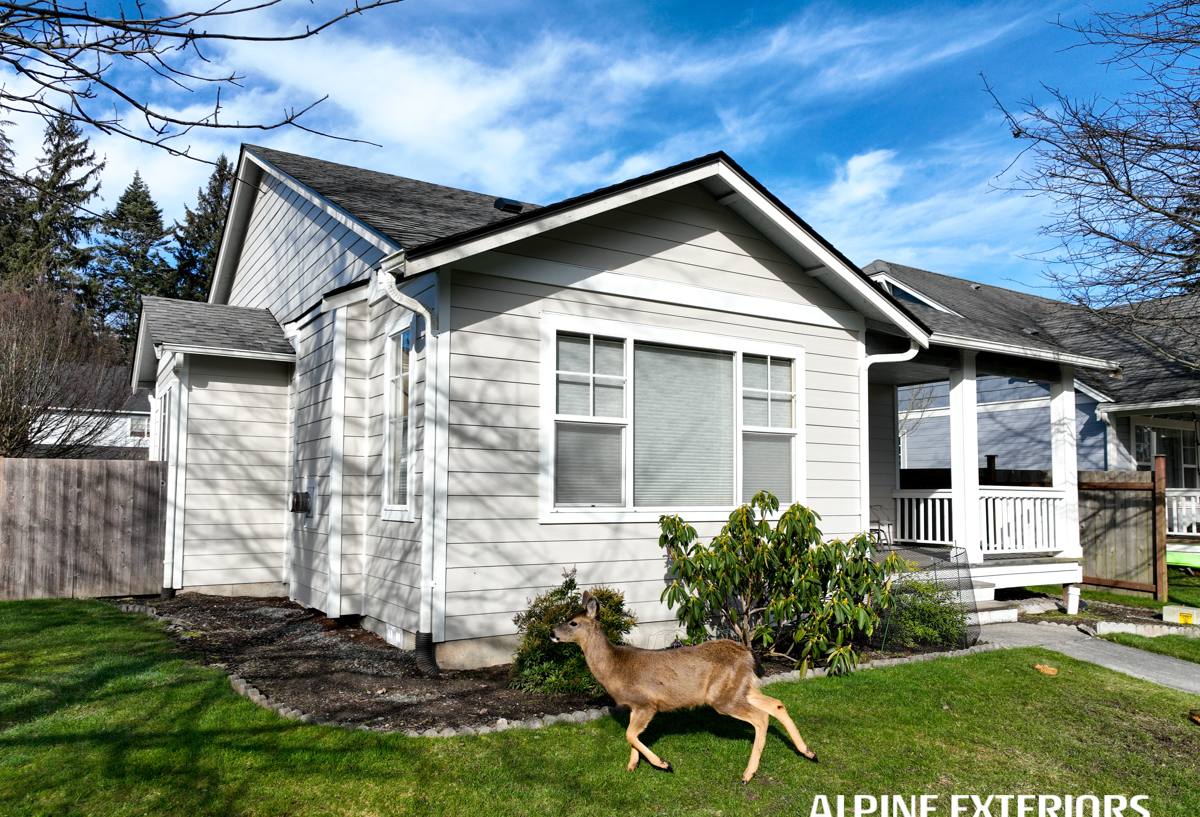
We install James Hardie fiber cement siding exclusively. We don't install vinyl, LP SmartSide, cedar, primed spruce, or other fiber cement brands like Cemplank or Allura. That's a deliberate standard, not a sales pitch, and it comes directly from what we've seen hold up — and not hold up — in this climate.
The Case Against the Alternatives, Briefly
Wood and engineered wood products can look great going in, but they depend on an intact factory coating and consistent maintenance to keep moisture out over the long haul. In a climate where wet weather runs a good chunk of the year and moss thrives in shaded, damp conditions, that maintenance window shrinks fast. Vinyl sidesteps some of the rot concerns but has its own trade-offs — it can warp or become brittle over time, and it isn't fire-resistant.
What Hardie Gets Right for This Climate
James Hardie fiber cement is engineered specifically to resist the freeze-thaw and moisture cycling common to the Pacific Northwest. It's non-combustible, doesn't provide a food source for moss and mildew the way wood fiber can, and holds its factory-applied ColorPlus finish far longer than field-painted alternatives — which matters when repainting a home means scheduling around a very short dry season. Hardie's HZ5 product line in particular is engineered for climates like ours, with moisture and impact performance built into the product rather than added on after the fact. It also carries a strong transferable warranty, which is worth something if you ever sell the house.
Siding Installation Done Right for This Area
Fiber cement siding is only as good as its installation. A lot of the moisture problems we get called out to diagnose on other brands' work trace back to installation shortcuts — not the material itself. For Alger homes specifically, we pay close attention to:
- Proper rainscreen gapping so water that gets behind the siding has somewhere to drain and dry
- Correct flashing at windows, doors, and roof-to-wall intersections, where wind-driven rain finds its way in first
- Fastener spacing and type matched to Hardie's specifications, using corrosion-resistant fasteners appropriate for a marine-influenced climate
- Caulking and sealant only where Hardie's install guide calls for it — over-caulking can trap moisture just as easily as gaps let it in
Done to spec, a Hardie installation in this climate should need very little attention for years — no annual repainting, no chasing moss out of soft wood seams.
Roofing: The First Line of Defense
Siding takes the brunt of sideways rain, but the roof handles almost everything else, and in a moss-prone area like Alger, roof condition and siding condition are connected. A roof that's shedding moss debris and holding moisture against its surface is also feeding excess water into gutters and downspouts, which affects how much moisture washes down the wall assembly below. We inspect roof condition — flashing, moss buildup, ventilation — as part of any full exterior evaluation, because ignoring it undercuts the siding work.
Windows That Match the Wall Assembly
Window replacement done alongside siding work is one of the more overlooked opportunities to fix moisture problems at the source. Old window flashing is a common entry point for the kind of wind-driven rain this area sees regularly. When we replace siding around existing windows, we integrate new flashing details properly rather than just cutting siding tight to old, potentially compromised window openings. If windows are original to an older home, it's worth evaluating them at the same time — both for energy performance and for how well they're sealing against the weather.
Decks: Built for Wet, Shaded Conditions
Outdoor living spaces in Alger deal with the same moss and moisture pressure as the siding above them, often worse, since decks sit horizontal and collect standing water and organic debris directly. Composite decking has become the practical choice for a lot of homeowners here because it doesn't require the sanding, staining, and sealing cycle that wood decking demands to stay ahead of rot and moss staining. Whether you're building new or replacing an aging wood deck, proper drainage underneath, ledger flashing at the house connection, and material choice all matter more in a climate like this than they would somewhere drier.
Comparing Common Siding Options for This Climate
| Material | Moisture Resistance | Moss/Algae Resistance | Maintenance | Fire Rating |
|---|---|---|---|---|
| James Hardie Fiber Cement | Engineered for wet climates | High — non-organic surface | Low — factory finish lasts years | Non-combustible |
| Vinyl | Moderate — can trap moisture behind panels | Moderate — can host mildew in seams | Low, but can warp/fade | Combustible |
| Cedar / Wood | Low without diligent upkeep | Low — organic material feeds moss/mildew | High — regular staining/sealing | Combustible |
| LP SmartSide / Engineered Wood | Depends heavily on coating integrity | Moderate | Moderate to high | Combustible |
Why a Local Crew Matters Here
Skagit County weather isn't monolithic — a home tucked against tree cover near Alger sees different exposure than one on a more open lot closer to town. A crew that works this area regularly knows where moss builds up first, which wall orientations take the worst of the wind-driven rain, and how local roofing and gutter conditions typically feed siding problems. That local knowledge shapes decisions during installation — where extra flashing attention matters most, how much rainscreen gap makes sense for a shaded lot versus an open one — in ways that a one-size-fits-all approach doesn't.
A Practical Checklist for Alger Homeowners
- Walk your home's north and shaded sides each fall and look for moss starting on siding or trim
- Check gutters and downspouts before the wet season ramps up — clogged gutters push water directly onto walls below
- Look for soft spots, bubbling paint, or gaps at siding seams and corners, especially near ground level
- Inspect roof surfaces for moss buildup, which holds moisture against shingles longer than bare roofing
- If you're due for a repaint on wood or composite siding, get a couple of quotes and compare that ongoing cost against a one-time fiber cement installation
What an Exterior Evaluation Looks Like
When we come out to an Alger property, we're looking at the whole envelope, not just the siding surface. That means checking how water is currently moving off the roof, where it's landing relative to the walls, whether existing flashing at windows and doors is doing its job, and where moss or algae growth signals a spot that stays wet longer than it should. From there we can tell you honestly whether you're looking at a full siding replacement, a more targeted repair, or roofing and gutter work that would solve the underlying moisture issue before it becomes a siding problem.
If you're noticing moss, soft siding, or aging trim on a home in the Alger area, we're happy to take a look and walk you through what we find — no pressure, no obligation. Reach out for a free estimate using the form below.