 Burlington
 Roofing Built for Clear Lake's Climate
Clear Lake sits in the wooded, semi-rural stretch of Skagit County between Burlington and Sedro-Woolley, and it takes a different kind of beating than a roof in a dry climate ever would. The tree cover that makes the area attractive also means shaded roof planes that stay damp for days after a storm. Add the driving rain that rolls in off the Sound and Samish Bay, the salt-laden marine air that works its way inland on a west wind, and a moss season that can run eight or nine months out of the year, and you have a roofing environment that punishes shortcuts. A roof replacement done right here isn't just about swapping old shingles for new ones — it's about building a roof system that can shed water fast, breathe properly under a tree canopy, and resist the moss and algae growth that Skagit County homeowners deal with more than almost anywhere else in the state.
We work on homes throughout the Clear Lake area regularly, and the patterns repeat: north-facing slopes that never fully dry out, valleys and roof-to-wall junctions that collect needles and debris, and roofs that were installed without enough attic ventilation for how wet this region actually stays. A correct replacement addresses all of that, not just the shingles on top.
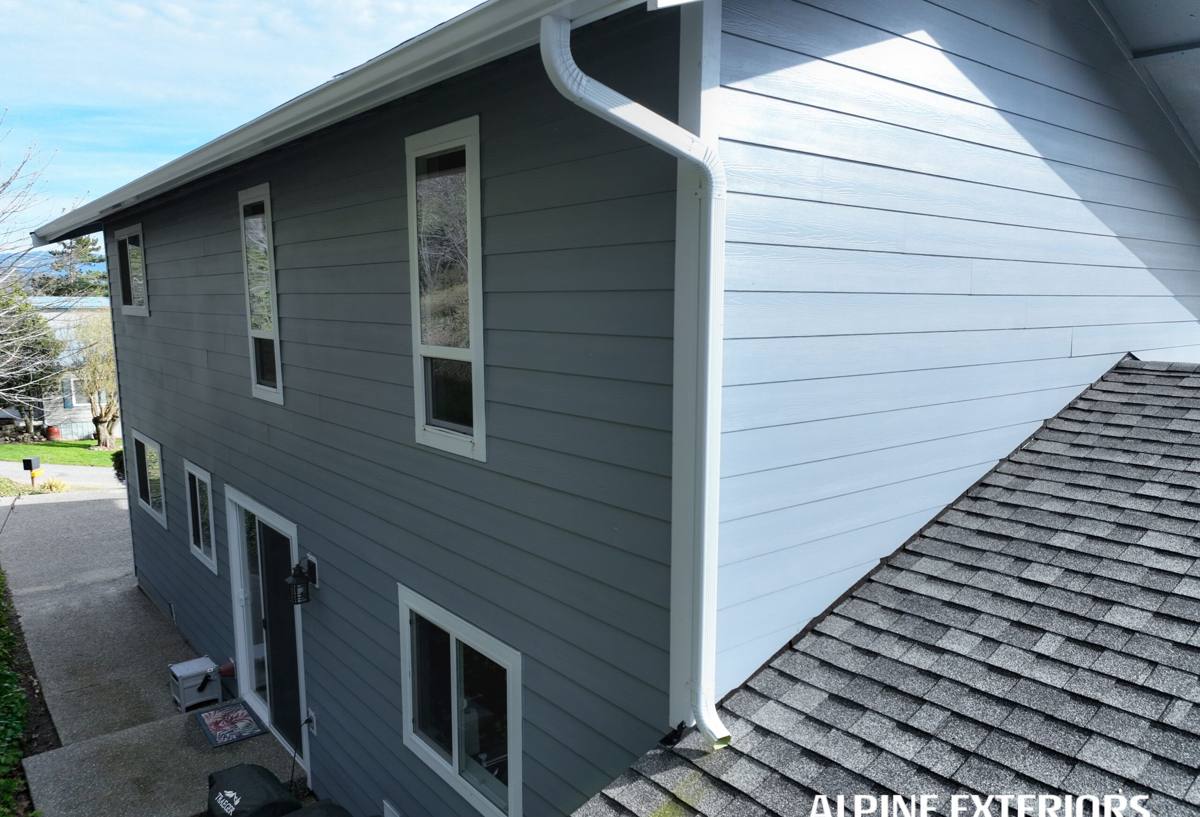
Signs a Clear Lake Roof Needs Full Replacement, Not Another Repair
Every roof eventually crosses a line where patching stops making financial sense. In this climate, that line often arrives earlier than manufacturers' rated lifespans suggest, because moisture cycling and moss root intrusion accelerate wear. Watch for:
- Granule loss heavy enough that you can see bare, shiny asphalt on multiple shingles
- Shingles that are cupping, curling at the edges, or cracking when touched
- Moss or algae mats thick enough to hold water against the roof surface, not just surface staining
- Soft spots in the decking you can feel underfoot, or sagging along roof lines
- Water stains on interior ceilings, especially near valleys, chimneys, or skylights
- A roof approaching or past 20-25 years old (asphalt) with no major recent work
- Repeated leak repairs in different spots each year — a sign the whole system is failing, not just one section
If you're only seeing one or two of these, a repair may still be the honest answer, and we'll tell you that. Replacement makes sense when the underlying deck, underlayment, or shingle field is failing broadly rather than in one isolated area.
What a Correct Roof Replacement Actually Involves
Tear-Off and Deck Inspection
We don't install new roofing over old. A full tear-off exposes the deck, which is the only way to catch rot, delamination, or soft spots caused by long-term moisture intrusion — common on Clear Lake roofs that have sat under tree cover for decades. Any damaged sheathing gets replaced before anything new goes down; roofing over compromised decking just hides a problem that will resurface as a leak or a soft spot within a few years.
Underlayment and Ice-and-Water Protection
Synthetic underlayment goes down across the full deck as the roof's real waterproof layer, since shingles alone are a shedding surface, not a seal. In vulnerable areas — eaves, valleys, and around any roof penetration — we add a self-adhering ice-and-water membrane. In this part of Skagit County that's less about ice dams and more about the sheer volume and duration of driving rain; those membranes stop wind-driven water that gets pushed backward under the shingle course.
Flashing
Flashing around chimneys, skylights, vents, and roof-to-wall transitions fails more often than the field of the roof itself. We replace flashing rather than reuse it wherever it's been exposed to the elements, since old flashing that looks intact can still have hairline gaps that leak slowly for years before showing up inside the house.
Ventilation
Balanced intake and exhaust ventilation keeps the attic temperature and moisture level close to outdoor conditions. Without it, moisture from daily living gets trapped in the attic, condenses on the underside of the deck, and rots it from the inside — a slower but just as damaging process as an exterior leak, and one we see more often than homeowners expect in shaded, high-humidity settings like Clear Lake.
Choosing the Right Roofing Material for This Climate
There's no single "best" roofing material — the right choice depends on your home's exposure, your budget, and how much long-term maintenance you're willing to take on. Here's how the common options compare for a shaded, moisture-heavy property in the Clear Lake area:
| Material | Moss/Moisture Resistance | Maintenance | Typical Lifespan |
|---|---|---|---|
| Architectural asphalt shingle | Good with proper ventilation; algae-resistant granules help | Low to moderate; occasional moss treatment | 25-30 years |
| Standing seam metal | Excellent; smooth surface sheds water and discourages moss | Very low | 40-50+ years |
| Composite/synthetic shake | Very good; engineered to resist moisture absorption | Low | 30-50 years |
| Cedar shake | Requires diligent upkeep in wet, shaded settings | High; regular treatment and inspection needed | 20-30 years with upkeep |
We install cedar shake when a homeowner wants that look and understands the maintenance commitment, but we're upfront that in a heavily shaded, high-moisture setting like much of Clear Lake, wood roofing needs more consistent attention than asphalt or metal to avoid moss taking hold in the grain. That's a maintenance-burden trade-off, not a knock on the material — it's simply more sensitive to the conditions this area produces.
Our Roof Replacement Process
- On-site inspection and estimate. We walk the roof, check the attic for ventilation and moisture signs, and give you a written scope and price — no pressure, no inflated "today only" pricing tactics.
- Material selection. We go over the options above based on your home's exposure, budget, and how the roof is shaded or exposed to wind-driven rain.
- Scheduling around weather. Skagit County's rain patterns mean we plan tear-off days carefully and protect the open deck if conditions shift mid-project.
- Tear-off, deck repair, and system installation. Underlayment, ice-and-water membrane, flashing, ventilation components, and the finish material go in, in that order, with inspection at each stage.
- Cleanup and walkthrough. Magnetic sweep for nails, full debris removal, and a final walkthrough so you understand what was done and what maintenance to expect going forward.
Moss Prevention Doesn't End at Installation
A new roof in the Clear Lake area still needs periodic attention if it sits under trees. Zinc or copper strips near the ridge release trace metal ions with every rain, which suppresses moss growth over time without harsh treatments. Keeping gutters and valleys clear of needles and leaves prevents the standing organic debris that gives moss and algae something to root into in the first place. We're happy to walk homeowners through a simple annual maintenance routine at the time of installation — it's a fraction of the cost of dealing with moss damage down the line.
What Drives the Cost of a Roof Replacement
We don't publish blanket prices because roof cost depends on real, project-specific factors — but here's what actually moves the number:
| Factor | Why It Matters |
|---|---|
| Roof size and pitch | Steeper roofs take longer and require more safety setup |
| Number of layers to remove | Tear-off labor increases with each existing layer |
| Deck condition | Rot or soft spots found during tear-off add material and labor |
| Material choice | Asphalt, metal, and composite carry different material costs |
| Roof complexity | Valleys, dormers, chimneys, and skylights add flashing work |
| Access | Tree cover and tight lot access can affect equipment staging |
We give you a firm written scope after inspection, not a rough phone estimate, so there are no surprise change orders once the tear-off starts.
Why a Crew That Already Works Clear Lake Matters
A roofer who works this specific area regularly already knows which roof orientations in Clear Lake tend to hold moisture, how heavy the local tree debris load gets by fall, and what ventilation setups actually perform under this level of shade and rainfall — rather than applying a generic install and hoping it holds up. That familiarity shows up in fewer callbacks and a roof that's built for the conditions it will actually face, not just the conditions on a spec sheet. It also means a crew that understands Skagit County permitting and can plan around the wetter stretches of the local weather pattern instead of getting caught mid-tear-off by a system rolling in off the water.
Questions to Ask Before You Hire
- Are you licensed and insured in Washington State, and can you provide proof?
- Will you provide a written scope of work, not just a total price?
- Do you tear off down to the deck, or install over existing layers?
- What underlayment and ice-and-water protection do you use, and where?
- How do you handle attic ventilation as part of the replacement?
- What's your warranty on labor, separate from the manufacturer's material warranty?
- Can you provide local references from work in the Burlington/Skagit County area?
If a roof over your Clear Lake home is showing its age, we're glad to take a look and give you a straight assessment — repair or replace, no pressure either way. Reach out for a free estimate using the form below.