 Burlington
 Siding for Edison's Salt Air and Open-Water Exposure
Edison sits close to the tidal flats of Samish and Padilla Bay, out in the open farmland of Skagit County where there isn't much between a house and the weather coming off the water. That combination — salt-laden marine air, wide-open exposure across the flats, and the damp, low-light stretches that define a Pacific Northwest winter — is hard on exterior materials in ways that homes further inland or more sheltered by trees and terrain don't experience to the same degree. If you own a home in or around Edison, your siding is doing more work than the average Skagit Valley house, whether or not it looks like it from the road.
We're a Burlington-based siding, roofing, window, and deck contractor, and Edison is inside our regular service area. We're not driving in from Seattle or subcontracting the job out — we know what this stretch of the county does to a house over ten or twenty years, and we build our recommendations around that, not around a generic national playbook.
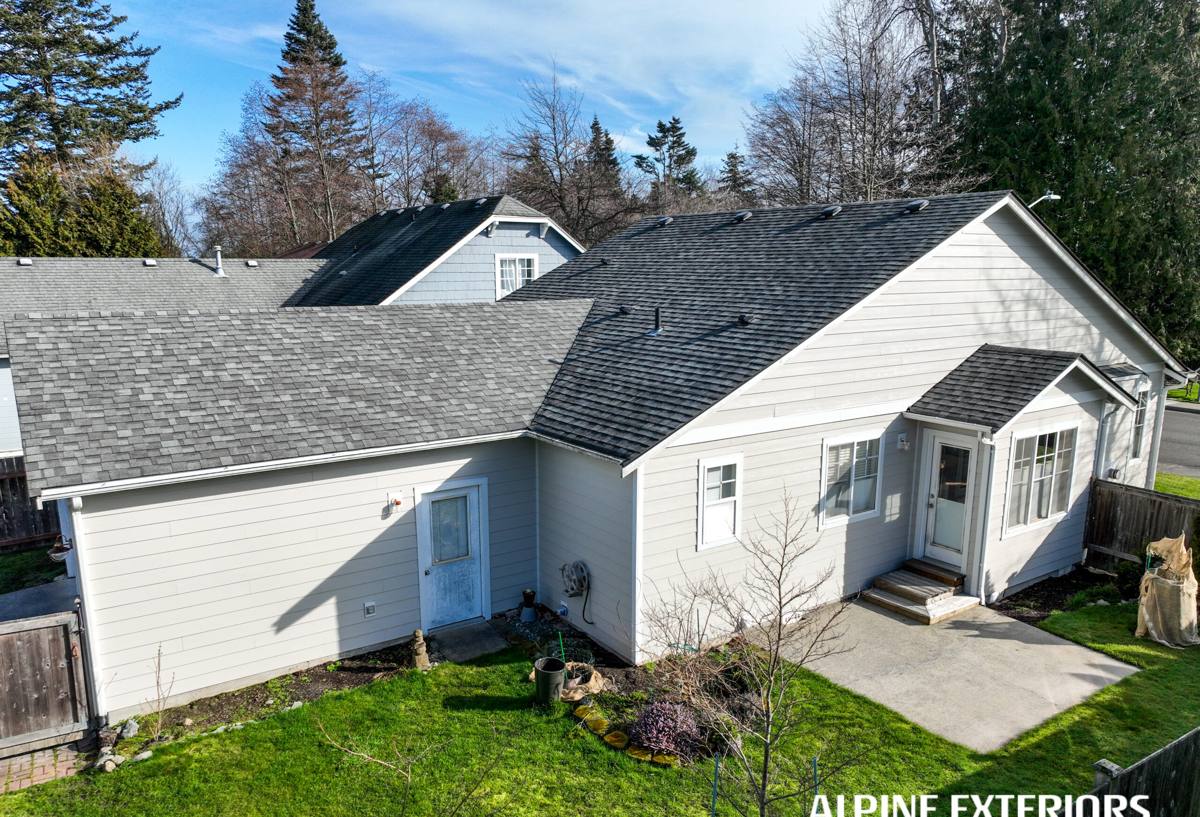
What the Local Climate Actually Does to Siding
Salt Air and Corrosion
Proximity to Samish Bay and Padilla Bay means airborne salt is a real factor here, even a mile or two inland. Salt-laden moisture accelerates corrosion on fasteners, flashing, and any exposed metal trim, and it degrades cheaper paint finishes faster than the same product would fail in a drier or more inland location. Over years, that shows up as rust streaking, chalky or peeling paint, and premature caulk failure at seams and trim joints.
Driving Rain and Open Exposure
Edison's open farmland setting means less wind buffering than a house tucked into a wooded lot. Wind-driven rain hits exterior walls at an angle, not just straight down, which pushes water into any gap, seam, or poorly lapped joint that a calmer climate would never expose. Siding that's marginal on water-shedding detail — lap spacing, caulking, flashing at windows and corners — tends to reveal its weaknesses here faster than it would in a more sheltered part of the county.
The Long Moss and Algae Season
Skagit County's wet season runs long, and Edison's flat, open, low-lying terrain holds moisture and humidity well into the year. North-facing walls, shaded soffits, and anywhere airflow is limited become breeding ground for moss, algae, and mildew. On some siding materials that's a cosmetic nuisance you can pressure-wash off. On others, sustained moisture contact against the material itself becomes a structural problem, not just a staining one.
Why We Only Install James Hardie Fiber Cement
We made a deliberate decision to install James Hardie fiber cement siding exclusively — not vinyl, not LP SmartSide, not Cemplank or Allura, not primed spruce or cedar. That's not a marketing angle; it's a standard we hold because of what we've seen happen to other materials in exactly this kind of coastal, wet, wind-exposed environment.
Fiber cement is non-combustible and dimensionally stable, meaning it doesn't expand, contract, warp, or absorb water the way wood-based or vinyl products can. James Hardie's ColorPlus finish is baked on at the factory under controlled conditions, which gives it better fade and moisture resistance than field-applied paint — a real advantage in a climate that's hard on painted surfaces. Hardie also engineers regional product lines (their HZ5 line is built for climates like ours) specifically to handle moisture cycling, which matters more here than it would in a dry inland market.
None of that means other products are junk. Vinyl is inexpensive and low-maintenance in mild climates. Cedar has real appeal and a long track record when maintained diligently. LP SmartSide and other engineered wood products have improved over the years. But each of them asks something of the climate, the installer, or the homeowner that we've decided isn't a good trade for a house sitting out in Edison's open, salt-touched air — whether that's ongoing repainting, strict caulk maintenance, or sensitivity to installation errors that don't show up until years later. We'd rather install one product correctly and stand behind it than manage the trade-offs of several.
How Hardie Compares in This Climate
| Material | Salt air / corrosion resistance | Moisture behavior | Maintenance burden here |
|---|---|---|---|
| James Hardie fiber cement | Strong — non-combustible, factory finish resists chalking | Does not absorb and swell; engineered for wet climates | Low — periodic wash, no repainting cycle in most cases |
| Vinyl siding | Fair — can chalk and become brittle over time | Sheds water but seams and panels can flex, allowing intrusion | Low, but limited repair options if damaged |
| LP SmartSide / engineered wood | Moderate — depends heavily on correct sealing and maintenance | Vulnerable at cut edges and joints if moisture gets in | Moderate — requires diligent caulk and paint upkeep |
| Cedar / primed spruce | Moderate — natural material, no inherent corrosion issue | Absorbs moisture; prone to rot and moss growth without upkeep | High — regular refinishing and inspection required |
Full Exterior Protection: Siding, Roofing, Windows, and Decks
Siding doesn't work in isolation. On an Edison property exposed to driving rain and salt air, the roof, windows, and any exterior deck or trim are all part of the same water-management system. A roof that's shedding water improperly onto a wall, or window flashing that was never properly integrated with the siding, will undermine even a well-installed Hardie exterior. Because we handle roofing, windows, and decks in addition to siding, we look at the whole envelope rather than treating siding as a standalone cosmetic project.
Where This Matters Most
- Roof-to-wall transitions and step flashing, where a large share of hidden water intrusion actually originates
- Window and door flashing integration with the new siding, not just a caulk bead over the gap
- Deck ledger boards and any point where a deck attaches to the house, a common rot location in wet climates
- Soffit and eave detail, especially on shaded or north-facing walls where moss pressure is highest
Coordinating these trades under one contractor means fewer handoffs, fewer finger-pointing situations if something leaks down the road, and a more consistent standard of work across the whole exterior.
What Correct Installation Looks Like
James Hardie siding is only as good as the installation behind it. The product is engineered to perform in wet, wind-exposed climates, but that performance depends on details that are easy to skip and hard to spot after the fact:
- Correct fastener type and placement, resistant to the corrosion pressure of salt-laden air
- Proper lap and clearance to shed wind-driven rain rather than trap it
- Rain-screen or drainage plane detailing appropriate for a high-moisture, open-exposure site
- Correctly integrated flashing at every window, door, and roofline penetration
- Manufacturer-specified gaps and sealant use, not generic caulk-everything shortcuts
We install to James Hardie's published specifications because those specifications exist for a reason — they're written for climates like this one, not just for the sake of a warranty checkbox. That's also part of why Hardie's transferable warranty carries real weight: it's backed by an installation standard we actually follow, not just a piece of paper.
Signs an Edison Home May Need Siding Attention
A lot of siding problems in this area develop quietly over several wet seasons before they become visible. Some things worth checking, especially on north- or west-facing walls that catch the most rain and shade:
- Persistent moss or algae growth that returns quickly after cleaning
- Soft spots, warping, or visible swelling, particularly near the bottom courses or trim
- Paint that's chalking, peeling, or fading unevenly across the wall
- Rust streaking from fasteners or trim, especially on walls facing open water
- Caulk that's cracked, shrunk, or pulled away from joints and window trim
- Rising utility bills or drafts that suggest the wall assembly isn't performing as it should
None of these on their own means you need a full re-side, but they're worth a professional look before they turn into a rot or moisture problem behind the wall.
Why a Local Crew Matters Here
Edison is a small community, and its exposure to the bay and open farmland isn't something you'd necessarily plan for if you were bidding the job from an office in another county. A crew that works Skagit County regularly knows which walls take the worst of the weather, how the local moss season behaves, and where past installations around here have held up versus where they haven't. That local knowledge shapes real decisions — product choice, flashing detail, where to spend the extra care — not just the sales pitch.
Being based in Burlington also means we're a short drive away if a warranty question or a post-installation concern comes up. We're not disappearing to the next region once the job wraps.
Get a Straightforward Estimate
If you're weighing a siding project in Edison — whether it's a full replacement, storm damage repair, or you're just trying to understand what shape your current siding is in — we're happy to take a look and give you an honest assessment, with no pressure to sign anything on the spot. Use the form below to request a free estimate.