 Burlington
 Clear Lake's Siding Problems Aren't the Same as Downtown Burlington's
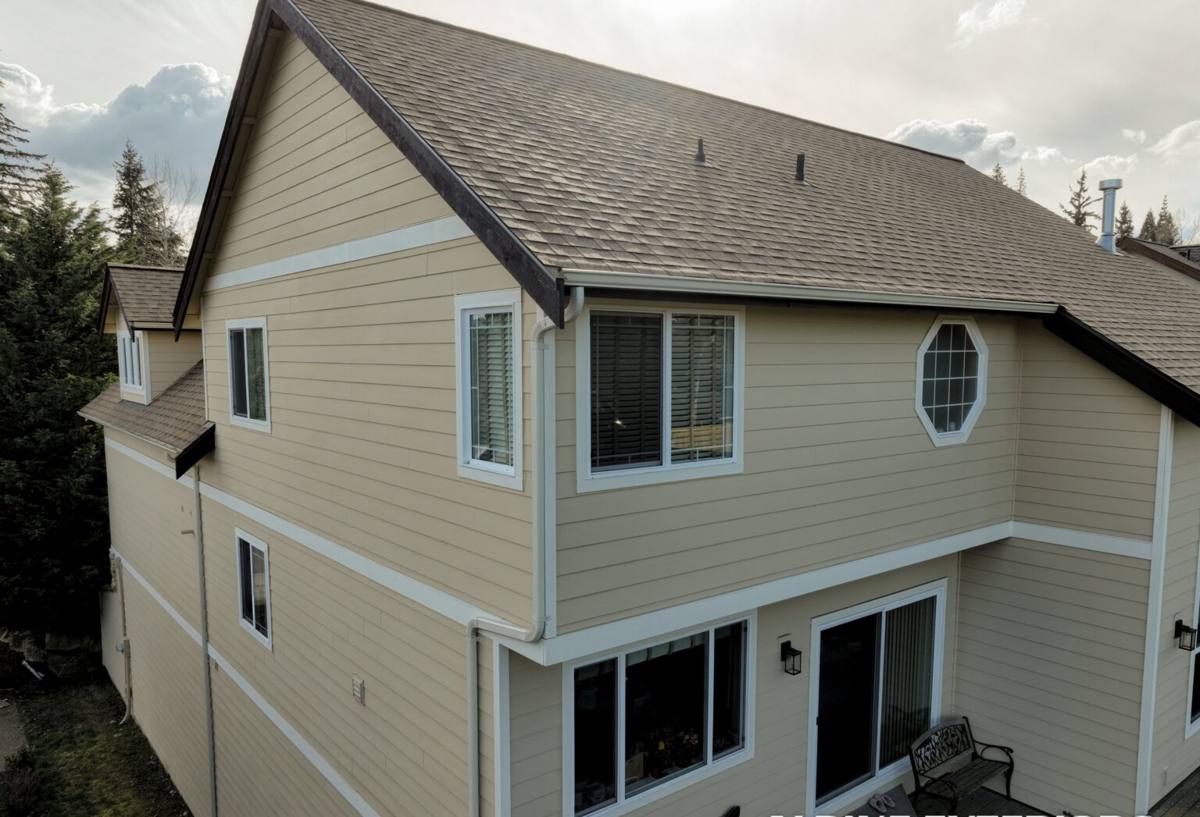
Clear Lake sits in a different microclimate than the flatter, more open parts of Burlington. Homes here tend to have more tree cover, more shade, and more standing moisture around the property through the fall and winter. That combination changes how siding fails. Instead of siding that just fades evenly in the sun, we see damage that's concentrated in specific spots: the shaded side of the house, the wall closest to the tree line, the section behind a fence or shrub line that never fully dries out. If you're dealing with a siding problem at your Clear Lake home, it's rarely a "whole house" issue — it's usually a localized one, and that's actually good news, because it means a proper repair can fix it without tearing into siding that's still doing its job.
Moisture That Lingers Instead of Draining
Skagit County gets a long wet season, and Clear Lake's tree cover and lake-adjacent humidity mean surfaces stay damp longer after a storm passes. Siding that's rated for occasional rain exposure doesn't always hold up well to siding that stays wet for days at a time. Wood-based products and older composite panels are the most vulnerable — they swell, the paint or coating fails first at the seams, and rot sets in from the inside out before it's visible from the street.
Moss and Algae on Shaded Walls
Moss season in this part of Washington isn't a one-month event — it's closer to five or six months of the year where conditions favor growth. On a shaded Clear Lake lot, north- and east-facing walls can stay green well into what should be a dry stretch. Moss itself doesn't eat through fiber cement siding, but it holds moisture against the surface, and on wood, vinyl, or failed paint film, that constant dampness is what accelerates rot, warping, and coating breakdown underneath.
Signs That Call for Repair, Not Just a Wash
A lot of homeowners try pressure washing or a scrub-down first, and sometimes that's genuinely all that's needed. But some symptoms mean there's damage underneath that cleaning won't touch. Here's what we look for on a Clear Lake service call:
- Soft or spongy spots when you press on the siding, especially near the bottom courses or around window trim
- Paint that's bubbling, peeling, or flaking in a way that keeps coming back after repainting
- Visible gaps, cracks, or buckled panels, particularly on walls that face the lake or sit under tree canopy
- Dark staining or persistent moss regrowth within weeks of cleaning
- A musty smell near an exterior wall, which often points to moisture that's already reached the sheathing
- Siding that flexes or moves when you push on it — a sign fasteners or the substrate underneath have failed
Any one of these on its own might be minor. Two or three together, especially clustered on one wall, usually means water has been getting behind the siding for a while.
What an Actual Repair Involves
Finding the Cause Before Touching the Siding
The mistake we see most often from patch-and-go repairs is fixing the symptom — replacing a rotted board — without figuring out why that board rotted in the first place. Was it a flashing gap above a window? A missing kickout at a roofline? A sprinkler hitting the wall every night? Ground soil piled too high against the bottom course? If the underlying cause isn't corrected, the same spot fails again in a year or two, and now there's hidden damage to the sheathing or framing behind it that costs more to fix later. Every repair we do starts with pulling back enough siding to actually see the wall assembly underneath, not just the piece that's visibly damaged.
Matching Material, Profile, and Finish
Repairing siding on an existing house means matching what's already there, or making an honest call about whether that's even worth doing. Reclaimed or discontinued lap profiles, sun-faded paint colors, and older vinyl or hardboard products are notoriously hard to match exactly — a patched section can end up more visually obvious than the damage it replaced. This is where we're upfront with Clear Lake homeowners: if the existing siding is a product we don't install (vinyl, LP SmartSide, old primed wood, Cemplank, Allura), we can still repair it, but we'll tell you plainly when a small patch job is a reasonable stopgap and when it's throwing money at a product that's going to keep failing around the repair.
Why We Repair Toward James Hardie, Not Around It
We only install James Hardie fiber cement siding, and that shapes how we approach every repair call, even on homes that don't have Hardie siding yet. If a section of your existing siding has failed and needs to come off anyway, we'll walk you through replacing that section — or, if damage is spreading, that elevation — with Hardie rather than sourcing a matching patch in a product we don't stand behind long-term.
There's a practical reason for this beyond preference. Fiber cement doesn't rot, doesn't feed insects, and doesn't swell with moisture the way wood or some composite panels do — which matters directly in a moss-heavy, moisture-heavy spot like Clear Lake. It's also non-combustible, holds a factory-applied ColorPlus finish that resists the fading and peeling we see on repainted wood and vinyl repairs, and carries a strong transferable warranty when installed to manufacturer spec. We're not going to tell you your existing siding is garbage — plenty of it was installed reasonably well and has done its job for years. But when it's time to replace a damaged section, we think Hardie is the better material to put back on the wall, and we'll explain why rather than just assuming you know.
Repair or Replace: How We Help You Decide
Not every damaged section needs a full re-side, and not every "small patch" request is actually small once we're behind the wall. Here's roughly how we walk homeowners through that decision:
| Factor | Leans Toward Repair | Leans Toward Replacement |
|---|---|---|
| Extent of damage | Isolated to one board or small section | Spread across a wall or multiple elevations |
| Cause | One-time event (impact, isolated flashing gap) | Systemic issue (grading, chronic moss, failed original install) |
| Age of existing siding | Siding is otherwise sound and mid-life | Siding is near or past its expected service life |
| Material match | Product is still available and matchable | Discontinued profile, faded color, or product we don't install |
| Sheathing condition | Substrate is dry and intact | Rot or moisture damage found behind the siding |
We'll give you our honest read on where your situation falls, including telling you when a repair is genuinely the right call and a full re-side would be overkill.
How the Repair Process Works
- On-site inspection — we look at the damaged area and the surrounding wall, including checking for moisture readings and any signs the problem extends past what's visible.
- Diagnosis — we identify the actual cause (flashing, grading, ventilation, chronic shade/moisture) so the repair doesn't just recur.
- Scope and options — we explain what a patch repair covers, what a section replacement covers, and what we'd recommend and why, in plain terms with a written estimate.
- Removal — damaged siding and any compromised house wrap or flashing come off carefully to avoid widening the repair area unnecessarily.
- Correcting the cause — flashing, drainage, or clearance issues get fixed before anything new goes back on the wall.
- Reinstallation — new siding (Hardie, where we're replacing rather than patching) goes in following manufacturer fastening and clearance specs, with attention to color and profile match where a partial repair is the goal.
- Final check — we walk the repair with you before calling the job done.
What Local Experience in Skagit County Actually Adds
A repair crew that already works Burlington and the surrounding Skagit County communities has seen how houses in this specific area age — which elevations take the worst of the driving rain off the valley, which lots hold moisture longest into spring, where moss comes back fastest after a cleaning. That's not something you can look up; it comes from being on ladders on these streets season after season. It also means faster, more accurate diagnosis: we're not guessing at what a Skagit County wet season does to a wall assembly, we're describing what we've already found on houses like yours nearby. And practically, a local crew can get to a Clear Lake repair call, order any needed material, and get back out to finish the work without the delays that come from an outfit driving in from outside the area.
Keeping Repaired Siding Ahead of the Next Wet Season
A repair is only as good as what happens to it afterward. A few things make a real difference in a shaded, moisture-prone spot like Clear Lake:
- Keep vegetation and mulch pulled back from the bottom edge of the siding so air can circulate and moisture can't sit against it
- Rinse moss-prone walls before it gets established rather than after it's built up — it's a much easier job either way
- Check gutters and downspouts each fall so overflow isn't running down the wall behind the siding
- Have flashing above windows and doors checked periodically, especially after the repair area, since that's a common re-entry point for water
- Walk your exterior once a year and press on any spot that looked questionable last season — catching it early is what keeps a repair a repair instead of a bigger job
Get an Honest Look at Your Siding
If you're seeing soft spots, persistent moss, peeling paint, or damage on a shaded wall of your Clear Lake home, it's worth having someone look at it before it gets bigger — especially heading into another wet Skagit County season. We'll tell you straight whether it's a repair, a section replacement, or something you can hold off on, and why. Reach out for a free, no-pressure estimate using the form below.