 Burlington
 Blanchard's Exterior Climate: Salt Air, Driving Rain, and a Long Moss Season
Blanchard sits in a corner of Skagit County that gets exterior conditions most inland neighborhoods never deal with. The community sits low against forested slopes near Samish Bay, which means homes here catch a steady drift of salt-laden air off the water, sit under heavy tree cover for much of the year, and stay damp longer than properties just a few miles inland toward Burlington and Mount Vernon. That combination — salt, shade, and standing moisture — is one of the harder tests a home's exterior can face in Western Washington.
None of that is unusual for this part of Skagit County. But it does mean that siding, trim, roofing, and even window flashing choices that hold up fine in a drier, sunnier neighborhood can start showing problems within a handful of years out here. We've built our business around exteriors for exactly this kind of climate, and it's a big part of why we standardized on one siding product instead of offering a menu of options.
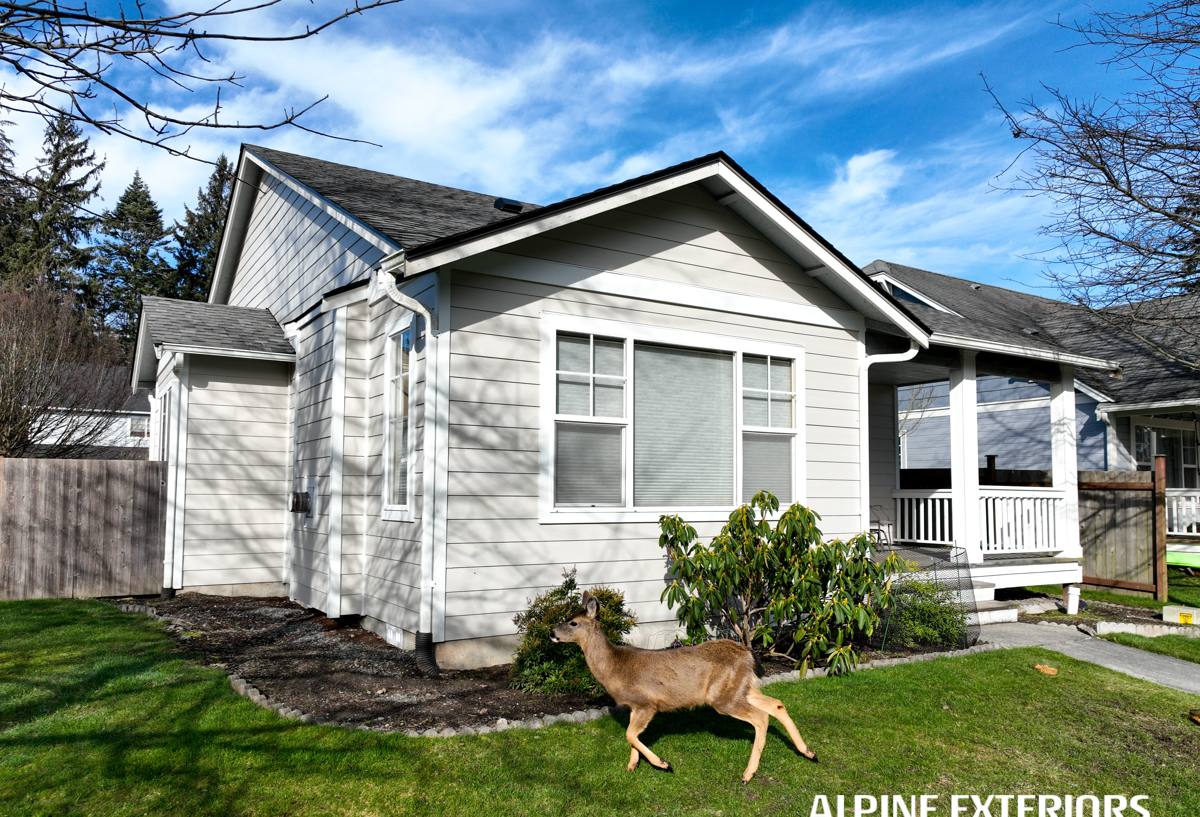
What Salt Air and Moss Actually Do to a House
Salt Air
Airborne salt is corrosive and hygroscopic — it pulls moisture out of the air and holds it against whatever surface it lands on. On a home's exterior, that means fasteners, flashing, and any exposed metal trim corrode faster than they would a few miles inland. It also means paint and coatings break down sooner, because the salt film sitting on the surface keeps the substrate underneath slightly damp even on days that look dry.
Driving Rain
Storms coming off the water don't just drop rain straight down — wind pushes it sideways into siding, around window and door trim, and up under lap joints that were never designed to handle water moving in that direction. Over time, driving rain finds every weak seam in a house's water management system, whether that's a poorly caulked joint, a butt seam without proper flashing, or a siding product that simply doesn't handle repeated wetting well.
Moss and Shade
The tree cover around Blanchard is one of the things people like about living there, but it also means long stretches of shade where siding, roofing, and decking stay wet well after a storm has passed. Moss and algae take hold on any surface that doesn't dry out fast, and once established, they hold moisture against the material underneath — which accelerates rot in wood-based products and speeds up finish failure on anything with a weaker factory coating.
Why We Install Only James Hardie Fiber Cement Siding
We get asked fairly often why we don't offer vinyl, LP SmartSide, or cedar as options. The honest answer is that we've seen how each of those products performs — and fails — in exactly the conditions Blanchard homes deal with, and we'd rather stand behind one product we trust completely than offer a menu that includes materials we know will disappoint some of our customers within a decade.
Vinyl
Vinyl is inexpensive and low-maintenance in the sense that it doesn't need repainting, but it's a petroleum-based product that expands, contracts, and can warp with temperature swings and direct sun exposure. In a damp, shaded, salt-exposed environment, moisture can also work behind vinyl panels at seams and penetrations, and once that happens it's hidden from view until real damage has occurred underneath.
LP SmartSide, Cedar, and Primed Spruce
These are engineered or solid wood products, and wood — no matter how it's treated — is organic material that rots when it stays wet. In a climate with a long moss season and persistent shade, wood-based siding is fighting an uphill battle against moisture intrusion, edge swelling, and fungal growth, especially at butt joints, corners, and anywhere caulking has started to fail.
Other Fiber Cement Brands
Products like Cemplank and Allura are also fiber cement, and fiber cement as a category is the right general direction. But we've standardized on James Hardie specifically because of its factory-applied ColorPlus finish, its climate-engineered HZ product lines, and the depth of its installation network and warranty backing. When we put our crew's name behind an installation, we want the product underneath it to be one we have full confidence in for the long haul.
What Makes James Hardie Different
James Hardie fiber cement is non-combustible, dimensionally stable, and manufactured specifically to resist moisture intrusion, freeze-thaw cycling, and pest damage. It doesn't rot, and it doesn't provide a food source for the algae and moss spores that are constantly present in a shaded, damp environment like Blanchard's — though like any exterior surface, it still needs to be kept clean of built-up organic debris.
Hardie also produces a version of its siding engineered for the Pacific Northwest's specific weather profile, built to perform in a climate defined by sustained moisture rather than dry heat. Combined with the factory-baked ColorPlus finish — which resists fading and chipping far better than field-applied paint — it's a product built for the reality of this region, not a generic national spec.
| Factor | Vinyl | Wood / LP SmartSide | James Hardie Fiber Cement |
|---|---|---|---|
| Moisture resistance | Can trap moisture behind panels | Absorbs moisture, prone to rot | Engineered to resist moisture intrusion |
| Fire resistance | Combustible | Combustible | Non-combustible |
| Finish durability | Can fade, brittle over time | Needs repainting/resealing | Factory ColorPlus finish, long fade resistance |
| Performance in shade/moss | Moderate | Poor — feeds fungal growth | Strong — doesn't feed organic growth |
| Typical lifespan when installed to spec | 20-30 years | 15-25 years | 30-50+ years |
How We Install Siding for Blanchard's Conditions
Product choice only matters if the installation respects it. A large share of the siding failures we see in coastal-adjacent Skagit County homes trace back to installation shortcuts, not the material itself. Our process is built around getting the water management right first, then finishing with the siding.
- Inspect and repair sheathing before anything new goes on — covering damaged substrate just hides a problem, it doesn't fix it
- Install a proper weather-resistive barrier with correctly lapped seams so water sheds down and out, not in
- Flash every window, door, and penetration so driving rain has nowhere to collect
- Maintain manufacturer-specified clearances at grade, decks, and roof lines so moisture and moss-prone debris don't sit against the bottom edge of the siding
- Fasten and caulk to James Hardie's published installation specs, which is what keeps the warranty valid
Beyond Siding: Roofing, Windows, and Decks
Salt air and driving rain don't stop at the siding line. We handle roofing, windows, and decks as well, because a home's exterior only performs as a system. A roof with compromised flashing will send water down behind good siding just as easily as bad siding will let it in directly. Windows with failing seals let moisture into wall cavities. Decks exposed to the same damp, shaded conditions need materials and fastening details that account for constant moisture, not occasional rain. When we're on a Blanchard property, we look at the whole exterior, not just the wall covering.
Why a Local Skagit County Crew Matters
Blanchard doesn't get talked about as often as Burlington or Mount Vernon, but the homes here face some of the more demanding exterior conditions in the county — closer to the water, more tree cover, and more sustained dampness than a lot of neighboring areas. A crew that works this region regularly knows to plan around that reality by default: extra attention to flashing details, awareness of which sides of a house need better ventilation clearance, and realistic expectations about how often moss removal and gutter maintenance need to happen. That local knowledge doesn't show up on a spec sheet, but it shows up in how long the job lasts.
Cost Factors for a Siding Project in Blanchard
Every home is different, but a few factors tend to drive cost on projects in this area more than elsewhere in the county.
| Factor | Why It Matters Here |
|---|---|
| Existing substrate condition | Long-term moisture exposure sometimes means sheathing repair is needed before new siding goes on |
| Tree cover and access | Shaded, wooded lots can mean more setup and cleanup work around the home |
| Trim and detail complexity | More corners, window trim, and transitions mean more flashing and finish work |
| Siding profile and color | Lap width and ColorPlus color selection affect material cost |
| Scope of work | Siding-only projects cost less than combined siding, roofing, and window work |
We provide a written, itemized estimate for every project so homeowners can see exactly what's being priced and why, without vague allowances or surprise add-ons later.
Keeping a Blanchard Exterior Healthy Between Projects
Whatever siding is currently on a home, a few habits make a real difference in a climate like this one.
- Keep gutters clear so water doesn't overflow and run down the siding face
- Trim back vegetation and tree limbs that keep sections of the house in constant shade
- Remove built-up moss and organic debris from siding, trim, and roofing before it spreads
- Check caulking at windows, doors, and trim joints annually, since salt air and rain cycles break it down faster here
- Walk the exterior after major windstorms to catch loose trim or flashing early, before water gets behind it
If you're weighing a siding, roofing, window, or deck project on a Blanchard home, we're happy to take a look and talk through what we're seeing and why — no pressure, no obligation. Reach out for a free estimate using the form below.