 Burlington
 Mount Vernon's Climate Is Harder on Siding Than It Looks
Mount Vernon sits in the Skagit River valley, close enough to Puget Sound that marine air moves through on a regular basis, and far enough inland to trap river fog and standing humidity through the fall and winter months. That combination is rougher on exterior building materials than most homeowners realize. Salt-tinged marine air, long stretches of driving rain, and a moss season that can run from October well into spring all work on siding, trim, and roofing at the same time, year after year.
None of this is dramatic in any single week. It's cumulative. A house that looks fine after one wet winter can show real wear after five or six, especially if the siding material wasn't built for this kind of exposure in the first place. That's the lens we bring to every Mount Vernon project — not just what a product looks like on install day, but what Skagit County weather will do to it over the next fifteen or twenty years.
What We See on Mount Vernon Homes
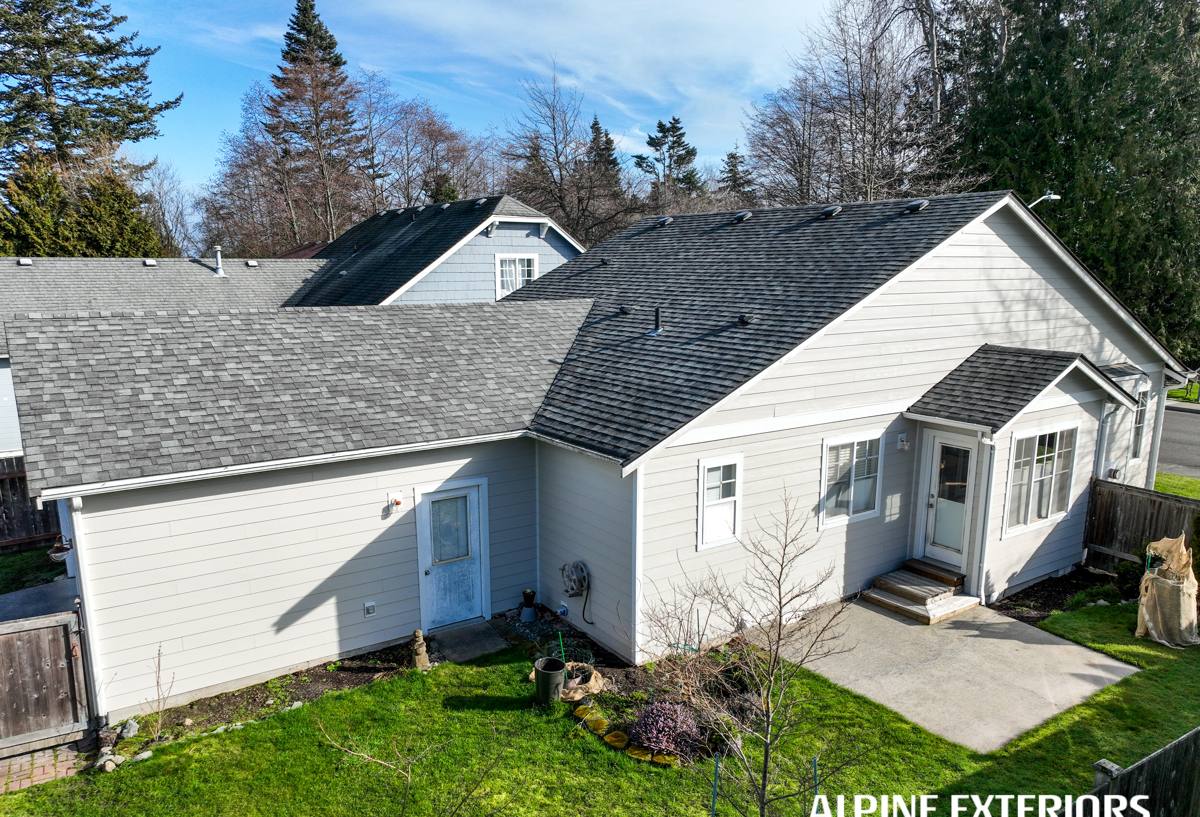
Mount Vernon has a real mix of housing stock — older homes closer to downtown and the river, and newer construction spread out through the surrounding neighborhoods. The problems change depending on the age and siding type, but a few patterns show up again and again:
- Moss and algae staining on north-facing walls and anywhere siding sits in shade from trees or the house itself
- Swelling, delaminating, or soft spots at the bottom edges of wood-based siding, where splash-back and standing moisture do the most damage
- Caulk and trim joints that have opened up after repeated freeze-thaw and wet-dry cycles
- Faded or chalky paint finishes that need repainting far sooner than the homeowner expected
- Warping or buckling on vinyl siding that's taken direct sun exposure on south and west walls
Almost none of these are one-time failures. They're the slow result of a material that wasn't engineered for this specific mix of rain volume, humidity, and organic growth. That's exactly why we standardized on one siding product instead of offering everything on the market.
Why Moss Season Matters More Here
Skagit County's moss season isn't just cosmetic. Moss and algae hold moisture directly against the siding surface for months at a stretch, which accelerates rot in wood-based products and stains porous surfaces in ways that pressure washing only partly fixes. Shaded lots, mature trees, and homes backed up against greenbelt are especially prone to it. Siding choice and installation detail — proper flashing, drainage gaps, and starter strip work — matter more here than in drier parts of the state.
Why We Only Install James Hardie Fiber Cement
We don't carry vinyl, LP SmartSide, Cemplank, Allura, or primed cedar or spruce siding. That's a deliberate call, not a limitation of what we're able to install. Every one of those products has real strengths, but each also comes with a trade-off that shows up specifically in wet, moss-prone, marine-influenced climates like Skagit County's — vinyl can warp and doesn't stand up well to sustained moisture at seams, engineered wood products are still wood at their core and depend heavily on perfect installation and maintenance to resist moisture intrusion, and painted or primed wood siding requires a repainting and caulking cycle that most homeowners underestimate going in.
James Hardie fiber cement is non-combustible, dimensionally stable in wet-dry cycling, and comes with a factory-applied ColorPlus finish that resists fading and chipping far longer than field-applied paint. Hardie also engineers specific product lines (the HZ5 line, for example) for regions with heavy moisture exposure — which is exactly the profile Mount Vernon and the rest of Skagit County fall into. It costs more up front than vinyl and is comparable to or less than high-end wood siding installed correctly. We think that trade is worth it for a house that has to survive this climate for decades, not just look good on install day.
How Siding Materials Actually Perform in This Climate
| Material | Moisture Resistance | Maintenance Burden | Typical Lifespan Here |
|---|---|---|---|
| Vinyl | Fair — can trap moisture at seams and laps | Low, but limited repair options when damaged | 15-25 years |
| Engineered wood (LP SmartSide, etc.) | Good if sealed and maintained perfectly | High — repainting, caulk inspection, edge sealing | 20-30 years with strict upkeep |
| Primed cedar or spruce | Moderate — natural wood, moisture-sensitive | High — regular repainting and moisture checks | 15-25 years, shorter in shaded/damp areas |
| James Hardie fiber cement | Excellent — non-combustible, stable in wet cycling | Low — factory finish, occasional wash | 30-50 years with correct installation |
These are general ranges based on how each material category is built to perform, not promises about any specific home — actual results always depend on installation quality, sun and shade exposure, and how well a house is maintained.
Roofing, Windows, and Decks Face the Same Conditions
Siding doesn't fail in isolation. The same driving rain and humidity that wear down exterior walls also work on roofing, window seals, and deck structures, and a weak point in one system often accelerates damage in another. A roof with worn flashing can send water straight down behind siding. Failing window seals let moisture into wall cavities. A deck built without proper ledger flashing or drainage can rot from the house outward. We handle all four — siding, roofing, windows, and decks — because in a climate like this, treating them as one connected system produces better results than patching each one separately.
What a Local Crew Actually Means for Mount Vernon Homeowners
Skagit County weather isn't uniform even within a few miles. A lot along the river valley holds moisture differently than one up on higher ground, and a shaded, tree-lined property needs different attention to ventilation and drainage than an open lot in full sun. A crew that works this specific region regularly — not just Western Washington in general — makes fewer assumptions and catches more of the details that matter: where moss tends to build first, how much drainage gap a wall actually needs, which trim details hold up and which ones open a path for water.
That local knowledge also shows up in scheduling and sequencing. Rain windows in Skagit County aren't always predictable, and a crew that plans around real regional weather patterns — rather than a generic install calendar — causes fewer delays and fewer half-finished walls left exposed overnight.
Signs Your Mount Vernon Home May Need Siding Attention
- Persistent moss or dark green-black staining that returns quickly after cleaning
- Soft, spongy, or visibly swollen sections, especially near the ground or under windows
- Paint that's peeling, bubbling, or chalking well ahead of its expected repaint cycle
- Visible gaps, warping, or buckling in panels, especially on south- or west-facing walls
- Rising energy bills that suggest air and moisture are moving through the wall assembly
- Siding age of 20+ years with no major replacement or refinishing on record
None of these by themselves mean a full replacement is necessary. Sometimes it's a repair, a resealing job, or better ventilation. Sometimes it's a sign the current material has reached the end of what it can reasonably handle in this climate.
What the Process Looks Like
A siding project on a Mount Vernon home starts with a real walk-around — checking for moisture damage, assessing the current material, looking at drainage, flashing, and sun/shade exposure on each wall. From there we talk through what James Hardie's product lines and ColorPlus color options look like for the house, what the timeline looks like given the season, and what correct installation involves: proper drainage planes, flashing at every penetration, and manufacturer-spec fastening, since fiber cement performs exactly as well as it's installed and no better. We give a straightforward estimate before any work begins, with no pressure to sign on the spot.
Practical Timing Notes
Late spring through early fall tends to be the most efficient window for siding work in Skagit County, simply because there are more consecutive dry days to work with. That said, roofing and window replacement can often proceed in wetter months with the right scheduling, and deck work is flexible for much of the year. We'll walk through realistic timing for your specific project rather than pushing a one-size-fits-all calendar.
If you're weighing a siding, roofing, window, or deck project on a Mount Vernon home, we're glad to take a look and give you a straightforward, no-pressure estimate. Use the form below to get started.