 Burlington
 Siding Replacement Built for Clear Lake's Climate
Clear Lake sits in a part of Skagit County that takes a lot of moisture in stride most of the year, but that moisture is exactly what wears siding down faster than homeowners expect. Between the driving rain that comes off the Puget Sound weather systems, the shade and humidity from surrounding tree cover, and a moss season that can stretch from fall through spring, siding here works harder than siding on a home fifty miles inland. When we replace siding on a Clear Lake home, we're not just swapping old material for new — we're correcting for a specific set of local conditions that caused the original siding to fail in the first place.
This page is focused on one service, in one place: full siding replacement for homes in and around Clear Lake. Not a repair, not a patch — a complete tear-off and reinstall done to spec, with a product system built to handle what this corner of Burlington throws at it year after year.
Why Siding Fails Faster Here Than in Drier Parts of the County
Salt Air and Driving Rain
Homes closer to the water pick up salt-laden air that accelerates corrosion on fasteners, trim, and any material with exposed metal components. Combine that with driving rain — wind-driven moisture that gets pushed sideways into joints, laps, and butt seams instead of simply running down the face of the wall — and you get a much higher rate of water intrusion than a calm, dry climate would produce. Siding that isn't installed with the right clearances and flashing details will let that water find its way behind the cladding, where it does the real damage.
Moss and Shade
Clear Lake's tree cover is part of what makes the area appealing to live in, but it also means longer periods of shade on north- and east-facing walls, slower drying times after rain, and moss and algae growth that holds moisture directly against the siding surface. Wood-based products are especially vulnerable here because moss doesn't just sit on top — it holds water in contact with the substrate for days at a time, which is exactly the condition that causes rot to start.
Freeze-Thaw and Seasonal Swings
Skagit County doesn't get brutal winters, but it does get repeated freeze-thaw cycles through the colder months. Any siding material that has absorbed moisture and then freezes is under stress — swelling, cracking, and delaminating a little more with each cycle. Over several winters, that stress adds up to visible damage.
Signs a Clear Lake Home Needs Siding Replacement, Not Just Repair
Homeowners often call us after noticing one or two symptoms, only to find during inspection that the underlying problem is more widespread. Common signs we look for on Clear Lake homes include:
- Soft or spongy spots when you press on the siding, especially near the bottom courses and around window trim
- Persistent moss or algae staining that comes back within a season or two of cleaning
- Visible cupping, warping, or buckling panels, particularly on shaded walls
- Paint that's failing faster than expected — bubbling, peeling, or requiring repainting more often than every 7-10 years
- Gaps opening up at seams, corners, or trim joints that let daylight or drafts through
- A musty smell near exterior walls, which often points to trapped moisture behind the cladding
Any one of these can sometimes be handled with a repair. But when several show up together, or when we find soft sheathing during inspection, replacement is the more honest recommendation — patching over a compromised wall assembly just delays the real cost.
Why We Only Install James Hardie Fiber Cement
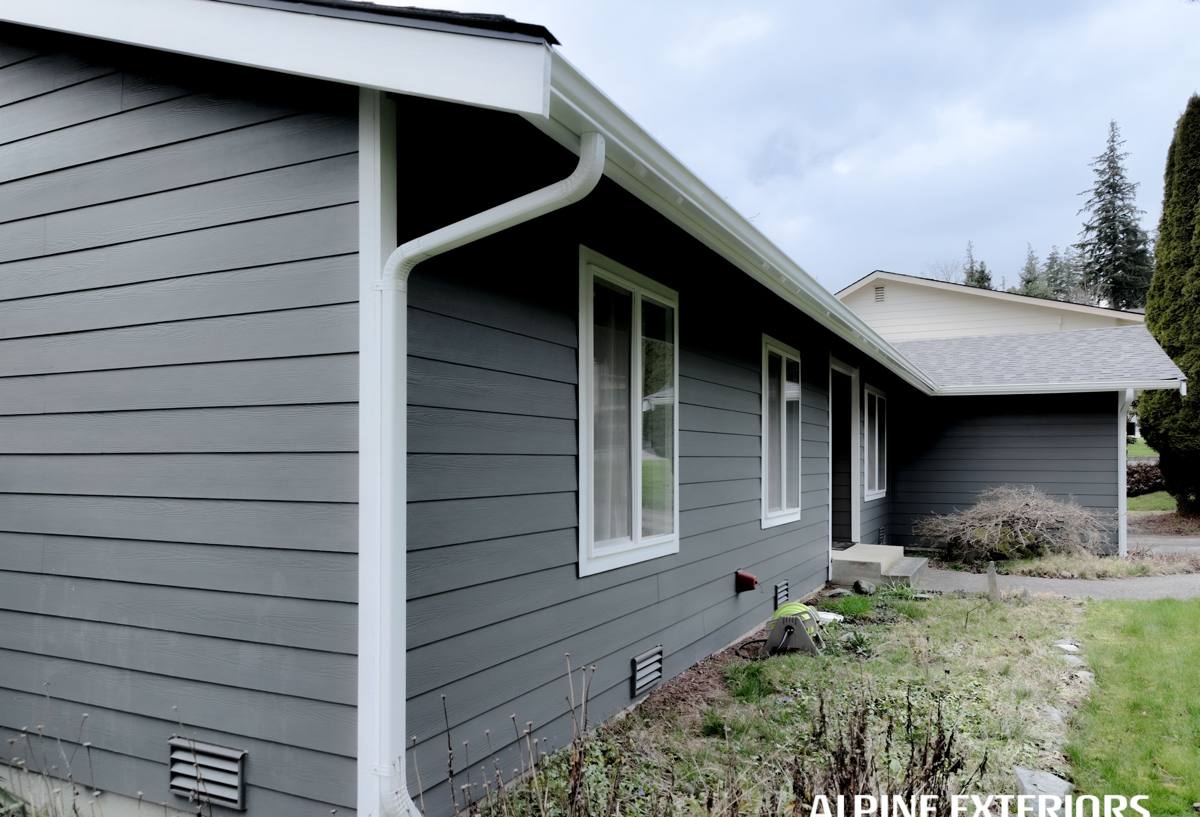
We install James Hardie fiber cement siding exclusively — we don't offer vinyl, LP SmartSide, cedar, primed spruce, or other fiber cement brands like Cemplank or Allura. That's a deliberate standard, not a marketing line, and it matters even more in a climate like Clear Lake's.
Fiber cement is non-combustible, doesn't support moss growth the way wood-based products can, and holds up to repeated wet-dry and freeze-thaw cycles without the swelling and rot risk of wood substrates. James Hardie's HZ5 product line is specifically engineered for wetter, cooler climates like the Pacific Northwest, which makes it a better structural match for Clear Lake than a general-purpose siding product designed for a national market. The factory-applied ColorPlus finish also matters here — it's baked on under controlled conditions and backed by its own finish warranty, which holds up better against constant moisture exposure than field-applied paint on wood siding that has to be recoated every several years.
We're not going to tell you every other product is worthless — vinyl is inexpensive and low-maintenance in the right application, and wood has real aesthetic appeal. But for a Clear Lake home dealing with shade, moss, salt air, and driving rain, we've made the call that fiber cement engineered for this climate is what we're willing to put our name behind.
What a Correct Siding Replacement Actually Involves
A siding replacement is only as good as what's underneath it. Rushing this part is where most siding failures — on any brand of siding — actually start. Our process on a Clear Lake home includes:
1. Full Tear-Off and Sheathing Inspection
We remove the old siding completely rather than installing over it. This lets us inspect the sheathing for rot or soft spots, which is common on homes that have had moisture intrusion for a while, especially near grade and around window and door openings.
2. Repair Before Cover-Up
Any compromised sheathing gets replaced before anything new goes up. Covering damaged sheathing with new siding just hides a problem that will resurface.
3. Weather-Resistive Barrier and Flashing
A correctly lapped weather-resistive barrier, proper window and door flashing, and a rainscreen or drainage gap where appropriate give water a way out if it does get behind the cladding — critical in a climate with as much driving rain as Clear Lake sees.
4. Installation to James Hardie's Specifications
Correct fastener type and spacing, proper clearances from grade, decks, and roof lines, and correctly caulked and sealed joints all affect how long the siding performs. Installing Hardie siding without following the manufacturer's fastening and clearance specs is one of the most common ways a warranty gets voided and a wall starts failing early — regardless of how good the product itself is.
5. Trim, Caulking, and Finish Details
Corner boards, trim, and caulk joints are finished to shed water rather than trap it, with attention to the details that matter most on shaded, moss-prone walls.
Cost Factors for a Clear Lake Siding Replacement
Every home is different, but the factors below are what typically move the price of a full siding replacement up or down. We provide a firm number after an in-person inspection — no ballpark figure is a substitute for actually seeing the wall assembly.
| Factor | Why It Affects Cost |
|---|---|
| Sheathing condition | Rotted or soft sheathing found during tear-off requires repair or replacement before new siding goes on |
| Home size and wall complexity | More corners, dormers, and trim details mean more labor and material cuts |
| Siding profile chosen | Lap siding, shingle-style panels, and board-and-batten each have different material and install time requirements |
| Existing siding removal | Multiple layers of old siding or hard-to-remove materials add tear-off time |
| Access and site conditions | Tree cover, slopes, and tight lot lines around Clear Lake properties can affect staging and scaffolding needs |
| Trim and flashing scope | Full replacement of window and door trim adds cost but improves long-term water management |
Why Hiring a Crew That Already Works in Clear Lake Matters
Siding installation isn't one-size-fits-all, even within the same county. A crew that regularly works Burlington and the surrounding Clear Lake area already understands how local shade patterns, tree lines, and rainfall behavior affect where moisture problems tend to show up first on a given elevation. That local familiarity shows up in small but meaningful decisions — where to add extra flashing attention, which walls need closer inspection for hidden rot, and how to sequence a tear-off around Skagit County's wetter stretches of the year.
It also matters for accountability. A local crew is easy to reach if a question comes up after the job is done, and has a reputation in the community worth protecting. That's a different relationship than a traveling crew that won't be back in the area next season.
Maintaining Your New Siding in a Clear Lake Climate
Fiber cement is low-maintenance, not no-maintenance. A little attention keeps it performing for decades in this climate:
- Rinse off moss and algae buildup once or twice a year, especially on shaded, north-facing walls
- Keep gutters clear so overflow doesn't run down the siding face repeatedly
- Trim back vegetation and tree branches that keep walls damp and shaded longer than necessary
- Recaulk trim joints if you notice cracking or gaps developing over time
- Inspect after major windstorms for any displaced trim or fastener issues
None of this is heavy upkeep, but skipping it in a climate this wet shortens the life of any siding product, including the best-engineered ones.
Get a Free, No-Pressure Estimate
If your Clear Lake home is showing signs of siding wear — moss that won't stay gone, soft spots, failing paint, or drafts at the trim — it's worth having a local crew take a real look before deciding between repair and replacement. We'll walk the property, check the sheathing where we can, and give you a straightforward assessment along with a firm estimate. Use the form below to request your free consultation.