 Burlington
 Windows in Sedro-Woolley Work Harder Than People Realize
Sedro-Woolley sits in a part of Skagit County that gets the full Pacific Northwest treatment: long stretches of driving rain off the Sound, damp air that lingers in the valley through fall and winter, and a moss season that can run most of the year on shaded, north-facing walls. Windows take that abuse directly. Every seam, every piece of flashing, and every inch of caulk around a window opening is a spot where water is trying to get behind your siding and into your wall framing.
Older windows in this area often show it before homeowners expect. Aluminum-frame single-pane windows from decades past, vinyl units installed without proper flashing, and wood-frame windows that never got repainted on schedule all tend to fail the same way here: moisture works in around the frame, the seal breaks down, and what started as a small drip becomes soft trim, fogged glass, or a drafty room. This page is specifically about replacing windows correctly for a Sedro-Woolley home — not a generic rundown of window options.
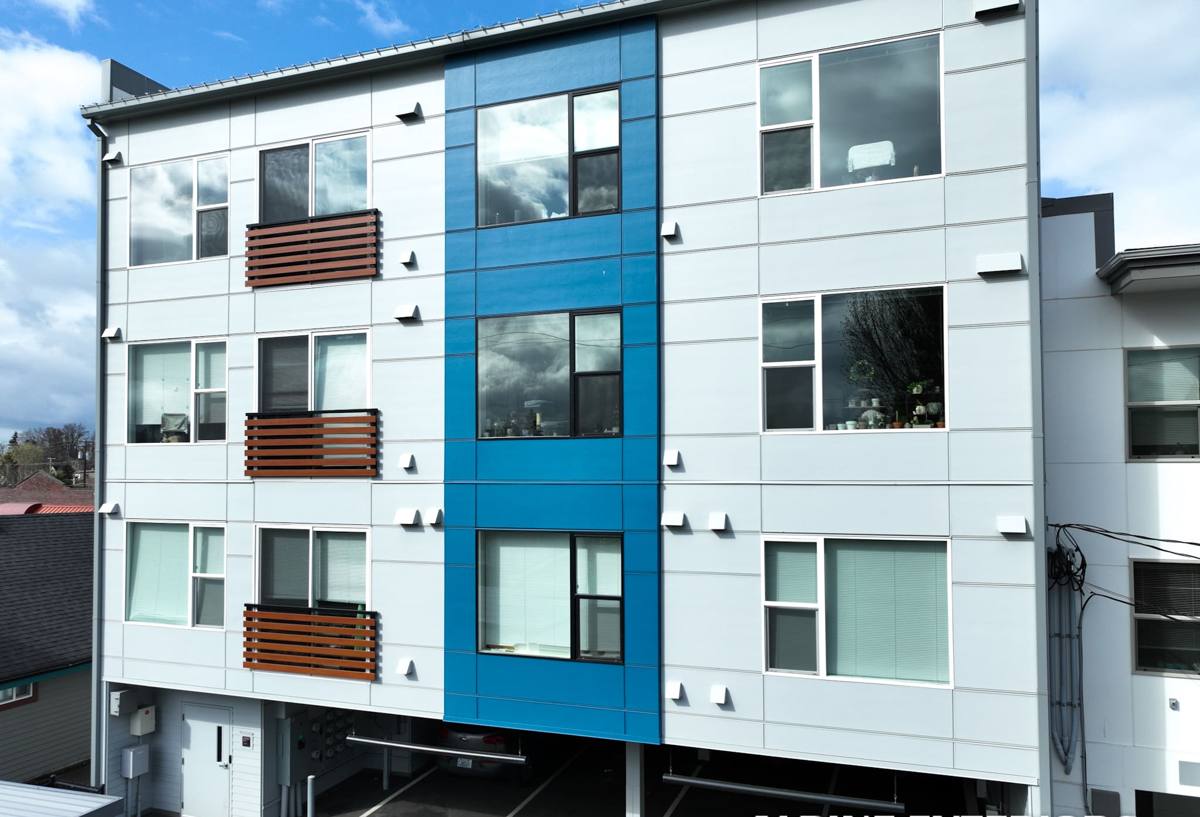
Signs a Sedro-Woolley Home Needs Window Replacement
Not every old window needs to come out immediately, but in this climate certain warning signs should move replacement up the priority list rather than waiting for "someday."
- Fogging or a visible haze between the panes of a double-pane window — the seal has failed and the insulating gas or dead air space is gone
- Wood trim or sill that feels soft, spongy, or shows dark staining when pressed with a thumb
- Visible moss or black streaking building up on the siding directly below a window, which usually points to water running off the frame instead of shedding cleanly
- Windows that are difficult to open, don't latch tightly, or let in a noticeable draft on windy, rainy days
- Condensation forming on the inside of the glass regularly during cold, damp stretches
- Visible daylight or gaps around the frame from outside
Any one of these on its own might just need a repair. Several at once, especially on the same wall, usually means the window and the flashing behind it have reached the end of their service life.
What a Correct Window Replacement Job Actually Involves
Swapping a window is more than removing an old unit and setting a new one in the hole. The part that determines whether the job holds up through a Skagit Valley winter is almost entirely hidden once the trim goes back on.
Full-Frame vs. Pocket (Retrofit) Replacement
A pocket replacement slides a new window into the existing frame, leaving the old frame and flashing in place. It's faster and less disruptive, and it can be the right call when the existing frame is sound and properly flashed. A full-frame replacement removes the window down to the rough opening, which lets us inspect and correct the flashing, sill pan, and moisture barrier — the parts that actually control whether water gets into the wall. On homes where we find soft trim, missing sill pans, or flashing that was never properly integrated with the house wrap, full-frame is the only honest option, even though it costs more.
Flashing and Moisture Management
Given how much rain this area sees, the flashing details matter more here than they would in a drier climate. That means a sloped sill pan so water drains outward instead of pooling, flashing tape properly layered so upper courses overlap lower ones (shingle-style), and a clean tie-in to the house's weather-resistant barrier. Skipping or rushing this step is the single most common cause of hidden rot behind windows we've opened up.
Sealing and Insulation
The gap between the new window frame and the rough opening needs to be insulated — usually with low-expansion foam rather than fiberglass batting alone — and sealed with an appropriate exterior sealant rated for our climate's temperature swings and constant moisture exposure. Over-caulking as a substitute for proper flashing is a shortcut that fails; caulk is a backup layer, not the primary defense against water.
Choosing Frame Materials for This Climate
There's no single "best" window material — the right choice depends on the wall, the exposure, and the budget. Here's how the common options hold up specifically under Skagit Valley conditions:
| Frame Material | Moisture Performance | Maintenance | Typical Fit For |
|---|---|---|---|
| Vinyl | Won't rot; seams and welds are the weak point if not installed correctly | Low — occasional cleaning | Most homes; best value for straightforward replacements |
| Fiberglass | Very stable in wet, temperature-swinging conditions; minimal expansion/contraction | Low | Exposed walls, larger openings, longer-term durability priorities |
| Wood-clad | Good if the cladding and flashing are perfect; interior wood still needs protection | Higher — finish and seals need periodic attention | Homes prioritizing a traditional interior look, with a maintenance plan in place |
| Bare aluminum | Conducts cold, prone to condensation; largely phased out for good reason in this climate | Moderate | Not something we recommend installing new here |
We don't install bare aluminum-frame windows on new work. It's not that aluminum is a bad metal — it's that uninsulated aluminum frames conduct outdoor temperatures straight through, which in a damp climate like ours means regular condensation on the interior frame. That moisture, held against wood trim and drywall over years, is exactly the kind of slow damage this area's climate is set up to cause. It's a maintenance and durability trade-off we're not willing to build into a customer's home.
Glass Packages Worth Considering
Beyond frame material, the glass package affects comfort and condensation resistance more than most homeowners expect.
- Double-pane, low-E glass is the standard baseline for this region and a meaningful upgrade from older single-pane or early double-pane units.
- Argon or krypton gas fill between panes improves insulation value with no visible difference in the glass itself.
- Warm-edge spacers (instead of older aluminum spacers) reduce the cold spot at the edge of the glass, which is where interior condensation tends to start first in a humid climate.
- Tempered glass is required by code in certain locations — near doors, low to the floor, in bathrooms — and we'll flag where that applies during the estimate.
Our Window Replacement Process
- On-site assessment. We look at each window individually — some walls take more weather than others, and not every window on a house needs the same approach.
- Honest scope and estimate. We'll tell you plainly which windows are candidates for pocket replacement and which need full-frame work, and why.
- Removal and inspection. Once the old window is out, we check the rough opening, sill, and sheathing for hidden moisture damage before anything new goes in.
- Correct flashing and sill pan installation. This is the step that determines whether the job lasts — done before the new window ever goes in the opening.
- Window installation, leveling, and shimming. A window that's out of square binds, leaks, and wears its hardware out early.
- Insulation, sealing, and exterior trim. Interior and exterior finish work completed to match the surrounding siding and trim.
- Final walkthrough. We check operation, seals, and cleanup with you before calling the job done.
What Affects the Cost
Every home is different, but the main cost drivers on a Sedro-Woolley window replacement project are consistent:
| Factor | Why It Matters |
|---|---|
| Pocket vs. full-frame replacement | Full-frame involves more labor and often trim and siding repair around the opening |
| Number and size of windows | Larger openings and specialty shapes cost more in both materials and labor |
| Frame material and glass package | Vinyl, fiberglass, and wood-clad carry different material costs; upgraded glass adds cost but pays back in comfort |
| Condition behind the old window | Rot repair, resheathing, or reframing found during removal adds scope that couldn't be priced sight-unseen |
| Siding and trim tie-in | Matching existing siding profile and trim around a new opening takes more time than a straightforward swap |
We give straightforward, itemized estimates and flag anything that could change once we open a wall — no surprise change orders sprung on you after the fact.
Why Hiring a Crew That Already Works This Area Matters
A window that's correctly flashed and sealed for a drier inland climate isn't automatically correct for a Skagit Valley wall that sees this much sustained rain and humidity. Crews who work Sedro-Woolley and the surrounding Burlington area regularly know which details can't be shortcut here — sill pan slope, house wrap integration, sealant selection — because they've seen what happens when those details get skipped on a house nearby. That's not something you can fully evaluate from a glossy brochure or a generic online quote; it comes from doing the work in this specific climate, on this specific type of housing stock, repeatedly.
It also matters for accountability. A local crew is easy to reach if a question comes up two years after the install, and has a reputation in the community worth protecting.
After Your New Windows Are In
New windows are close to maintenance-free compared to what they replace, but a little attention keeps them performing well through Skagit County's wet seasons:
- Rinse frames and tracks periodically to clear dirt and organic buildup, especially on shaded walls prone to moss and algae
- Check exterior caulk lines once a year for cracking or separation, particularly after a hard winter
- Keep gutters and downspouts clear so roof runoff isn't sheeting down across window heads
- Operate each window a few times a season so weatherstripping and hardware don't seize up
- Report any new fogging, drafts, or soft trim right away rather than waiting — catching it early is always cheaper
If your windows are drafty, fogged, or just past their prime, we're happy to take a look and give you a straightforward, no-pressure estimate — no obligation, no hard sell. Use the form below to get started.