 Burlington
 Why Mount Vernon Windows Wear Out Faster Than the Brochure Says
Mount Vernon sits low in the Skagit Valley, close enough to Puget Sound and the Skagit River delta that salt-laden air is a regular visitor, not an occasional guest. That air carries fine salt particles that settle into window hardware, screen tracks, and exposed fasteners, where they accelerate corrosion in anything that isn't properly rated for coastal-adjacent exposure. Add in driving rain that comes sideways off winter storms and a moss season that can run eight months out of the year on shaded north- and west-facing walls, and you have a combination that finds every weak point in a window's installation.
None of this is unique to Mount Vernon, but the combination is more persistent here than in drier parts of Washington. A window that would coast along for twenty years in Spokane can show rot, fogged glass, or a swollen sash in half that time in Skagit County if it was installed with shortcuts. The window unit itself usually isn't the problem — it's almost always the flashing, sealing, and integration with the wall assembly that fails first.
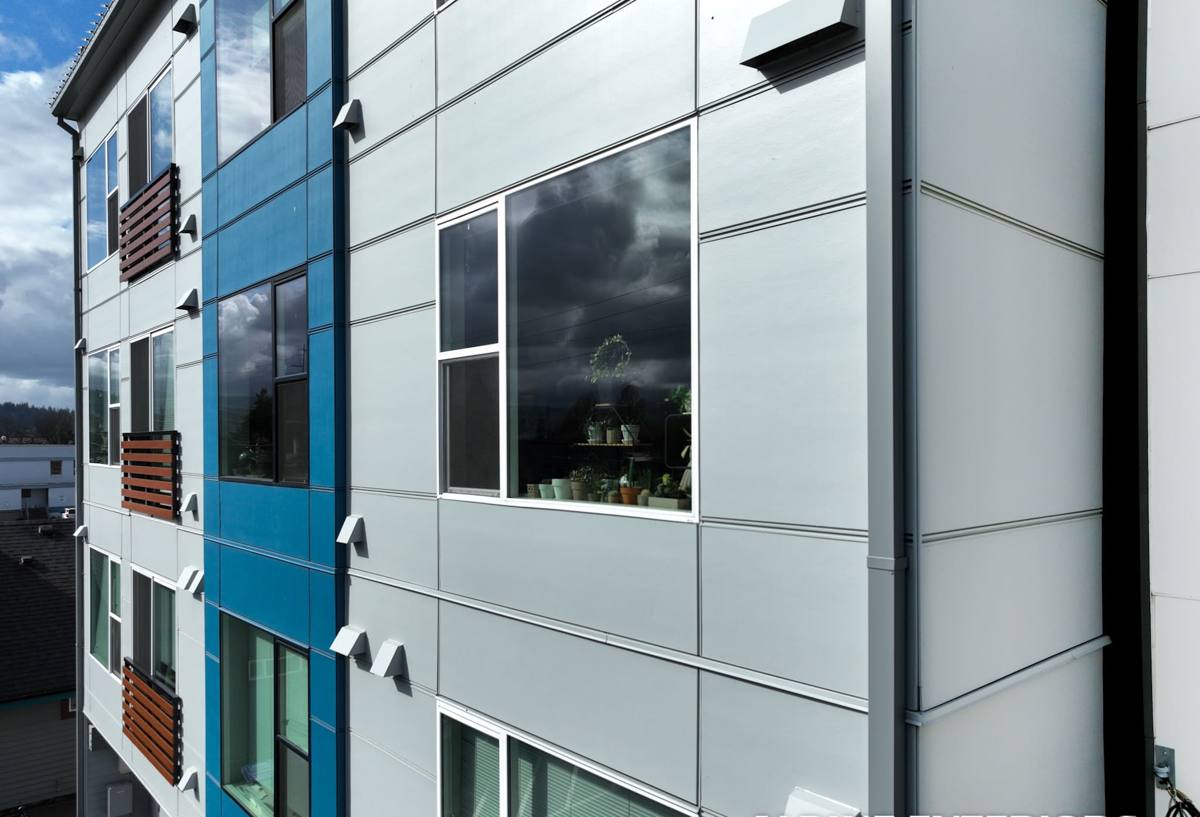
Signs a Window Needs Replacing, Not Just Recaulking
Homeowners often try to caulk their way past a failing window, and sometimes that buys a season or two. But certain signs mean the installation itself has failed and a new window, properly set, is the only real fix.
- Fogging or a visible haze between panes — the seal on the insulated glass unit has broken and can't be restored
- Soft or discolored trim and sill material, especially on the sides that catch prevailing wind-driven rain
- Visible daylight or a draft you can feel at the frame when it's windy outside
- Paint or finish that keeps failing in the same spot no matter how often it's touched up
- Difficulty opening, closing, or latching — often a sign the frame has racked out of square
- Moss or dark streaking on the siding directly below a window, which usually means water is exiting the wall assembly there, not just running off the glass
That last one is worth pausing on. Moss and staining below a window is frequently blamed on the siding when the actual source is water that got behind the window flashing and is draining out lower on the wall. Replacing the siding without correcting the window won't solve it.
What a Correct Window Installation Actually Involves
A window installation is really a small waterproofing project with a window in the middle of it. The window unit itself is the easy part; getting the water management right around it is where most failures start.
Flashing and the Weather-Resistive Barrier
Every opening needs to be flashed so that any water reaching the window's edges is directed out of the wall, never trapped behind the siding. That means sill pan flashing at the bottom of the opening, side flashing that laps correctly with the weather-resistive barrier, and head flashing at the top that overlaps everything below it. Sequence matters as much as materials — flashing installed in the wrong order can funnel water directly into the wall cavity instead of away from it.
Sealing, Shimming, and Insulation
The window has to be shimmed level, plumb, and square before it's fastened, or it will bind, leak, or fail early regardless of the product quality. Gaps between the frame and the rough opening need to be insulated without overpacking, which can bow the frame inward. Exterior sealant is the last line of defense, not the first — a good installation doesn't rely on caulk to do the job flashing should already be doing.
Interior and Exterior Trim
Trim isn't just cosmetic. It protects the transition points where water is most likely to find a way in, and it needs to be back-primed and sealed on all sides before installation, not just on the face that will be visible.
Choosing the Right Window Materials for This Climate
There's no single "best" window material for every home, but some choices hold up better than others under Skagit County's salt air and sustained rain exposure. The table below reflects general trade knowledge, not a claim about any specific brand.
| Frame Material | Coastal/Salt Air Performance | Maintenance | Notes |
|---|---|---|---|
| Vinyl | Good — won't corrode or rot | Low | Budget-friendly; quality varies widely between manufacturers |
| Fiberglass | Very good — dimensionally stable, resists corrosion | Low | Higher upfront cost, holds paint well if a custom color is wanted |
| Aluminum | Fair — prone to corrosion near salt air unless properly coated | Moderate | Thermally weaker unless thermally broken; less common in residential retrofits here |
| Wood-clad | Fair to good depending on cladding integrity | Higher | Any breach in the exterior cladding exposes wood to moisture; needs vigilant caulking |
Hardware matters as much as frame material. Look for corrosion-resistant fasteners and hinges — in this climate, standard-grade hardware can start showing rust streaks on the sash within a few years, well before the window itself has any real problem.
How We Approach a Window Installation
We treat every window opening as its own small water-management project, whether it's one replacement window or a whole-house job.
- On-site assessment of the existing opening, including checking for hidden rot or water damage before ordering anything
- Accurate field measurement — factory windows are made to the opening, not the other way around
- Careful removal of the old unit with attention to what the framing and sheathing look like once it's out
- Repair of any damaged framing or sheathing found during removal, before the new window goes in
- Sill pan flashing, side flashing, and head flashing installed in the correct shingle-style sequence
- Setting the window level, plumb, and square, then fastening per the manufacturer's schedule
- Low-expansion insulation at the perimeter and exterior sealant as the final layer, not a substitute for flashing
- Trim work, interior finish, and a final operational check on every window before we call the job done
What Affects the Cost
Every home and opening is different, so we don't publish flat pricing, but these are the main factors that move a window installation estimate up or down.
| Factor | Why It Matters |
|---|---|
| Frame material and glass package | Vinyl, fiberglass, and wood-clad windows carry different material costs, and double vs. triple glazing changes the price too |
| Condition of the existing opening | Rotted framing or sheathing found during removal adds repair time before the new window can go in |
| Window size and configuration | Larger openings, bay or bow windows, and custom shapes take more time and often cost more in materials |
| Number of openings | Whole-house replacements typically bring a better per-window cost than one-off replacements |
| Access and story height | Second-story or hard-to-reach windows take longer and may need additional equipment |
| Trim and finish work | Matching existing interior trim profiles or upgrading exterior trim adds labor |
Why Working With a Crew That Knows Mount Vernon Matters
A window installer who works mainly in drier inland climates can do a technically fine job and still get flashing decisions wrong for this area — because the failure modes here are different. Wind-driven rain that comes from a specific prevailing direction, moss growth patterns on shaded elevations, and salt exposure near the water all change which details deserve the most attention on a given home. A crew that regularly works Mount Vernon and the broader Skagit Valley has already seen how local homes fail and knows which corners can never be cut here, even if they'd be fine somewhere else in the state.
There's also a practical side to hiring local: a contractor based near Burlington can respond quickly if a problem shows up after the job, without a long drive eating into response time. That matters more with window work than most other exterior trades, since a flashing mistake often doesn't show itself until the first hard winter storm.
Questions Worth Asking Before You Hire
- Do you use sill pan flashing on every window opening, or only when you think it's needed?
- What happens if you find rot or damaged sheathing once the old window is out?
- Are your installers factory-trained or certified on the specific window line you're proposing?
- What's your warranty on labor, separate from the manufacturer's product warranty?
- Can you walk me through your flashing sequence in plain language before work starts?
- Do you carry current licensing and insurance for work in Washington State?
A contractor who answers these questions clearly and specifically, without dodging into vague reassurances, is worth trusting more than one who simply quotes a low number.
If your windows in Mount Vernon are drafty, fogged, hard to operate, or just old enough that you're wondering, we're glad to take a look and give you a straight answer — no pressure, no upsell. Use the form below to request a free estimate.