 Burlington
 Anacortes Roofs Deal With a Different Kind of Weather
Anacortes sits out on Fidalgo Island, surrounded by the Salish Sea, which means homes here take on a combination of stress that inland Skagit County properties simply don't see as often. Salt-laden air off the water accelerates corrosion on exposed metal flashing, fasteners, and vents. Winter storms bring driving rain sideways off the water, testing every seam and lap in a roof system. And the long, wet moss season that defines this part of Washington doesn't let up just because a storm has passed — it keeps working on a weakened roof long after the wind dies down.
When a storm rolls through Skagit County, the damage isn't always obvious from the ground. A few missing shingles are easy to spot. What's harder to see is the flashing that got lifted just enough to let water start tracking under the roofing, or the granule loss from wind-driven debris that's quietly shortening the life of a roof that otherwise looked fine. Homes near the water in Anacortes are especially prone to this because the same salt air that corrodes flashing also breaks down sealants and adhesives faster than in drier, inland areas.
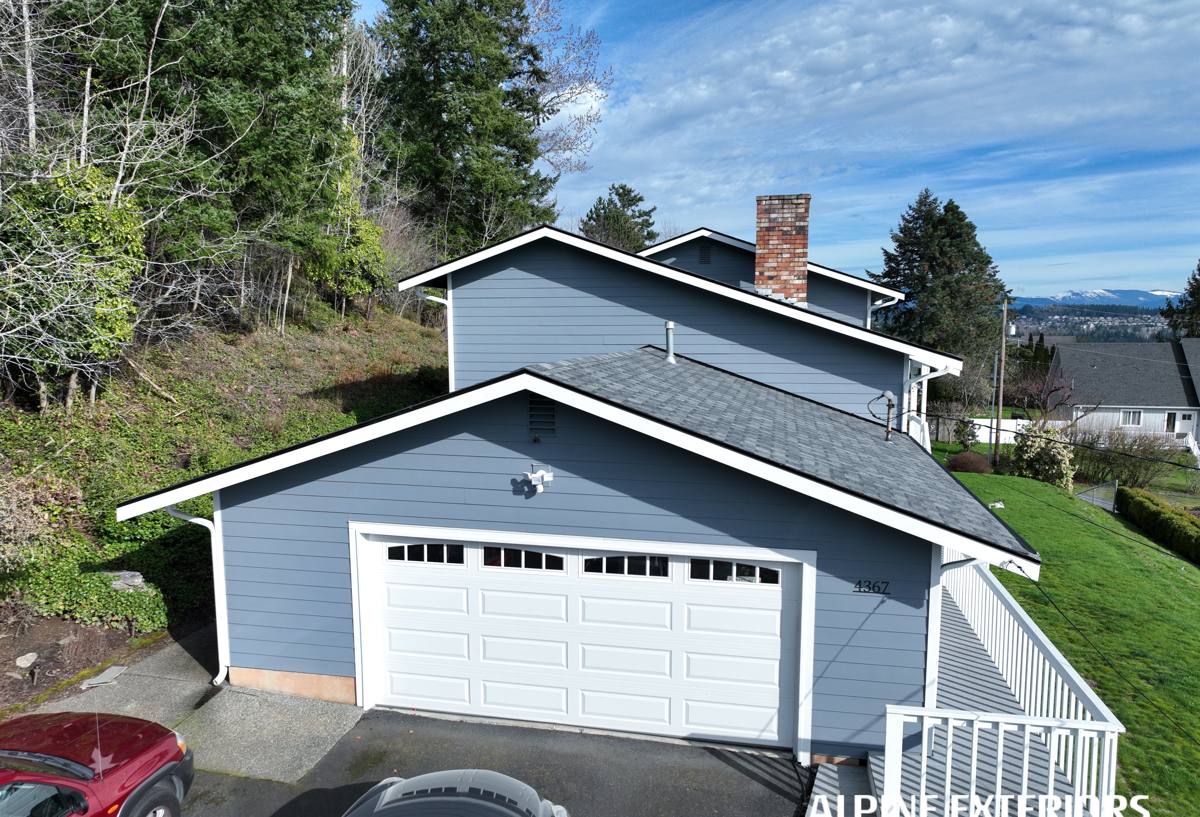
What Actually Counts as Storm Damage
Not every roof problem after a storm is dramatic. Some of the most common issues we find on Anacortes homes after wind and heavy rain events include:
- Shingles or shakes lifted, cracked, or torn loose by wind gusts off the water
- Flashing around chimneys, vents, and roof-to-wall transitions pulled loose or bent
- Granule loss on asphalt shingles from wind-driven rain and debris, leaving bare patches that age faster
- Moss and organic buildup in valleys and along eaves that trapped moisture during the storm and is now holding it against the roof deck
- Gutters pulled away from fascia boards, which redirects storm runoff back up under the roof edge instead of away from the house
- Soft or discolored decking visible from the attic, a sign that water already found its way through before repairs began
Some of this is visible from the ground with a pair of binoculars. Most of it isn't. That's the reason a proper storm damage inspection has to include time on the roof itself, not just a drive-by look.
Why "Just Patch It" Isn't the Same as Fixing It
After a storm, it's tempting to have someone slap a patch over the obvious problem area and call it done. Sometimes that's genuinely the right short-term move — especially if there's active water intrusion and the goal is to stop it fast. But a patch and a correct repair are different jobs with different outcomes, and homeowners deserve to know which one they're getting.
| Factor | Quick Patch | Correct Storm Repair |
|---|---|---|
| Root cause addressed | Usually not — covers the symptom | Yes — flashing, underlayment, and decking checked |
| Material match | Often approximate | Matched to existing roofing where possible |
| Underlying decking checked | Rarely | Always, wherever access allows |
| Expected lifespan of the fix | Months to a couple years | Matches remaining life of the roof system |
| Insurance documentation | Minimal | Photos, notes, and scope suitable for a claim |
A patch has its place — mainly as an emergency stopgap before a proper repair can be scheduled. What it shouldn't be is the final answer on a roof that took real storm damage, because whatever caused the original failure is usually still there, waiting for the next system to blow through off the water.
What a Correct Repair Involves
Assessment Before Anything Gets Replaced
We start by getting on the roof, not just looking at it from the yard. That means checking the decking underneath damaged shingles or shakes, tracing water staining back to its actual entry point (which is frequently several feet from where the stain shows up inside), and checking flashing at every penetration — chimneys, plumbing vents, skylights, and wall transitions.
Matching Materials and Technique
Storm repairs on an otherwise sound roof should use materials that match what's already there in type, profile, and where possible, color and age-appropriate blend. A mismatched patch is a cosmetic problem today and a maintenance headache later, since materials that don't match often weather differently and stand out even more over time.
Flashing Gets Real Attention
Given how hard salt air is on exposed metal here, we don't just re-seat flashing that's come loose — we check its condition. Corroded or thinned flashing gets replaced rather than reused, because a flashing failure is one of the most common reasons a "repaired" roof leaks again within a year or two.
Moss and Debris Cleared, Not Just Covered
Any repair on an Anacortes roof includes clearing moss and organic debris from the work area first. Repairing over trapped moisture just seals the problem in.
How We Handle It, Start to Finish
- Inspection: A hands-on roof inspection, including decking and flashing wherever it's safely accessible, not just the visibly damaged section.
- Documentation: Photos and a written scope of the damage, useful whether you're filing an insurance claim or just want a clear record of what's wrong and why.
- Honest scope: We tell you plainly whether this is a targeted repair, a larger section replacement, or something closer to a full re-roof — and why.
- The repair itself: Matched materials, corrected flashing, and decking replaced where it's compromised, not just covered over.
- Cleanup and check: Site cleaned, gutters checked for storm-related damage since they're often part of the same failure, and the repair area reviewed with you before we consider the job done.
Insurance Claims: What We Can and Can't Do
Many storm damage repairs in Skagit County involve a homeowner's insurance policy. We're happy to provide the photo documentation, written scope, and honest assessment that supports a claim — that's a normal part of the job. What we won't do is inflate a scope of work to match a settlement number, or tell a homeowner they need a full roof replacement when the actual damage is a localized repair. Your adjuster and your policy determine what's covered; our job is to give you an accurate, defensible picture of what the storm actually did to your roof.
If you haven't filed a claim yet, it's worth getting an inspection first. Having clear documentation of the damage — including anything hidden that a ground-level look would miss — makes for a smoother claims process either way.
Why a Crew That Already Works Anacortes Matters
Storm damage repair isn't just about the repair itself — it's about knowing what to expect on a given house. A crew that regularly works roofs on Fidalgo Island and around Anacortes already understands how salt exposure changes the maintenance timeline on flashing and fasteners, how moss establishes differently on shaded, water-facing roof slopes than it does further inland, and which storm patterns tend to hit this area hardest. That local pattern recognition means less guesswork and fewer surprises once we're actually on your roof.
It also matters for follow-through. A roof repair should hold up through the next storm season, not just look fine on a dry day. Working regularly in this specific climate — with its combination of coastal wind, salt air, and a moss season that runs long — is what lets us stand behind a repair with confidence instead of hope.
Signs You Should Have Your Roof Checked After a Storm
- Visible missing, cracked, or curled shingles or shakes after a wind event
- New or worsening water stains on ceilings or interior walls
- Granules collecting in gutters or at downspout outlets after heavy rain
- Daylight visible through the roof deck from inside the attic
- Gutters or flashing that look pulled away, bent, or missing after a storm
- A musty smell in the attic that wasn't there before, which can indicate trapped moisture
- Any roof over 15-20 years old that's just been through a significant windstorm, even with no obvious visible damage
If any of these sound familiar, it's worth having a professional take a look before the next system rolls in off the water. Small issues after a storm tend to get more expensive the longer they sit, especially with Anacortes' extended wet season giving them time to work.
Get a Straight Answer on Your Roof
If your Anacortes home has been through recent storm weather and you're not sure whether what you're seeing is cosmetic or something that needs real attention, we're glad to take a look. We'll give you an honest assessment — including whether a targeted repair makes sense or if the damage points to something bigger — with no pressure either way. Use the form below to request a free estimate.