 Burlington
 Storm Damage Roof Repair for Stanwood Homes
Stanwood sits close enough to the water that its roofs take a different kind of beating than homes further inland. Between wind off the Sound, driving rain that comes in sideways during winter storms, and the salt air that speeds up corrosion on metal flashing and fasteners, roofs here age differently than roofs in drier parts of the state. When a storm does damage, the repair needs to account for all of that, not just patch the visible hole and move on.
We're a Burlington-based crew that works throughout Skagit County, and Stanwood is a regular part of our service area. That matters more than it sounds like it should. A roof that gets storm-damaged in Stanwood needs a different repair approach than the same damage would need somewhere with a milder, drier climate, and a crew that only shows up once in a while doesn't build the local judgment to know the difference.
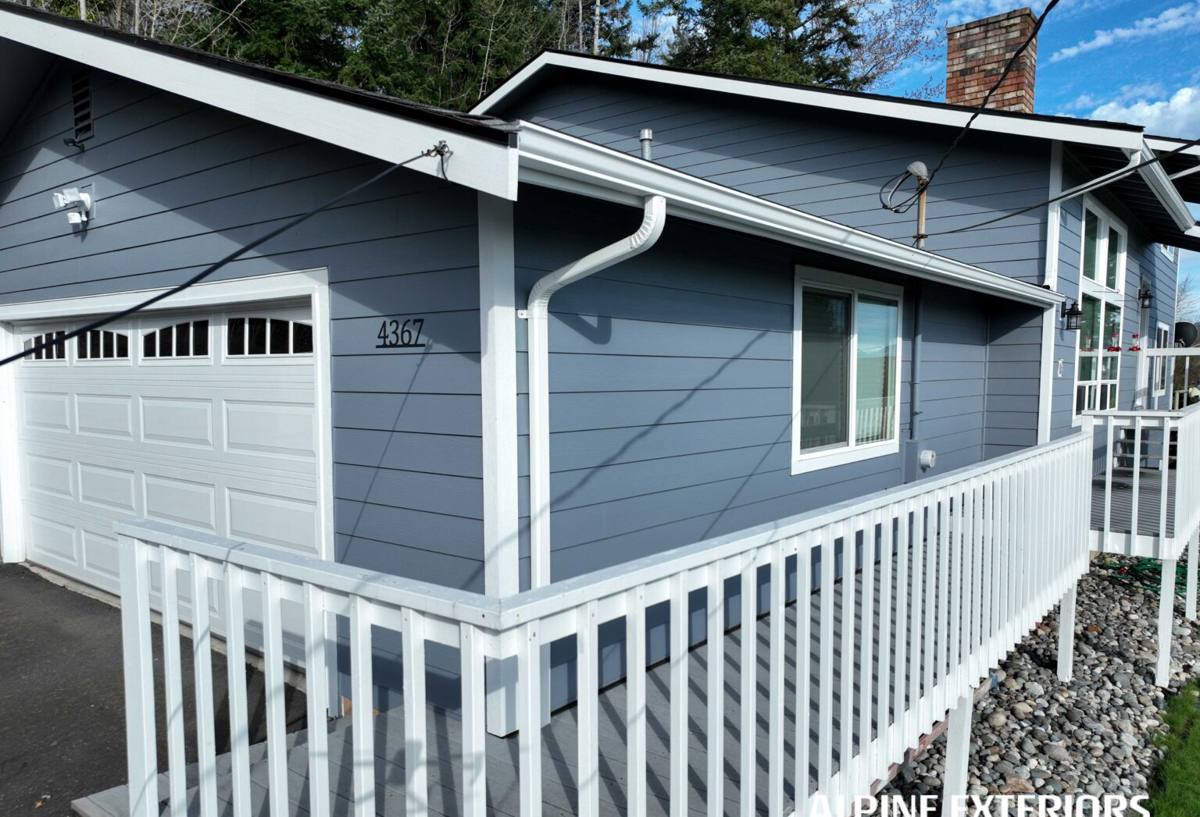
What Skagit County Storms Actually Do to a Roof
Storm damage here rarely looks like the dramatic wind-strips-the-whole-roof scenario people picture. More often it's a combination of smaller failures that add up:
- Wind-lifted shingles or panels — edges and ridge lines take the brunt of gusts, especially where wind has already loosened fasteners over time
- Flashing pushed loose around chimneys, vents, and valleys, letting wind-driven rain track sideways under the roofing material instead of running off it
- Debris impact from branches and limbs, common wherever mature trees stand close to the house
- Granule loss and surface wear that isn't caused by one storm but gets exposed when a storm strips away material that was already failing
- Accelerated corrosion on nails, flashing, and metal fasteners from long-term salt air exposure, which weakens the roof's grip well before any single storm hits
That last point is the one homeowners furthest from the coast don't have to think about, but it matters a lot for Stanwood. Salt-laden air corrodes exposed metal faster than it would 20 or 30 miles inland, so fasteners and flashing that would hold fine elsewhere in the county can fail earlier here. A proper storm repair has to check for that, not just replace what obviously broke.
Moss Season Makes Everything Worse
Western Washington's long, wet moss season is its own slow-motion storm. Moss holds moisture against the roofing material for months at a time, which softens shingles, corrodes fasteners faster, and lifts edges just enough that the next windstorm has something to grab onto. A lot of what looks like sudden storm damage is really moss-weakened roofing finally giving way during a wind event. That's why we look at moss growth and drainage patterns during a storm damage assessment, not just the spot that's obviously leaking.
What a Correct Storm Repair Actually Involves
A repair that only addresses the visible damage tends to fail again at the next storm. A repair done right follows a few consistent steps, regardless of how big or small the damage looks from the ground.
1. Full Roof Assessment, Not Just the Damaged Spot
Storm damage is rarely isolated to one area. We check the whole roof plane — not just where the leak showed up inside the house — because wind and rain stress the entire roof, and a second weak spot often exists nearby even if it hasn't failed yet.
2. Emergency Tarping When Needed
If there's an active leak or exposed decking, we get a proper tarp on before anything else. A rushed or undersized tarp job causes its own water damage, so this step gets done right even when the priority is speed.
3. Matching Materials and Fastening for the Environment
Given the corrosion issue near the water, we don't just replace with whatever's on the shelf. Fasteners and flashing need to hold up to the same salt air and moisture cycle that caused the original damage, or the repair becomes a repeat call within a few years.
4. Checking Underlayment and Decking, Not Just Surface Material
Wind-driven rain often gets underneath the visible roofing before anyone notices. If underlayment is soaked or decking has started to soften, patching over it just traps the problem. We check what's underneath before closing anything back up.
5. Verifying Drainage and Ventilation
A repair that doesn't account for how water and moist air move off the roof will have the same failure again, especially with a moss season this long. Clearing debris from valleys and gutters near the repair area is part of the job, not an afterthought.
Repair vs. Replacement: How We Make That Call
Not every storm-damaged roof needs full replacement, and not every roof that "just needs a patch" should stop there. The honest answer depends on a few factors:
| Factor | Leans toward repair | Leans toward replacement |
|---|---|---|
| Age of roof | Under 10-12 years, otherwise sound | Near or past expected service life |
| Extent of damage | Localized to one section or feature | Multiple areas showing separate failures |
| Underlying decking condition | Dry, solid decking | Soft spots or rot found during assessment |
| History of prior repairs | First significant issue | Repeat leaks or patch jobs in the same areas |
| Fastener/flashing corrosion | Isolated corrosion, easily replaced | Widespread corrosion from long-term salt air exposure |
We'll tell you plainly which side of that line your roof falls on, including when a repair is the right call even though a full replacement would be more profitable for us. That kind of honesty is part of why homeowners call us back the next time something comes up.
Why a Local Burlington Crew Matters for This Kind of Repair
Storm damage repair is one of the areas where local knowledge actually changes the outcome, not just the convenience. A crew that regularly works Stanwood and the rest of Skagit County has already seen how salt air, moss, and driving rain interact on roofs in this specific stretch of Washington. That means:
- We recognize corrosion patterns specific to homes near the water, instead of treating every fastener the same
- We know which roof styles and orientations in this area tend to take the worst wind exposure
- We can respond faster when tarping is time-sensitive, because we're not driving in from out of the area
- We understand how moss season timing affects when repairs should happen versus when they can reasonably wait
A traveling crew or a company based far outside the county can still do competent work, but they're often applying general roofing knowledge to a climate that has some real regional quirks. Those quirks are exactly what determines whether a storm repair lasts five years or fifteen.
Our Process, Start to Finish
- Contact and initial description — tell us what you're seeing (active leak, visible damage, missing material) so we know if emergency tarping is needed right away
- On-site assessment — full roof inspection, not just the reported problem area, including a check of flashing, fasteners, and moss buildup
- Honest scope and estimate — a clear explanation of what's damaged, what's at risk, and whether repair or replacement makes sense
- Repair work — matched materials and fastening appropriate for salt air and moisture exposure, with underlayment and decking checked before closing up
- Final walk-through — confirming drainage, ventilation, and the repair area are all functioning correctly before we consider the job done
What Homeowners Can Check Before Calling
You don't need to get on the roof yourself, but a few things are safe to check from the ground or attic that help us prioritize the visit:
- Any water stains on ceilings or attic framing, even small or old-looking ones
- Visible missing or lifted shingles/panels from the ground or a neighboring vantage point
- Debris accumulation in valleys or gutters near the suspected damage
- Daylight visible through the attic roof deck, if you're comfortable checking
- Any musty smell in upper rooms, which can indicate slow moisture intrusion even without an obvious leak
None of these replace a proper inspection, but they help us understand urgency before we're on-site.
Getting a Straight Answer on Your Roof
Storm damage doesn't wait for convenient timing, and neither should an honest assessment of what your roof actually needs. If you're dealing with damage from a recent storm, or you suspect moss and moisture have been working against your roof longer than you realized, we're glad to take a look and tell you straight what we find. Reach out for a free, no-pressure estimate using the form below.