 Burlington
 Why Decks in Bow Wear Differently Than Decks Inland
Bow sits close enough to the water that salt-laden air is a daily fact of life, not an occasional nuisance. Combine that with Skagit County's long wet season and the moss and algae growth that comes with months of shade and standing moisture, and you get a deck environment that's genuinely harder on wood, fasteners, and finishes than what you'd find twenty miles inland in Burlington proper. We work on decks throughout this area regularly, and the failure patterns we see in Bow are consistent enough that we can usually tell a homeowner what we'll find before we even pull up a board.
Salt air accelerates corrosion in metal fasteners and connectors — the nails, screws, joist hangers, and bolts that hold a deck together structurally. Driving rain, especially wind-blown rain off the water, gets pushed sideways into places a deck was never designed to shed water from: behind ledger boards, under rail posts, into end-grain cuts that were never sealed. And moss doesn't just make a deck slippery. It holds moisture against the wood surface for weeks at a time, which is exactly the condition wood rot needs to take hold.
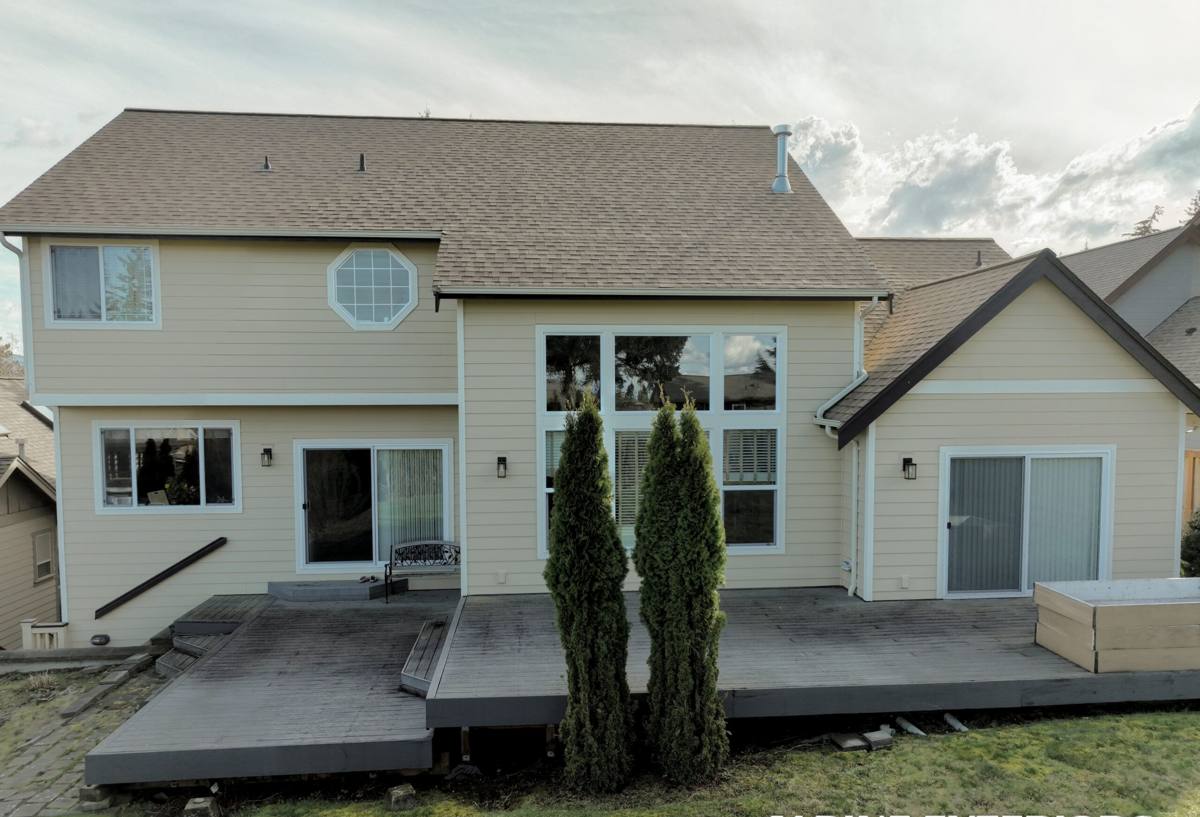
The Deck Problems We See Most Often in This Area
Ledger Board Rot
The ledger is the board that attaches your deck to the house, and it's the single most important structural connection on the whole structure. When flashing is missing, undersized, or was never properly integrated with the house's siding or wrap, water tracks down behind the ledger every time it rains. In a driving-rain climate like ours, that happens more than most homeowners realize. By the time rot shows up as soft or spongy wood, the damage underneath is often more advanced than it looks from outside.
Post Base and Footing Deterioration
Posts that sit in standing water, or that were set without a proper standoff base, wick moisture up into the end grain. Combined with salt exposure, the fasteners connecting posts to beams can corrode well before the wood itself fails, which is why a post can look solid but still be unsafe.
Moss-Related Surface and Structural Decay
A long moss season means north-facing and shaded decks in Bow often carry a green film for a good part of the year. Left alone, that moss holds moisture against decking boards, stair treads, and railings, softening the wood fibers over time and creating slip hazards well before rot becomes visible.
Fastener and Hardware Failure
Standard hot-dip galvanized hardware can hold up fine in a drier inland climate but corrode faster in areas with regular salt air exposure. We see loose or rust-streaked joist hangers and rail brackets on decks that are otherwise in decent shape structurally — the hardware simply wasn't rated for this environment.
Railing and Stair Movement
Wobbly railings are usually a symptom, not the actual problem. Rot at the post base, corroded lag bolts, or a cracked stringer are the common causes, and treating the wobble without diagnosing the cause just delays the real fix.
Repair or Replace: How We Actually Decide
Not every rotted board means a full deck replacement, and not every "just replace a few boards" job is actually safe to do. We look at three things before recommending either direction: whether the structural frame (ledger, beams, posts, joists) is sound, how widespread the moisture damage is versus isolated to one area, and whether the deck's age and hardware match current safety standards. A deck with a solid frame but a handful of failing surface boards is a straightforward repair. A deck with ledger rot, undersized footings, or hardware that's failing across multiple connections usually needs more than patchwork — and we'll tell you that plainly rather than quoting a repair that won't hold up through another wet season.
Signs a Repair Is the Right Call
- Soft or discolored decking boards limited to a section, not spread across the whole surface
- Railings that are loose but the posts underneath are still solid
- Surface moss and staining without soft or spongy wood underneath
- Isolated fastener corrosion caught before it affects the surrounding structure
- A deck under 15-20 years old with a frame that still tests solid
What a Correct Deck Repair Actually Involves
A repair that's done right starts below the surface, not at it. Before we replace a single board, we check the framing underneath — joists, beams, and especially the ledger connection — because replacing decking over a compromised frame just hides the real problem for another season. Once we know what we're working with, the repair itself typically covers:
- Removing and replacing rotted or damaged decking, framing, or posts down to solid, sound wood
- Correcting or adding flashing at the ledger board so water sheds away from the house instead of behind it
- Replacing corroded fasteners and hardware with connectors suited to a coastal-air environment
- Resetting or replacing post bases so wood isn't sitting in standing water
- Addressing the moss and moisture source, not just cleaning the surface, so the same spot doesn't fail again next year
That last point matters. Pressure washing moss off a deck makes it look better for a season, but if the underlying drainage, grading, or shade issue isn't addressed, the moss comes back and the deck keeps absorbing moisture in the same spots.
Our Process, Start to Finish
1. On-Site Inspection
We walk the whole deck — surface, framing, posts, and the ledger connection — and probe any wood that looks or feels suspect. This is where we catch the difference between cosmetic wear and structural rot.
2. Honest Scope and Written Estimate
You get a clear breakdown of what needs to be replaced, what's salvageable, and why. If we think a repair won't actually solve the underlying moisture problem, we say so before you spend money on it.
3. Demo and Structural Assessment
Once we open up the affected area, we confirm the extent of the damage. Occasionally this changes the scope — hidden rot at a ledger or post base is common enough in this climate that we build room for that conversation into the process rather than surprising you with it after the fact.
4. Repair and Rebuild
We replace what needs replacing, correct flashing and drainage issues, and upgrade hardware where the existing fasteners aren't holding up to local conditions.
5. Final Check and Cleanup
We test railings, stairs, and structural connections before we consider the job done, and we clean up the site so you're not left with debris or hardware scraps.
What Deck Repair Typically Costs — and What Drives the Range
Deck repair pricing varies widely because it depends on how much structural work is hidden versus visible. The table below is a general guide to what affects cost on a Bow-area deck repair, not a quote — every deck is different once we get into it.
| Cost Factor | Why It Matters |
|---|---|
| Extent of structural rot found | Ledger, beam, or post damage adds labor and material well beyond surface boards |
| Access to the affected area | Decks built low to the ground or over finished space underneath take longer to open up and repair |
| Hardware and fastener upgrades | Corrosion-resistant connectors cost more upfront but hold up far better in salt air |
| Decking material match | Matching existing wood or composite decking can affect both cost and lead time |
| Flashing and drainage corrections | Fixing the actual water source at the ledger or grading adds work but prevents repeat failures |
| Size of the affected area | Isolated repairs cost less than damage that's spread across multiple sections |
Keeping a Repaired Deck in Good Shape
A repair holds up a lot longer with a little seasonal attention, especially in a climate that gives moss and moisture every advantage. A few habits make a real difference:
- Clear moss and debris from decking and stair treads before the wet season sets in, not after
- Keep gutters and downspouts near the deck clear so water isn't dumping onto or under it
- Check railing posts and hardware for looseness once a year, ideally before winter storms
- Re-seal or re-stain wood decking on the manufacturer's recommended schedule — coastal air shortens the useful life of most finishes
- Watch for standing water pooling on the deck surface after rain, which usually points to a drainage or slope issue worth addressing early
Why It Matters That We Already Work in Bow
A lot of deck problems in this area come down to the same handful of causes — driving rain finding its way behind ledger boards, hardware that wasn't specified for salt air, moss holding moisture against north-facing sections. A crew that's already repaired decks throughout Burlington and the surrounding Skagit County communities isn't guessing at what's likely wrong underneath; we've seen the pattern enough times to know where to look first and what actually holds up long-term in this specific environment. That's the difference between a repair that gets you through one season and one that's built to handle what Bow's climate throws at it year after year.
If you've got a deck showing soft spots, loose railings, or moss that keeps coming back no matter how often you clean it, we're happy to come take a look. Estimates are free, there's no pressure to move forward, and you'll get a straight answer about whether you're looking at a repair or something more — use the form below to get started.