 Burlington
 Decks in Alger Take a Different Kind of Beating
Alger sits close enough to the water and the tree line that its decks deal with a combination most inland neighborhoods don't: salt-laden air drifting in off the bay, driving rain that comes in sideways during winter storms, and deep shade from surrounding conifers that keeps surfaces damp long after the rain stops. That combination is hard on wood, hard on fasteners, and hard on anything that traps moisture instead of shedding it.
We've replaced enough decks in this corner of Skagit County to know that the failures we see here aren't random. They follow a pattern tied directly to the climate: rot starting at ledger boards and post bases, corroded hardware, and a moss layer that holds water against the decking surface for weeks at a time. A deck replacement done right for Alger has to account for all three, not just swap out old boards for new ones.
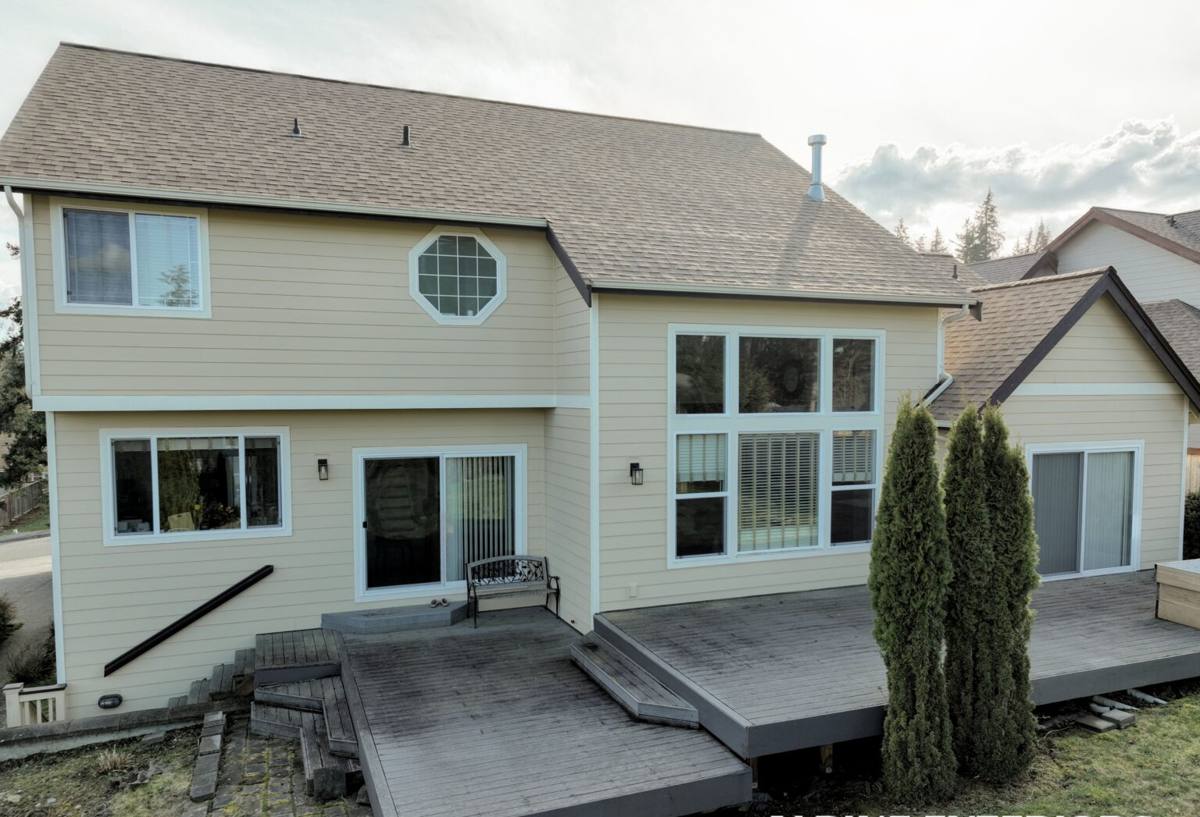
Why "Just Replace the Boards" Doesn't Work Here
A lot of deck problems in this area start below the surface. The decking boards are usually the first thing homeowners notice failing — they cup, splinter, or grow a slick coat of algae — but by the time the boards look bad, the structure underneath has often been absorbing moisture for years. Replacing boards on top of a compromised frame just buys a few more seasons before the same problems resurface, often worse.
That's especially true in Alger, where shaded lots and marine humidity mean framing lumber rarely gets a full dry-out between storms. A proper deck replacement means opening things up enough to actually see the ledger connection, the joists, the post bases, and the flashing — not just refinishing what's visible.
Common Failure Points We Find
- Ledger boards attached to the house without proper flashing, letting water track behind the siding
- Joist hangers and fasteners corroded from salt-air exposure, especially on decks facing open water or wind
- Post bases sitting in standing water or buried soil contact instead of proper concrete footings
- Moss and organic buildup trapped between boards, holding moisture against the wood far longer than open air would
- Undersized or missing structural connectors that were adequate when built but don't meet current code
Signs an Alger Deck Needs Replacement, Not Repair
Not every deck needs a full replacement. Sometimes a section of decking, a handful of joists, or the railing system can be addressed on their own. But there are signs that tell us the whole structure is past the point where patching makes sense:
- Soft, spongy spots anywhere on the deck surface, especially near the house or around posts
- Visible gaps or movement where the ledger meets the house framing
- Rust streaking from fasteners or hardware
- A persistent green or black film that comes back within weeks of cleaning
- Posts that wiggle at the base or show soft wood when probed
- A deck more than 15-20 years old that has never had the substructure inspected
If you're only seeing surface wear — graying wood, minor splintering, a little algae — that can often be handled without a full tear-out. We'll tell you honestly which category your deck falls into during the estimate rather than defaulting to the bigger job.
What a Correct Deck Replacement Involves
Structure First
Everything starts with the frame: ledger attachment, joist spacing and condition, beam sizing, and post footings. In a climate like ours, we pay particular attention to the ledger-to-house connection, since that's the single most common source of hidden rot. Proper flashing and a ledger detail that actually sheds water away from the house band is non-negotiable, not an upgrade.
Hardware and Fasteners
Salt air corrodes standard hardware faster than most homeowners expect. We use hot-dip galvanized or stainless connectors and fasteners rated for exterior, coastal-adjacent exposure — the extra cost up front is small compared to what it costs to reopen a deck a few years later because the hangers rusted through.
Decking Surface
This is where material choice matters most for day-to-day livability, and we'll walk through the honest trade-offs below. Whatever material you choose, board spacing and airflow underneath the deck matter as much as the product itself — tight spacing in a shaded, damp lot is a recipe for trapped moisture no matter how good the board is.
Railings and Stairs
Railings and stair stringers get the same structural scrutiny as the deck frame. These are the components most likely to be original to an older deck and least likely to have been maintained, since they're not walked on directly.
Material Options for Alger's Climate
There's no single "best" decking material — there's a best fit for your budget, your maintenance appetite, and how much sun or shade your particular lot gets. Here's how the common options actually perform in conditions like Alger's, without the marketing spin:
| Material | How It Handles Our Climate | Maintenance | Typical Lifespan |
|---|---|---|---|
| Pressure-treated wood | Affordable, but absorbs moisture readily in shaded, damp spots; needs consistent sealing | Annual cleaning and re-sealing recommended | 10-15 years with upkeep |
| Cedar | Naturally rot-resistant and handles moisture better than treated pine, but still needs care in constant shade | Periodic sealing/staining | 15-20 years with upkeep |
| Composite decking | Doesn't absorb water the way wood does, resists moss growth better, holds up well to salt air | Occasional washing, no sealing/staining | 25+ years, varies by product warranty |
| PVC/cellular decking | Fully synthetic, best moisture and moss resistance of the group, performs consistently in shaded lots | Occasional washing | 25-30+ years, varies by product warranty |
We're upfront that composite and PVC cost more up front than treated wood. For a shaded, damp lot like a lot of Alger properties sit on, that extra cost often pays for itself in avoided maintenance and a longer stretch before the next replacement. For a sunnier, more exposed lot with an owner who doesn't mind an annual sealing routine, wood can still be the right call. We'll talk through your specific site rather than push one material across the board.
Our Process
- On-site assessment. We look at the existing structure — not just the decking — and identify what's driving the wear before we talk replacement scope.
- Honest scope and estimate. You get a clear breakdown of what needs to be rebuilt versus what can stay, with material options and pricing ranges explained plainly.
- Permitting. Deck replacements of significant size typically require a permit through Skagit County or the relevant local jurisdiction. We handle that paperwork rather than leaving it to you.
- Demo and structural rebuild. Old decking, railings, and any compromised framing come out. Ledger flashing, footings, and framing get done to current code, not just matched to what was there before.
- Decking, railing, and finish work. Installed per manufacturer spec, with attention to spacing and airflow given our moisture conditions.
- Final walkthrough. We go over the finished deck with you, including what maintenance (if any) the material requires going forward.
What Drives the Cost
Every deck is different, but the same handful of factors determine most of the cost swing between a modest replacement and a larger one:
| Factor | Why It Matters |
|---|---|
| Deck size and shape | More square footage and multiple levels or angles increase material and labor |
| Extent of structural rebuild | A deck needing full frame replacement costs more than one where the substructure is sound |
| Decking material chosen | Treated wood, cedar, composite, and PVC carry meaningfully different material costs |
| Height and stairs | Elevated decks and multi-run stairs add framing and railing complexity |
| Site access | Tight or sloped lots common in wooded areas can add labor time for material handling |
| Permit requirements | Larger or elevated decks may require engineering review, which adds cost and lead time |
We'd rather give you a real range after seeing your deck than a number over the phone that doesn't hold up once we're on site.
Keeping a New Deck Performing Longer
Whatever material you choose, a few habits go a long way in a climate like ours:
- Sweep debris and needles off the surface regularly, especially under tree cover — trapped organic matter feeds moss
- Keep gutters and downspouts near the deck clear so runoff isn't dumping directly onto or under it
- Check the ledger flashing area yearly for any sign of water intrusion at the house connection
- For wood decks, stick to the sealing schedule rather than waiting until graying is obvious
- Make sure under-deck airflow isn't blocked by stored items or overgrown landscaping
Why a Crew That Already Works Alger Matters
Deck problems here aren't generic — they're shaped by this specific stretch of Skagit County: the salt exposure, the tree cover, the rainfall pattern, and the number of homes built decades ago before current flashing and hardware standards existed. A crew that works this area regularly has already seen how those conditions play out in real decks, not just in a manual. That means fewer surprises once we open up your structure, and a replacement built to actually hold up to what Alger throws at it rather than a one-size-fits-all approach.
If your deck is showing wear, feels soft in places, or you're just not sure whether it needs a repair or a full replacement, we're glad to take a look and give you a straightforward answer. Reach out for a free, no-pressure estimate using the form below.