 Burlington
 Stanwood sits close enough to the water that its homes take on a different kind of exterior wear than a house further inland — salt-laden air off the water, rain that comes in sideways during a fall or winter system, and a moss season that runs long on shaded, north-facing walls. We already work throughout the region, and siding replacement is one of the most common calls we get from Stanwood-area homeowners, usually after they've noticed something isn't right but aren't sure whether it's a repair job or something bigger. This page walks through what full siding replacement actually involves, what local conditions demand from the material and the installation, and how we approach the work.
Why Siding Replacement Looks Different for a Stanwood-Area Home
Full siding replacement isn't the same job as patching a few damaged boards. It means removing the old cladding down to the sheathing, inspecting and repairing what's underneath, and rebuilding the entire weather-resistive envelope of the house — flashing, house wrap, joint treatment, and fastening — before a single new board goes up. In a climate that delivers salt air, driving rain, and a long moss season most of the year, cutting corners at any one of those layers is exactly how a home ends up needing this same work again in half the time it should have lasted.
That's the real argument for replacement over repeated patch repairs once siding starts failing in more than one spot: a patch only addresses what's visible on the surface, while the moisture damage driving that failure is usually already spreading behind boards that still look fine. Full replacement is the only point in a siding's life where the crew can actually see and correct what's happening at the sheathing and framing level.
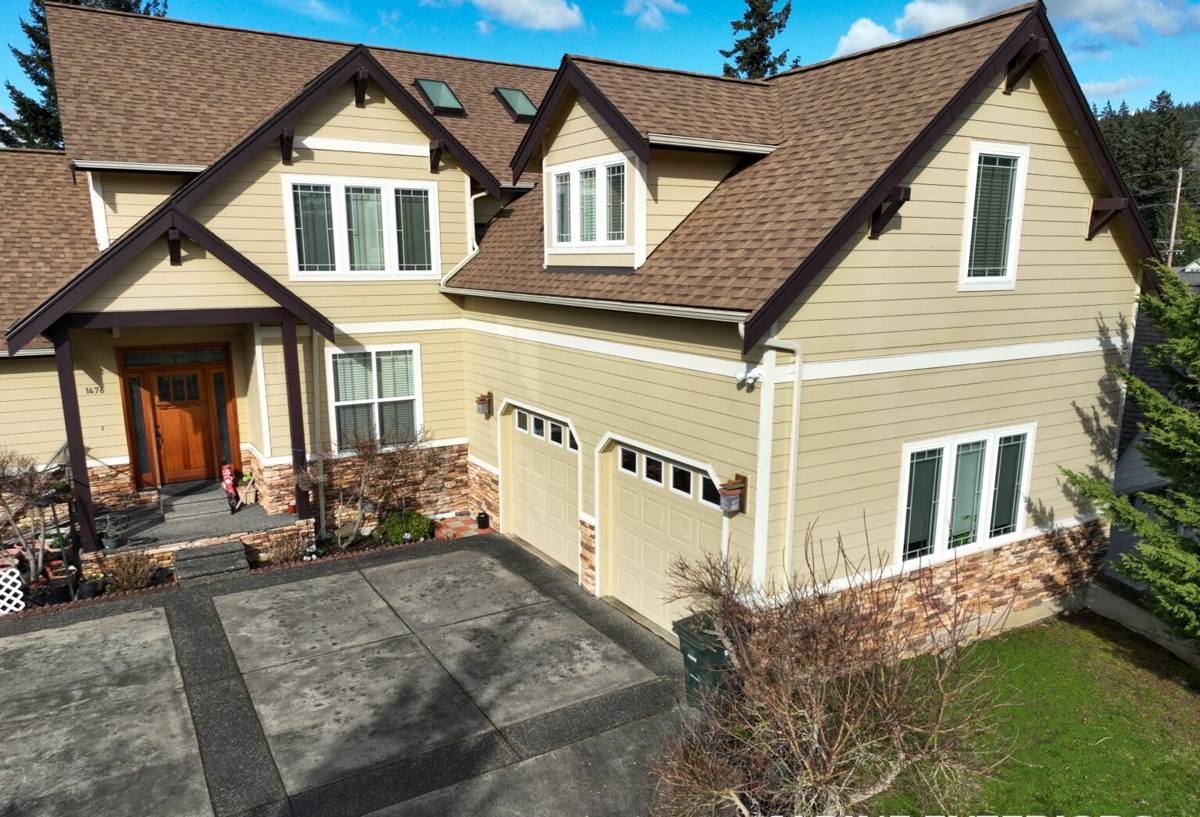
Signs Your Stanwood Home Needs a Full Replacement, Not a Patch
Not every siding problem calls for tearing the whole exterior off. But there's a point where patch repairs stop making financial sense and a full replacement becomes the more honest recommendation. These are the signals we look for during an inspection:
- Soft, spongy, or crumbling boards in more than one area of the house, especially near the bottom courses and around window and door trim
- Visible warping, buckling, or gaps between boards that weren't there a few years ago
- Paint that's failing repeatedly in the same spots no matter how often it's recoated
- Persistent moss or dark staining on shaded walls that keeps coming back after cleaning
- Interior signs — peeling paint, musty smell, or soft drywall near exterior walls — that point to moisture getting past the siding
- Siding that's original to a home built more than 20-25 years ago, especially wood-based or older engineered products nearing the end of their service life
If you're only seeing one or two of these in an isolated spot, a targeted repair may be enough. Once several of these show up across different parts of the house, that's usually a sign the underlying moisture barrier and flashing have been compromised broadly enough that a full replacement is the more responsible path.
What a Correct Siding Replacement Involves
The finished siding is only as good as everything installed underneath it. A correct replacement job has three layers that matter as much as the visible boards.
Tear-Off and Sheathing Inspection
Removing the old siding is also the only chance to actually see the condition of the wall behind it. Every square foot gets checked for rot, soft spots, or water staining in the sheathing before anything new goes up. Damaged sheathing gets cut out and replaced rather than covered over — a step that's invisible in the finished product but determines how long the new siding will actually last.
Weather-Resistive Barrier and Flashing
A new weather-resistive barrier goes on the sheathing, correctly lapped from bottom to top so water sheds outward rather than working its way in behind a seam. Flashing gets installed or replaced at every window, door, and penetration, integrated with the barrier rather than caulked on as an afterthought. This layer is where most premature siding failures actually start, and it's almost entirely hidden once the job is finished — which is exactly why it has to be done right the first time.
Installation to Manufacturer Spec
New siding gets installed with the fastening pattern, clearance from grade and rooflines, and joint treatment specified by the manufacturer for the product and the wall's actual exposure — not a generic, one-size-fits-all approach. A shaded, moss-prone wall and a sun-exposed wall on the same house can call for different joint treatment, and a crew that treats every wall identically is skipping a detail that matters here.
Why We Replace With James Hardie Fiber Cement
We install one siding product on every replacement we do: James Hardie fiber cement. We don't offer vinyl, LP SmartSide, Cemplank, Allura, primed spruce, or cedar, and that's a deliberate standard rather than a limited catalog. Each of those alternatives does something well — vinyl is inexpensive, engineered wood installs quickly and takes paint easily, cedar has real natural character — but each also carries a trade-off that matters more in a climate with sustained moisture and a long moss season than it might somewhere drier.
Vinyl can warp and grow brittle with age, and its seams are exactly the kind of gap wind-driven rain works into over time. Wood-based products, however well treated at the factory, still have an organic core that depends on flawless field priming and caulking at every cut edge to keep moisture out consistently across an entire job. Cedar is genuinely attractive but organic as well, and it asks for real ongoing upkeep — refinishing, sealing, moss control — to keep performing through a wet season that doesn't leave much of a dry window to recover in between storms.
Fiber cement handles the core problem differently because it isn't organic — there's no wood substrate for moisture to work into, and it doesn't feed moss and mildew growth the way wood-based siding can. James Hardie builds climate-engineered HZ product lines around sustained moisture and coastal exposure rather than one generic formulation sold everywhere in the country, and pairs that with a factory-applied ColorPlus finish that's baked on under controlled conditions instead of painted on-site — holding color and resisting cracking longer than most field-applied finishes manage in a climate this wet. It also carries a strong, transferable manufacturer warranty, which matters on a full replacement that's meant to be the last siding job this house needs for a long time.
Repair or Full Replacement? How We Help You Decide
Homeowners often call us assuming they need a full replacement when a repair would do, or the reverse — assuming a few new boards will fix a problem that's actually much deeper. Part of our job during the initial inspection is giving an honest answer either way, even when that answer is smaller and less expensive than what a homeowner expected to hear.
| Factor | Repair Likely Sufficient | Full Replacement Recommended |
|---|---|---|
| Extent of damage | Isolated to one small area or a few boards | Present in multiple areas or wall faces |
| Sheathing condition | Sound, no signs of rot behind the damaged section | Soft, stained, or rotted in more than one spot |
| Age of existing siding | Newer product still within its expected service life | Original siding beyond 20-25 years or already failing broadly |
| Underlying moisture barrier | Intact and correctly installed where checked | Compromised, outdated, or never installed correctly |
| Cosmetic vs. structural concern | Cosmetic wear with no interior symptoms | Interior signs of moisture intrusion present |
Our Siding Replacement Process, Start to Finish
A full replacement follows the same sequence on every Stanwood-area home we work on, adjusted for the specifics of the house:
- On-site inspection and honest assessment of whether the home needs repair or full replacement, with the reasoning explained plainly
- Written scope of work covering material, flashing details, and any sheathing repair contingencies before work begins
- Careful tear-off of existing siding and trim, with debris managed to protect landscaping and the site
- Full sheathing inspection, with any rot or soft spots cut out and replaced before moving forward
- Installation of a new weather-resistive barrier, correctly lapped, and new or repaired flashing at every window, door, and penetration
- Installation of James Hardie siding to manufacturer spec, with fastening and joint treatment matched to each wall's actual exposure
- Final walkthrough with the homeowner and review of warranty coverage and basic maintenance expectations
Cost Factors for a Stanwood Siding Replacement Project
We don't publish blanket pricing because it wouldn't be an honest number — every house is different, and the real cost drivers depend on what's actually found once tear-off starts. The factors that consistently move a project's cost up or down are worth understanding before you get quotes.
| Factor | How It Affects Cost |
|---|---|
| Sheathing and framing condition | Hidden rot found during tear-off adds repair scope beyond the original estimate |
| Home size and wall complexity | More corners, gables, and penetrations mean more flashing detail and labor time |
| Siding profile and trim package | Board-and-batten or heavier trim detail runs higher than standard lap siding |
| Site access and staging | Tree cover, tight lot lines, or difficult access can affect labor time and equipment needs |
| Scope of trim and accessory work | Replacing trim, fascia, or soffits alongside siding adds material but often saves on separate mobilization later |
Why a Crew That Already Works the Stanwood Area Matters
A crew that regularly works homes in this part of the region has already seen how a shaded, water-facing wall ages differently than an open, south-facing wall on the same street, and adjusts flashing and joint treatment accordingly instead of applying one generic approach everywhere. That judgment comes from doing this work repeatedly under this specific mix of salt air, driving rain, and moss, not from a spec sheet written for the whole country. It also means someone local is reachable years later if a warranty question comes up or a detail needs a second look, rather than chasing down a crew that's moved on to another part of the state entirely.
Get a Free, No-Pressure Estimate
If you're seeing early signs of siding trouble on a Stanwood-area home — or you already know it's time for a full replacement — we're happy to take a look and give you a straight answer about what the house actually needs. Reach out for a free estimate and we'll walk the property with you and explain exactly what we find.