 Burlington
 Blanchard is a small, quiet community tucked into the wooded, hillside country of northwestern Skagit County, not far from Burlington. It's a different kind of exposure than an open lot in town — more tree cover, more shade, and often more moisture held against a wall for longer stretches at a time. Add in the salt air that moves through this whole corridor of Skagit County, the driving rain that comes off Pacific storm fronts, and a moss season that runs longer here than in drier parts of the state, and you've got a set of conditions that wears on siding in specific, predictable ways. This page is about siding repair specifically — not full replacement — for homes in and around Blanchard.
Why Repair Is Its Own Job, Not a Small Version of Replacement
Siding repair gets treated too casually by a lot of contractors. It's tempting to think of it as "replacement, but smaller" — pull a few damaged boards, nail up new ones, call it done. In practice, a repair job is harder to do well than a full re-side in some respects, because you're matching new work into an existing system that's already aged, already weathered, and already has its own quirks. Color has to match a wall that's had years of sun and rain on it. Flashing has to tie into details that were installed under a different code cycle or by a different crew entirely. Get the match wrong and you end up with a patch that's visually obvious and, worse, one that leaks at the seam between old and new.
Done right, a repair should look like nothing happened and perform like the rest of the wall. That's the standard we hold repair work to, whether it's one damaged board or a full section of a wall that took the brunt of a storm.
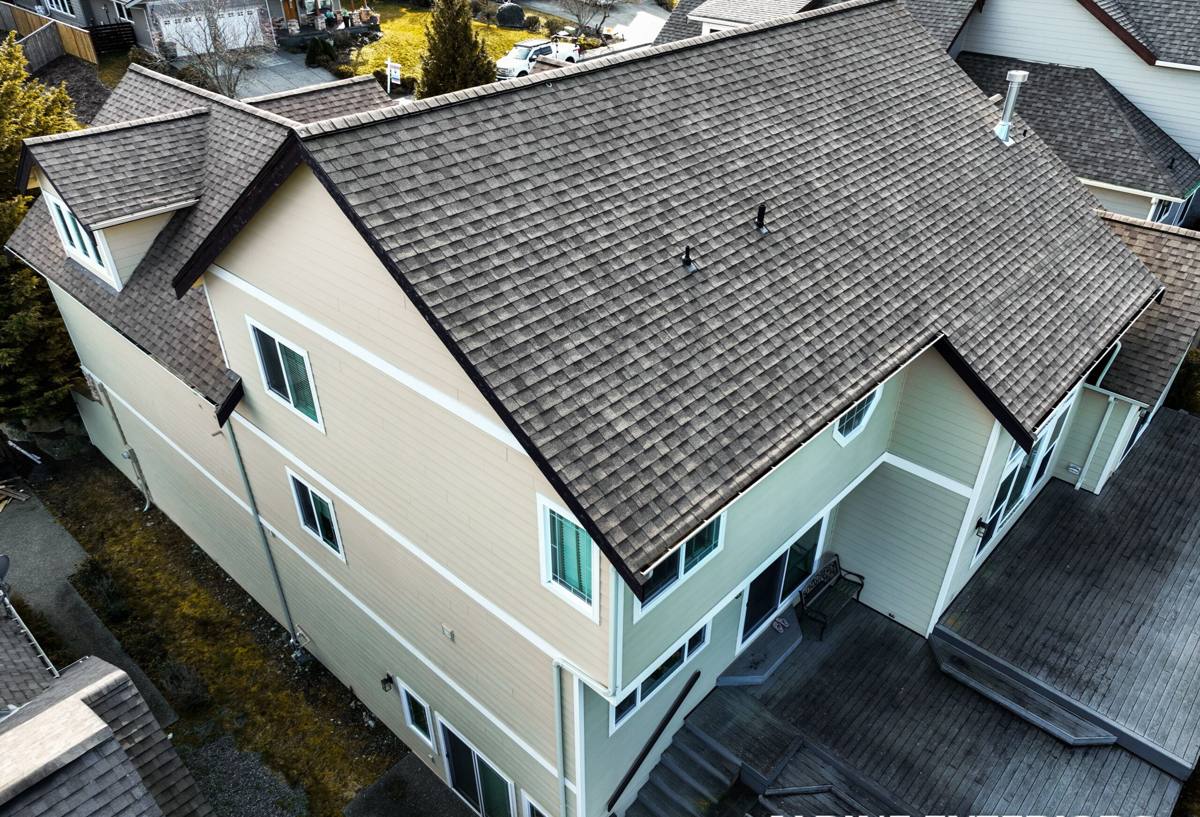
What Blanchard's Climate Does to Siding Specifically
Three things drive most of the siding damage we see in this part of Skagit County: salt-laden air moving inland, wind-driven rain that gets pushed sideways into wall assemblies rather than falling straight down, and a moss season that lingers longer than it does in more open, sun-exposed neighborhoods. Blanchard's wooded, hillside lots amplify the third factor in particular. Shade from trees and terrain keeps walls damp longer after a storm passes, and that extended dampness is exactly what moss needs to take hold on a north-facing or heavily shaded wall.
Shade and Moisture Retention
A wall that dries out within a day of a storm behaves very differently over ten years than a wall that stays damp for three or four days at a stretch. On organic siding materials — wood-based products, primed spruce, cedar — that extended dampness works into any gap in the finish, at cut edges, seams, and under-caulked joints, and starts a slow rot process that isn't visible until it's well established. Rural, tree-lined properties around Blanchard see this more than open lots closer to town, simply because the sun doesn't reach every wall face as often.
Salt Air and Fasteners
Salt-laden air corrodes exposed metal faster than it would further inland, and a repair that reuses or matches corroded fasteners without addressing that corrosion is a repair that's going to need attention again soon. Any honest repair job on a home in this corridor should account for fastener condition, not just the visible siding material.
Common Siding Repair Issues We See in Blanchard Homes
Not every repair call is the same problem. The most common issues we're asked to look at in this area include:
- Impact damage from falling branches or debris — common on wooded lots with mature trees close to the house
- Rot or soft spots at trim, corner boards, and butt joints where moisture has been sitting longest
- Failed or cracked caulk joints around windows, doors, and penetrations letting wind-driven rain behind the siding
- Moss and mildew staining held against shaded wall sections long enough to start affecting the substrate underneath
- Warped, cracked, or discolored panels on older vinyl or engineered wood siding that's simply reached the end of what a patch can fix
- Fastener corrosion or popped nails that have loosened panels along an entire course
Repair or Replace? How We Make That Call Honestly
Not every damaged section needs a full re-side, and we're not going to tell you it does. But there's a point where patching a wall stops being a repair and starts being a way to delay an inevitable, more expensive job. We look at the extent of the damage, what's underneath it, and how much of the wall is affected before recommending either path.
| Sign | Usually Points to Repair | Usually Points to Full Replacement |
|---|---|---|
| Damage extent | Isolated to one or two boards or a single section | Spread across multiple walls or a large percentage of one wall |
| Underlying moisture | Localized, caught early, sheathing intact | Widespread rot or soft sheathing found once siding is opened up |
| Material match | Matching product and finish still available or close enough to blend | Discontinued product or faded finish that can't be reasonably matched |
| Age of existing siding | Siding is otherwise sound and well within its expected service life | Siding is near or past the end of its realistic lifespan already |
| Underlying material | Fiber cement or another inorganic material with isolated damage | Widespread organic (wood-based) failure with rot spreading under intact-looking panels |
When damage is widespread or the underlying material is the kind that doesn't age well in this climate, we'll say so plainly rather than sell you a patch job that won't hold up through another wet season.
What a Correct Siding Repair Actually Involves
A repair is only as good as what happens underneath the visible surface. Before any new material goes up, the damaged section needs to come off cleanly, and whatever's behind it — sheathing, house wrap, flashing — needs an honest look. Skipping that step and just covering damage with new siding is how a repair becomes a callback a year later.
Matching, Not Just Covering
Color and profile matching matters more on a repair than on a full re-side, because the goal is a wall that reads as one continuous surface, not a patchwork. On James Hardie's factory-applied ColorPlus finish, matching an existing color is more consistent than trying to blend field-applied paint, since the original finish was baked on under controlled conditions rather than mixed and rolled on-site.
Flashing Integration
Any repair around a window, door, or penetration needs flashing that ties correctly into the surrounding wall assembly, not just fresh caulk laid over the joint. Caulk is a maintenance item, not a flashing detail, and treating it as the latter is one of the most common shortcuts we see in repair work done elsewhere.
Why We Repair to James Hardie Standards
We install one siding product on every job we take on: James Hardie fiber cement. That standard shapes our repair work too. When we're repairing an existing James Hardie wall, matching material and finish is straightforward because it's a system we know from the inside. When we're called to repair vinyl, cedar, primed wood, or other engineered products on an older Blanchard home, we'll do honest patch work where it makes sense — but we're upfront when a wall has reached the point where continued patching of an organic or seam-prone material is throwing money at a problem that a Hardie re-side would solve permanently. Fiber cement doesn't feed moss growth or rot the way wood-based products can, and it holds up to salt air and sustained moisture differently because there's no organic substrate for that moisture to work into.
Our Siding Repair Process
- On-site inspection of the damaged area and a check of the surrounding wall for signs the problem has spread further than what's visible
- Diagnosis of the root cause — impact, moisture, fastener failure, or material fatigue — rather than just addressing the symptom
- An honest repair-or-replace recommendation, explained plainly, with the reasoning behind it
- Careful removal of damaged material and inspection of sheathing, house wrap, and flashing underneath
- Correct flashing and moisture barrier repair before any new siding goes back up
- Color and profile matching for a finished look that blends into the existing wall
Why a Crew That Already Works Blanchard Matters
Blanchard is small and rural enough that it doesn't get the same routine attention from every siding crew in Skagit County. A contractor who already works this area regularly understands how much shade and moisture a given lot holds, which wall faces need the most attention for moss, and how salt air and driving rain move through this specific stretch of the county compared to more open, in-town properties. That familiarity matters when diagnosing a repair — knowing what's normal wear versus what's an early warning sign takes seeing this climate play out on real homes, not just reading a general spec sheet. It also means someone local is reachable down the road if a repair needs a follow-up look.
What to Look For When Hiring for a Siding Repair
- A willingness to open up the damaged area and check what's underneath before quoting a fix
- A clear, honest answer on whether the job is a true repair or a stopgap ahead of eventual replacement
- Experience matching color and profile so the repair blends rather than stands out
- Correct flashing knowledge, not just caulk-and-cover patching
- Proper licensing, bonding, and insurance you can verify before signing anything
- A track record of work specifically in this part of Skagit County, not a generic regional service claim
If you've got siding damage on a Blanchard home — whether it's one section from a storm or something you've been meaning to have looked at for a while — we're happy to come take a look and give you a straight answer on what it actually needs. Reach out for a free, no-pressure estimate and we'll walk the property with you.