 Burlington
 Metal Roofing on Samish Island: A Different Set of Rules
Samish Island sits out where Skagit County meets the water, and that changes what a roof has to survive. Homes here take a steady diet of salt-laden air off Samish Bay, wind-driven rain that finds every gap in a roof system, and a wet, shaded climate that keeps moss and moisture in play most of the year. A roof spec that works fine a few miles inland in Burlington doesn't automatically hold up the same way out here. Metal roofing, done correctly for this exposure, is one of the more reliable answers we install — but "metal roofing" covers a wide range of products, fastening methods, and coatings, and the details matter more on Samish Island than almost anywhere else we work.
This page is about that one job, in that one place: what a correct metal roof installation looks like for a Samish Island home, why the standard approach sometimes needs adjusting for this exposure, and what our process actually involves from first look to final walk-through.
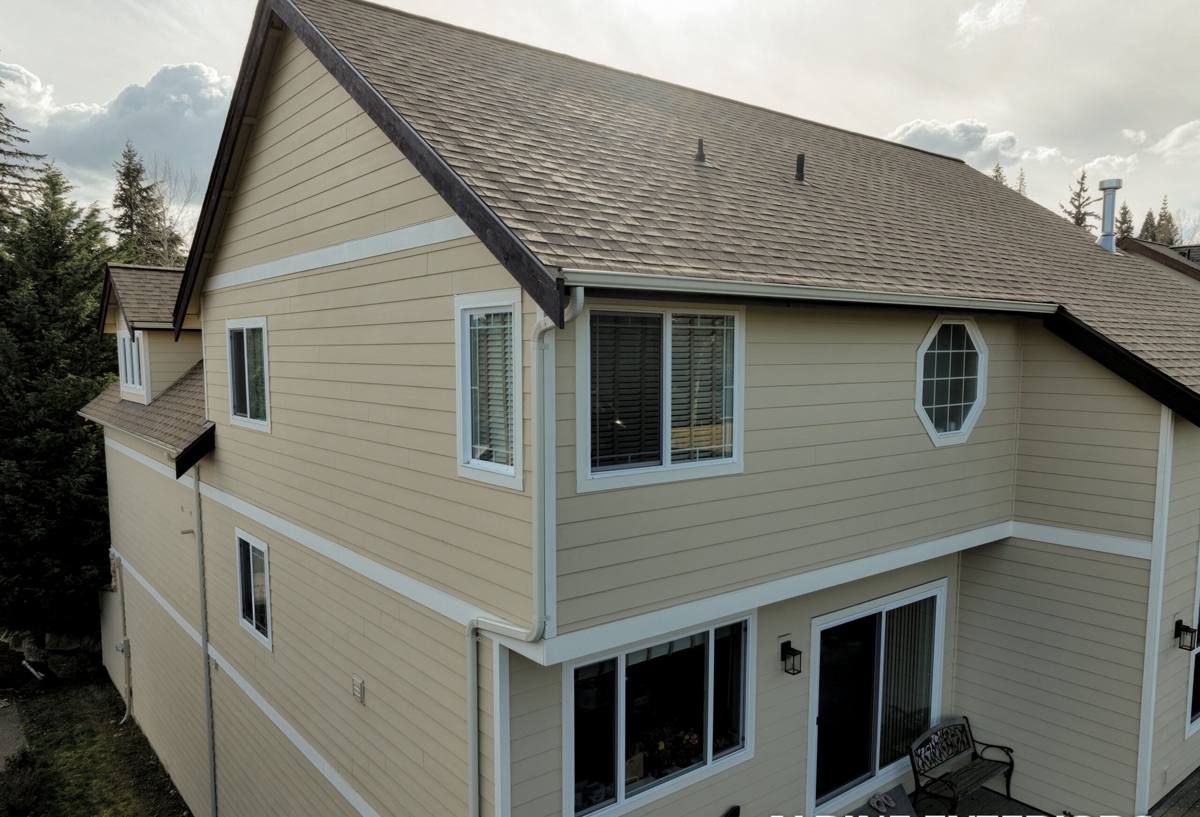
What Salt Air, Driving Rain, and Moss Actually Do to a Roof
Salt Air and Corrosion
Airborne salt is a slow, quiet problem. It settles on metal surfaces, fasteners, and flashing, and over years it accelerates corrosion — especially anywhere two dissimilar metals touch, or where a coating has been scratched or worn thin. A roof that looks fine from the ground can have fastener heads or cut edges quietly rusting long before the panels themselves show any trouble. This is why coating type and fastener material aren't cosmetic choices for a property like this — they're the first line of defense.
Driving, Wind-Blown Rain
Skagit County storms coming off the water don't always fall straight down. Wind-driven rain gets pushed sideways and upward under laps, around penetrations, and into any seam that wasn't detailed with that in mind. A roof that would shed water fine in a calm, straight rain can leak in a sideways storm if the underlayment, flashing, and panel overlap weren't built for it. Out here, we treat every roof as if it will see wind-driven rain regularly, because it will.
Moss and a Long Wet Season
Shade, moisture, and mild temperatures are exactly what moss wants, and Samish Island gets a long stretch of the year with all three. Moss holds water against a roof surface far longer than an open, sun-exposed roof would ever see, and it can work its way into laps and fastener penetrations over time. Metal roofing resists moss far better than shingles or wood, but it isn't moss-proof, and roof geometry, overhang, and nearby tree cover all affect how much of a problem it becomes on a given house.
Why Metal Roofing Is a Strong Fit Here — With Caveats
Standing seam and quality metal panel systems handle this climate well when they're specified and installed correctly. They shed water fast, they don't absorb moisture the way some roofing materials do, and they give moss less to hold onto. That's the upside, and it's real. The caveat is that metal roofing is less forgiving of a rushed or generic installation than some other materials — a poorly fastened or badly flashed metal roof can actually trap and channel water in ways that create bigger problems than a simpler roof would have. On a site like Samish Island, where the roof is under constant coastal load, the installation quality matters as much as the material choice.
Panel Types and Coatings Compared
| System | Typical Fit for Coastal Exposure | Key Trade-Off |
|---|---|---|
| Standing seam, concealed fastener | Strong choice — fewer penetrations, better long-term seal | Higher upfront cost, more installation skill required |
| Exposed-fastener panel | Workable, but fastener seals need closer long-term attention | Fastener washers age and need eventual replacement |
| Galvalume coating | Good general corrosion resistance | Can be more reactive in direct, heavy salt exposure than premium coatings |
| Premium paint/coating systems | Best suited to salt-air sites like Samish Island | Added material cost, but reduces long-term coating failure risk |
We don't push one system on every roof. The right call depends on the home's exact exposure — how close it sits to open water, how much wind it takes, roof pitch, and what the homeowner wants long-term. Part of our job is walking through that trade-off honestly rather than defaulting to whatever is easiest to install.
Where Coastal Metal Roofs Actually Fail — And How We Address It
Fasteners
Fastener choice matters more here than the panel material itself in some cases. We use fasteners and washers rated for coastal/corrosive exposure, and we're deliberate about avoiding metal-on-metal combinations that accelerate galvanic corrosion. This is a detail that's invisible once the roof is finished, but it's one of the most common reasons a metal roof underperforms its expected lifespan near the water.
Flashing and Penetrations
Every chimney, vent, skylight curb, and wall transition is a place where wind-driven rain wants to get in. Flashing has to be sized, lapped, and sealed for sideways water, not just water running straight down the slope. We treat flashing detail work as the most important part of the install, not an afterthought once the panels are up.
Underlayment
A quality synthetic or self-adhered underlayment underneath the metal is cheap insurance against wind-driven rain and ice-adjacent moisture that gets past the panel seams. On an exposed site like this, we don't treat underlayment as optional or interchangeable — it's part of the actual weather barrier, not just a construction-phase layer.
Panel Overlap and Seam Direction
Panel laps and seam direction need to account for prevailing wind and rain direction on the specific roof, not just be run the "standard" way. On a site that regularly sees wind-driven rain off the water, getting this wrong is one of the more common causes of a leak that shows up months or years after installation.
Our Process for a Samish Island Metal Roofing Project
- On-site assessment. We look at the existing roof structure, deck condition, exposure direction, tree cover, and any moss or moisture history before recommending a system.
- Honest system recommendation. Based on that assessment, we recommend panel type, coating, and fastening approach suited to the home's actual exposure — not a one-size-fits-all package.
- Deck and structure check. Any existing moisture damage, soft decking, or ventilation issues gets addressed before a single panel goes on. Installing new roofing over a compromised deck just hides the problem.
- Underlayment and flashing installation. This is where most of the long-term performance of the roof actually gets decided, and we don't rush it.
- Panel installation. Panels are installed with attention to seam direction, fastener spacing, and coastal-rated hardware.
- Final walk-through. We go over the finished roof with the homeowner, including what routine maintenance will look like for that specific property.
Living With a Metal Roof in a Wet, Wooded Climate
Metal roofing is lower-maintenance than most materials, but "low-maintenance" isn't "no-maintenance," especially on a shaded, moisture-heavy site. A little seasonal attention goes a long way toward protecting the investment.
- Keep gutters and valleys clear of needles and debris so water has a clear path off the roof
- Trim back overhanging branches where practical to reduce shade and organic debris buildup
- Watch for moss starting at north-facing slopes or shaded valleys and address it early, before it spreads
- Have flashing and penetration seals visually checked periodically, since these are the first points to show wear
- Avoid pressure-washing metal roofing — it can damage coatings and force water under laps
None of this is heavy work, but it's the difference between a metal roof that reaches its full lifespan on Samish Island and one that develops avoidable problems from being left completely alone for years.
What Affects Cost on a Coastal Metal Roofing Project
Every home is different, and we'll give you real numbers after we've actually looked at the roof — but these are the factors that typically move the price on a project like this.
| Factor | Why It Matters |
|---|---|
| Panel system chosen | Standing seam typically costs more than exposed-fastener panel, reflecting labor and material differences |
| Coating grade | Coastal-rated coatings cost more upfront but reduce long-term corrosion risk |
| Roof complexity | More valleys, penetrations, and transitions mean more flashing work and labor time |
| Existing deck condition | Repairs to soft or damaged decking add cost but are not optional if found |
| Roof pitch and access | Steeper or harder-to-access roofs take longer and require more safety setup |
We'd rather walk a homeowner through these trade-offs honestly than quote a number that doesn't reflect what the roof actually needs. Broadly, expect metal roofing to cost more upfront than asphalt shingles, offset by a longer service life and less frequent replacement — but the exact numbers depend on the specifics of your roof.
Why Local Experience on Samish Island Matters
A contractor who mostly works drier, less exposed sites inland can still install a technically correct roof — on paper. But knowing how a specific stretch of Skagit County coastline behaves, which directions the worst wind-driven rain tends to come from, how fast moss establishes on a shaded north slope near the water, and which flashing details actually get tested by real weather here isn't something you get from a spec sheet. It comes from having worked roofs in this exact kind of exposure before. That's the difference between a roof that's built to a general standard and one that's built for this specific place.
We're a Burlington-based crew that works throughout Skagit County, including waterfront and near-waterfront properties like those on Samish Island. We're not guessing at what this climate does to a roof — we see it on every coastal project we take on.
Get a Straight Answer About Your Roof
If you're considering metal roofing for a home on Samish Island, we're glad to come take a look, walk you through what your specific roof needs, and give you an honest recommendation — no pressure, no upsell. Use the form below to request a free estimate.