 Burlington
 Roofing for Bow's Coastal Microclimate
Bow sits close enough to Samish Bay and the open water of Skagit County that homes here take on a different kind of weather than roofs just a few miles inland. Salt-laden air moves off the water, driving rain comes in sideways during winter storms, and the shade from surrounding fir and cedar keeps roof surfaces damp for months at a stretch. A roof built for a drier, more sheltered lot doesn't hold up the same way out here, and that's the gap we try to close with every new roof installation we do in this area.
This page is about one job: putting a new roof on a home in Bow, done in a way that actually accounts for what the local climate does to a roof over ten, twenty, and thirty years. It's not a general overview of roofing — it's what we've learned from working on roofs in this specific stretch of Skagit County.
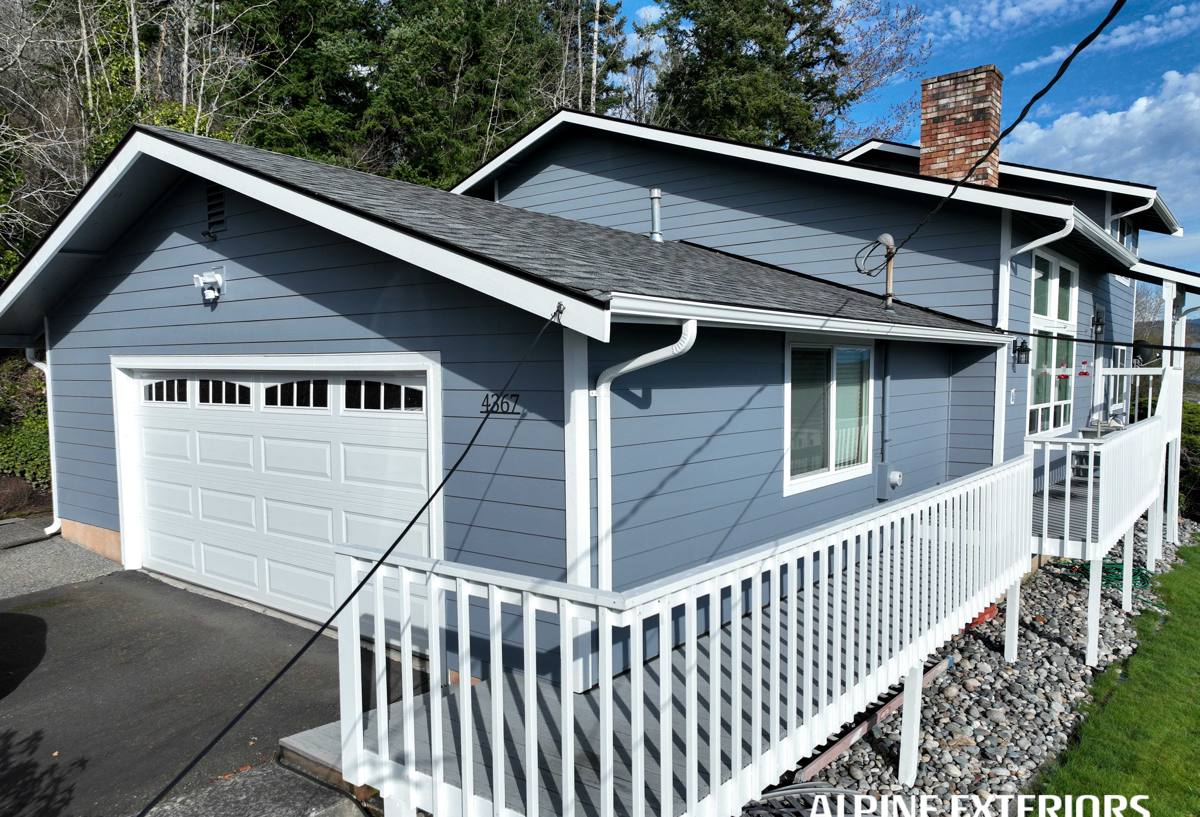
What Bow's Weather Actually Does to a Roof
Moss and Algae Growth
Northwest Washington has one of the longest moss seasons in the country, and Bow's tree cover and coastal humidity make it worse than average. Moss doesn't just look bad — it holds moisture against the roofing material, lifts shingle edges, and works its way under flashing over time. A roof installed without moss-resistant strategy in mind will show growth again within a couple of seasons, even after a clean install.
Salt Air and Metal Corrosion
Homes closer to the water deal with airborne salt that accelerates corrosion on unprotected metal — flashing, fasteners, vents, and any exposed hardware. Standard fasteners and lower-grade flashing corrode faster here than they would ten or fifteen miles inland. This is one of the most overlooked factors in a roof's real lifespan near Bow, and it rarely gets mentioned until a roof starts leaking around a penetration years before it should.
Driving, Wind-Driven Rain
Skagit County storms often bring rain at an angle, not straight down, which means water gets pushed up under shingle laps, around vent boots, and into any gap in flashing that a calmer climate would never test. A roof that isn't detailed for wind-driven rain can look fine in dry weather and still leak during the first real winter storm.
Signs a Bow Home Needs a New Roof, Not Another Repair
- Granule loss heavy enough that you're finding grit in gutters every time it rains
- Moss or algae that returns within months of cleaning, especially on north-facing slopes
- Soft spots or sagging when walked, which usually means the deck underneath has taken on moisture
- Daylight visible through the attic at roof edges or around vents
- Multiple past repairs in different areas rather than one isolated problem
- Shingles curling, cracking, or missing tabs across more than one section of the roof
- A roof approaching or past 20-25 years old, regardless of how it looks from the ground
If you're only dealing with one of these, a repair may still make sense. Once several show up at once, patching stops being cost-effective and a full replacement becomes the more honest recommendation.
What a Correct Installation Involves
Tear-Off and Deck Inspection
We don't install a new roof over an old one. A full tear-off lets us see the actual condition of the roof deck, which is the part homeowners almost never get to inspect. In Bow's damp climate, it's common to find soft or delaminated plywood around old penetrations or valleys where water has been getting in slowly for years without an obvious leak inside the house. Replacing bad decking before the new roof goes on is not optional — installing new shingles over a compromised deck just hides the problem for another season.
Underlayment and Ice/Water Protection
Given how much rain this area sees, we don't treat underlayment as a formality. Synthetic underlayment across the full roof, with self-adhering ice-and-water membrane at eaves, valleys, and around every penetration, is the difference between a roof that sheds wind-driven rain and one that only handles rain falling straight down.
Flashing That's Actually Corrosion-Resistant
Given the salt air factor discussed above, we pay particular attention to flashing and fastener material near Bow. Cutting corners here doesn't show up as a problem on install day — it shows up as a leak around a chimney or vent stack five or six years later, which is exactly when it's hardest to trace.
Ventilation
Proper intake and exhaust ventilation keeps the attic temperature and moisture level balanced, which matters twice over in a wet climate: it reduces condensation buildup on the underside of the deck and it helps the shingles themselves last through more temperature swings without prematurely aging.
Choosing a Roofing Material for Bow's Conditions
There's no single "best" roofing material — the right choice depends on your home, your budget, and how much long-term maintenance you're willing to take on. Here's how the common options actually compare for a home in this climate.
| Material | Moss/Algae Resistance | Salt Air Durability | Typical Lifespan Here | Relative Cost |
|---|---|---|---|---|
| Standard 3-tab asphalt | Low — needs regular cleaning | Fair, if fasteners are corrosion-resistant | 15-20 years | Lowest |
| Architectural (laminate) asphalt | Moderate; algae-resistant granule options available | Good with proper flashing | 25-30 years | Moderate |
| Metal (standing seam or panel) | High — sheds moss more easily due to slick surface | Requires marine-grade coatings/fasteners near water | 40-50+ years | Higher |
| Composite/synthetic shake | Moderate to high, depending on product | Good | 30-40 years | Higher |
Architectural asphalt shingles with algae-resistant granules are the most common choice we install in Bow — they strike a practical balance between upfront cost and how well they hold up against moss and moisture. Metal roofing is a strong option for homeowners planning to stay long-term and wanting to minimize moss maintenance, but it's a bigger upfront investment and needs the right fastener and flashing spec to hold up to salt air. We'll walk through the honest trade-offs for your specific home rather than pushing whatever has the best margin.
Our Process, Start to Finish
- On-site inspection — we look at the current roof, attic ventilation, and any visible deck issues before quoting anything.
- Written estimate — material options, scope, and price laid out clearly, no vague allowances.
- Tear-off and deck check — old roofing removed, deck inspected and repaired where needed.
- Underlayment and flashing — synthetic underlayment, ice-and-water membrane at vulnerable areas, corrosion-resistant flashing and fasteners.
- Installation — shingles or panels installed to manufacturer spec, with attention to nailing pattern and exposure, which matters more in high-wind areas than most homeowners realize.
- Ventilation check — intake and exhaust confirmed balanced for the attic size.
- Cleanup and final walkthrough — site cleared, roof reviewed with you before we consider the job done.
Why Local Experience in Bow Matters
A roofing crew that regularly works Skagit County homes near the water already knows which details can't be skipped here — the fastener grade, the flashing at valleys, the underlayment coverage at eaves where ice and wind-driven rain hit hardest. A crew based somewhere drier or further inland may build to a code minimum that simply wasn't designed with salt air and a months-long moss season in mind. That's not a knock on general roofing know-how — it's just the difference between a roof built for average conditions and one built for the conditions Bow actually gets.
We also know how the local permitting and inspection process works in Skagit County, which keeps the project moving instead of stalling on paperwork.
Protecting Your New Roof After Installation
A correctly installed roof still benefits from basic upkeep, especially in a climate like this one. A few habits go a long way toward getting the full lifespan out of the investment:
- Keep gutters clear so water isn't backing up under the shingle edge
- Trim back overhanging branches to cut down on shade and debris that feed moss growth
- Have moss treated or gently removed at the first sign of regrowth rather than waiting a full season
- Schedule a visual inspection every couple of years, especially after major storms
- Watch for granule buildup in gutters as an early sign of shingle wear
Get a Free, No-Pressure Estimate
If your roof in Bow is showing its age or you're planning ahead rather than waiting for a leak, we're happy to come take a look and give you a straight answer about what it needs. There's no pressure and no obligation — just an honest assessment and a written estimate you can take your time with. Fill out the form below to get started.