 Burlington
 Why Mount Vernon Homes Need a Different Approach to Siding
Mount Vernon sits low in the Skagit Valley, close enough to Puget Sound and the Skagit River delta that homes here deal with a specific combination of weather stress: damp marine air carrying salt, long stretches of driving rain off the water, and a moss and mildew season that can run eight or nine months out of the year. None of that is exotic or extreme compared to, say, coastal storm exposure, but it is relentless. Siding here doesn't fail because of one bad event — it fails slowly, from years of moisture cycling into seams, joints, and any spot where the wrong material was used or the installation cut a corner.
We're a Burlington-based crew, and Mount Vernon is part of our regular service area, not a stretch job we drive in for once and forget. That matters more than it sounds like it should, because siding problems in this valley tend to be pattern-based — the same north-facing walls, the same low eave lines, the same ground-contact mistakes show up house after house. A crew that works this area consistently starts to recognize those patterns before they turn into callbacks.
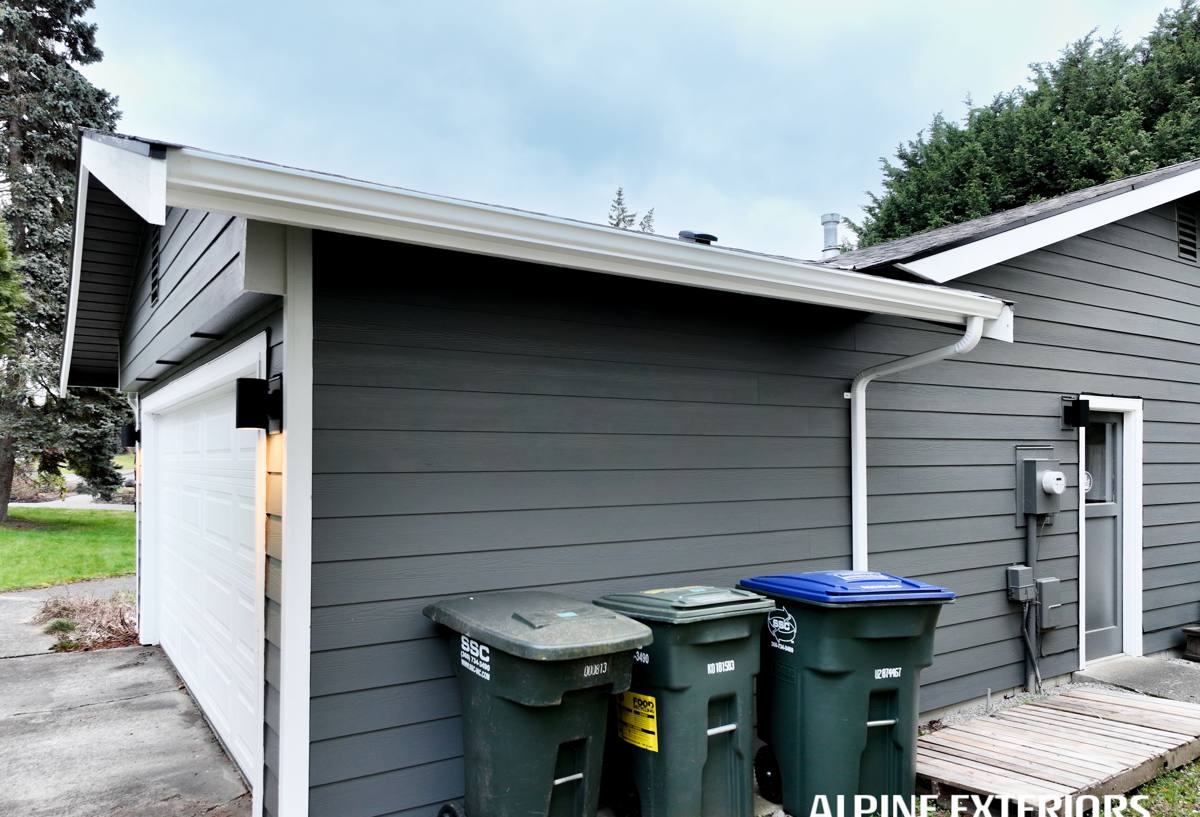
What Salt Air, Rain, and Moss Actually Do to Siding
It helps to separate the three stressors, because each one attacks siding differently.
Salt-Laden Marine Air
Mount Vernon isn't oceanfront, but Skagit Valley air still carries salt content pulled in off Puget Sound, especially on west and south exposures. Salt accelerates corrosion on fasteners, flashing, and any metal trim that isn't rated for it. On siding materials that swell or absorb moisture, salt-laden air also slows drying time between rain events, which keeps the material wetter for longer stretches than a drier inland climate would.
Driving, Wind-Pushed Rain
Skagit County rain rarely falls straight down. Wind off the valley pushes it sideways into wall assemblies, which puts real pressure on horizontal laps, butt joints, and anything around windows and doors. A siding job that looks fine on a dry day can leak for years before a homeowner notices staining or soft trim, because the water is getting behind the cladding, not just running off the face of it.
Extended Moss and Mildew Season
Shaded north walls, tree-lined lots, and the valley's humidity keep surfaces damp long after a storm passes. Moss and mildew don't just look bad — they hold moisture against the siding surface and, on absorbent materials, keep feeding a cycle of softening and paint failure. Siding that can't shed water quickly and dry out between rain events is fighting this climate every single day of the year, not just during the wettest months.
Why We Install James Hardie and Nothing Else
We made a decision early on to standardize on James Hardie fiber cement and stop installing other siding materials, and Mount Vernon's climate is a big part of why that decision holds up. Fiber cement is non-combustible and dimensionally stable — it doesn't swell, warp, or absorb water into its core the way wood-based products can. James Hardie's HZ5 product line is specifically engineered for wet, cold-swing climates like ours, with formulation and testing aimed at exactly the moisture-cycling conditions the Skagit Valley produces.
The ColorPlus factory finish is the other piece of this. It's baked on in a controlled environment rather than field-applied, which means better adhesion and a finish that's built to handle the freeze-thaw and wet-dry cycling this region sees. That translates into fewer repaint cycles and a color that holds up against the valley's damp, shaded conditions instead of chalking or peeling early.
We don't say this to knock every other product on the market — plenty of materials work fine in the right climate and with the right installation. But when we weigh moisture behavior, long-term maintenance, and how a material performs specifically in a place like Mount Vernon, Hardie fiber cement is what we're willing to put our name behind.
What This Means Compared to Other Common Siding Choices
| Factor | James Hardie Fiber Cement | Wood-Based / Composite Sidings | Vinyl |
|---|---|---|---|
| Moisture absorption | Minimal; engineered for wet climates | Can absorb and swell at cut edges/joints | Doesn't absorb, but seams can trap moisture behind it |
| Salt air resistance | Strong; non-organic core | Variable; organic content can be vulnerable | Generally stable but fasteners/trim can corrode |
| Finish durability | Factory-baked ColorPlus finish | Often field-painted, shorter repaint cycle | Color molded in, but fades and becomes brittle over time |
| Fire performance | Non-combustible | Combustible | Combustible, can deform under heat |
| Typical repaint interval | 15+ years depending on color/exposure | 5-10 years in this climate | Not painted, but replacement is the fix when it fails |
What a Correct Hardie Installation Looks Like Here
The product is only half the equation. In a valley climate like this, installation details are where jobs succeed or fail long-term. A correct install on a Mount Vernon home should include:
- Proper water-resistive barrier and rainscreen or drainage plane behind the siding, so any moisture that gets past the cladding has somewhere to go instead of sitting against the wall sheathing
- Correct fastener type and spacing per James Hardie's published installation instructions — not generic siding nail patterns
- Flashing at every horizontal joint, window head, and door head, lapped correctly so water sheds outward instead of tracking behind the board
- Minimum clearance from grade, decks, and roof lines, so splash-back and standing moisture don't sit against the bottom course
- Caulked and sealed joints only where Hardie's specifications call for sealant — not as a substitute for correct flashing
- Field-cut edges sealed or primed per manufacturer instructions, since an unsealed cut edge is one of the few places fiber cement can take on water
Skip any one of these and you can end up with a wall that looks right for a few years and then starts showing staining, soft trim, or paint failure right where the shortcut was taken. This is exactly the kind of detail that separates a warranty-backed installation from one that voids coverage without the homeowner knowing it.
Our Process for a Mount Vernon Siding Job
1. On-Site Assessment
We walk the exterior and look specifically for the failure patterns common to this area — north-wall moisture staining, trim rot at grade level, gaps around window and door flashing, and any moss buildup that points to a drainage problem rather than just a cosmetic one.
2. Scope and Product Plan
We spec the correct James Hardie panel or lap profile, HZ5 formulation, and ColorPlus color for the home, and lay out where the drainage plane, flashing, and trim details need attention beyond a straight re-side.
3. Tear-Off and Sheathing Check
Old siding comes off and we check the sheathing underneath for any moisture damage before anything new goes up. This step catches problems that don't show from the outside.
4. Weather Barrier and Flashing First
The water-resistive barrier, drainage plane, and flashing go in before a single piece of siding is installed. This is the layer that actually keeps water out over the long run — the siding is the second line of defense, not the first.
5. Installation to Manufacturer Spec
Fastening, spacing, clearances, and joint treatment follow James Hardie's published requirements, which keeps the manufacturer's warranty intact and gives the home the performance the product is engineered for.
6. Final Walkthrough
We review the finished work with the homeowner, including clearances, caulk lines, and any maintenance notes specific to the home's exposure.
Why a Local Burlington Crew Matters for This Job
Siding contractors who don't work Skagit County regularly can still install Hardie correctly on paper, but they're less likely to know which walls on a Mount Vernon home take the worst of the wind-driven rain, or which lots hold moss longest into the summer. Being based in Burlington means we're not learning this valley's climate on your house — we're applying what we already see across the neighborhoods we work in every season. It also means warranty follow-up, minor adjustments, or questions down the road don't involve waiting on a crew that has to drive in from out of the area.
What Homeowners Should Watch For Before Hiring Anyone
- Ask whether the crew installs to James Hardie's published fastening and flashing specifications, not just "standard" siding practice
- Confirm whether a drainage plane or rainscreen is included, especially on shaded or north-facing walls
- Ask how field-cut edges are sealed, since this is a common shortcut that shows up as damage years later
- Check whether the installer is a certified James Hardie contractor, which affects warranty coverage
- Get a clear scope in writing — including flashing and drainage details, not just "siding replacement"
Maintenance Expectations After Installation
A correctly installed James Hardie system in this climate is low-maintenance, not no-maintenance. Homeowners should expect periodic washing to keep moss and mildew from building up on shaded walls, occasional caulk inspection at trim joints, and repainting on a much longer cycle than wood-based siding would need — often 15 years or more depending on color and sun exposure. None of this is heavy upkeep; it's the normal cost of owning a home in a wet valley climate, and it's considerably lighter than what most alternative siding materials demand here.
If you're weighing a siding replacement or repair on a Mount Vernon home and want a straight answer about what your walls actually need, we're happy to take a look. Reach out for a free, no-pressure estimate using the form below.