 Burlington
 Why Mount Vernon's Climate Is Hard on Siding
Mount Vernon sits in the Skagit Valley, close enough to Skagit Bay and the Puget Sound estuary system that homes here deal with a mix of weather most siding products simply weren't built to handle for decades on end. Salt-tinged air moving up the valley from the water accelerates corrosion on fasteners and finishes. Driving rain off Pacific storm systems drives water sideways into laps, seams, and trim joints rather than just running straight down a wall. And because the valley holds moisture and shade longer than drier parts of the state, homes here go through a long moss and algae season that can start well before winter and linger into spring.
None of that is unusual for Skagit County — it's just the trade-off of living somewhere green and close to water. But it means siding decisions that work fine in Spokane or Boise don't always hold up the same way in Mount Vernon. Wood siding needs more frequent repainting and is more prone to rot at end grain and joints. Vinyl can warp with prolonged UV exposure and doesn't hold up as well against wind-driven rain intrusion at seams. Any siding installed with tight clearances or poor flashing details will trap moisture here faster than in a drier climate, and that moisture doesn't dry out quickly when the marine layer sits over the valley for days at a time.
Why We Install Only James Hardie Fiber Cement
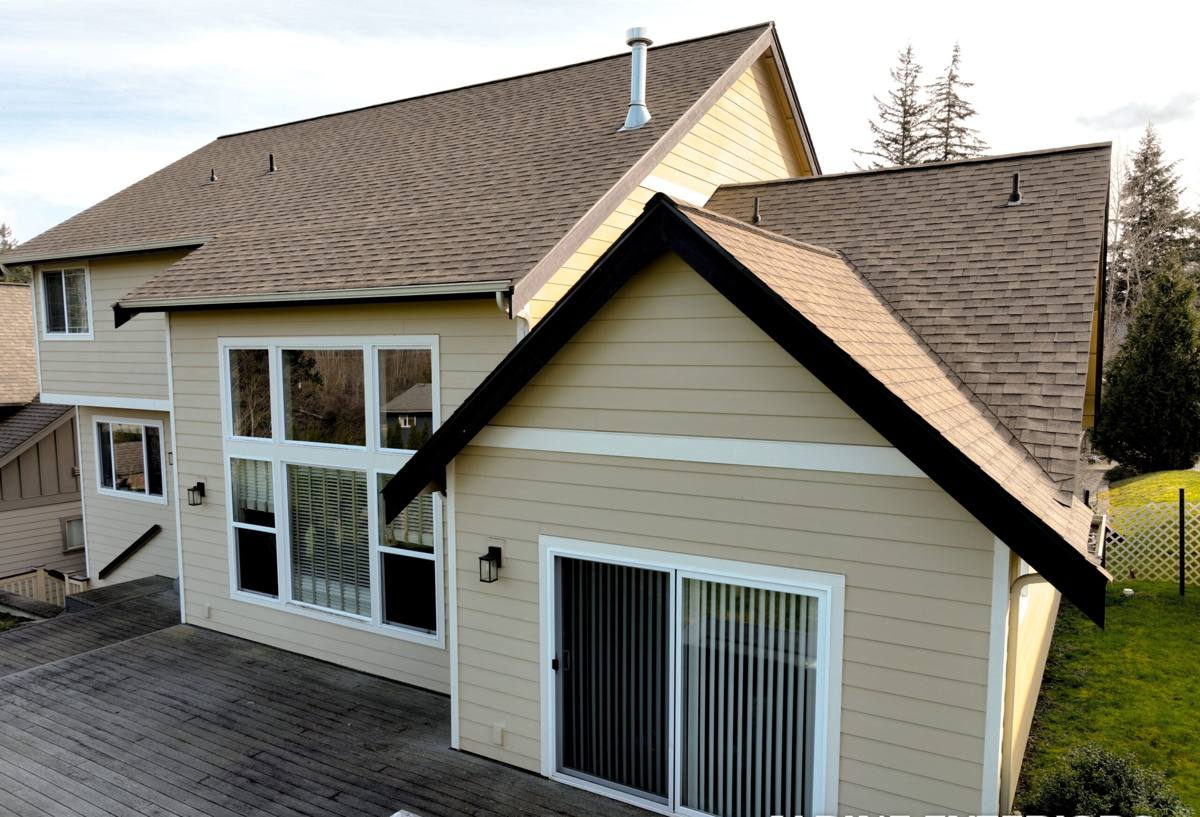
We standardized on James Hardie fiber cement for every home we side, including here in Mount Vernon, because it's engineered to handle exactly this kind of climate. It's non-combustible, it doesn't rot, it holds paint and factory finish far longer than wood, and it's dimensionally stable enough that it doesn't expand and contract the way vinyl does when temperatures swing. Hardie also makes an HZ5 product line specifically engineered for climate zones like ours — cooler, wetter, and coastal-influenced — which is part of why we don't install competing fiber cement brands or substitute materials. When a manufacturer builds a product specifically for Pacific Northwest conditions and backs it with a real warranty, that's the product we want on a Mount Vernon roofline, not a generic version meant for a different climate zone.
What Correct Fiber Cement Installation Involves
Fiber cement siding is only as good as the installation behind it. The material itself resists moisture and rot, but a poorly installed job can still trap water behind the boards, and that defeats the purpose. On every Mount Vernon project we pay close attention to the details that matter most in a wet, salt-influenced climate.
Flashing and Water Management
Every window, door, and roof-to-wall transition needs proper flashing and a drainable water-resistive barrier behind the siding, not just caulk covering a gap. In a climate with as much driving rain as ours, water will find any shortcut in the flashing detail eventually. We install a code-compliant weather barrier and rain screen approach so that any moisture that does get behind the cladding has somewhere to drain and dry out instead of sitting against the wall sheathing.
Clearances and Fastening
James Hardie's installation instructions specify minimum clearances from grade, roof lines, decks, and other siding terminations — usually several inches — because tight or non-existent clearances are one of the most common ways moisture wicks into the bottom of a board and starts breaking down paint or, over time, the substrate underneath. We also follow Hardie's fastening pattern and use corrosion-resistant fasteners, which matters more here than in inland areas because salt-influenced air will find and attack the wrong fastener faster than people expect.
Joints, Caulking, and Finish
Butt joints, corners, and trim transitions are where a lot of siding failures start. We follow Hardie's specifications for joint treatment and use exterior-grade sealants rated for the movement and moisture exposure those joints see. ColorPlus factory-finished boards also reduce how much field caulking and touch-up painting is needed in the first place, which is one less place for water to find a way in over the years.
Common Issues We See on Mount Vernon Homes
Because of the local climate, certain siding problems show up more often here than in drier parts of the state. Most trace back to installation shortcuts rather than the siding material itself.
| Symptom | Usual Cause | Why It Happens Here |
|---|---|---|
| Dark streaking or moss growth on north-facing walls | Shaded, slow-drying surfaces with limited airflow | Long moss season and marine-layer humidity in the valley |
| Paint or caulk failing early at joints | Wrong sealant type or joints not detailed to spec | Constant damp-dry cycling stresses caulk faster than a dry climate would |
| Soft spots or staining near the bottom of walls | Insufficient clearance from grade, decks, or walkways | Driving rain and splash-back keep the lower courses wetter, longer |
| Rust streaking below fastener heads | Non-rated fasteners or exposed fastener heads | Salt-influenced air accelerates corrosion on the wrong hardware |
Our Process, Start to Finish
We keep the process straightforward so homeowners know what to expect from the first walkthrough to the final cleanup.
- Free on-site estimate and inspection of your current siding, trim, and any moisture or ventilation concerns
- Written scope covering product line, color, trim details, and clearances specific to your home
- Removal of old siding and inspection of the sheathing underneath for hidden rot or water damage
- Installation of a drainable weather-resistive barrier and correct flashing at every penetration
- Hardie board installation following manufacturer clearance, fastening, and joint specifications
- Final walkthrough and cleanup, with an honest explanation of any maintenance you'll want to keep up with
Why Hiring a Crew That Already Works Mount Vernon Matters
Siding crews who work regularly in Skagit County already know which details matter most here — where moss tends to build up fastest, which wall orientations take the worst of the driving rain, and how to plan clearances around a landscape that stays damp longer than drier parts of the state. Mount Vernon also sits close to the Skagit River, and parts of the area are within reach of seasonal flood concerns, which is one more reason lower-wall clearance and drainage details aren't optional here — they're part of doing the job right the first time. A crew unfamiliar with this climate can install a technically correct product and still leave a home more exposed than it needs to be, simply by not weighting those local details the way a crew that works here every week would.
Local familiarity also means faster response if something needs a look after the job is done — no waiting on a crew that has to travel in from out of the area.
What Fiber Cement Siding Costs to Consider
Every home is different, and an accurate number only comes from an on-site estimate, but these are the main factors that move the price on a Mount Vernon project:
| Factor | Why It Matters |
|---|---|
| Home size and wall complexity | More corners, gables, and trim details mean more labor and material waste |
| Removal of existing siding | Tear-off and disposal of old wood or vinyl adds time and cost |
| Condition of the sheathing underneath | Hidden rot or water damage found during removal may need repair before new siding goes on |
| Product line and profile | Lap width, panel style, and trim choices affect material cost |
| Color: ColorPlus vs. field-painted | Factory finish costs more up front but reduces repainting down the road |
Keeping Fiber Cement Siding Looking Right in This Climate
Fiber cement is low-maintenance compared to wood, but "low-maintenance" doesn't mean "no maintenance" — especially with the moss and algae season we get in the valley. A little upkeep goes a long way toward protecting the investment:
- Rinse siding gently once or twice a year to keep moss and algae from taking hold, especially on shaded, north-facing walls
- Keep gutters clear so overflow doesn't run down the siding face and keep it perpetually damp
- Trim back landscaping and tree limbs that shade walls and slow drying time
- Check caulking at joints and trim periodically and re-seal if it starts to crack or pull away
- Watch the bottom courses near grade, decks, and walkways for splash-back staining, which can signal a clearance or drainage issue worth a look
If you're planning a siding project in Mount Vernon and want an honest look at what your home actually needs, we're happy to walk the property with you and put together a straightforward, no-pressure estimate — just fill out the form below to get started.