 Burlington
 Metal Roofing Built for Conway's Climate, Not Just Its Rooflines
Conway sits low in the Skagit River delta, close enough to Skagit Bay and the Sound that salt-laden air is a real factor in how a roof ages here — not a talking point. Add in the amount of driving, wind-blown rain this part of Skagit County sees over the fall and winter, and a moss season that can run eight months or longer under the tree cover and humidity typical of this valley, and you've got three separate forces working against a roof at the same time. Asphalt shingles wear out under that combination faster than most homeowners expect. Metal roofing, installed correctly, is built to shrug off all three — but "installed correctly" is doing a lot of work in that sentence, and it's the part that gets skipped when a crew treats a metal roof like any other job.
This page is about metal roofing specifically for homes in and around Conway. Not a general pitch for the product — a look at what this climate actually demands from a metal roof, what a correct installation involves, and how we approach the work on homes in this part of Skagit County.
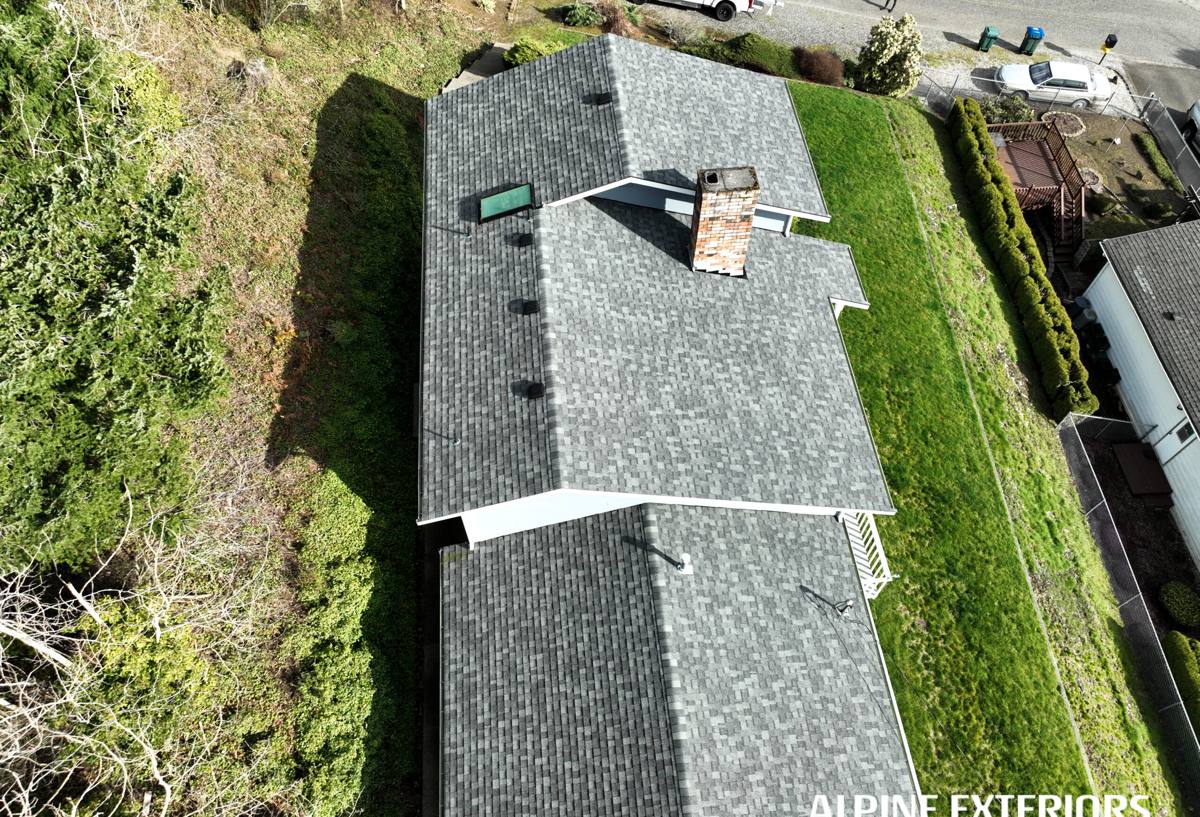
What Conway's Climate Actually Does to a Roof
Salt Air and Corrosion
Proximity to tidal water means airborne salt finds its way onto exposed metal, fasteners, and flashing. Left unaddressed, that accelerates corrosion at cut edges, fastener heads, and anywhere the protective coating has been scratched or compromised during installation. This is why panel material, coating quality, and fastener selection matter more here than they would twenty or thirty miles inland.
Driving Rain and Wind-Driven Water
Storms coming off the Sound don't just fall straight down — wind pushes rain sideways, up under laps, and into any gap a lazy installation leaves behind. A metal roof's watertightness depends almost entirely on details you can't see once the job is done: underlayment, seam design, and flashing at every transition. Get those wrong and the panels themselves become irrelevant.
Moss and the Long Wet Season
Shade, moisture, and mild temperatures make this valley good moss habitat for most of the year. Moss doesn't damage metal panels the way it damages shingles, but it does hold moisture against seams and fasteners longer than the roof would otherwise see, and it clogs valleys and gutters if it's allowed to build up. A metal roof reduces the moss problem significantly compared to shingles, but it doesn't eliminate the need to keep an eye on it.
What a Correct Metal Roof Installation Involves
Underlayment and the Moisture Barrier
A quality synthetic or high-temp underlayment goes down first, with self-adhered membrane at eaves, valleys, and any low-slope transitions — the spots where wind-driven rain is most likely to test the roof. This layer is your backup if wind ever drives water past the panel laps, which happens even on well-built roofs in a bad enough storm.
Panel Fastening and Seam Type
Exposed-fastener panels and concealed-fastener standing seam panels both have a place, but they behave differently over time, especially with wind and thermal movement. Fasteners need to be the right length and type for the decking, spaced correctly, and — this matters near salt air — matched in material to the panel to avoid galvanic corrosion where dissimilar metals touch.
Flashing at Every Penetration
Chimneys, vents, skylights, and wall transitions are where most roof leaks actually start, metal or otherwise. Each one needs flashing detailed for that specific condition, not a generic boot or a bead of caulk standing in for real metalwork. Caulk fails; properly formed and lapped flashing doesn't rely on a sealant to do the structural work of keeping water out.
Ventilation
Metal roofs still need a ventilated attic or roof assembly underneath them. Proper intake and exhaust ventilation keeps moisture from condensing on the underside of the panels and controls attic temperature, which matters for ice and moisture management during Skagit County's colder, wetter stretches.
Choosing Panel Material and Finish
Not every metal roofing product is a good fit this close to salt air and heavy rain. The table below covers the trade-offs we walk homeowners through most often.
| Option | Strengths in This Climate | Trade-Offs |
|---|---|---|
| Steel, Galvalume or Galvanized with quality paint finish | Strong, widely available, good coating durability when properly finished | Cut edges and scratches need touch-up to prevent rust starting points |
| Aluminum | Naturally corrosion-resistant, performs well in coastal-influenced air | Softer material, denting risk is slightly higher, generally costs more |
| Standing seam (concealed fastener) | Fewer penetrations, better long-term watertightness, cleaner look | Higher upfront cost, requires more installation skill to get seams right |
| Exposed-fastener panel | Lower cost, faster install, good for outbuildings and simpler roofs | Fastener washers age and need periodic inspection or replacement over decades |
For most Conway homes, we lean toward standing seam with a quality Kynar or comparable PVDF paint system when budget allows — the concealed fasteners and superior coating give the best combination of corrosion resistance and long-term watertightness for a home exposed to both salt air and driving rain. Exposed-fastener panels remain a reasonable, honest choice for shops, garages, and budget-conscious projects where the trade-offs make sense.
Living With Moss on a Metal Roof
A correctly installed metal roof is far less hospitable to moss than shingles, but shaded, low-slope, or north-facing sections in a wet valley like this one can still collect it, especially where overhanging trees drop debris into valleys and gutters. A few habits keep a metal roof performing the way it should through Skagit County's long wet season:
- Clear needles, leaves, and debris from valleys and gutters at least twice a year, more often under heavy tree cover
- Trim back branches that keep a section of roof shaded and damp longer than the rest
- Avoid pressure washing directly into seams or under panel laps — it can force water where it shouldn't go
- Address any moss growth with a gentle, roof-safe treatment rather than scraping, which can scratch protective coatings
- Have fasteners and flashing points checked periodically, particularly after a hard windstorm
Signs a Conway Home May Need Metal Roof Work
Some of these apply to homes considering a first metal roof; others apply to homes with an existing metal roof that needs attention.
- Visible rust starting at cut panel edges, fastener heads, or flashing seams
- Streaking or staining below valleys and penetrations, which often points to a flashing detail failing
- Loose or backed-out fasteners on an older exposed-fastener roof
- Moss or standing debris building up in valleys or against upslope obstructions
- Recurring interior moisture or musty smell in the attic during the wet months
- An aging or failing shingle roof where the ongoing maintenance burden no longer makes sense compared to a one-time metal roof investment
Our Process for Conway Roof Projects
- On-site evaluation. We look at the existing roof deck, ventilation, and any problem areas specific to the home's exposure and shading before recommending anything.
- Panel and finish selection. We walk through material, profile, and coating options against your budget and how exposed the home is to wind and salt air.
- Tear-off or overlay assessment. Some roofs are candidates for a metal roof installed over existing decking with proper battens or underlayment; others need a full tear-off. We're honest about which one your roof actually needs.
- Installation. Underlayment, flashing, panels, and fastening done to spec, with particular attention to every penetration and transition point.
- Final walkthrough. We go over the finished roof with you, including what routine maintenance to expect and how to spot issues early.
What Metal Roofing Typically Costs Here
Every roof is different, but homeowners planning a project deserve a realistic starting point rather than a guess pulled out of thin air. Broad ranges for installed metal roofing in this region generally run in the neighborhood of $10 to $18 per square foot, with the spread driven mostly by the factors below rather than by the brand name on the panel.
| Cost Factor | Why It Moves the Price |
|---|---|
| Panel type (exposed-fastener vs. standing seam) | Standing seam requires more labor and specialized tools to fabricate and install seams correctly |
| Roof complexity | Valleys, dormers, and multiple penetrations all add flashing work and labor time |
| Tear-off vs. overlay | Removing and disposing of an old roof adds cost but is sometimes the only sound option |
| Decking condition | Rotten or undersized decking found during tear-off needs repair before panels go on |
| Access and pitch | Steep or hard-to-access roofs take longer and require more safety setup |
We give a firm, written estimate after seeing the actual roof — not a phone-quote guess — because so much of the real cost depends on conditions specific to your home.
Why It Matters That We Already Work in Conway
A crew that mostly works elsewhere and takes the occasional Conway job doesn't carry the same working knowledge of what this low-lying, river-delta stretch of Skagit County does to a roof year over year. We're based out of Burlington, and jobs like this are the normal course of our week, not a special trip. That means we already know how to detail flashing for the wind-driven rain this area gets, which panel finishes hold up against the salt air coming off the Sound, and how aggressively moss and moisture need to be managed under the tree cover common to homes here. It also means we're a known, reachable local business if you ever have a question about the roof years after installation — not a name that only shows up for the sale.
If you're weighing a new metal roof, a replacement, or repairs on an existing one, we're glad to take a look and give you a straight answer about what your roof actually needs. Reach out for a free, no-pressure estimate using the form below.