 Burlington
 Avon sits low in the Skagit Valley just outside Burlington, on flat farmland ground where fog settles easily and moisture has nowhere fast to drain. Homes here take on the same coastal air moving up from Skagit Bay that the rest of the county deals with, but the valley floor location adds its own wrinkle: less wind to dry a wall off between storms, and long shaded stretches where moss gets a real foothold. If you're planning a siding project on an Avon home, this page walks through what that specific combination of conditions means for the job, and how we approach James Hardie fiber cement installation in this part of Skagit County.
What Avon's Location Does to a House Exterior
Three things define exterior wear on an Avon home: salt-laden air carried inland off Skagit Bay and the broader Puget Sound system, driving rain that comes in sideways off Pacific storm fronts rather than falling straight down, and a moss season that runs longer here than in drier, more exposed parts of the state. None of these hit a house all at once in a dramatic way. They work slowly — breaking down finishes, working into joints that weren't sealed quite right, and holding moisture against a wall for days after a storm has already passed through.
The valley floor location around Avon matters more than it might seem. Homes on more exposed, elevated ground get more wind and sun to dry a wall surface out between rain events. Avon's flatter, lower terrain doesn't offer that as readily, which means a wall assembly here can stay damp longer after the same storm than one a few miles away on higher ground. That's not a reason to over-engineer everything, but it is a reason to take moisture management seriously on every detail of a siding job — starter strip clearance, flashing laps, joint sealing — rather than treating them as boilerplate steps.
Why a Generic Siding Spec Isn't Enough Here
Most siding products on the market are engineered and marketed for a national-average climate. That's a reasonable approach for a manufacturer selling nationwide, but it leaves a real gap between "performs fine in most places" and "performs fine on a low-lying Skagit Valley lot." That gap is exactly where premature siding failure tends to start — not because the material was defective, but because it wasn't matched to the actual conditions the wall faces day after day.
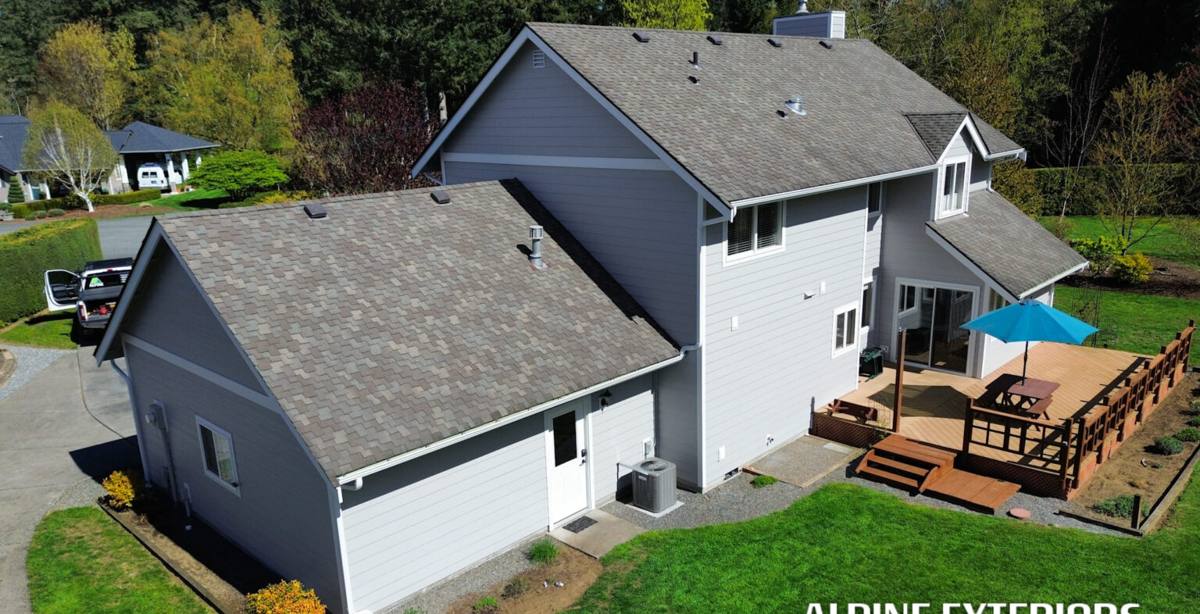
Why We Install Only James Hardie on Avon Homes
We install one siding product, full stop: James Hardie fiber cement. We don't offer vinyl, LP SmartSide, Cemplank, Allura, primed spruce, or cedar. That's a deliberate professional standard, not a limited catalog, and each of the alternatives we don't install gets something right — vinyl is inexpensive and low-maintenance in milder climates, engineered wood products go up fast and take paint well, cedar has real natural character. But each one carries a trade-off that matters more in a valley climate like Avon's than it might somewhere drier.
Vinyl can grow brittle and warp with age and temperature swings, and its panel seams and J-channels are precisely the kind of small gap that wind-driven rain finds its way into over years of exposure. Wood-based products, however well the factory treats them, still have an organic core that depends on flawless field priming and caulking at every single cut edge to keep sustained moisture out — a hard standard to hold across an entire job, every time, for the full life of the siding. Cedar looks genuinely good and has real character, but it's organic too, and it asks for ongoing upkeep — refinishing, sealing, moss control — to keep performing in a climate that doesn't give it much of a dry season to recover in.
Fiber cement handles the core problem differently because it isn't organic to begin with. There's no wood substrate for trapped moisture to work into, and it doesn't feed moss and mildew growth the way wood-based siding can. James Hardie builds climate-specific HZ product lines engineered around sustained moisture and coastal exposure, rather than one generic formulation sold everywhere in the country regardless of climate. Paired with a factory-applied ColorPlus finish — baked on under controlled conditions instead of painted on-site in whatever weather shows up that week — it holds color and resists cracking longer than most field-applied finishes manage in a climate this consistently wet.
What Correct Installation Looks Like on an Avon Lot
A siding product is only as good as the installation behind it, and that's especially true on lower, flatter ground where a wall doesn't get much help drying out on its own. Correct Hardie installation on an Avon home means proper clearance from grade, correctly lapped and sealed flashing at every window, door, and roofline transition, manufacturer-specified fastening patterns for the product line being used, and joint treatment that accounts for each wall's real sun and shade exposure rather than a single blanket approach for the whole house.
- Flashing integrated correctly at every window, door, and roofline transition — not caulked over after the fact as a patch
- Proper starter strip height and clearance from grade, patios, and low points where water can pool
- Fastener pattern and spacing matched to the specific Hardie product line and site wind exposure
- Joint and seam treatment adjusted for sun-exposed versus shaded, moss-prone wall faces
- Factory-finished ColorPlus color matched cleanly at trim and touch-up points, not a mismatched field repaint
Skip any one of those details and the siding still looks fine going up. The problem shows up a year or two later, usually at the exact point that was rushed — and by then it's a repair job instead of a five-minute fix during install.
HZ Product Lines and Why They Matter Here
James Hardie's HZ5 product line is engineered for regions with higher moisture exposure and freeze-thaw cycling, which fits the Skagit Valley's wet, low-lying conditions better than a formulation built for a drier climate zone. Specifying the right HZ line for an Avon address isn't a marketing detail — it's part of what makes the installation correct for where the house actually sits, and it's a decision we make based on the site, not a default we apply everywhere without thinking about it.
Comparing Siding Approaches for an Avon Home
| Factor | Generic National-Average Approach | Skagit-Valley-Specific Approach |
|---|---|---|
| Siding material | Whatever's cheapest or most common regardless of region | James Hardie HZ5 engineered for sustained moisture and coastal exposure |
| Flashing detail | Standard, one-size-fits-all approach | Sized to wind-driven rain and slower-drying, low-lying ground |
| Finish | Field-applied paint on a recoating schedule | Factory-baked ColorPlus finish, less field maintenance over time |
| Moss and shade exposure | Not factored into product or joint choices | Considered wall-by-wall based on sun, shade, and tree cover |
| Grade and drainage clearance | Minimum code clearance applied uniformly | Adjusted for flatter, slower-draining valley floor lots |
Cost Factors for a James Hardie Project in Avon
We don't publish blanket pricing because it wouldn't be an honest number — every house has a different starting condition and scope. That said, the factors that actually move a project's cost up or down are consistent enough to lay out plainly, and knowing them ahead of time makes for a more useful conversation when we walk your property.
| Factor | How It Affects Cost |
|---|---|
| Existing exterior condition | Hidden moisture or rot damage found during tear-off adds repair scope before new siding goes on |
| Home size and wall complexity | More corners, gables, and penetrations mean more flashing detail and labor time |
| Siding profile and trim package | Board-and-batten or heavier trim details run higher than standard lap siding |
| Site access and staging | Tree cover, outbuildings, or tight lot lines can affect equipment access and labor time |
| HZ product line specified | Higher-moisture-rated lines can carry a modest premium over standard formulations |
What to Ask Before Hiring a Siding Contractor in Avon
Not every crew that installs siding treats flashing and moisture management with the same level of care, and on a low-lying lot that gap in care shows up faster than it would somewhere drier. A few questions upfront tell you a lot about who you're hiring.
- Manufacturer training or certification on James Hardie products specifically, not siding installation in general
- A clear explanation of how flashing will be handled at every window, door, and roofline transition on your specific house
- Which HZ product line they'd specify for your address and why
- Proper licensing, bonding, and insurance you can verify before signing anything
- A written scope of work and warranty terms you can actually read and understand
- A track record of work in Skagit County conditions specifically, not just a general service radius claim
Why a Crew That Already Works This Area Matters
A contractor who's worked on Avon and Burlington homes before already knows how the valley floor's slower drying time and moss exposure differ from a job a few miles away on higher, more exposed ground. That's not a small thing — it shows up in decisions like starter strip height, joint sealing schedule, and which HZ line gets specified, made correctly the first time instead of learned the hard way on your house. Local experience isn't a marketing line here; it changes real installation decisions.
Maintaining Hardie Siding Once It's Installed
Correctly installed fiber cement siding is low-maintenance, but "low" isn't "none," especially in a valley climate that stays damp for long stretches. Keeping gutters clear ahead of the wet season prevents overflow from soaking siding and trim at the eaves. Checking shaded, north-facing walls periodically for early moss growth and addressing it before it spreads keeps moisture from sitting against the surface for extended periods. Inspecting caulked joints at trim and penetrations every year or two catches small gaps before wind-driven rain finds them. None of this is a heavy burden on fiber cement compared to wood-based alternatives, but a contractor who installed the work correctly should be able to tell you exactly what to watch for on your specific house.
Get a Free, No-Pressure Estimate
If you're weighing a siding project on an Avon home, we're happy to take a look and give you a straight assessment of what your house actually needs — no pressure, no generic sales pitch. Reach out for a free estimate and we'll walk the property with you and talk through what we see.