 Burlington
 Why Edison Homes Need a Different Approach to Windows
Edison sits close enough to Samish Bay and the surrounding tidal flats that salt-laden air is simply part of daily life. Add in Skagit County's long stretch of driving rain each fall and winter, plus a moss season that seems to start earlier every year, and you've got a set of conditions that are hard on window frames, seals, and glazing. A window that performs fine in a drier inland climate can fail years early here — not because it was a bad product, but because it was never built or installed with this kind of exposure in mind.
Energy-efficient windows for an Edison home aren't just about lower heating bills, though that matters. They're about keeping moisture out of the wall cavity, keeping salt air from corroding hardware, and keeping the frame material from breaking down under repeated wet-dry cycles. Get those fundamentals right and the energy performance follows. Get them wrong and you'll be dealing with fogged glass, sticking sashes, or soft trim within a handful of years.
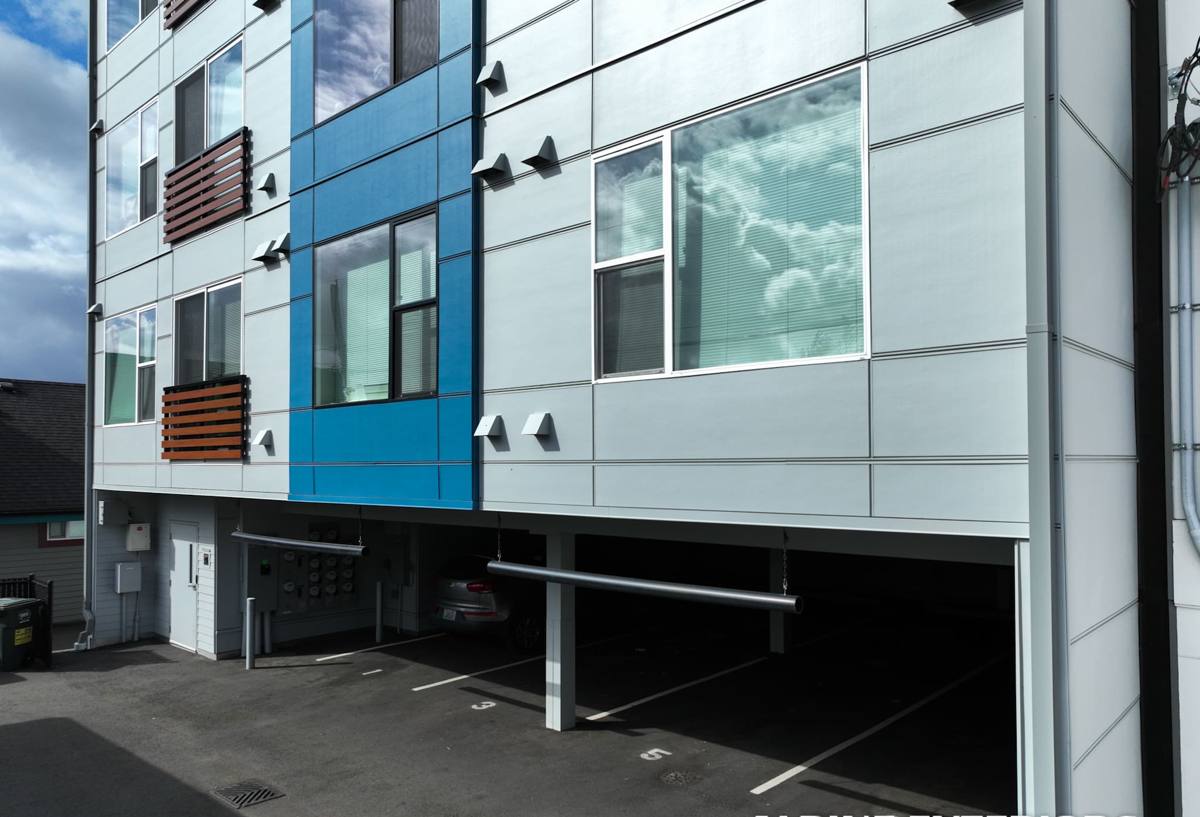
What Salt Air, Rain, and Moss Actually Do to Windows
Salt Air and Hardware Corrosion
Homes closer to the water — which describes a good portion of Edison — deal with airborne salt settling on exterior surfaces year-round. Over time this attacks unprotected metal: hinges, cranks, locks, and screws. Cheaper window hardware, or hardware without adequate coatings, can seize up or corrode from the outside in, long before the glass or frame shows any wear. This is one of the first things we check when we're asked to look at aging windows in this area.
Driving Rain and Water Intrusion
Wind-driven rain doesn't just hit a window head-on — it gets pushed sideways and upward into gaps that would stay dry in a calmer climate. If flashing, sill pans, and sealants aren't installed correctly, water works its way behind the trim and into the framing around the window. That's how you end up with soft wood, stained drywall, or a musty smell in a room that otherwise looks fine.
Moss and Organic Growth
Skagit County's moss season isn't limited to roofs. Shaded window sills, north-facing trim, and anywhere water sits too long can grow moss and algae. Beyond the cosmetic issue, sustained moisture and organic growth against wood trim accelerates rot and holds moisture against the window frame longer than it should sit.
What "Energy-Efficient" Actually Means for This Climate
Energy efficiency in the Pacific Northwest is less about blocking extreme heat and more about controlling moisture, drafts, and steady heat loss through a long heating season. A handful of specs matter more here than a generic national buying guide might suggest.
| Spec | Why It Matters in Edison |
|---|---|
| U-Factor | Measures heat loss — lower is better for our long, cool, wet winters and the steady heating load that comes with them |
| Frame material weather resistance | Needs to hold up to repeated wet-dry cycling and salt exposure without warping or corroding |
| Glazing / low-E coatings | Reduces heat loss through the glass and helps control condensation on cold, damp mornings |
| Weatherstripping and seal quality | Keeps wind-driven rain and drafts out — the single biggest factor in whether a window performs well here long-term |
| Hardware coating/finish | Determines how well cranks, hinges, and locks resist salt-air corrosion over time |
Solar Heat Gain Coefficient (SHGC) still matters, but it's a secondary consideration for most Edison homes compared to how a window handles water and wind. We size and spec windows based on orientation and exposure on your specific home rather than defaulting to one blanket recommendation.
Frame Material: Honest Trade-Offs for This Climate
There's no single "best" frame material for every home — each comes with trade-offs worth understanding before you decide.
- Vinyl: Budget-friendly, low maintenance, and handles moisture well since it doesn't rot or corrode — a solid choice for many Edison homes, though quality varies widely between manufacturers.
- Fiberglass: Excellent dimensional stability and weather resistance, holds paint well over time, and tends to outperform vinyl in temperature swings — usually a higher upfront cost.
- Wood: Classic look and good insulating properties, but requires the most maintenance in a climate with this much rain and moss pressure — we only recommend it when the homeowner understands and wants to keep up with that upkeep.
- Wood-clad (wood interior, aluminum or vinyl exterior): A middle ground — interior warmth of wood with a weather-resistant exterior shell, though the cladding-to-frame seal is a spot worth inspecting carefully during installation.
We don't push one material on every job. We walk through what each option means for your specific exposure — how close you are to the water, how shaded the window is, how much upkeep you actually want to do — and let you decide with real information.
What a Correct Installation Actually Involves
The window unit itself is only part of the equation. Installation quality is what determines whether that energy-efficient rating actually holds up in Edison's climate.
Sill Pan Flashing
A properly installed sill pan directs any water that does get past the window to the exterior instead of into the wall framing. This is one of the most commonly skipped steps in lower-quality installs, and it's exactly the step that matters most in a driving-rain climate.
Integration with the Water-Resistive Barrier
Flashing tape and the window's nailing flange need to integrate correctly with the house wrap or building paper already on the wall — shingled so water always flows down and out, never trapped behind a layer. Done wrong, you get hidden water intrusion that doesn't show up until there's real damage.
Sealant Selection and Placement
Not every sealant is meant for every joint. Some seams need a flexible sealant that allows for expansion and contraction; others need a backer rod and sealant combination to avoid trapping moisture. We choose based on the specific location on your home, not a one-size approach.
Insulation Around the Frame
Gaps between the window frame and rough opening need to be insulated correctly — enough to stop air movement, but not packed so tight it bows the frame. Both mistakes are common and both undermine the energy performance you're paying for.
Our Process for an Edison Window Project
- On-site assessment: We look at each window's exposure — sun, wind, and rain direction — plus the current condition of trim, sills, and framing.
- Honest product recommendation: Based on your home's exposure and your priorities (budget, maintenance tolerance, appearance), we recommend frame material and glazing specs — not a single default package.
- Proper removal: Old windows come out carefully so we can inspect the framing underneath for hidden rot or moisture damage before anything new goes in.
- Framing repair if needed: Any soft wood or water damage gets addressed before the new window goes in — never covered up.
- Correct flashing and sealing: Sill pans, flashing tape, and sealants installed in the right order, shingled correctly for water to shed outward.
- Final fit and finish: Interior and exterior trim finished cleanly, hardware tested, and the whole opening checked for square and proper operation.
Signs an Edison Home's Windows Need Attention
- Fogging or condensation between panes (a failed seal, not a cleaning issue)
- Cranks, locks, or hinges that feel gritty, stiff, or corroded
- Visible moss or dark staining collecting on sills or lower trim
- Drafts you can feel near the frame on a windy day
- Soft or spongy trim when pressed near the corners
- Windows that are difficult to open, close, or lock properly
- A noticeable jump in heating costs without another clear cause
Why Hiring a Crew That Already Works in Edison Matters
Window installation isn't just a product decision — it's a site-specific one. A crew that regularly works Burlington and the surrounding Skagit County communities already knows how exposure varies block to block near the water, how moss builds up differently depending on tree cover and shade, and where driving rain tends to cause the most trouble on a typical Edison-area home. That familiarity shows up in the details: which side of the house gets the extra attention on flashing, which hardware finish is worth the upgrade, and which shortcuts simply don't hold up out here.
It also means a crew that's easy to reach if a question comes up after the job is done, and one that stands behind their own installation work — not just the manufacturer's product warranty.
Maintenance That Protects Your Investment
Even a correctly installed, well-built window benefits from a little seasonal attention in this climate.
- Rinse salt residue off exterior frames periodically, especially on wind-exposed sides of the home
- Clear moss or debris from sills and tracks before it holds moisture against the frame
- Check weatherstripping annually for wear or gaps
- Lubricate hardware occasionally to prevent stiffness from corrosion
- Inspect exterior caulking each year and touch up before small gaps become bigger problems
Get a Straight Answer for Your Edison Home
Every home's exposure is a little different, even within the same neighborhood, so a real assessment beats a generic estimate every time. If you'd like an honest look at your windows and what would actually make sense for your home's exposure and budget, we're happy to come take a look. Use the form below to request a free, no-pressure estimate.