 Burlington
 Why Big Lake Homes Put Windows Through More Than Most
Big Lake sits in a pocket of Skagit County where the weather does two things at once: it soaks the house with driving rain off the water, and it holds onto moisture longer than homes just a few miles inland in Burlington. Add the faint but real salt-air influence that reaches up from Puget Sound through the valley, and you've got a set of conditions that are hard on window frames, glazing seals, and trim. We've replaced enough windows around the lake to know that a window that performs fine in a dry inland neighborhood can fail years early here if it isn't matched to what this specific spot actually does to a house.
This page is about one thing: custom windows for Big Lake homes, done right for this climate. Not a general product pitch — the specifics of what to ask for, what to watch out for, and how a correctly done job actually goes together.
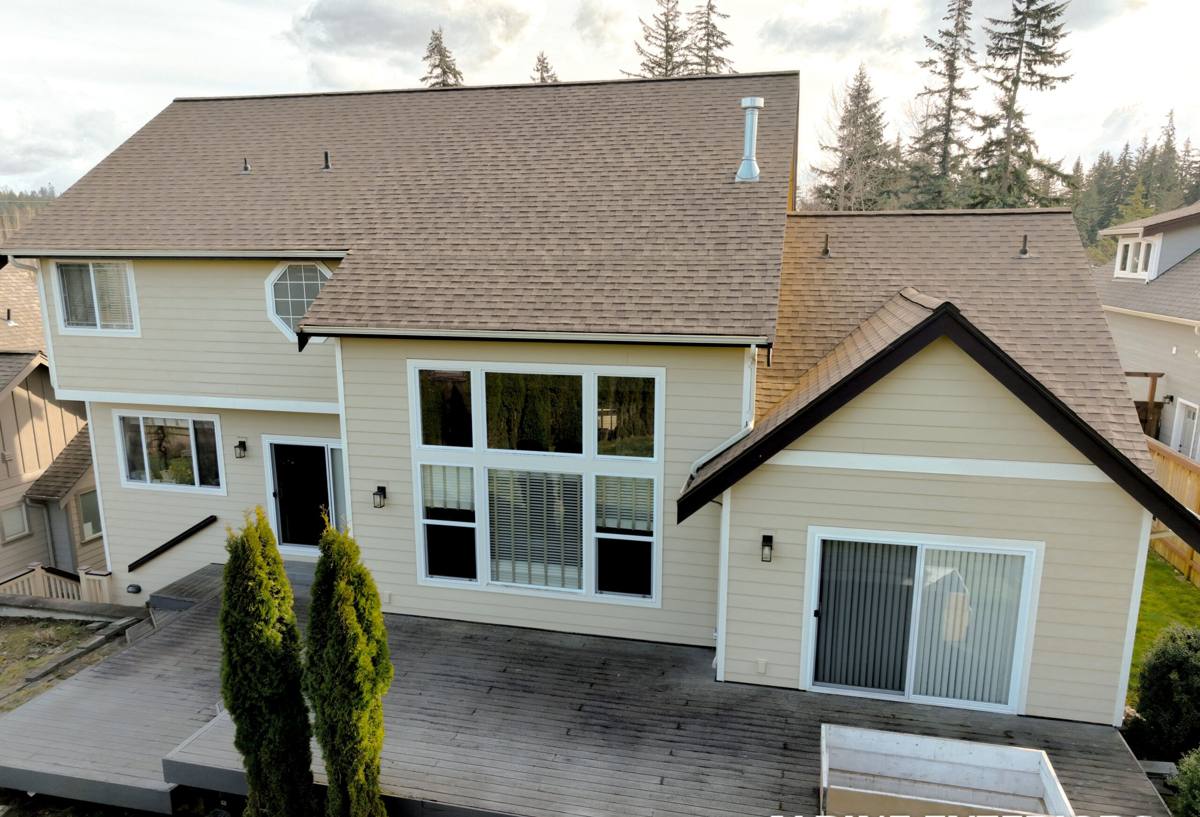
What the Lake Climate Actually Does to a Window Over Time
Moisture load and condensation
Homes directly on or near Big Lake deal with higher ambient humidity than homes set back from the water. That moisture doesn't just sit in the air — it condenses on cool glass surfaces, works into end-grain wood at the corners of frames, and feeds the moss and algae growth that Skagit County's long wet season is famous for. A window with a marginal seal or a frame material that isn't suited to sustained dampness will show it first at the corners and the bottom rail, where water sits longest.
Driving rain and wind-driven water
Storms coming across open water hit lake-facing walls with more force and more sustained wind-driven rain than a sheltered inland wall gets. That matters for windows because most water intrusion problems aren't glass failures — they're flashing and installation failures where wind-driven rain finds a gap the manufacturer's warranty never covers. A window can be excellent and still leak if the flashing detail behind it wasn't built for wind-driven rain in the first place.
The long moss season
Skagit County's moss season runs long, and it doesn't stop at the roofline. Moss and algae will colonize any horizontal or near-horizontal surface that stays damp — sills, exterior trim, and the tops of window casings all qualify. Beyond the cosmetic issue, moss holds moisture against wood and paint far longer than bare wood would, which accelerates rot at exactly the joints where a window is most vulnerable.
What "Custom" Should Actually Mean Here
Custom windows aren't just about odd sizes or a specific look. For a Big Lake home, custom means the window and its installation detail are chosen to match this property's actual exposure — which wall faces the water, how much roof overhang protects it, what the existing frame material is, and how the house has handled moisture historically. A correct custom window job typically covers:
- Frame material matched to the wall's sun and rain exposure, not a one-size-fits-all default
- Sizing and shape that account for any settling or slight out-of-square condition in an older frame opening
- Flashing and weather barrier integration specific to the existing wall assembly, not just the window unit itself
- Glazing package suited to the home's orientation — solar gain on south and west exposures, condensation resistance on shaded or lake-facing walls
- Sill and trim details designed to shed water fast rather than let it pool and feed moss growth
Frame Material: What Actually Holds Up Around Big Lake
There's no single "best" window frame material for every home — it depends on exposure, existing trim, and budget. Here's how the common options actually perform under this area's damp, moss-prone conditions, based on what we see when we replace them.
| Material | Moisture behavior | Maintenance | Best fit |
|---|---|---|---|
| Vinyl | Doesn't absorb water or rot; seams and welds are the weak point if installation is sloppy | Low — occasional cleaning | Most Big Lake homes on a straightforward budget |
| Fiberglass | Very stable in wet-dry cycling, resists warping better than vinyl in extreme temperature swings | Low | Lake-facing walls with heavy direct exposure |
| Aluminum-clad wood | Exterior sheds water well; any breach in the cladding exposes wood to rot risk | Moderate — cladding seams need periodic inspection | Homes wanting a wood interior look with exterior protection |
| Solid wood | Handsome, but end-grain and joints are genuinely vulnerable in sustained damp conditions | High — repainting and sealant checks needed regularly | Homes prioritizing a specific historic or architectural look, with an owner willing to maintain it |
We'll be direct about wood: it's not that solid wood windows are bad, it's that a lake-adjacent, high-moss climate is one of the harder environments to keep them in good shape without a real maintenance commitment. We'll tell you that honestly rather than sell you something that needs more upkeep than you're expecting.
How We Handle a Custom Window Job at Big Lake
1. On-site assessment of the actual wall, not just the window
Before we talk product, we look at the wall the window sits in — what's behind the siding, whether there's existing moisture damage, which direction the wall faces relative to the water and prevailing storms, and how much roof overhang is protecting it. This tells us far more about what the window needs to do than the room's interior finish does.
2. Measuring for the actual opening, not a catalog size
Older homes settle, and lake-area homes are no exception. We measure the real opening, including any out-of-square condition, so the custom unit fits tight without shims trying to make up for a gap that then becomes a water path.
3. Removal with attention to what's underneath
Pulling the old window is when hidden rot or a failed flashing detail usually shows up. We check the sheathing and framing at that point, before anything is closed back up, and address anything found rather than sealing over it.
4. Flashing and weather barrier integration
This is the step that actually prevents leaks in wind-driven rain — the window unit itself is only part of the system. We integrate new flashing with the existing weather-resistive barrier so water is directed out and down, not into the wall cavity.
5. Setting, shimming, and sealing
The unit goes in level and square, shimmed correctly at load points, and sealed with materials rated for sustained damp exposure — not just whatever caulk happens to be on the truck.
6. Trim and sill detail to shed water and resist moss
Sill slope and trim profile matter more here than in a dry climate. We finish details so water runs off quickly instead of sitting, which is the single biggest thing you can do to slow moss and algae colonization on trim.
7. Final check and homeowner walkthrough
We walk the finished window with you, operate it, and explain anything specific to that unit's maintenance — especially if it's a material that needs periodic attention.
Common Problems We Find in Older Big Lake Window Installations
When we're called out to a lake-area home for a window issue, a handful of patterns show up again and again:
- Original flashing that was never properly lapped with the house wrap, found only once the old unit is pulled
- Wood sills with rot concentrated at the corners, where end grain absorbed water for years before it became visible
- Caulk used as a substitute for proper flashing — it looks fine for a while, then fails all at once
- Moss and algae buildup on sills and trim that's been treated as a cosmetic issue when it's actually been holding moisture against wood for seasons
- Condensation mistaken for a leak, when the real cause is a glazing package not suited to the wall's exposure and interior humidity
Checklist: Signs Your Big Lake Home's Windows Need Attention
- Soft or spongy wood at the sill or bottom corners of the frame
- Persistent condensation between panes, which usually means a failed seal rather than a simple humidity issue
- Moss or dark green growth building up on sills, trim, or the top of the casing
- Drafts or a noticeable temperature difference near the window on windy, rainy days
- Paint or finish peeling specifically at the corners and bottom rail, rather than evenly across the sash
- Difficulty opening or closing that developed gradually, which can point to frame swelling from moisture
If any of these sound familiar, it's worth having the window looked at before a small seal or flashing issue turns into a framing repair.
Why Hiring a Crew That Already Works Big Lake Matters
Window installation quality depends heavily on understanding the specific conditions a house faces — and Big Lake's conditions aren't identical to a dry inland Burlington lot or a sheltered Mount Vernon neighborhood a few miles away. A crew that's worked this area knows which walls typically take the worst of the wind-driven rain, how fast moss establishes on north- and lake-facing trim, and which older flashing details in homes from this area tend to fail first. That local pattern recognition shortens the diagnostic part of the job and means the flashing and sealing details are built for what this specific microclimate actually throws at a house, not a generic installation standard.
It also matters for follow-up. A local crew is easy to reach if a question comes up after the job is done, and has a reputation in the community worth standing behind.
Keeping New Windows Performing for the Long Haul
A correctly installed custom window shouldn't need much from you, but a few habits go a long way in this climate:
- Rinse pollen, algae, and moss spores off sills and trim during the wetter months before they get a foothold
- Check exterior caulk lines once a year, especially after a hard winter storm season
- Keep gutters and downspouts clear so roof runoff isn't adding extra water load onto window walls below
- Operate every window a few times a year, even ones you rarely open, so seals and hardware don't seize up
None of this is heavy maintenance — it's mostly about not letting moisture sit somewhere it doesn't need to.
Get a Straight Answer for Your Home
Every Big Lake home faces the water a little differently, and the right window choice depends on your specific walls, exposure, and existing frame condition — not a generic recommendation. If you'd like an honest look at what your home actually needs, we offer a free, no-pressure estimate. Fill out the form below and we'll come take a look.