 Burlington
 Why Anacortes Decks Wear Out Faster Than Inland Decks
A deck built in Anacortes lives a harder life than one built twenty miles inland in Sedro-Woolley or Mount Vernon. Anacortes sits close to the water on Fidalgo Island, which means salt-laden air is a daily condition, not an occasional event. That salt air accelerates corrosion on fasteners, hardware, and any exposed metal, and it works year-round, not just during storms. Add in the driving rain that comes off the Sound during fall and winter, and a long, damp moss season that can stretch from October well into spring, and you have a climate that punishes decks built to a generic, one-size-fits-all standard.
We build and repair decks across Skagit County out of our Burlington shop, and the decks we get called out to fix in Anacortes almost always show the same pattern: the wood or composite surface looks fine, but the framing, fasteners, or ledger connection underneath have been quietly failing for years because they weren't specified for a marine environment. A deck built correctly for Anacortes conditions costs a bit more up front in material choices, but it avoids the expensive, sometimes dangerous surprises that show up five or ten years down the road.
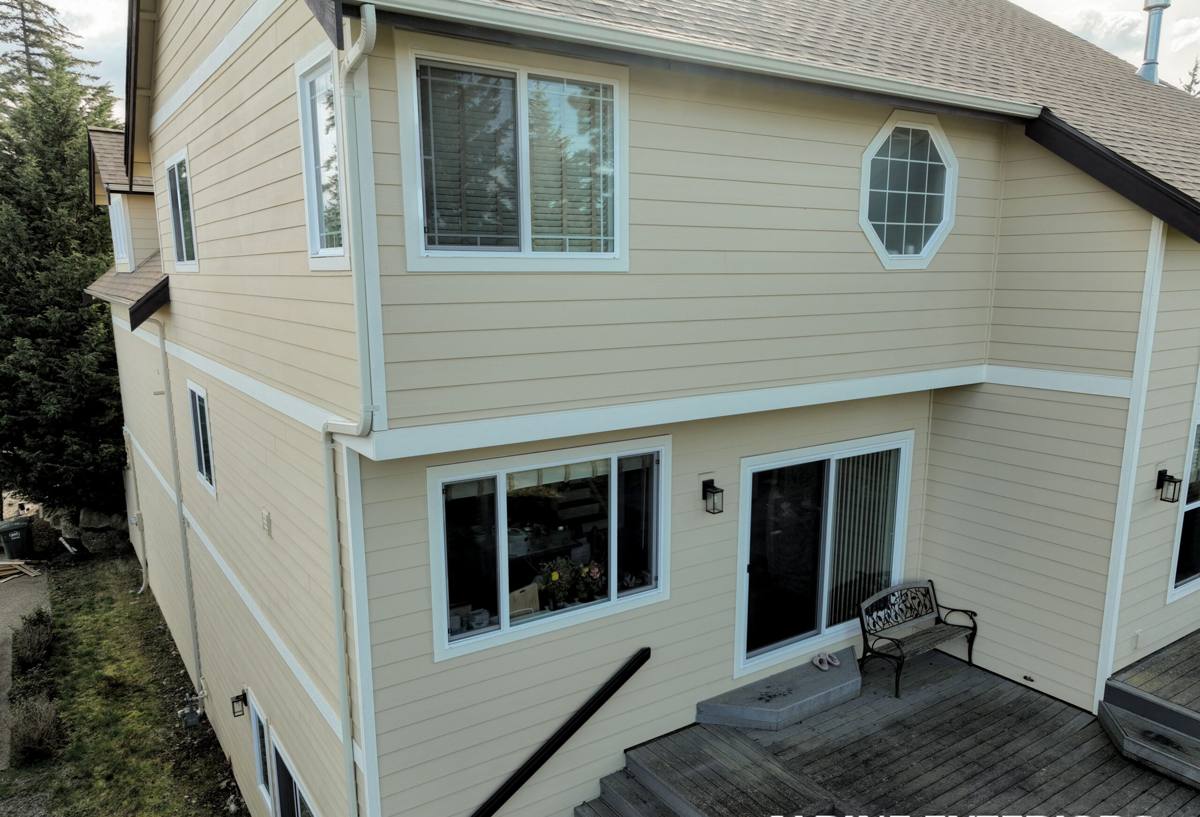
What Anacortes' Marine Climate Actually Does to a Deck
Salt Air and Corrosion
Airborne salt doesn't need direct ocean spray to do damage — it travels on wind and settles on any exposed surface, including framing hardware tucked under the deck boards where you can't see it. Standard galvanized fasteners and connectors can start showing rust streaks and pitting within a few years in a coastal environment like Anacortes, well before their inland service life. Once corrosion starts on a joist hanger or ledger bolt, it weakens the connection long before it's visible from the surface.
Driving Rain and Moisture Intrusion
Wind-driven rain off the Sound doesn't fall straight down — it gets pushed sideways into ledger connections, stair stringers, and any spot where two materials meet. Without proper flashing and gapping, that moisture gets trapped instead of draining, which leads to rot in wood framing and staining or mildew on composite and PVC surfaces.
Moss and Algae
Skagit County's damp shoulder seasons feed moss and algae growth on any deck surface that doesn't get regular sun and airflow. Beyond looking bad, a mossy deck surface becomes genuinely slick and dangerous underfoot, and moss holding moisture against wood decking accelerates rot from the top down, not just from underneath.
Decking Material Choices for a Coastal Anacortes Home
There's no single "best" decking material for every Anacortes property — the right choice depends on how much sun exposure the deck gets, how close it is to the water, and how much maintenance the homeowner actually wants to do. Here's how the common options hold up in this specific climate.
| Material | Salt Air Performance | Moss/Algae Resistance | Maintenance Reality |
|---|---|---|---|
| Pressure-treated wood | Good if fasteners are corrosion-rated; framing lumber holds up well | Needs regular cleaning and sealing to resist moss | Annual cleaning, re-sealing every 2-3 years |
| Cedar | Naturally rot-resistant, but surface grays and can cup near salt spray | Moderate — benefits from breathable finish, not a heavy sealer | Periodic cleaning, occasional oil or stain refresh |
| Composite decking | Excellent — won't rot, resists salt staining on quality boards | Good, but can still grow surface algae without airflow/sun | Occasional washing; no staining or sealing needed |
| PVC/capped polymer | Excellent — fully sealed surface, best moisture resistance | Good with periodic washing | Lowest maintenance of the group |
For decks with heavy sun and open airflow, cedar or quality pressure-treated lumber can still be the right call, especially if a homeowner wants a natural look and is willing to maintain it. For shaded, north-facing, or heavily wind-exposed decks closer to the water, composite or capped polymer decking earns its higher upfront cost by not needing the constant upkeep a coastal environment otherwise demands.
The Part of the Deck That Actually Determines Its Lifespan
Homeowners naturally focus on the decking surface — the boards you walk on and see every day — but the framing, connectors, and fasteners underneath are what actually determine how long a deck lasts in a salt-air environment. This is the single biggest difference between a deck built to a generic standard and one built specifically for Anacortes conditions.
| Hardware Type | Standard Galvanized | Stainless Steel / Marine-Grade |
|---|---|---|
| Corrosion resistance near salt air | Moderate; pitting and rust streaks over time | High; built for this exact exposure |
| Best used for | Inland, low-exposure builds | Ledger bolts, joist hangers, stair hardware near coastal air |
| Upfront cost | Lower | Higher, but small relative to total project cost |
| Long-term value | May require hardware replacement mid-life | Matches the deck's intended lifespan |
We spec stainless or marine-grade hardware for structural connections on Anacortes decks as a standard practice, not an upsell. The cost difference on a typical deck is a small fraction of the total project, and it removes the single most common cause of premature deck failure we see in this area.
Ledger Board Flashing
Where a deck attaches to the house, proper flashing that directs water away from the ledger board and the home's siding is non-negotiable in a climate with this much driving rain. A poorly flashed ledger connection is one of the most common — and most expensive to fix later — mistakes we find on older decks in this area, since it often means opening up siding to repair hidden rot.
Our Custom Deck Process
Every Anacortes property is different — lot slope, sun exposure, distance from the water, and how the deck ties into the home all shape the right approach. Here's how we work through a project:
- On-site assessment. We walk the property, look at grade, sun/wind exposure, and how close the build is to salt air influence, and talk through how the space will actually be used.
- Design and material selection. We talk through decking material, railing style, and layout based on your budget, maintenance preference, and the specific exposure of your lot.
- Structural planning. Framing layout, footing depth, and hardware spec are set based on local code and the coastal exposure of the site — not a generic template.
- Permitting. We handle the permit application and inspections required for the build, coordinating with the applicable jurisdiction for your property.
- Construction. Framing first, with corrosion-rated fasteners and proper flashing at every connection point, then decking, railing, and finish work.
- Final walkthrough. We go over the finished deck with you, including what maintenance it actually needs and on what schedule.
Permits and Site Considerations
Most new deck builds and many deck replacements require a building permit, and depending on your specific lot, there may be additional considerations tied to setbacks, shoreline proximity, or slope. We handle the permit process as part of the project so you're not left navigating it alone, and we flag early in the design phase if your specific site has anything unusual that needs addressing before we finalize plans.
Signs Your Existing Deck Needs Attention
If you already have a deck in Anacortes, a few warning signs are worth checking for before they become bigger problems:
- Rust streaks bleeding from screws, bolts, or joist hangers onto the decking surface
- Soft or spongy spots when you walk across the deck, especially near the ledger board
- Persistent moss or algae film that returns quickly after cleaning
- Gaps, cracking, or separation where the deck meets the house
- Railing posts that feel loose or flex when pushed
- Visible daylight or water staining on siding directly above or behind the ledger connection
- Decking boards that cup, split, or feel unusually soft underfoot
Any one of these on its own might be minor. Several together, especially involving the ledger connection or structural hardware, usually mean it's worth having someone look at the framing before it becomes a safety issue rather than just a cosmetic one.
Why Local Experience Matters for This Job
Deck building isn't exotic work, but building one that holds up specifically in Anacortes' combination of salt air, wind-driven rain, and a long moss season takes more than a standard framing package. A crew that mostly builds inland may default to standard galvanized hardware and skip the flashing detail that matters most here, simply because it's never bitten them before. We work throughout Skagit County, including Anacortes, and we spec hardware, flashing, and material choices based on what actually holds up in this specific coastal climate — not what's standard everywhere else.
If you're planning a new deck or need an honest look at one that's showing its age, we're happy to come out, walk the site, and talk through what makes sense for your home and budget. Fill out the form below for a free, no-pressure estimate.