 Burlington
 Guemes Island Takes Weather Differently Than the Mainland
Guemes Island sits out in the water off Anacortes, and that position changes how storms actually hit a roof. Wind that's already lost some of its punch by the time it reaches inland Burlington or the rest of Skagit County arrives at full strength on the island, often with less tree cover and fewer buildings to break it up. Add the salt-laden air coming straight off the water, driving rain that hits roofs at an angle rather than falling straight down, and a moss season that runs long into the wet months, and you get a roof that ages and fails differently than one a few miles inland.
That doesn't mean island roofs need exotic materials or specialty construction. It means the ordinary rules of a good roofing job — correct flashing, proper fastening, materials matched to sustained moisture exposure — matter more here, and get punished faster when they're skipped. This page covers what storm damage on Guemes Island actually looks like, what a correct repair involves, and why working with a crew that already understands the island's access and weather pattern makes a real difference in how fast and how well the job gets done.
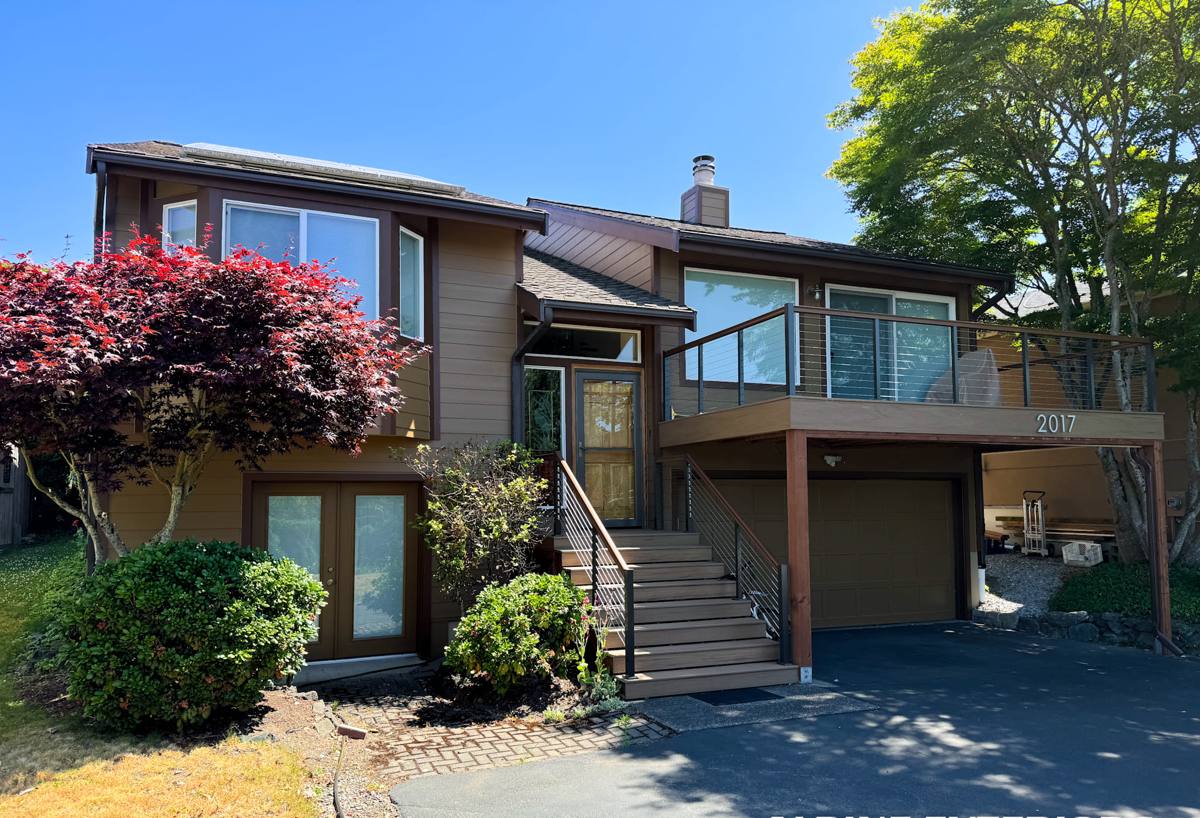
What Storm Damage Actually Looks Like Here
Wind-Lifted and Missing Shingles
Sustained wind off the water works shingle tabs loose gradually, cycle after cycle, before a single strong gust finally tears one free. On Guemes Island roofs we often find several shingles with broken or weakened seals near ridge lines and exposed corners even when nothing is visibly missing yet — the failure is already underway, it just hasn't shown itself as a hole.
Flashing Failure at Penetrations
Chimneys, vent stacks, skylights, and roof-to-wall transitions rely on flashing to stay dry, and flashing is almost always the first thing a storm compromises. Wind can lift the edge of a flashing piece just enough to let wind-driven rain track underneath it, and because the water enters at a seam rather than through open damage, it can travel and show up as a stain well away from where the actual failure is.
Debris Impact
Branches and larger debris come down during island storms the same as anywhere in Skagit County, but on a wooded lot with mature trees close to the house, the impact zone tends to be more concentrated. A single limb can crack shingles, dent metal roofing, or puncture underlayment in a tight cluster rather than spreading damage evenly across the roof.
Moss and Trapped Moisture
Moss doesn't cause storm damage on its own, but it sets a roof up to fail faster once storm damage happens. A moss mat holds water against the shingle surface long after a storm passes, which softens shingles, degrades the granule surface that protects against UV and rain, and can work its way under tab edges that are already stressed from wind. A roof going into storm season with heavy moss buildup is a roof with less margin for error.
Water Intrusion Signs Inside the House
Not every storm-damaged roof shows the damage from the ground. Ceiling stains, a musty smell in an attic or crawlspace, peeling paint near an exterior wall, or soft spots in ceiling drywall are all signs that water has already gotten past the roof covering, sometimes well before anyone notices anything wrong from outside.
Reading Damage Severity Correctly
Not every storm mark on a roof needs the same response, and treating minor cosmetic wear the same as active leak risk wastes money in one direction or invites bigger repair costs in the other. Here's roughly how we sort what we find:
| Severity | What It Looks Like | Recommended Response |
|---|---|---|
| Cosmetic | Granule loss, minor curling, isolated moss patches, no active leak | Monitor and address during routine maintenance; not urgent |
| Localized damage | A handful of lifted or missing shingles, one compromised flashing point, isolated debris strike | Targeted repair, usually completed in a single visit |
| Active leak | Interior staining, damp insulation, water actively entering during rain | Priority repair with interior moisture check; don't wait out the next storm |
| Widespread damage | Multiple roof sections affected, structural sheathing exposed, large area of missing covering | Full assessment for repair vs. partial replacement; insurance documentation strongly recommended |
What a Correct Repair Actually Involves
Full Roof Inspection, Not Just the Obvious Spot
A storm rarely damages only the spot a homeowner can see from the yard. A proper repair starts with walking the whole roof — not just the area near a visible leak or missing shingle — because wind and debris damage cluster in predictable but not always visible places: ridges, valleys, penetrations, and the leading edge that takes the brunt of driving rain.
Matching the Repair to the Existing Roof
Patching storm damage means working with materials that match the existing roof's age, profile, and exposure rating as closely as possible. A mismatched shingle patch isn't just a cosmetic problem — different products can shed water and handle thermal movement differently, which creates a new weak point right where the repair meets the original roof.
Flashing Gets Rebuilt, Not Just Resealed
Caulking over a lifted flashing edge is a temporary fix at best. A correct repair means removing the compromised flashing, checking the underlayment and decking beneath it for hidden moisture damage, and reinstalling flashing that's properly integrated with the surrounding roofing material — not just sealed on top of it.
Underlayment and Decking Checked, Not Assumed
Any spot where water has been getting in for more than a short window needs the decking underneath checked for soft spots or rot before new roofing goes back down. Covering damaged decking with new shingles just delays the same failure and makes the eventual real fix more expensive.
Ventilation Isn't Ignored
Storm repair is also a reasonable moment to check attic ventilation, since poor airflow traps moisture that compounds whatever the storm already did and accelerates moss growth on the repaired area right along with the rest of the roof.
- Photograph visible damage from the ground before anyone gets on the roof, for your own insurance file
- Check attics, closets, and upper-floor ceilings for staining or a musty smell after any significant windstorm
- Don't walk a wet or moss-covered roof yourself — it's one of the more common ways homeowners get hurt after a storm
- Note the date and approximate wind conditions of the storm you suspect caused the damage
- Get damage assessed before the next storm system, since existing damage almost always worsens with repeated wind-rain cycles
- Ask any contractor for a written scope of repair before work starts, not just a verbal estimate
Our Process for a Guemes Island Storm Repair
1. Scheduling Around the Ferry
Getting a crew and materials to Guemes Island means working around the ferry schedule, not against it. We plan the visit as a single, well-loaded trip rather than multiple back-and-forth runs, which keeps the job moving and keeps island access from turning a same-day repair into a multi-week wait.
2. Full Inspection and Photo Documentation
We walk the entire roof, document what we find with photos, and explain what's storm-related versus pre-existing wear. If the damage looks likely to qualify for a homeowners insurance claim, we provide documentation written the way adjusters expect to see it — clear, specific, and tied to the storm event.
3. A Written Scope Before Any Work Starts
You get a clear explanation of what needs repair, what materials we'll use, and why, before anything happens on the roof. No surprise add-ons discovered halfway through the job without a conversation first.
4. The Repair Itself
We match materials to your existing roof, rebuild flashing rather than patch over it, and check decking and ventilation wherever the damage gives us access to look. If we find something beyond the original scope — softened decking under a leak, for example — we stop and talk it through with you before proceeding.
5. Follow-Up
We tell you honestly what to expect from the repaired area going forward, including whether the rest of the roof is showing age that's worth planning for, rather than letting a storm repair become the first time anyone looked closely at the whole roof's condition.
Why a Crew That Already Works Guemes Island Matters
Island jobs carry logistics that mainland Burlington repairs don't. Every trip depends on ferry timing, every material list has to be right the first time since a forgotten flashing piece or fastener means either a delay or an improvised substitute, and every crew needs to be comfortable working a job site that isn't a quick drive back to the shop if something's missing. A contractor who's made that trip before plans for it automatically. One who hasn't tends to either under-schedule the job or pass the friction along to you in the form of delays.
There's also a familiarity factor with the weather itself. Roofs on Guemes Island take wind and salt exposure that inland Skagit County homes don't see at the same intensity, and a crew that's repaired storm damage out there before knows where to look first — which flashing points fail earliest, which roof orientations catch the worst of the wind-driven rain — instead of treating every inspection as a blank slate.
Insurance Claims and Storm Damage
Many storm-related roof repairs are eligible for a homeowners insurance claim, particularly when there's a documented wind event tied to the damage. We're not a public adjuster and we don't handle the claim itself, but we can provide the kind of photo documentation and written damage assessment that supports a claim, and we're glad to talk through what we're seeing in plain terms so you can make an informed decision about whether filing makes sense for your situation. Every policy and every claim is different, so we'd rather be straightforward about the limits of what we can speak to than guess at coverage details that aren't ours to determine.
When Repair Makes Sense and When It Doesn't
Not every storm-damaged roof should be repaired — sometimes a roof that's already near the end of its service life is better served by planning a replacement rather than sinking money into patching an aging system. We'll tell you honestly which situation you're in. If the roof is otherwise sound and the damage is limited to a specific area, a proper repair is the right call and should hold up well through the next several storm seasons. If the roof was already showing widespread wear before the storm, we'll say so rather than repairing around a bigger problem.
If you're dealing with storm damage on a Guemes Island roof, or you just want a straight assessment of where things stand before the next system rolls in, we're glad to come take a look. The estimate is free, there's no pressure attached to it, and you'll get an honest answer either way — use the form below to get in touch.