 Burlington
 La Conner sits directly on the Swinomish Channel, the tidal waterway that connects Skagit Bay to the water south of town. That location gives La Conner a more concentrated version of the weather the rest of Skagit County deals with — salt-laden air moving off the channel on a near-daily basis, driving rain pushed sideways by Pacific storm fronts, and a moss season that runs longer than it does on drier, more exposed lots further inland. If you're planning a siding installation on a La Conner home, those three conditions should shape almost every decision in the project: the material, the flashing detail, and the crew doing the work. This page focuses specifically on what a siding installation needs to get right in La Conner, and how our Burlington-based crew approaches that job on homes we already know well.
What Living on the Swinomish Channel Does to Siding
Proximity to tidal water changes how fast an exterior wears compared to a home even a few miles inland. Salt-laden air corrodes exposed fasteners and lower-grade finishes faster than it does further from the water, and it doesn't take a direct waterfront lot to feel it — the air moves through the whole town. Wind off the channel also drives rain into wall assemblies at an angle rather than letting it run straight down a roof and off the eaves, which means siding here has to shed water sideways as reliably as it does from above. And because so many La Conner lots sit low, shaded, or close to the water table, moss and lingering dampness show up on north-facing walls faster than on a sunnier lot across town.
Salt, Rain, and Moss Wear Siding in Different Ways
These three conditions don't damage siding the same way, which is why a correct installation has to account for all of them separately rather than treating "wet climate" as one generic problem. Salt air attacks metal — fasteners, flashing, and any exposed hardware — long before it does visible damage to the siding material itself. Driving rain finds physical gaps: unsealed joints, poorly lapped flashing, and seams that weren't installed tight the first time. Moss and sustained dampness are a slower problem, holding moisture against a wall surface for extended periods on the shaded sides of a house. A siding installation that only solves for one of these will still leave a home exposed to the other two.
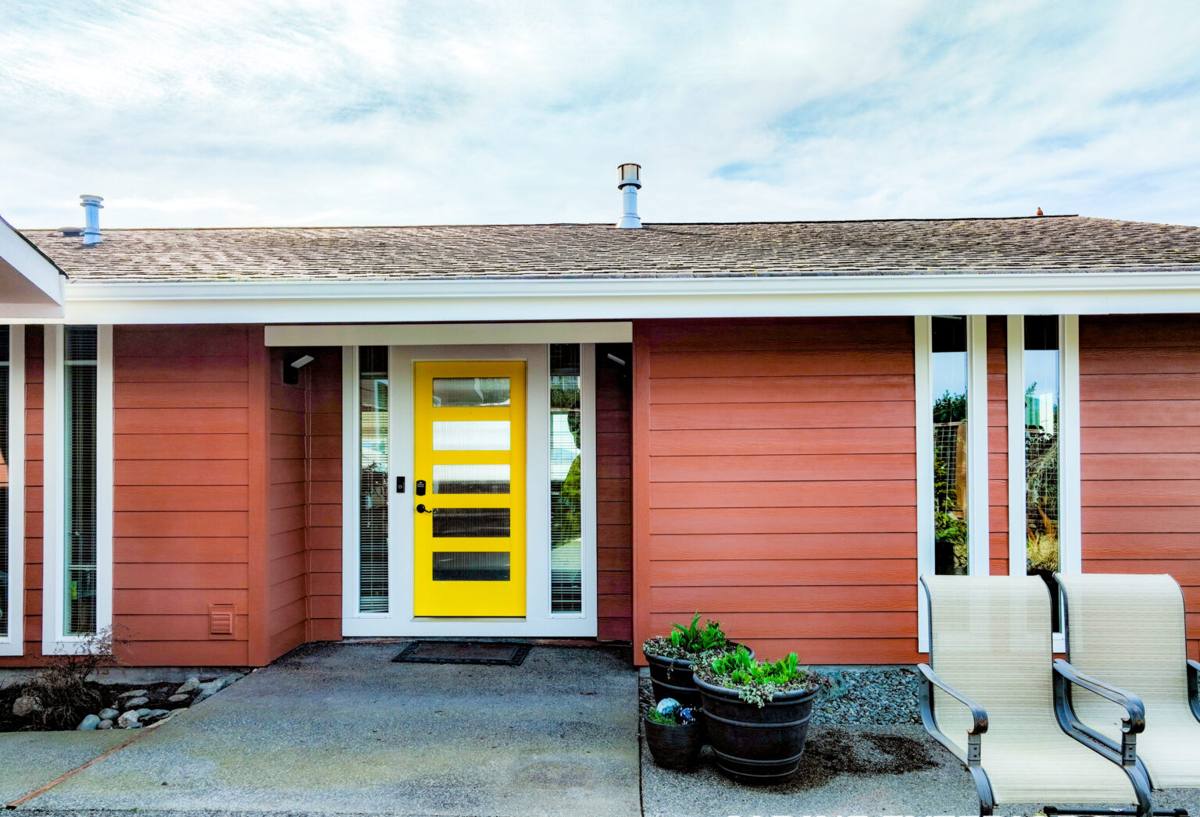
Why James Hardie Fiber Cement Is the Only Siding We Install in La Conner
We install one siding product on every job, in La Conner and everywhere else we work: James Hardie fiber cement. We don't offer vinyl, LP SmartSide, Cemplank, Allura, primed spruce, or cedar, and that's a professional standard, not a limited catalog. Each alternative gets something right — vinyl is inexpensive, engineered wood products install quickly and take paint well, cedar has real natural character — but each also carries a trade-off that matters more on a channel-front town than it would somewhere drier. Vinyl can grow brittle with age and temperature swings, and its seams are exactly the kind of gap that wind-driven rain works into over time. Organic, wood-based products depend on flawless field priming and sealed cut edges to keep moisture out of the substrate, a standard that's hard to hold across an entire crew on every job for the full life of the siding, especially in air this consistently damp.
Fiber cement handles the core problem differently because it isn't organic — there's no wood substrate for trapped moisture to work into, and it doesn't feed moss and mildew growth the way wood-based siding can. James Hardie also builds HZ product lines engineered specifically around sustained moisture and coastal exposure, rather than one generic formulation sold everywhere in the country, which matters directly for a town sitting on tidal water. The factory-applied ColorPlus finish is baked on under controlled conditions instead of painted on-site, so it holds color and resists cracking longer than a field-applied finish typically manages through a wet Skagit County season with limited dry windows to cure in.
What a Correct Siding Installation Involves in La Conner
A siding product is only as good as the installation behind it, and that's especially true this close to salt air and tidal humidity. Getting it right here means paying close attention to a handful of details that matter more on a channel-front home than they would on a dry, inland lot.
- Corrosion-resistant fasteners and flashing hardware rated for coastal or high-moisture exposure, not standard-grade hardware
- Flashing integrated correctly at every window, door, and roofline transition, then verified before siding closes over it
- Proper clearance from grade, decks, and patios, which matters more on low-lying La Conner lots where water tables sit closer to the surface
- Joint and seam treatment matched to each wall's actual sun and shade exposure, since north-facing walls on shaded lots hold moisture far longer
- Weather-resistive barrier installed and lapped correctly behind the siding, not just relied on as a backup to good caulking
- Factory-finished color matched cleanly at trim and touch-up points rather than a mismatched field repaint later
Our Installation Process, Start to Finish
We run the same disciplined process on every siding installation, adjusted for what we find once the old material comes off.
- A walkthrough of the home to assess the existing siding, trim, and any visible signs of moisture or moss damage, with a straight explanation of what we see
- Full tear-off of the old siding, which is also when hidden rot, under-flashed windows, or past water intrusion gets found and addressed before anything new goes on
- Repair of any damaged sheathing and installation of a correctly lapped weather-resistive barrier and flashing system at every penetration
- Installation of James Hardie siding to manufacturer specification, with fastener pattern and joint treatment matched to the wall's exposure
- Trim, touch-up, and a final walkthrough so you know exactly what was done and what to watch for going forward
Installing Siding on La Conner's Older and Waterfront Homes
La Conner has a mix of older homes near its historic core and newer construction closer to the water, and both bring their own considerations to a siding installation. Older homes often have decades of layered repairs, past paint jobs, and trim details worth preserving even as the siding itself gets replaced — matching a new material to an existing trim profile takes more care than a straightforward strip-and-replace. Tear-off on these homes is also where hidden moisture damage tends to surface, since older wall assemblies weren't always built with today's flashing and moisture-barrier standards in mind. Homes closer to the water deal with more consistent salt exposure and often more direct wind, which is exactly why fastener choice and joint sealing matter more there than they do on a comparable home a few blocks inland. We treat every La Conner job as its own assessment rather than assuming one standard approach fits every lot in town.
Full Tear-Off vs Installing Over Existing Siding
Some contractors will offer to install new siding directly over what's already on the wall to save time and cost. We don't recommend that approach on most La Conner homes, and the reasoning comes down to what tidal-area moisture tends to do behind old siding over time.
| Factor | Installing Over Existing Siding | Full Tear-Off |
|---|---|---|
| Hidden moisture or rot | Stays hidden behind the new siding, undetected | Found and repaired before new siding goes on |
| Weather-resistive barrier | Old barrier stays in place, often degraded | New barrier installed and correctly lapped |
| Flashing at windows and doors | Existing flashing reused as-is | Flashing inspected, repaired, or replaced |
| Wall thickness and trim fit | Trim and window returns can look built-up or awkward | Trim details sit flush as designed |
| Long-term outcome in tidal air | Problems trapped behind new siding surface later, harder to trace | Wall assembly starts clean and fully inspected |
Cost Factors for a La Conner Siding Installation
We don't publish blanket pricing because the honest number depends on the house in front of us, but the factors that move a project's cost up or down are consistent enough to lay out plainly.
| Factor | How It Affects Cost |
|---|---|
| Condition found at tear-off | Hidden rot or past water damage adds repair scope before new siding can go on |
| Home age and construction era | Older homes often need more sheathing repair and careful trim matching |
| Proximity to the water | Homes closer to the channel may call for upgraded fastener and flashing hardware |
| Home size and wall complexity | More corners, gables, and window openings mean more flashing and labor time |
| Siding profile and trim detail | Board-and-batten or heavier trim packages cost more than standard lap siding |
| Site access | Tight lots, tree cover, or limited staging space near the water can affect labor time |
Why a Local Crew That Already Works La Conner Matters
A crew that installs siding across La Conner and the rest of Skagit County regularly sees how differently a shaded, low-lying lot near the channel ages compared to a sunnier lot two blocks away — and adjusts fastener choice, flashing detail, and joint treatment accordingly. That judgment comes from doing this work repeatedly in this specific setting, not from a generic spec sheet written for the average American climate. It also means someone is reachable from Burlington, minutes away, if a warranty question or a flashing detail needs a second look years down the road, rather than chasing down a crew that mainly works somewhere else and treats La Conner as a stop along the way.
Keeping New Siding Performing After Installation
Even a correctly installed, climate-appropriate siding job benefits from basic seasonal attention in a channel-front town like La Conner. Rinsing salt residue off siding near the water during dry stretches helps limit its slow buildup on the surface and around hardware. Checking shaded, north-facing walls periodically for early moss growth and addressing it before it spreads keeps moisture from sitting against the surface for extended periods. Keeping gutters clear ahead of the wet season prevents overflow from soaking siding and trim at the eaves. None of this is a heavy burden, and a crew that installed the work correctly should be able to tell you exactly what to watch for on your specific home.
If you're weighing a siding installation on a La Conner home, we're happy to take a look and give you a straight assessment of what your house actually needs — no pressure, no generic sales pitch. Reach out for a free estimate and we'll walk the property with you and talk through what we see.