 Burlington
 Conway's Climate and What It Does to Siding Over Time
Conway sits low in the Skagit River delta, close enough to Skagit Bay and Puget Sound that salt-laden air is a regular part of the weather, not an occasional visitor. Add in Skagit County's long, wet winters and the moss and moisture that come with them, and you have a combination that is genuinely tough on exterior building materials. Homes here don't fail because owners neglected them — they fail because the siding wasn't matched to what this specific stretch of Western Washington throws at a house year after year.
Three factors do most of the damage: salt air that accelerates corrosion of fasteners and finishes, driving rain that gets pushed sideways into seams and laps during winter storms, and a moss season that can run eight months or longer on shaded, north-facing walls. Any one of these is manageable. Together, on a product that isn't built for them, they compound.
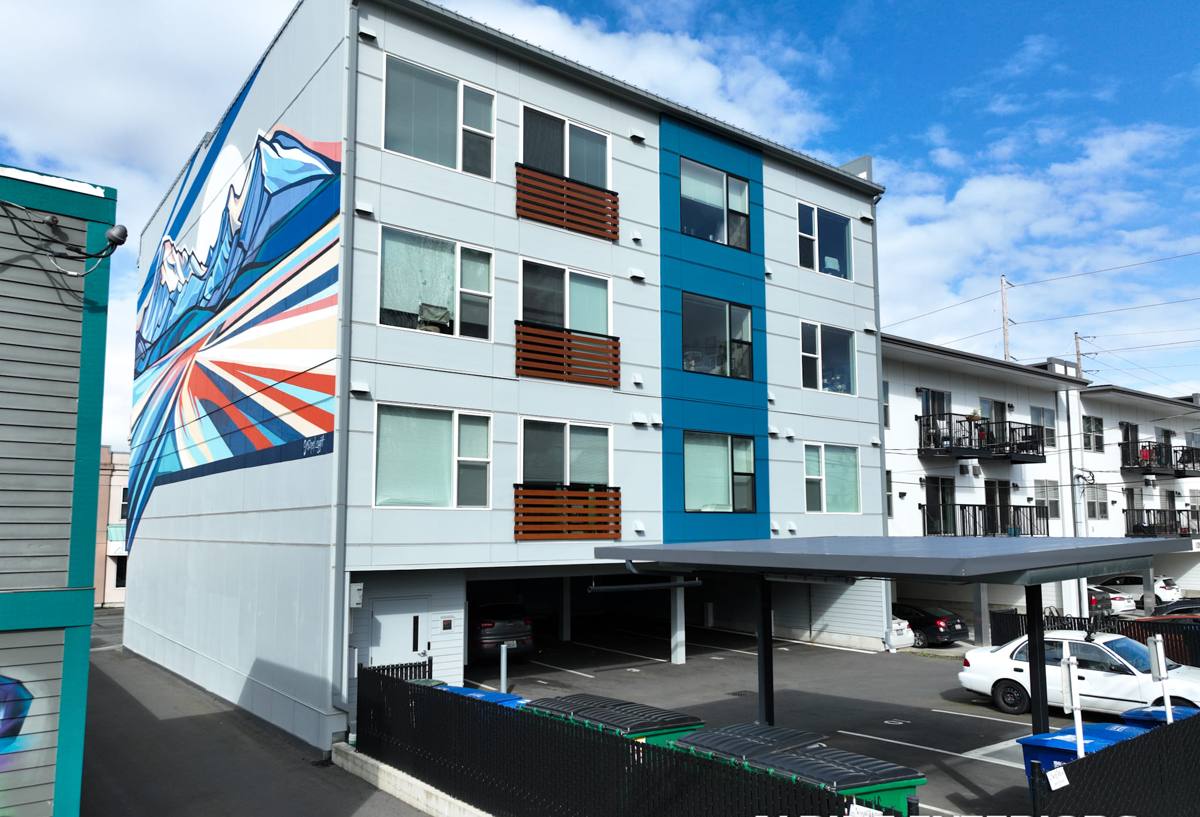
Signs Your Conway Home's Siding Needs Replacing
Siding rarely fails all at once. It tells you first, usually years before the damage becomes structural. Knowing what to look for lets you catch a siding problem while it's still a siding problem, not a sheathing or framing problem.
- Soft or spongy spots when you press on the siding, especially near the bottom courses and around windows
- Paint that's peeling, bubbling, or needing repainting far more often than it used to
- Visible warping, buckling, or panels pulling away from the wall
- Persistent moss or black streaking that comes back within a season of cleaning
- Cracked or crumbling caulk lines at seams, corners, and trim
- Rising energy bills that hint at a compromised weather barrier behind the siding
- Rust streaks below fasteners or trim, a common early sign of coastal-air corrosion
If you're seeing two or more of these on a Conway home, it's worth having someone look at the wall assembly, not just the surface. Surface symptoms often point to water that's already gotten behind the cladding.
What Correct Siding Replacement Involves
A siding job is only as good as what's underneath it. In a climate like this one, the water-resistive barrier and flashing details matter more than the siding brand printed on the invoice. A correct replacement isn't just pulling off old material and nailing up new — it's rebuilding the wall's ability to shed water on its own terms.
That means a continuous, properly lapped weather-resistive barrier behind the siding, correctly flashed window and door openings so water is directed out and away rather than trapped, and attention to how the wall assembly drains and dries. On a home exposed to Conway's driving winter rain, a rainscreen gap or drainage plane behind the siding gives any moisture that does get past the cladding somewhere to go besides the sheathing. Fastening pattern, joint treatment, and clearance at grade all affect how long the assembly lasts — and all of it is invisible once the new siding is up, which is exactly why it has to be done right the first time.
Why We Install Only James Hardie Fiber Cement
We don't install LP SmartSide, vinyl, Cemplank, Allura, primed spruce, or cedar. That's not a marketing position — it's a standard we hold because of what we've seen these climate factors do to siding over time. Fiber cement resists the two things that do the most damage here: sustained moisture and sun exposure that break down engineered wood and crack vinyl over the years. James Hardie is the fiber cement manufacturer we've standardized on because their products are engineered specifically for climate zones like ours, backed by a strong transferable warranty, and finished in a way that holds up to salt air without the constant repainting cycle that plagues other materials.
ColorPlus Factory Finish
Hardie's ColorPlus finish is baked on in a controlled factory environment rather than applied on-site with a brush or sprayer. That process produces a more uniform, more durable finish than field-applied paint, and it's backed by its own finish warranty. For a home dealing with salt air and near-constant winter moisture, a factory finish that doesn't rely on a perfect on-site paint job is a real advantage.
HZ5 Climate-Engineered Formulation
Hardie makes region-specific formulations under its HZ line, engineered around the moisture and freeze patterns of different parts of the country. Western Washington, including Skagit County, falls into a wet, moderate climate zone where moisture resistance matters more than freeze-thaw cycling. Installing the formulation engineered for our actual conditions, rather than a generic version of the product, is part of what "installed correctly" means.
Hardie vs. Other Siding Options in Conway's Climate
Every siding material has a fair case to make somewhere. Here's how the main options actually hold up against Conway's specific mix of salt air, driving rain, and moss:
| Factor | James Hardie Fiber Cement | Vinyl | Engineered Wood (LP SmartSide) | Cedar |
|---|---|---|---|---|
| Salt air / coastal corrosion | Non-combustible, does not corrode or rust like metal-faced products | Doesn't corrode but becomes brittle and can fade or warp in salt exposure over time | Vulnerable if the engineered wood core absorbs moisture at cut edges or seams | Natural rot resistance but still needs regular sealing to hold up to salt air |
| Driving rain / moisture | Engineered fiber cement core resists swelling and moisture damage | Sheds surface water but seams and laps can let water track behind the panel | Wood-based core is the most moisture-sensitive material on this list | Absorbs and releases moisture with the seasons; needs consistent maintenance |
| Moss / organic growth | Dense composition resists moss root penetration; cleans up well | Moss sits on the surface but can trap moisture at panel overlaps | Textured surface can hold moisture and organic growth longer | Natural grain readily holds moss and mildew in shaded, damp areas |
| Finish durability | Factory-baked ColorPlus finish, multi-year finish warranty | Color is through-body but can chalk and fade; not repaintable easily | Field-applied or factory finish, repainting cycle typically shorter | Requires repeated staining or sealing to maintain appearance |
| Fire resistance | Non-combustible material | Combustible, can melt or deform near heat sources | Combustible, wood-based | Combustible, wood-based |
| Typical maintenance | Periodic washing; repainting cycle measured in decades, not years | Low upkeep but limited repair options once damaged | Regular caulking and paint maintenance at seams and edges | Ongoing staining, sealing, and moisture monitoring |
None of this means the other products are junk — LP SmartSide, vinyl, and cedar all have applications where they make sense. It means that for the specific combination of conditions a Conway home faces, we've concluded fiber cement is the material worth standing behind, and Hardie is the fiber cement we trust.
Our Siding Replacement Process
The steps don't change much from house to house, but the details we pay attention to at each one do, based on what we've learned working walls in this climate.
- Assessment. We look past the visible siding at the sheathing and framing underneath, especially at wall sections that face prevailing wind and rain, to understand what's actually happening behind the surface.
- Tear-off. Old siding, trim, and any compromised barrier material come off carefully so we can evaluate the sheathing condition and address anything that needs repair before new material goes up.
- Weather barrier and flashing. A continuous water-resistive barrier goes on with correctly lapped seams, and every window, door, and penetration gets flashed to direct water outward.
- Drainage plane. Where the wall assembly calls for it, we build in a gap behind the siding so incidental moisture has a path to drain and dry rather than sitting against the sheathing.
- Hardie installation. Panels or planks go up to manufacturer spec — correct fastening pattern, clearance at grade and roof lines, and proper joint treatment at seams and corners.
- Trim, caulk, and finish details. Trim work and sealant at transitions are where a lot of long-term water problems either get prevented or get built in — we treat this step as part of the waterproofing, not just the appearance.
- Final walkthrough. We go over the finished work with the homeowner and confirm everything from fastening to clearances meets the standard we hold ourselves to.
Checklist: What to Ask Before Hiring a Siding Contractor in Conway
A siding replacement is a big enough investment that it's worth vetting the crew before you sign anything. A few questions separate contractors who understand this climate from ones who don't:
- Do they explain what's happening behind the siding — barrier, flashing, drainage — or only talk about the visible product?
- Can they speak specifically to how they handle moisture management on homes exposed to driving, wind-blown rain?
- Do they install one climate-appropriate product line consistently, or a little of everything depending on what's cheapest that week?
- Will they put warranty terms — both manufacturer and workmanship — in writing before work starts?
- Do they have experience specifically in Skagit County, where salt air and moss season are a factor most inland crews rarely deal with?
- Are they willing to walk you through the sheathing condition once old siding is off, before it's covered back up?
Why Local Experience in Conway Matters
A crew that already works in and around Conway has seen how this specific stretch of Skagit County behaves — which walls take the worst of the winter rain, how fast moss comes back on shaded north sides, and what happens to siding that wasn't detailed for salt air when it's been up for ten or fifteen years. That's the kind of judgment that doesn't come from a manufacturer's install manual alone; it comes from doing this work on homes just like yours, in this same weather, season after season.
It also means fewer surprises during the job itself. Local contractors know the permitting expectations in Skagit County, understand realistic weather windows for tear-off and install without leaving a home exposed, and can speak plainly about what a Conway home actually needs instead of offering a one-size-fits-all answer.
If your Conway home's siding is showing its age, or you just want a straight answer about what condition it's really in, we're glad to take a look. Fill out the form below for a free, no-pressure estimate — we'll assess what's there, explain what we find, and give you a clear picture of what correct siding replacement would involve for your home.