 Burlington
 Why Stanwood Siding Wears Differently Than Siding Inland
Stanwood sits close enough to Puget Sound and the Stillaguamish River delta that homes here deal with a mix most inland Skagit County neighborhoods don't: salt-laden air drifting off the water, wind-driven rain that gets pushed sideways into wall assemblies, and a long, damp moss season that can run from October clear into May. Any one of those factors will shorten the life of ordinary siding. Together, they're the reason so many homes in this area show siding failure well before the rest of the house is due for work.
Salt air is corrosive to exposed metal fasteners and trim, and it accelerates the breakdown of paint films on wood and engineered wood products. Driving rain doesn't just wet the surface of a wall — it finds every gap, seam, and nail hole and pushes moisture behind the cladding if the water-resistive barrier and flashing details aren't done correctly. And moss, which thrives in the shaded, moisture-holding conditions common on north- and west-facing walls here, holds water against the siding surface for weeks at a time, feeding rot in anything that isn't inherently resistant to it.
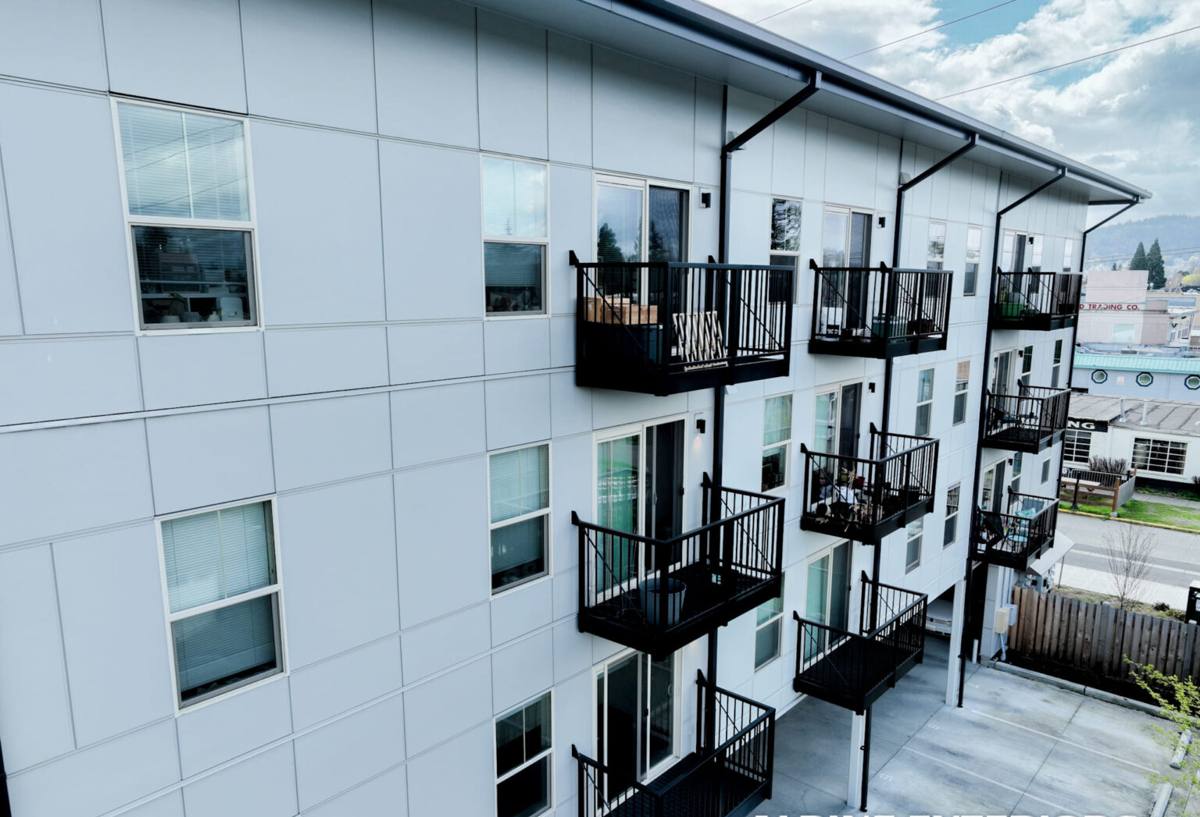
Why James Hardie Is the Right Material for This Stretch of Skagit County
James Hardie fiber cement is manufactured from cement, sand, and cellulose fibers — there's no wood content for moisture to soak into and no organic material for moss and mildew to feed on the way they do with cedar or primed wood-based products. That single difference matters enormously in a climate where a wall can stay damp for days after a storm rolls through.
HZ5 Engineering for the Pacific Northwest
Hardie manufactures its siding in different formulations for different climate zones, and homes in western Washington fall under the HZ5 engineering category — built specifically to resist the freeze-thaw cycling, prolonged moisture exposure, and damp conditions typical of the Pacific Northwest. That's a meaningfully different product than the versions of Hardie siding sold in dry, hot climates, and it's one reason we only source and install the HZ5-rated product line for jobs in this area.
ColorPlus Factory Finish
Most of the siding we install carries Hardie's ColorPlus finish — a coating baked on in a controlled factory environment rather than sprayed or brushed on site. It resists fading and chipping far better than field-applied paint, which matters in a location where UV exposure, salt air, and constant moisture all work against a painted surface. A ColorPlus finish also means touch-up work, when it's ever needed, is limited and predictable rather than a full repaint every few years.
Why We Don't Install Vinyl, LP SmartSide, or Cedar on Stanwood Homes
We get asked from time to time why we don't offer lower-cost siding alternatives, especially since some of them carry a smaller price tag up front. In a climate like this one, the trade-offs aren't worth it. Vinyl siding expands and contracts more than fiber cement across the temperature swings between a cold, damp winter and a warm summer day, and its seams and J-channels give wind-driven rain more opportunities to work behind the panel over time. LP SmartSide and other engineered wood products use a wood-strand core that, however well treated, is still an organic material vulnerable to the kind of sustained moisture exposure this area sees for months at a time. Cedar looks good going up, but it demands a maintenance schedule — re-staining, sealing, and vigilant moisture management — that most homeowners don't keep up with once the novelty wears off, and once cedar starts absorbing moisture in a moss-prone environment, the clock is running. None of that makes those products bad everywhere. It just means they're a worse match for a Stanwood roofline than fiber cement engineered for exactly this kind of weather, which is why James Hardie is the only siding system we install.
Signs Stanwood Homeowners Should Watch For
Because siding failure here tends to start hidden — behind trim, at butt joints, or low on the wall where splashback and moss collect — it's worth knowing what to look for before a small problem becomes a structural repair.
- Soft or spongy spots when you press on the siding, especially near the bottom courses or around window and door trim
- Visible moss or dark green-black staining that keeps returning within weeks of being cleaned off
- Paint that's peeling, bubbling, or alligatored in patches rather than fading evenly across the wall
- Warping, cupping, or separation at seams and butt joints, particularly on walls that face prevailing wind and rain
- A musty smell in an interior room along an exterior wall, which can indicate moisture has already worked its way behind the cladding
- Fastener heads that are rusting, popping, or staining the siding around them
Any one of these is worth a professional look. Several together usually mean the existing siding and possibly the sheathing behind it have been compromised for a while.
What a Correct Installation Actually Involves
James Hardie siding performs the way it's designed to only when it's installed to the manufacturer's specifications — and in a high-moisture, salt-exposed area like Stanwood, the details matter more than they would somewhere drier. A rushed or corner-cutting install can leave a home with the same moisture problems as the siding it replaced, just with a better-looking surface.
The Details That Separate a Correct Job From a Problem Waiting to Happen
| Installation Detail | Why It Matters in This Climate |
|---|---|
| Weather-resistive barrier and proper overlap | Stops wind-driven rain from reaching the sheathing even when it gets past the siding surface |
| Flashing at windows, doors, and penetrations | Directs water away from openings, which are the most common entry points for driving rain |
| Correct fastener type, spacing, and placement | Prevents rust staining, fastener pull-through, and panel movement in salt air and wind |
| Proper clearance from grade, decks, and roof lines | Keeps siding out of standing water and splashback zones where moss and rot start first |
| Correct joint and butt-seam treatment | Seals the gaps where moisture most often works its way behind the cladding |
| Rainscreen or drainage gap where called for | Lets any moisture that does get behind the siding dry out instead of sitting against the wall |
Every one of those details is spelled out in Hardie's own installation guidelines, and every one of them is also easy to skip if a crew is moving fast or isn't used to working in this climate. That's not a hypothetical concern — it's the single biggest factor in whether a Hardie installation lasts the decades it's capable of or develops problems within a few years.
Our Process for a Stanwood James Hardie Job
1. On-Site Inspection and Assessment
We start by walking the exterior with you, checking for soft spots, moss buildup, existing moisture damage, and any areas where past flashing or trim work has failed. This tells us not just what siding is needed, but what's happening behind it.
2. Tear-Off and Sheathing Check
Once the old siding comes off, we inspect the sheathing underneath. Any rot or moisture damage gets addressed before anything new goes on — installing new siding over compromised sheathing just hides the problem instead of fixing it.
3. Weather Barrier and Flashing
We install or verify the weather-resistive barrier and flashing at every window, door, and penetration, with special attention to walls that take the brunt of prevailing wind and rain.
4. James Hardie Installation to Spec
Panels, fastening, clearances, and joint treatment all follow Hardie's published specifications for the HZ5 zone — not a generalized approach that ignores the specific demands of a coastal Skagit County property.
5. Trim, Caulking, and Final Detail Work
The finish details — corner trim, caulking at transitions, and touch-up where needed — are what make the difference between siding that looks good on day one and siding that still looks good and performs well ten years in.
6. Walkthrough and Warranty Registration
We walk the finished job with you, and register the installation for Hardie's manufacturer warranty so the coverage is properly on record from day one.
Why Local Experience in Stanwood Specifically Matters
A siding crew that's already worked on homes in this part of Skagit County knows which walls in a given orientation tend to take the worst of the weather, how moss establishes itself differently on shaded lots near the water than it does further inland, and what wind-driven rain actually does to a wall assembly here versus in a drier climate zone. That's knowledge you only get from doing the work in this specific area, repeatedly — not from a general contractor's siding brochure.
Local experience also means fewer surprises during permitting and inspection, a better read on how a given home's existing moisture problems developed, and a crew that isn't learning the region's climate behavior on your project.
Maintenance in a Salt Air and Moss Climate
One of the practical advantages of James Hardie in this environment is how little ongoing maintenance it actually needs compared to wood-based sidings — but "little" isn't "none." A yearly rinse to knock down moss and salt residue before it has a chance to establish itself, along with a visual check of caulking and trim, goes a long way toward protecting the investment.
- Rinse siding annually, focusing on shaded, north- and west-facing walls where moss takes hold first
- Trim back vegetation and tree cover that keeps walls damp and shaded longer than necessary
- Check caulking at trim and joints every year or two, since caulk fails well before the siding itself does
- Keep gutters and downspouts clear so overflow doesn't run down the wall face repeatedly
- Address any soft trim, staining, or moss regrowth early rather than waiting for it to spread
What This Costs and What Drives the Range
| Cost Factor | How It Affects Your Project |
|---|---|
| Home size and wall complexity | More corners, gables, and trim details mean more labor and material |
| Condition of existing sheathing | Rot repair found during tear-off adds cost but is far cheaper to fix now than later |
| Siding profile and finish selection | Lap width, shingle-style panels, and trim upgrades vary in material cost |
| Accessibility and site conditions | Steep lots, tight setbacks, or multi-story walls affect labor time |
| Scope: full replacement vs. partial | Full tear-off and replacement typically outperforms patching over old, failing material |
We don't publish a flat price on this page because every home's condition and scope is different — but we'll give you a clear, itemized estimate after an on-site look, with no pressure to sign anything on the spot.
Get a Free, No-Pressure Estimate
If your Stanwood home is showing moss, peeling paint, soft trim, or siding that's simply reaching the end of its useful life, we'd be glad to take a look. Fill out the form below to schedule a free, no-obligation estimate — we'll assess your home's specific exposure and give you a straightforward recommendation, whether that's a full James Hardie replacement or targeted repair work.