 Burlington
 Why Avon Homes Need Siding That's Built for This Exact Climate
Avon sits in the low-lying country just outside Burlington, in a part of Skagit County where the weather doesn't do things halfway. Homes here take on salt-laden air moving in off the Sound, long stretches of driving rain through the fall and winter, and a moss and algae season that can run most of the year on shaded north and west walls. That combination is harder on exterior siding than what most manufacturers test for, and it's harder still on siding that wasn't installed with this environment in mind.
Salt air accelerates corrosion on fasteners and trim metal. Driving rain doesn't just wet a wall's surface — wind-driven moisture gets pushed sideways and upward, testing every seam, joint, and piece of flashing. And moss doesn't just look bad; it holds moisture against a wall surface for weeks at a time, which is exactly the condition that causes paint to fail early and wood-based products to soften and rot from the back side out. A siding job that would hold up fine in a drier inland climate can start showing problems in Avon within a few years if it isn't matched to what this area actually does to a house.
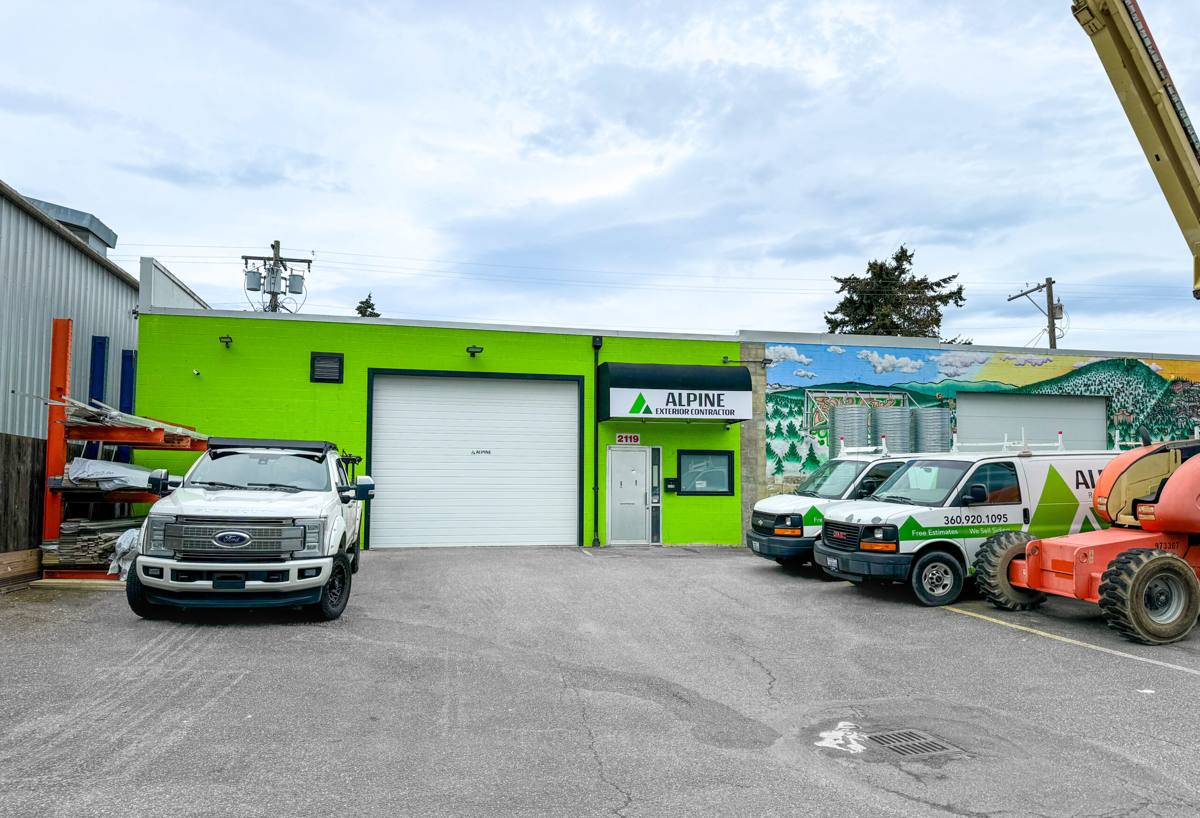
What Happens When Siding Isn't Matched to Avon's Conditions
We get called out to a lot of homes in the Burlington area where the siding looks tired well before it should. The patterns repeat:
- Paint that's peeling or chalking on the north and west elevations first — the sides that stay damp longest and get the least direct sun
- Moss and algae staining that keeps coming back within a season or two of being cleaned
- Soft, spongy siding at the bottom courses and around window sills, where water collects and repeated wetting has broken down the material
- Rust streaks below nail heads and trim fasteners, especially on homes closer to open water
- Caulked joints that have cracked and opened up, letting moisture behind the siding where it can't dry out
None of that is inevitable. It's what happens when the product, the installation details, or both weren't built for driving rain and a long wet season. It's also why we don't treat every siding job the same way regardless of where the house sits — a home in Avon needs different attention to flashing, clearances, and material choice than a similar house on higher, drier ground.
Why We Only Install James Hardie Fiber Cement
We install James Hardie fiber cement siding exclusively — we don't offer vinyl, LP SmartSide, Cemplank, Allura, or primed wood species like spruce or cedar as alternatives. That's a deliberate standard, not a sales default, and it comes directly out of what holds up in Pacific Northwest coastal-influenced climates like this one.
Fiber cement is made from cement, sand, and cellulose fiber, which means it doesn't absorb and swell with moisture the way wood-based or wood-fiber products can, and it won't soften from repeated wetting the way engineered wood siding can if a seam or cut edge is exposed. James Hardie's ColorPlus factory finish is baked on under controlled conditions rather than field-applied, which gives it better adhesion and more resistance to the kind of chalking and fading that shows up first on shaded, damp walls — exactly the walls that give Avon homeowners the most trouble. Hardie also engineers specific product lines (their HZ5 line, for example) for regions with more rain and moisture exposure, which is the right starting point for a home this close to the water.
We're not going to tell you other siding products are worthless — some of them have real strengths, and homeowners choose them for good reasons in the right setting. But we've made a professional call that in this climate, for the homes we put our name on, fiber cement from a manufacturer that engineers for moisture and backs it with a strong transferable warranty is what we're willing to install. That's the standard we hold for every job in Avon and across the rest of the Burlington area.
How Fiber Cement Compares in This Climate
| Factor | James Hardie Fiber Cement | Vinyl | Engineered Wood (LP-type) |
|---|---|---|---|
| Moisture absorption | Very low — cement-based, doesn't swell | Doesn't absorb, but seams can trap water behind panels | Moderate — vulnerable at cut edges and seams if exposed |
| Moss/algae resistance | Factory finish resists staining better than field paint | Can stain and is hard to fully clean without damage | Paint layer wears, exposing substrate to moss growth |
| Salt air / coastal exposure | Engineered product lines available for higher-moisture regions | Can become brittle and discolor with UV and salt exposure over time | More sensitive to prolonged moisture near coastal air |
| Fire resistance | Non-combustible | Combustible, can melt/deform near heat sources | Combustible |
| Typical repaint/refinish cycle | Long-interval, factory finish designed for years between refinishing | Doesn't need paint but shows wear as brittleness/fading | Shorter repaint cycle once field paint starts to wear |
The point of this comparison isn't that every other product fails — it's that in a climate with this much sustained moisture exposure, the margin for error is smaller, and fiber cement gives that margin back.
What a Correct Fiber Cement Installation Actually Involves
Fiber cement siding is only as good as the installation behind it. A large share of the siding failures we see in this area trace back to installation shortcuts, not the product itself. On every Avon job, that means paying close attention to the parts of the job you won't see once it's finished.
Weather Barrier and Drainage Plane
A correctly detailed water-resistive barrier behind the siding gives any moisture that does get past the surface a path to drain and dry out, instead of sitting against the sheathing. In a climate with as much driving rain as Skagit County sees, this layer matters as much as the siding itself.
Flashing and Clearances
Windows, doors, and any horizontal trim need flashing that actually sheds water outward, not just caulk relied on to do a flashing detail's job. Siding also needs proper clearance above rooflines, decks, and grade — tight clearances trap moisture and are one of the most common causes of early rot and moss buildup at the base of a wall.
Fastening
Fasteners need to be the right type, driven to the right depth, and placed according to Hardie's published fastening schedule — not just "close enough." Overdriven or underdriven nails compromise the siding's ability to move slightly with temperature changes without cracking the finish.
Joints and Caulking
Butt joints, corners, and penetrations need to be sealed with the right sealant, applied correctly, not just caulked heavily to compensate for a loose fit. Poor joint work is one of the fastest ways moisture gets behind fiber cement siding regardless of how good the panel itself is.
Quick Checklist: What to Confirm Before Siding Work Starts
- Is a proper water-resistive barrier being installed, and is it detailed around every window and door?
- Will flashing be installed at all horizontal trim and penetrations, not just caulked?
- Are clearances from grade, roofing, and decks being set to manufacturer specification?
- Is the fastening pattern being followed per James Hardie's installation guidelines for your siding profile?
- Are joints being sealed with an appropriate, compatible sealant rather than general-purpose caulk?
- Is the product itself genuine James Hardie, with the ColorPlus finish and warranty paperwork you'd expect?
Our Process, From Estimate to Finished Siding
We walk every Avon property in person before we quote anything. That means looking at which elevations take the most weather, checking existing moisture damage at trim and sills, and looking at drainage around the foundation — all things that affect how the job should be detailed, not just what it will cost. From there:
- On-site assessment of existing siding, moisture points, and drainage conditions specific to your property
- A written estimate that spells out the Hardie product line, profile, and color, plus the scope of prep and flashing work included
- Removal of old siding and inspection of the sheathing underneath for any moisture damage that needs to be addressed before new siding goes on
- Installation of the weather-resistive barrier, flashing, and trim details before a single piece of siding is hung
- Siding installation to Hardie's fastening and clearance specifications, with attention to every joint and penetration
- A final walkthrough with you before we call the job done
Maintenance That Fits Avon's Weather
Even the right siding, installed correctly, still lives in Avon's climate — that doesn't stop the day we finish. A little regular attention keeps moss and salt air from becoming a long-term problem:
- Rinse siding periodically, especially on shaded north and west walls where moss and algae take hold fastest
- Keep gutters clear so overflow isn't running down the siding face during heavy rain
- Trim back vegetation and tree limbs that keep a wall section shaded and damp longer than it needs to be
- Check caulked joints and trim periodically for cracking, and have any gaps resealed before a wet season sets in
- Have fastener heads and metal trim checked occasionally for early corrosion, particularly on homes closer to open water
None of this is heavy maintenance — it's the kind of upkeep that takes an afternoon a couple of times a year, and it's a fraction of what's needed to keep wood-based siding or a peeling paint job looking decent in this climate.
Why Local Experience in Avon and Burlington Matters
A siding crew that mostly works drier, inland areas doesn't always think about clearance, flashing, and drainage the same way a crew that works Skagit County's wetter, coastal-influenced neighborhoods every week does. We know which elevations in this area take the worst weather, which details tend to get skipped on lower-bid jobs, and what actually happens to a wall over a few Avon winters when those details are missed. That's not something you can fully substitute with a product spec sheet — it comes from working this specific area, on this specific kind of weather, over and over.
If you're planning a siding project on an Avon home and want a straight answer about what your house actually needs — not just a quote — we're happy to take a look. Reach out for a free, no-pressure estimate using the form below.