 Burlington
 Why Board & Batten Suits Stanwood's Homes
Board and batten has become one of the most requested siding styles in Stanwood, and it's not just a trend. The vertical lines read as clean and modern on newer builds, but they also sit comfortably on the farmhouses, barns, and older ranch homes scattered around this part of Skagit County. It's a style with roots in agricultural building, which fits an area that's still surrounded by working farmland and open fields between the town and Skagit Bay.
Beyond looks, board and batten changes how water moves down a wall. Wide vertical boards with narrow battens covering the seams shed rain differently than horizontal lap siding does, which matters here more than in drier parts of the state. Done right, it's a durable, low-maintenance exterior. Done wrong, the vertical seams and butt joints are exactly where water finds its way behind the cladding. The difference between those two outcomes is almost entirely in the installation, not the material.
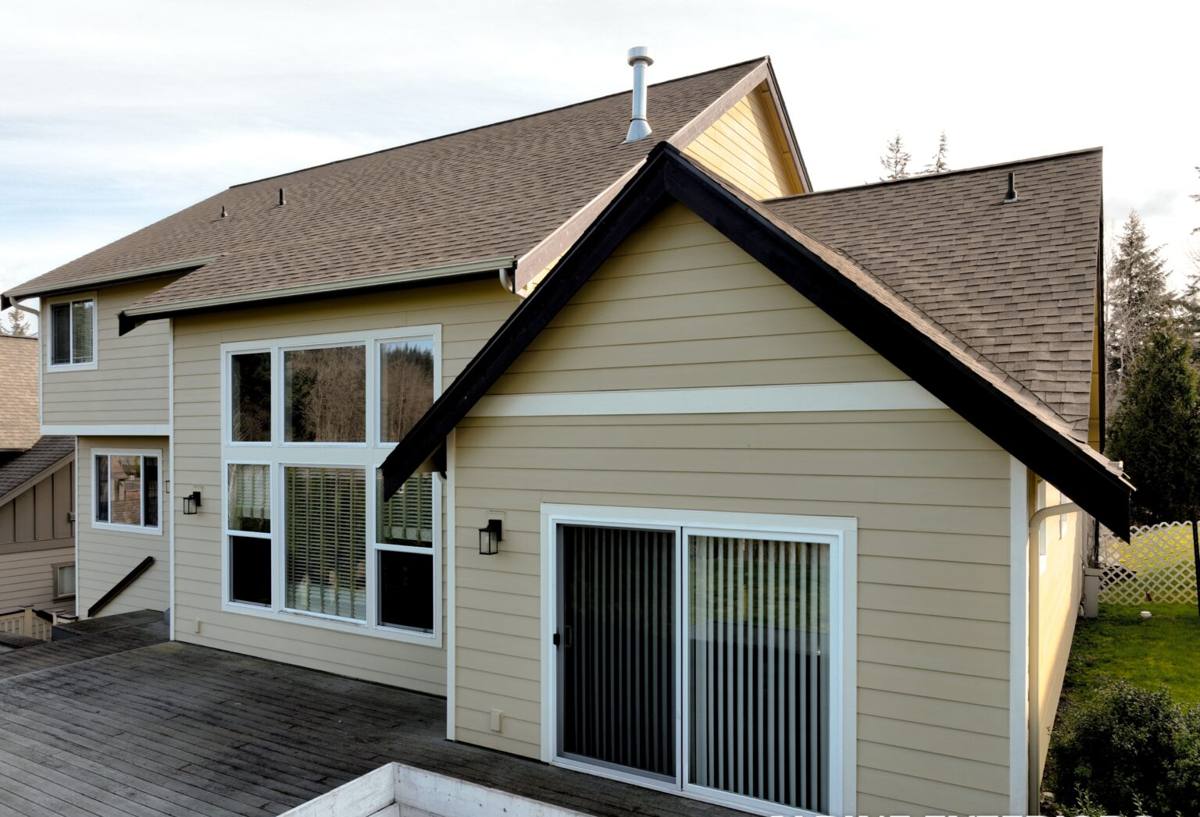
What Stanwood's Climate Actually Does to Siding
Stanwood sits close enough to Skagit Bay and Port Susan that homes here deal with a steady dose of salt-laden air on top of everything else western Washington throws at a house. That combination is harder on an exterior than people expect.
- Salt air: accelerates corrosion on exposed metal fasteners, flashing, and trim — a slow, invisible process until paint starts lifting near nail heads or seams.
- Driving rain: wind off the water pushes rain sideways into vertical joints and under poorly lapped trim, which is a bigger risk with board and batten than with standard lap siding if the joints aren't detailed correctly.
- Long moss season: shaded north and west walls, common on lots with mature trees or close neighboring structures, stay damp for months at a time, feeding moss and algae growth that traps moisture against the surface.
None of this means board and batten is a bad choice for Stanwood. It means the installation has to account for these conditions specifically, not just follow a generic spec sheet written for a drier climate.
What a Correct Board & Batten Job Requires
Drainage Plane and Rainscreen
Every board and batten installation should start with a weather-resistive barrier and, in most cases on this coastline, a rainscreen gap behind the panels. That gap lets any moisture that gets past the cladding drain and dry out instead of sitting against the sheathing. On a home exposed to salt air and driving rain, skipping this step is one of the most common ways a siding job fails early, even when the material itself is excellent.
Fastening and Fastener Choice
Board and batten relies on consistent, correctly spaced fastening into framing, not just sheathing. In a salt-air environment, fastener material matters — corrosion-resistant fasteners rated for the exposure prevent the streaking and loosening that happens when the wrong hardware starts to rust from the inside out.
Joint and Trim Detailing
Butt joints, corners, and transitions around windows and doors are where board and batten either performs or fails. Proper flashing at every horizontal joint, correctly lapped trim, and sealed penetrations keep driving rain from finding its way behind the boards. This is detail work that takes longer than a quick nail-and-caulk approach, and it's the part that separates a siding job that lasts decades from one that needs repair in five years.
Bottom Clearance and Grade
Board and batten siding needs proper clearance from grade, decks, and roof lines. Wet ground and mulch beds pushed up against the bottom edge of the siding create a constant moisture source that no amount of good material can outlast.
James Hardie Board & Batten Options
We install James Hardie fiber cement exclusively, and for board and batten that mainly means two product lines: HardiePanel vertical siding paired with Hardie trim battens, and the Artisan series for homes where a more refined, tighter-reveal look is the goal. Both are engineered fiber cement, not wood or wood-composite, which matters directly for the conditions described above — fiber cement doesn't absorb moisture and swell the way engineered wood products can, and it won't feed the rot that moss and prolonged dampness cause in organic materials.
| Feature | HardiePanel Vertical Siding | Artisan Board & Batten |
|---|---|---|
| Look | Classic board and batten, broader reveal | Tighter, more refined reveal and detailing |
| Best fit | Farmhouse, craftsman, and traditional exteriors | Custom and higher-end architectural homes |
| Finish | ColorPlus factory finish available | ColorPlus factory finish, premium color options |
| Typical use | Full walls, gable accents, mixed with lap siding | Feature walls, entries, full exteriors |
Both are backed by James Hardie's engineered HZ5 product line for the Pacific Northwest, formulated to hold up to sustained moisture exposure, and both carry a factory-applied ColorPlus finish when specified, which resists the fading and chalking that field-painted siding is prone to under years of coastal sun and salt air.
Why We Only Install James Hardie
We get asked why we don't offer vinyl, LP SmartSide, or cedar board and batten, since all three are available and cheaper up front. The honest answer is that in a climate like Stanwood's, those trade-offs stack against the homeowner over time. Vinyl can warp and fade, and it doesn't hold sharp board and batten lines the way fiber cement does. Engineered wood products are moisture-sensitive at the core, which is a real liability with the amount of driving rain and prolonged dampness this area sees. Cedar looks great new but demands ongoing maintenance — refinishing, caulking, and moss treatment — that most homeowners don't want to keep up with for 20-plus years. Fiber cement is non-combustible, holds paint and factory finish far longer, and simply requires less babysitting in this climate. That's the whole reason we standardized on it.
Our Installation Process
- On-site assessment: we look at wall orientation, shade patterns, existing moisture damage, and grade clearance before ever quoting the job.
- Tear-off and sheathing check: old siding comes off and we inspect sheathing for rot or damage before anything new goes up — this is often where hidden problems from a previous installation surface.
- Weather-resistive barrier and rainscreen: installed to current best practice for coastal Skagit County exposure.
- Panel and batten installation: fastened to framing on proper spacing, with corrosion-resistant hardware.
- Flashing and trim detail: every joint, window, and door transition flashed and sealed correctly, not just caulked over.
- Finish and walkthrough: final inspection with the homeowner before we consider the job done.
Board & Batten vs. Other Siding Styles Here
| Consideration | Board & Batten (Hardie) | Lap Siding (Hardie) | Vinyl |
|---|---|---|---|
| Look on farmhouse/traditional homes | Strong match | Good, more common | Limited authenticity |
| Moisture resistance | Excellent when detailed correctly | Excellent | Good but can warp |
| Salt air durability | High with factory finish | High with factory finish | Fades over time |
| Maintenance | Low | Low | Low, but brittle with age |
What Board & Batten Costs Depend On
| Factor | Why It Matters |
|---|---|
| Wall complexity | More corners, gables, and trim transitions mean more flashing and labor time |
| Existing sheathing condition | Rot or damage found during tear-off adds repair work before siding can go on |
| Product line | Artisan detailing costs more than standard HardiePanel |
| Height and access | Two-story walls and steep grades affect scaffolding and labor |
Maintenance Checklist for Stanwood Homeowners
- Rinse shaded, moss-prone walls once or twice a year, especially north-facing sides near mature trees
- Check caulking around windows, doors, and trim annually for cracking or separation
- Keep mulch, soil, and plantings pulled back from the bottom edge of the siding
- Look for streaking near fasteners or trim, which can signal early corrosion
- Address gutter overflow quickly — water sheeting down a wall accelerates moss and staining
Why Hire a Crew That Already Works in Stanwood
Board and batten installed to spec in Spokane doesn't necessarily hold up the same way in Stanwood. A crew that already works this part of Skagit County knows which walls take the worst of the driving rain off the water, which lots stay shaded and mossy longer than others, and how much rainscreen and flashing detail is actually needed here versus what a generic install guide calls for. That local knowledge shows up in the details — not in the sales pitch, but in how the joints are flashed and where the extra ten minutes gets spent.
If you're considering board and batten for a home in Stanwood, we're happy to walk the property, talk through what your walls specifically need, and give you a straightforward, no-pressure estimate. Fill out the form below to get started.