 Burlington
 Edison Roofs Face a Specific Kind of Wear
Edison is a small, close-to-the-water community in Skagit County, just outside Burlington, and its roofs don't age the same way roofs do twenty miles inland. Being near open bay and sound waters means more salt-laden air moving across the rooftops here, more wind-driven rain finding its way under loose flashing, and a longer stretch of damp, shaded months that let moss get established before anyone notices. A roof repair here isn't just patching a leak — it's addressing why that leak happened in the first place, and that reason is almost always tied to this specific stretch of Skagit County climate.
We've worked on homes throughout the Burlington area, and Edison roofs consistently show a pattern: metal fasteners and flashing that corrode faster than they should, shingle granule loss that's accelerated by salt exposure, and moss colonies that take hold in north-facing valleys and under tree cover months before a homeowner in a drier part of the county would see the same thing. Repairing a roof correctly here means planning for that pattern, not just fixing what's visible today.
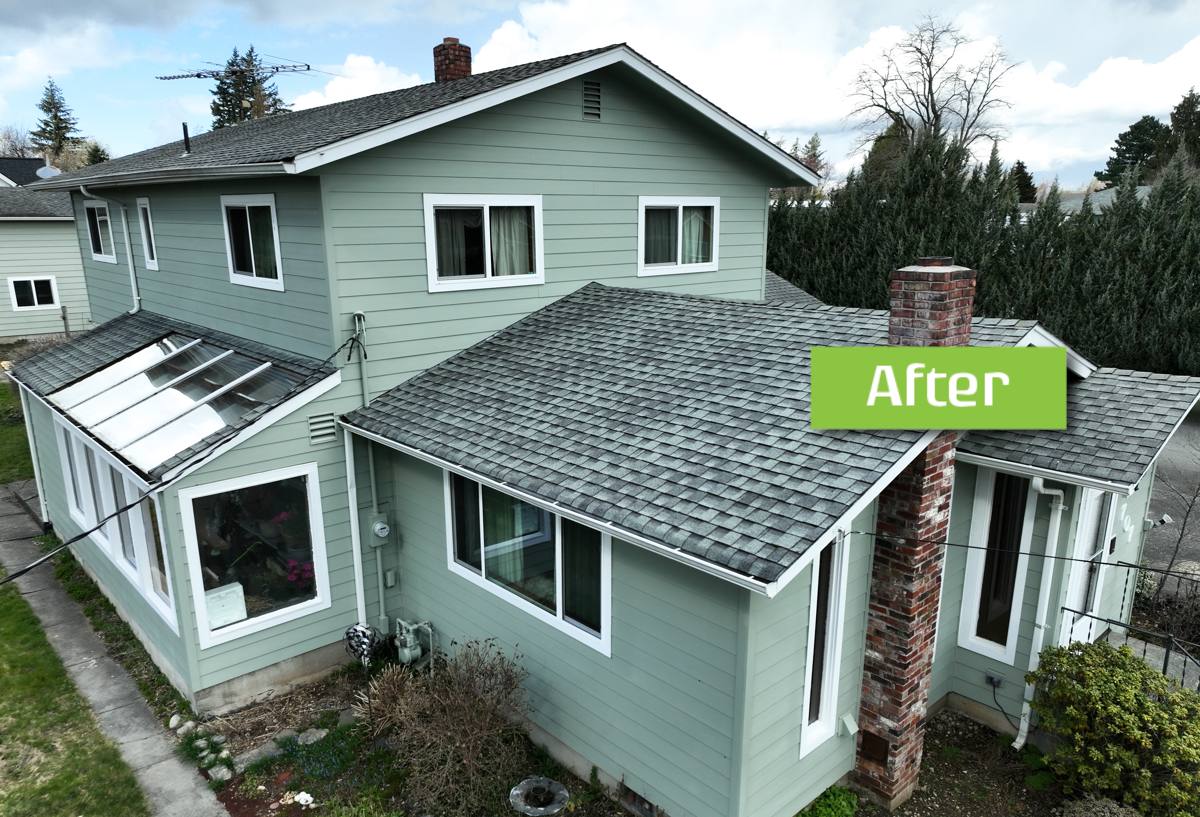
What Salt Air, Rain, and Moss Actually Do to a Roof
Salt Air and Metal Corrosion
Salt in the air settles on every exposed metal component on a roof — flashing, drip edge, nail heads, gutter hardware, vent stacks. Over time it accelerates oxidation, and once a fastener or flashing seam starts to corrode, it stops sealing the way it should. That's often the real cause behind a "mystery leak" that shows up nowhere near where the water is actually entering — it traveled along a corroded flashing seam or a failed nail before showing itself inside the attic or ceiling.
Driving Rain and Wind-Driven Water
Skagit County storms coming off the water don't just fall straight down — they push rain sideways and upward under laps, ridge caps, and flashing that would keep water out in a calmer climate. This is why repairs done with standard, non-coastal detailing tend to fail again within a season or two here. The underlayment, the flashing overlap, and the ridge and hip details all need to account for wind-driven moisture, not just gravity.
The Long Moss Season
Edison's tree cover, shaded roof sections, and extended damp months give moss a long window to establish itself — often longer than in more open, sun-exposed parts of Burlington. Moss doesn't just look bad; it holds moisture against the roofing material, lifts shingle edges as it grows, and works its way under laps and around fasteners. Left alone through a full moss season, it turns small, cheap-to-fix issues into structural rot underneath.
Signs an Edison Roof Needs Repair
Most roof problems here start small and are easy to miss from the ground. These are the signs we tell Edison and Burlington homeowners to watch for between professional inspections:
- Dark streaking or green/black growth in shaded valleys or north-facing slopes
- Granules collecting in gutters or at downspout outlets
- Curling, cracked, or lifted shingle edges, especially near ridges and hips
- Rust staining below metal flashing, vent stacks, or fasteners
- Soft or spongy spots when walking a low-slope section
- Daylight visible through the roof deck from inside the attic
- Water stains on ceilings or attic sheathing, even faint ones
- Sagging gutters or debris buildup that keeps water sitting against the roof edge
Any one of these on its own might be minor. Two or more together, especially in a shaded or bay-facing section of the roof, usually means active moisture intrusion that's been going on for a while.
What a Correct Roof Repair Actually Involves
Diagnosis Before Patching
A repair that just covers the spot where water is showing up inside the house often misses the actual entry point, which can be several feet away, upslope, or hidden under a flashing detail. We trace the path of the water — checking flashing, underlayment condition, ventilation, and the roofing material itself — before deciding what actually needs to be opened up and fixed.
Matching Materials and Fastening
Patching in mismatched shingle material, the wrong fastener type, or flashing that isn't rated for coastal exposure creates a weak point that fails again, often faster than the original problem did. We use fasteners and flashing suited for salt-air exposure and match the existing roofing material as closely as possible so the repair blends in and performs the same as the surrounding roof.
Flashing, Underlayment, and Ventilation
Most roof leaks in this area trace back to flashing — around chimneys, skylights, valleys, and wall-to-roof transitions — rather than the field of the shingles themselves. A correct repair rebuilds that flashing detail properly, checks the underlayment underneath for hidden damage, and confirms the attic is ventilating correctly, since poor ventilation traps moisture and accelerates rot from the inside out even when the exterior repair looks fine.
Moss and Growth Removal Done Right
Moss has to be removed carefully, not scraped or pressure-washed aggressively, which can strip granules and shorten the life of the surrounding shingles. We remove growth, treat the affected area to slow regrowth, and check underneath for moisture damage the moss may have been hiding.
Our Repair Process
- Inspection and diagnosis — We walk the roof (weather permitting) and check the attic from inside, tracing any leak back to its actual source rather than just the visible symptom.
- Honest assessment — We tell you plainly whether it's a targeted repair, a larger section replacement, or something closer to full replacement, and why.
- Written estimate — A clear scope of work and price range before anything is touched, no surprise add-ons once we're on the roof.
- Repair work — Flashing, underlayment, decking, and roofing material are addressed as needed, using materials matched to your existing roof and suited for this climate.
- Cleanup and check — Debris, old material, and moss growth are cleared from the roof and gutters before we consider the job done.
- Follow-up — We let you know what to watch for and when it's worth a check-up, particularly heading into or out of moss season.
Repair or Replace? What Actually Drives the Decision
Not every roof problem in Edison calls for a full replacement, and not every leak is fixable with a simple patch. The honest answer depends on a handful of factors:
| Factor | Leans Toward Repair | Leans Toward Replacement |
|---|---|---|
| Age of roof | Under 15 years, or a newer roof with an isolated issue | Nearing or past its material's expected service life |
| Extent of damage | Localized — one flashing detail, one valley, one section | Spread across multiple slopes or found in more than one spot during inspection |
| Decking condition | Solid, dry sheathing under the affected area | Soft, rotted, or delaminated decking found during inspection |
| History of repairs | First or second repair on this roof | Repeated repairs to the same or nearby areas over recent years |
| Moss/growth extent | Surface growth with no underlying rot found | Moss has been established long enough to cause deck-level damage |
We'll always tell you when a repair is the right call, even if replacement would be the bigger job — patching a sound roof with a real fix is often the more honest answer, and we'd rather earn repeat trust in Edison than push work that isn't needed.
Roofing Materials We Work With in This Climate
Asphalt composition shingles remain the most common roofing material on Edison and Burlington homes, and for repair work, matching the existing material is usually the priority — mixing shingle brands or profiles on one roof plane creates visible seams and inconsistent wear. Metal roofing and standing-seam sections show up on some homes and outbuildings in the area and hold up well against wind-driven rain when flashed correctly, but they need corrosion-resistant fasteners and coatings given the salt exposure, or the fastener heads become the weak point years before the panels themselves. Whatever material is on your roof now, a repair should reinforce its weak points for this specific climate — not just replace what failed with more of the same.
Why a Crew That Already Works Edison Matters
A roofer who mainly works drier, inland areas can still do competent general roofing work, but they won't necessarily know to check for the specific failure points that show up here first — the salt-corroded flashing nails, the north-facing valley that holds moss longer than the rest of the roof, the wind-driven rain path that a standard flashing detail doesn't stop. We work throughout Burlington and the surrounding Skagit County communities, including Edison, and that regular exposure to this exact climate shapes how we diagnose and repair a roof — we're not guessing at what coastal Skagit County weather does to a roof over time, we've seen it directly, repeatedly, on homes like yours.
There's also a practical side to hiring local: a crew based nearby can respond faster to an active leak, follow up on a repair without a long drive eating into the job, and stand behind the work because they're not disappearing to the next region over.
Maintenance That Extends a Repair's Life
A good repair lasts longer with a little regular attention, especially given how long moss season runs here. Between professional check-ups, this is worth staying on top of:
- Clear gutters and downspouts of debris and granules, especially after fall storms
- Trim back overhanging branches that keep roof sections shaded and damp
- Look for early moss or algae growth in valleys and north-facing slopes each spring
- Check attic ventilation isn't blocked by insulation or debris
- After any major windstorm off the water, do a visual check for lifted or missing shingles
- Have flashing around chimneys, skylights, and vents checked every couple of years, since these fail before the field of the roof usually does
If you're noticing signs of a problem, or it's just been a while since your roof had a real look-over, we're happy to come out and give you a straight answer — no pressure, no upsell, just what we actually find. The form below gets you a free estimate for your Edison home.