 Burlington
 Why Mount Vernon Siding Wears the Way It Does
Mount Vernon sits in the Skagit River valley, close enough to Puget Sound and the Sound-influenced weather systems that homes here deal with a specific combination of stressors: salt-tinged marine air moving up the valley, long stretches of driving rain off the water, and a moss and algae season that can run most of the year on shaded or north-facing walls. None of these are dramatic events. They're slow, constant pressure, and siding shows the effects gradually — a soft spot here, a discolored panel there, a seam that's opened up just enough to let water behind the wall.
Siding repair in a climate like this isn't just about patching what's visible. It's about understanding why that spot failed in the first place, because if the underlying cause (bad flashing, a failed caulk joint, a drainage gap that's been closed off) isn't addressed, the same failure comes back in a season or two, sometimes worse.
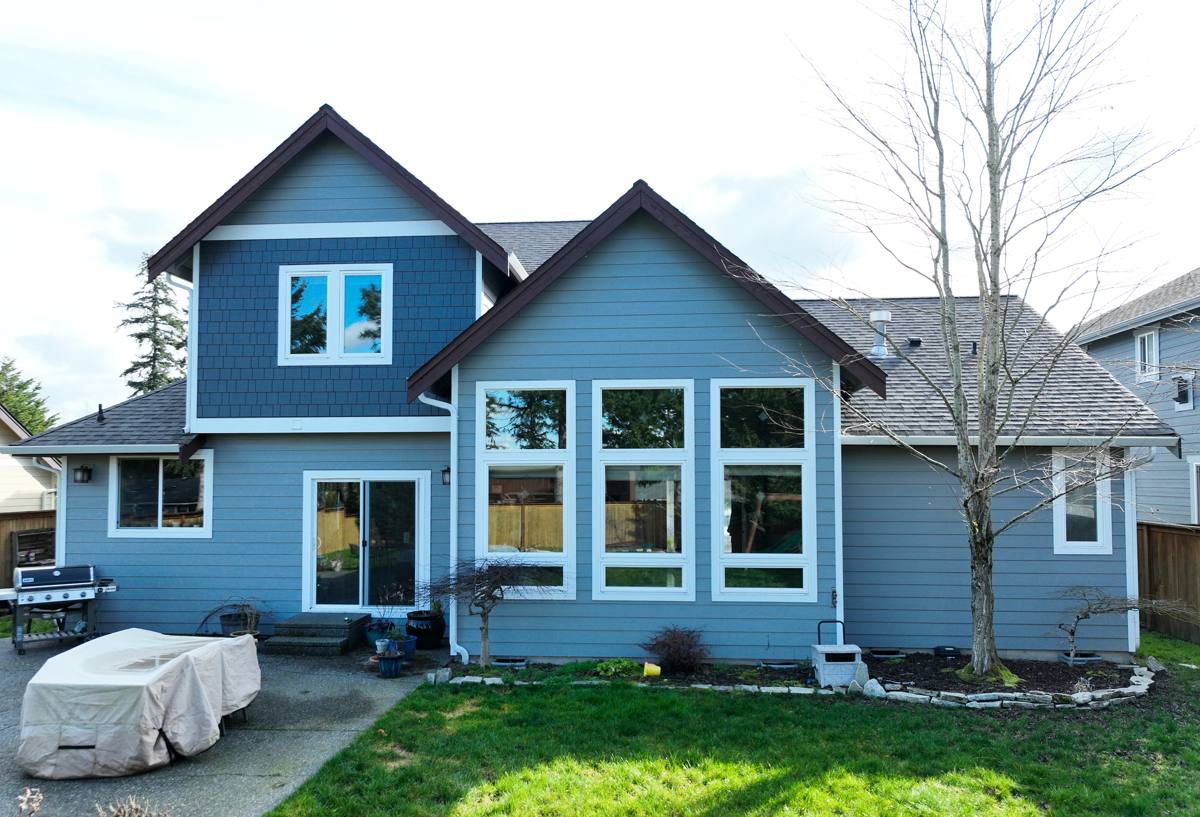
What Damage Actually Looks Like on Mount Vernon Homes
Most homeowners don't call about siding until something is visibly wrong, but the early signs are usually there well before that. On a moisture-driven repair call in this area, we're typically looking at one or more of the following:
- Swelling, bubbling, or soft, spongy panels — usually a sign water has been getting behind the siding, not just sitting on the surface
- Persistent moss or dark algae staining on shaded or north-facing walls that won't wash off and keeps returning
- Cracked, shrunk, or missing caulking at trim joints, window and door casings, and panel seams
- Warped or cupped boards, especially on walls that take direct, driving rain
- Paint that's peeling, chalking, or failing unevenly in patches rather than across the whole wall
- Gaps or separation at corners and butt joints where two pieces of siding meet
Any one of these on its own might be minor. Several showing up on the same wall usually means water has had a way in for a while, and the repair needs to include whatever is letting it in — not just the siding itself.
Why This Matters More Here Than in a Drier Climate
In a dry inland climate, a small gap in caulking might sit unnoticed for years. In Skagit County, with the volume of rain and the humidity that keeps walls damp for extended stretches, that same gap becomes a moisture entry point on a much faster timeline. Wood-based and lower-grade siding products are especially vulnerable — they absorb water, swell, and eventually break down from the inside, which is part of why we don't install those products in the first place.
Repair or Replace: How We Actually Decide
Not every damaged section needs full replacement, and not every "small" repair should stay small. We look at the extent of the damage, what's behind it, and how much of the wall is affected before recommending anything. Here's roughly how that decision plays out:
| Factor | Repair Usually Makes Sense | Replacement Usually Makes Sense |
|---|---|---|
| Extent of damage | Isolated to one or two panels or a single wall section | Spread across multiple walls or recurring in the same areas |
| Underlying structure | Sheathing and framing are dry and sound | Water has reached and damaged sheathing, framing, or insulation |
| Siding material | Existing material is sound fiber cement in good condition | Existing material is failing wood, vinyl, or degraded fiber cement |
| Age of siding | Well within its expected service life | Near or past the point where repeated repairs are cost-effective |
| Color and profile match | Replacement panels can be closely matched | Discontinued color or profile makes patching visually inconsistent |
We'll walk you through which category your home falls into and why, rather than defaulting to the more expensive option. A lot of the time, a targeted repair genuinely is the right call — but it has to be done correctly, or it's just delaying the same problem.
What a Correct Repair Actually Involves
A siding repair that holds up in this climate is more than swapping out a damaged board. The work that actually matters usually happens underneath and around the visible siding:
Diagnosing the Water Path
Before any siding comes off, we trace how water got in — a failed flashing detail, a clogged or misdirected gutter, a caulk joint that's opened up, or siding that was face-nailed or installed too tight to the trim with no room to drain. Replacing the panel without fixing this just resets the clock.
Checking What's Behind the Wall
Once panels are pulled, we check the house wrap or weather-resistive barrier, the sheathing, and the framing underneath for moisture damage or rot. If there's damage back there, that gets addressed before anything new goes back up — covering rotten sheathing with new siding just hides a bigger problem.
Correct Reinstallation
Replacement sections get installed to manufacturer specification — proper clearance from grade, decks, and roof lines, correct nailing pattern, and properly lapped and sealed flashing at joints, windows, and penetrations. This is where a lot of poor repairs go wrong: the new piece looks fine on day one but was never given a way to shed water correctly.
Matching Finish and Profile
Because we work exclusively in James Hardie fiber cement, repairs use ColorPlus factory-finished panels in matching colors and profiles wherever possible, so a repaired section doesn't stand out as an obvious patch — and doesn't need field painting that won't hold up the same way as a factory finish.
Our Process for Mount Vernon Repair Calls
Because we work in this area regularly, we're not learning the local conditions on your dime. Our process for a Mount Vernon repair typically looks like this:
- Inspection and diagnosis — we look at the damaged area and the surrounding siding, not just the spot you called about, since moisture damage often extends further than what's visible.
- Honest scope and estimate — you get a clear explanation of what's causing the damage, whether repair or replacement makes more sense, and what it will cost, in writing.
- Sourcing matched materials — we confirm color and profile match against your existing siding before scheduling the work.
- Repair to spec — including flashing, drainage clearance, and fastening, not just cosmetic panel replacement.
- Final walkthrough — we go over the completed work with you before considering the job done.
Why We Only Work in James Hardie Fiber Cement
We don't install or repair siding with LP SmartSide, vinyl, Cemplank, Allura, primed spruce, or cedar. That's a deliberate standard, not a limitation we work around. Fiber cement from James Hardie is non-combustible, engineered for climates like the Pacific Northwest's, and holds a factory ColorPlus finish that resists the fading and moisture intrusion that drives most of the repair calls we get on other materials. When we repair a Hardie installation, we're usually dealing with a flashing or installation issue, not the material itself breaking down — which is a meaningfully different (and less frequent) kind of call than what we see on wood or vinyl siding in this climate.
This also means when we replace a damaged section, we're working with a product that's designed to hold its finish and profile for the long run, so a repair today doesn't turn into a mismatched patch a few years down the road.
Why Local Experience in Mount Vernon Matters
Siding performance is site-specific. A wall that takes direct, wind-driven rain off the valley behaves differently than a sheltered wall on the same house, and a shaded north side with poor airflow is going to grow moss faster than a sun-exposed south wall regardless of the siding product. A crew that regularly works Skagit County homes recognizes these patterns quickly — which walls are the recurring problem spots, what kind of flashing details tend to fail first in this climate, and how local moisture and moss cycles actually affect a repair's long-term durability. That translates into a faster, more accurate diagnosis and a repair that's built for the conditions your specific home actually faces, not a generic fix.
Keeping Repaired Siding in Good Shape Afterward
A correct repair should hold up for years, but a little ongoing attention helps, especially given the moss and moisture cycle in this area:
- Keep gutters clear so water isn't overflowing directly onto siding below
- Trim back vegetation and tree cover that keeps walls shaded and damp longer than necessary
- Rinse off moss and algae buildup periodically, especially on north-facing walls, before it has a chance to hold moisture against the surface
- Have caulking at trim and joints checked every couple of years, since it's usually the first thing to fail
- Address small issues (a lifted corner, a hairline crack) promptly rather than waiting for them to become bigger repairs
If you're noticing soft spots, staining, or gaps in your siding, we're happy to take a look and give you a straightforward assessment of what's going on and what it would take to fix it. Reach out for a free, no-pressure estimate using the form below.