 Burlington
 Windows Built for Avon's Weather, Not Just Any Weather
Avon sits low in the Skagit Valley, close enough to Puget Sound and the Skagit River delta that homes here deal with a different mix of weather stress than houses twenty miles inland. Salt-laden air moves in off the water, driving rain comes sideways during winter storms, and the long gray stretch from October through April keeps everything damp long enough for moss to take hold on anything that stays wet. Windows are one of the first things that mix goes to work on. Frames corrode faster, seals fail sooner, and glass that isn't rated for this climate fogs up between the panes within a few years instead of lasting decades.
When we talk about "energy-efficient windows" for an Avon home, we're not just talking about a lower heating bill, though that matters. We're talking about a window system — frame, glass, flashing, and sealant — that's specifically suited to a wet, salt-touched, low-elevation Skagit County property. That's a narrower job than a generic window upgrade, and it's the one we specialize in.
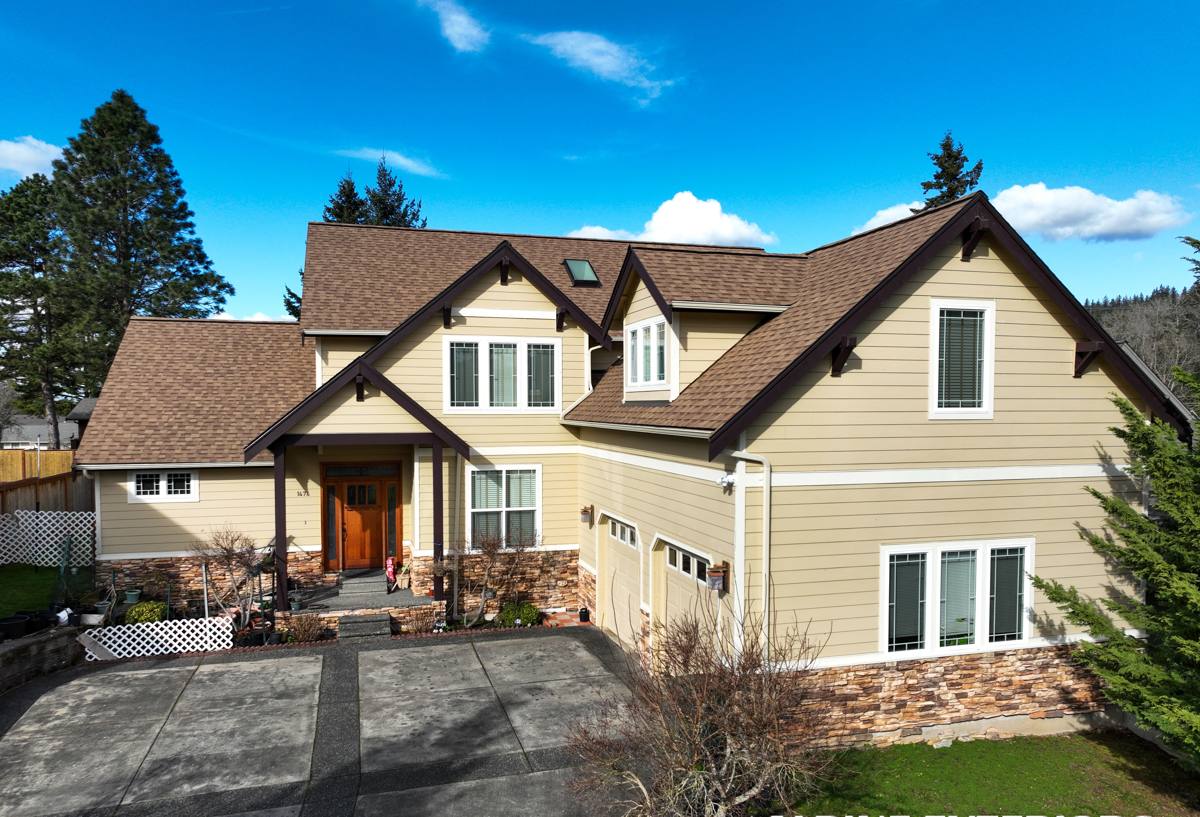
What "Energy-Efficient" Actually Means Here
Energy efficiency in a window comes down to a handful of measurable factors, and in western Washington some matter more than others:
- U-factor — how well the window resists heat loss. Lower is better for our cool, heating-dominated climate.
- Solar Heat Gain Coefficient (SHGC) — how much solar heat passes through. In Skagit County's mild, often overcast climate, this matters less than in sunnier regions, but it still affects comfort on clear days.
- Air leakage rating — how much air moves through the window assembly itself, which matters a lot when wind-driven rain is pressing against the glass.
- Condensation resistance — how well the window handles the temperature and humidity swings between a warm interior and a cold, damp Skagit Valley night.
A window can carry a strong energy rating on paper and still perform poorly on an Avon home if it wasn't installed with attention to how water moves around it. Efficiency and weather-tightness are two sides of the same job — you can't really separate them out here.
Double-Pane vs. Triple-Pane
Most homes in this area do well with a quality double-pane, Low-E, argon-filled unit. Triple-pane glass adds cost and weight for a relatively small efficiency gain in our climate zone, and it's rarely the deciding factor in comfort or energy savings for a typical Avon home. We'll talk through it honestly rather than upsell it — for most single-family houses here, the frame material and installation quality matter more than the third pane of glass.
Signs Your Current Windows Are Working Against You
Homeowners in Avon usually notice a few consistent warning signs before they call about window replacement:
| What You Notice | What's Likely Happening |
|---|---|
| Fogging or haze between the glass panes | The seal has failed and the gas fill has escaped — this can't be repaired, only replaced |
| Drafts near the frame on windy days | Failed weatherstripping or a frame that's shifted/warped from moisture |
| Soft or discolored trim/sill around the window | Water is getting behind the frame — often a flashing or caulk failure, not just an old window |
| Moss or dark streaking on the frame or nearby siding | Persistent moisture sitting in a spot that isn't shedding water and drying properly |
| Windows that are hard to open or don't latch tight | Frame swelling from moisture intrusion, common in older wood and lower-grade vinyl units |
Any one of these on its own might just mean a repair. Several of them together, especially on a home's north or west-facing walls where wind-driven rain hits hardest, usually mean it's time to talk about full replacement.
What a Correct Installation Actually Involves
The window unit itself is only part of the job. In our experience, most window failures in this region trace back to installation shortcuts, not bad product. A correct install for an Avon home includes:
Proper Flashing and Water Management
Every window opening needs to be flashed so that any water that gets behind the exterior cladding is directed back out, never trapped against the wall framing. This means sill pan flashing at the bottom of the opening, house wrap integration at the sides and top, and a shingled, lapped sequence so water always sheds downward and outward. This step is invisible once the job is done, and it's the single biggest factor in whether a window lasts 10 years or 30 in a wet coastal climate.
Sealant That Matches the Material
Not every caulk or sealant is rated for the same movement, UV exposure, or adhesion needs. We match sealant to substrate — vinyl, fiber cement, wood trim — rather than using one general-purpose product everywhere, because a bad sealant match is a common, quiet cause of early leaks.
Fit and Shimming
A window that's out of square, even slightly, puts uneven stress on the frame and can compromise both the seal and the operation of the sash over time. Correct shimming keeps the frame square and the reveal even all the way around.
Interior and Exterior Trim-Out
Once the window is set and flashed, trim and insulation around the frame need to be finished so there are no gaps for air or moisture to travel through the wall cavity.
Comparing Frame Materials for a Coastal Skagit County Home
Frame material affects how a window holds up to salt air, rain, and moss exposure over the long run. Here's how the common options stack up for this specific climate:
| Frame Material | Moisture & Salt-Air Performance | Maintenance | Typical Lifespan Here |
|---|---|---|---|
| Vinyl | Good — won't rot or corrode, handles salt air well | Low — occasional cleaning | 20–30 years with quality installation |
| Fiberglass | Very good — dimensionally stable, resists warping in temperature/humidity swings | Low | 30+ years |
| Wood (unclad) | Poor without diligent upkeep — absorbs moisture, prone to rot and moss growth in shaded, damp spots | High — regular painting/sealing required | Highly variable, often 10–15 years before major repair |
| Wood-clad (vinyl or aluminum exterior) | Good on the exterior face, but any breach in the cladding lets moisture into the wood core | Moderate — exterior is low-maintenance, but seams need monitoring | 20–25 years if the cladding stays intact |
For most Avon homes, we lean toward vinyl or fiberglass frames precisely because of the moisture and salt exposure this area sees. Unclad wood can look great, but it asks a lot of ongoing maintenance from the homeowner to hold up here, and we'd rather tell you that upfront than sell you a product that becomes a maintenance project. If you want the look of wood, a quality clad or composite option gets you closer without the same upkeep burden.
How We Approach a Window Job in Avon
- On-site assessment. We look at each window opening individually — sun/wind exposure, current condition of the flashing and sill, and any signs of existing water intrusion.
- Honest scope. Some windows may only need resealing or minor repair. We'll tell you which ones actually need full replacement instead of pushing a whole-house job when it's not warranted.
- Removal and inspection. Once a window comes out, we check the surrounding sheathing and framing for hidden moisture damage before anything new goes in — this is often where problems that caused the original failure get found.
- Correct flashing and installation. Sill pan, house wrap integration, shimming, and sealant matched to the materials involved.
- Trim and finish. Interior and exterior trim-out, cleanup, and a final check that every window opens, closes, and locks correctly.
Why Local Experience in Avon Matters
A crew that already works in and around Avon and greater Burlington knows what this specific stretch of Skagit County throws at a house — where wind-driven rain tends to hit hardest on a typical lot orientation, how long moss season really runs here, and what a salt-air-exposed frame looks like after a few winters versus a well-installed one. That's not something you get from a general contractor passing through once. It also means we're around for warranty work, seasonal check-ins, or answering a question a year or two after the install — not a crew that did one job in the area and moved on.
Keeping New Windows Performing Long-Term
Even a well-installed, energy-efficient window benefits from basic upkeep in this climate. A simple seasonal routine goes a long way:
- Rinse frames and tracks periodically to clear salt residue and organic buildup before it holds moisture
- Check and clear weep holes on vinyl and fiberglass frames so water can drain out as designed
- Inspect exterior caulk lines once a year, especially after a hard winter, and touch up any cracking before water gets behind it
- Watch for moss or algae starting on frames or nearby trim — treat it early rather than letting it establish
- Test operation of locks and latches each season, since swelling or misalignment often shows up here first
None of this is a big time commitment, but skipping it is how a 30-year window turns into a 15-year window in a climate like ours.
Get a Straight Answer for Your Windows
If your windows are fogging, drafty, sticking, or just old enough that you're wondering whether they're costing you more than they're worth, we're glad to take a look. We'll give you a clear, honest read on what's actually going on — repair, reseal, or replace — with no pressure either way. Use the form below to request a free estimate for your Avon home.