 Burlington
 Why Siding Fails Faster in Lyman
Lyman sits along the Skagit River corridor east of Burlington, tucked into a stretch of Skagit County where tree cover is thick, humidity lingers, and the growing season for moss and algae runs nearly year-round. Add the marine-influenced, salt-tinged air that moves up the valley off Puget Sound and the driving rain that defines a Skagit County winter, and you have a climate that is genuinely hard on exterior siding. Homes here don't fail because the siding was installed carelessly — they fail because most siding products simply weren't engineered for this specific combination of shade, moisture, and salt air.
We do siding repair work throughout the Lyman area regularly, and the damage we see follows a pattern. It's rarely one dramatic event. It's months of moisture sitting against a wall that doesn't get much direct sun, moss holding water against a seam, or a small gap at a trim joint that's been wicking rain into the wall assembly since last fall. By the time a homeowner notices a soft spot or a stain, the damage is usually further along than it looks from the ground.
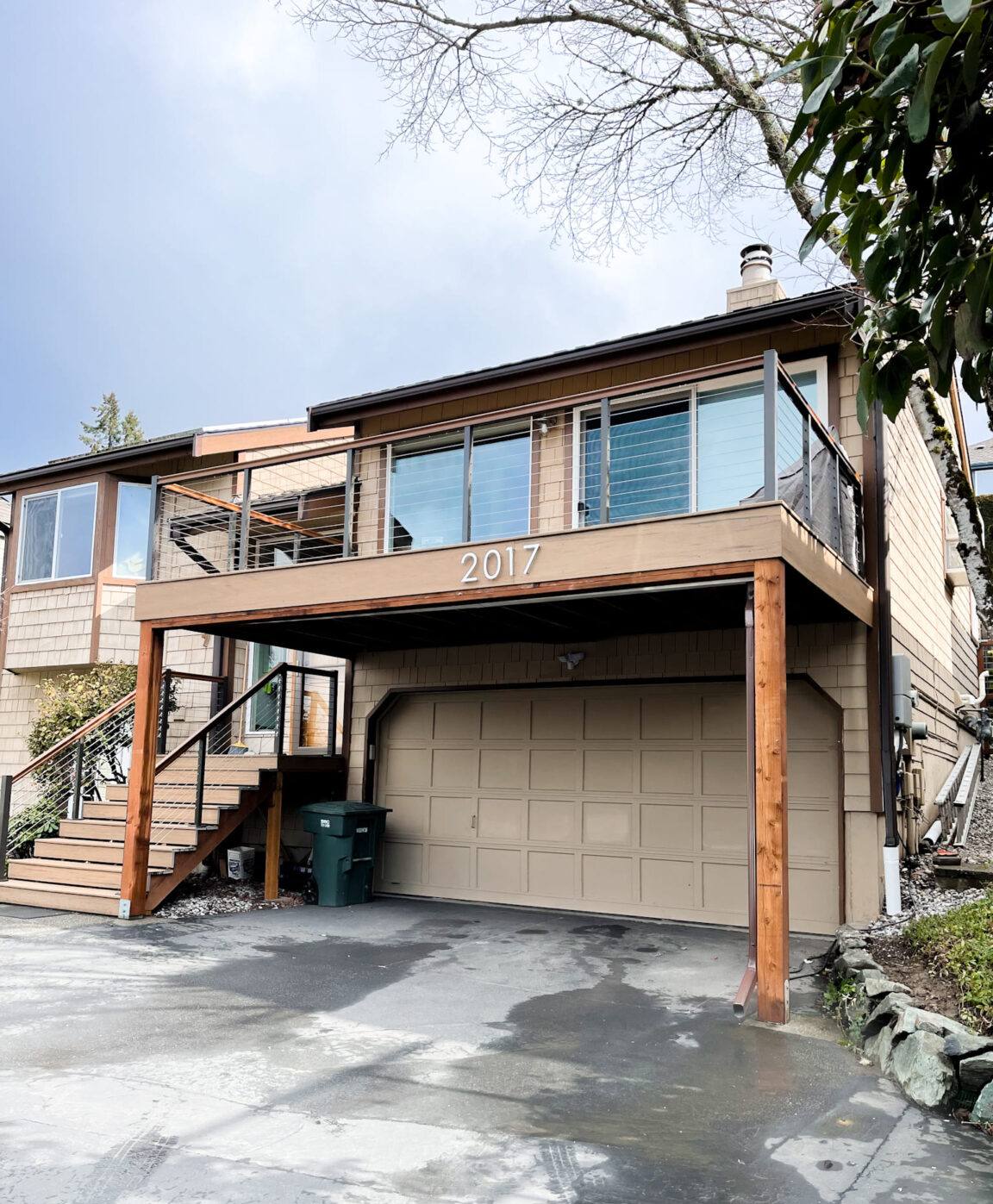
What Siding Damage Looks Like on a Lyman Home
Moss and Organic Growth
Shaded walls, north-facing elevations, and anything close to overhanging trees are the first places moss and algae take hold. On its own, surface growth is mostly cosmetic. The problem is what it does over time: moss holds moisture against the siding surface far longer than open air would, softening caulk joints, breaking down paint film, and — on wood-based products — feeding rot in the substrate underneath.
Soft, Swollen, or Delaminating Panels
If you press on a section of siding and it gives, flexes, or feels spongy, that's a sign moisture has gotten past the surface. On wood composite and OSB-based products this often shows up as swelling at the edges or bottom of a panel, sometimes with visible delamination where the layers are separating. This is one of the most common repair calls we get in this area, and it almost always traces back to a compromised seam, a failed caulk joint, or siding installed too close to grade or a deck surface.
Cracked, Warped, or Buckled Sections
Freeze-thaw cycles, though milder here than east of the mountains, still happen enough winters in Skagit County to stress siding that's already saturated. Panels that have absorbed water and then gone through a cold snap are prone to cracking or buckling, especially at fastener points.
Paint and Finish Failure
Chalking, peeling, or uneven fading — especially in patches rather than uniformly across a wall — usually points to moisture moving through the material from behind, not just UV wear from the front. This is a useful diagnostic clue: finish failure that follows a pattern (bottom courses, around windows, near downspouts) tells us where water is actually getting in.
Why the Repair Material Matters as Much as the Repair Itself
A repair is only as good as what you repair with. We install exclusively James Hardie fiber cement siding, and that shapes how we approach every repair in Lyman. Fiber cement doesn't absorb water the way wood, wood composite, or OSB-based products do, and it won't rot, delaminate, or feed the kind of organic growth that thrives in this climate. When we're called out to patch damage on a home that already has a moisture-sensitive product installed, we'll always give an honest read on whether a spot repair will actually hold or whether the underlying material is going to keep failing regardless of how well the patch is done.
That's not a sales pitch — it's a practical reality of working in a wet, shaded river valley. A well-executed repair on a product that isn't built for this climate buys you a few more years. A repair using James Hardie material, tied into the existing wall correctly, is built to hold up under the same conditions that caused the original damage.
What a Correct Siding Repair Actually Involves
Diagnosing the Cause, Not Just the Symptom
Before any siding comes off, we identify why that section failed. That means checking the flashing above and below the damaged area, looking at how water sheds off nearby rooflines and gutters, and probing the sheathing behind the siding to see if moisture has already reached the wall assembly. Replacing a damaged panel without addressing the water source behind it just means paying for the same repair again in a few years.
Checking the Water-Resistive Barrier
Once damaged siding is removed, we inspect the house wrap or building paper underneath. If it's torn, improperly lapped, or compromised, that gets corrected before anything new goes back on — this layer is what protects the sheathing and framing even if water gets past the siding itself, and skipping it is the single most common shortcut that leads to repeat repairs.
Matching Existing Siding
James Hardie's ColorPlus factory finish and product lines are engineered for consistency, which makes matching an existing repair straightforward when the original installation used Hardie products. When we're integrating a repair into a home with a different existing siding, we're upfront about what will and won't blend seamlessly, and we won't overpromise a perfect match where the materials genuinely differ.
Proper Flashing and Fastening
Correct repair work follows the same detailing standards as new installation: proper flashing at every horizontal joint and penetration, correct fastener placement and spacing, and joints that are sealed but still allow the wall to manage incidental moisture rather than trap it.
Our Repair Process
Every siding repair in Lyman starts with a walk-through of the affected area and, when needed, a broader look at the rest of the exterior — damage in one spot is often a signal that similar conditions exist elsewhere on the home. From there:
- We identify all damaged sections and probe surrounding areas to confirm the full extent of the problem, not just what's visible.
- We provide a straightforward estimate that separates the repair itself from any related work, such as flashing corrections or WRB repair, so you know exactly what you're paying for.
- We remove only what needs to come off, protecting the surrounding siding and landscaping during the work.
- We correct the underlying cause — flashing, sealant, drainage, or barrier issues — before installing new material.
- We install matching James Hardie siding, properly fastened and flashed, and finish with a clean site.
Repair or Replace? What Actually Drives That Decision
Not every problem area needs a full re-side, and not every "repair" is worth doing if the underlying siding is failing broadly. Here's how we help homeowners think through it:
| Factor | Leans Toward Repair | Leans Toward Replacement |
|---|---|---|
| Extent of damage | Isolated to one or two wall sections | Recurring damage across multiple elevations |
| Cause | A single identifiable source (flashing, caulk, a gutter issue) | Systemic issues — original product unsuited to the site conditions |
| Material condition | Surrounding siding is sound and stable | Surrounding siding is soft, warped, or visibly aging |
| Age of siding | Newer installation with isolated damage | Original siding is near or past its practical service life |
| Match feasibility | Product and color still available or close enough to blend | Discontinued product, no reasonable match possible |
We'll always give you a straight answer on which side of that line your home falls on — there's no benefit to us patching something that's going to fail again in two years.
Maintenance That Keeps Repairs From Becoming Recurring
A big part of protecting a repair — or new siding — in a shaded, damp environment like Lyman is staying ahead of the conditions that caused the original damage. A short seasonal checklist goes a long way:
- Trim back tree limbs and brush that keep siding shaded and damp longer than necessary
- Rinse moss and algae off siding surfaces before it has a chance to establish and hold moisture
- Check and clear gutters each fall so overflow isn't running down the wall behind the siding
- Inspect caulking at trim, windows, and joints annually and re-seal where it's cracked or pulling away
- Watch for soft spots or paint changes after the wet winter months, when damage is most likely to show up
- Keep soil, mulch, and landscaping pulled back from direct contact with the bottom of the siding
Why Hiring a Crew That Already Works in Lyman Matters
Siding repair in a rural, tree-covered river valley community is a different job than the same repair on an open, sun-exposed lot in town. A crew that regularly works Lyman knows which elevations take the worst of the moss and moisture, understands how the local building department handles permitting for exterior repair work, and has already seen how James Hardie products perform against these specific conditions over multiple seasons. That familiarity shows up in faster, more accurate diagnosis and fewer surprises once the old siding comes off.
It also means straightforward scheduling and response — not routing a crew in from outside the area for a job that needs to happen before the next round of fall rain sets in.
If you're seeing moss buildup, soft panels, or paint failure on your Lyman home, we're glad to take a look and give you an honest assessment — no pressure, no obligation. Use the form below to request a free estimate.