 Burlington
 Avon Sits in a Tough Spot for Siding
Avon is one of those Skagit County communities that takes more weather abuse than its size would suggest. It sits low in the Skagit River valley, close enough to Skagit Bay and Padilla Bay that salt-tinged air rides in on the wind, and close enough to the river and surrounding farmland that humidity lingers long after a storm passes. Add the tree cover and low winter sun angle common throughout this part of Burlington, and you get siding that stays damp for days at a stretch during the wet season. That combination of salt air, driving rain, and a moss season that can run eight or nine months a year is exactly why siding here fails differently than siding in a drier, more exposed part of the state.
None of that means Avon homes are doomed to constant siding trouble. It means repairs done here need to account for moisture behavior, not just cosmetic damage. A crack or a stain on the surface is rarely the whole story — it's usually the visible end of something happening behind the siding, where you can't see it until it's a bigger problem.
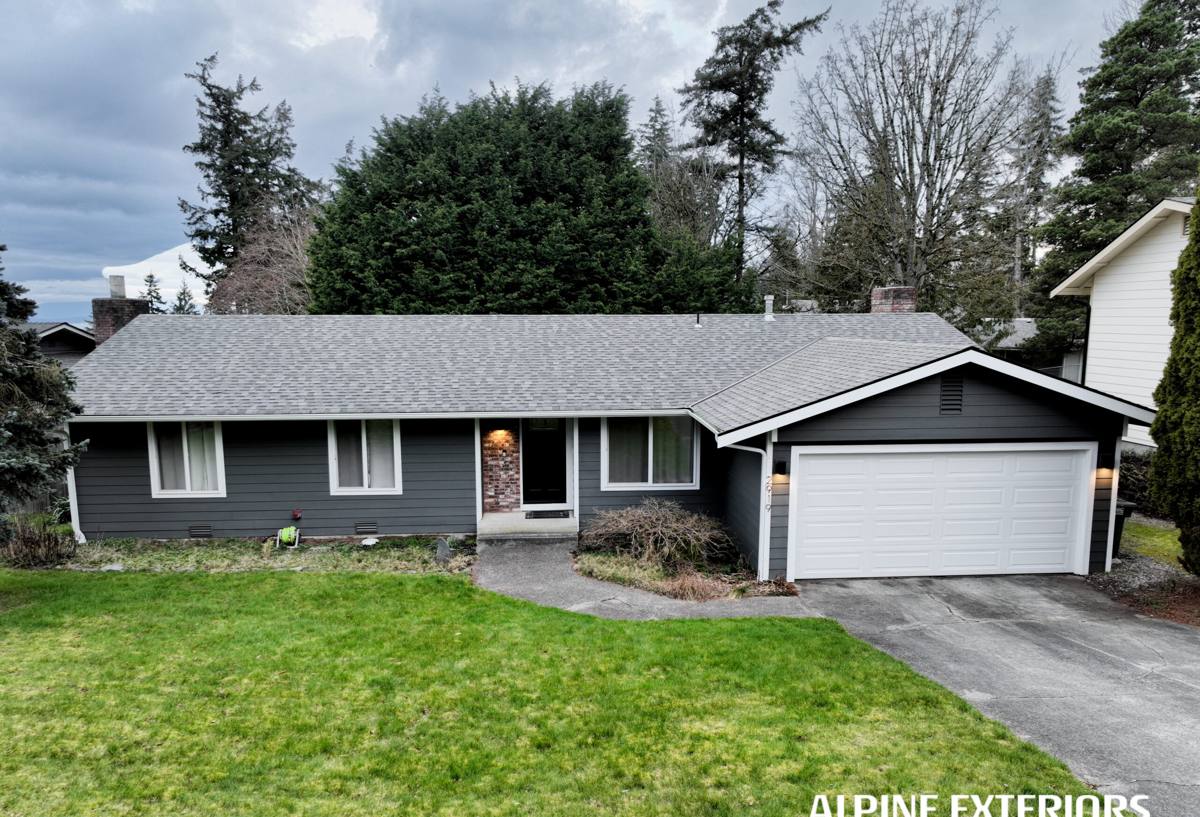
Signs an Avon Home Needs Siding Repair
Most homeowners call us after noticing one obvious problem, but a proper inspection almost always turns up a few more. Here's what we look for, and what you should look for too:
- Soft or spongy spots when you press on the siding, especially near the bottom courses and around window and door trim
- Persistent moss or algae growth that comes back within weeks of being cleaned off
- Paint that's bubbling, peeling, or chalking unevenly rather than uniformly across a wall
- Visible gaps, cracks, or splits, particularly at butt joints and corners
- Staining or dark streaking below seams, nail heads, or trim boards — a sign water is tracking down behind the surface
- Warping or cupping panels, common on older wood-based or engineered wood siding
- A musty smell in interior rooms along an exterior wall
Any one of these on its own might be minor. Several together, especially on a north- or west-facing wall that stays shaded most of the day, usually points to a moisture problem that's been building for a while.
What's Actually Driving Siding Damage in This Part of Skagit County
Moisture That Doesn't Dry Out
Rain itself isn't usually the enemy — siding is designed to shed water. The problem is rain combined with shade, low airflow, and mild temperatures that don't dry things out quickly. In Avon's setting, walls facing away from the afternoon sun can stay damp for days, which is more than enough time for wood fibers to swell, paint to fail, or fasteners to start corroding.
Moss and Organic Growth
Moss doesn't just sit on top of siding — its root structure holds moisture against the surface and, over time, works into seams, fastener holes, and caulk lines. On painted wood or older engineered wood products, that trapped moisture is often what turns a cleaning problem into a repair problem.
Failed Caulking and Flashing
Caulk joints and flashing details are the first line of defense at windows, doors, and trim transitions. In a climate that cycles between wet and dry as often as ours does, caulk has a shorter effective life than most people assume, and once it cracks, water finds its way behind the siding fast.
Material Fatigue
Older wood siding, primed spruce, and some engineered wood products weren't built for decades of this cycle. Repeated wetting and drying eventually breaks down the material itself, not just the paint on top of it.
What a Correct Siding Repair Actually Involves
A repair that just patches the visible damage and repaints over it tends to fail again within a season or two, because it doesn't address what caused the damage in the first place. Our approach starts with figuring out why a section failed, not just fixing what's visible.
- Remove the damaged siding and inspect the house wrap or building paper underneath for tears, gaps, or improper overlap
- Check flashing at windows, doors, and any penetrations in the affected area
- Confirm the wall assembly has proper drainage — siding should never sit flush against a wet barrier with nowhere for moisture to escape
- Replace deteriorated sheathing if the damage has gone that deep
- Install matching material with correct fastening, gapping, and caulking per manufacturer spec
- Repaint or finish to blend with the surrounding siding as closely as possible
Skipping the underlying inspection is the single most common shortcut in siding repair, and it's the reason so many "fixed" spots come back within a year or two.
Repair or Replace? How We Make That Call
Not every damaged section needs a full re-side, but not every problem is a candidate for a spot repair either. We look at scope, age, and how the damage is distributed across the home before recommending either path.
| Factor | Leans Toward Repair | Leans Toward Replacement |
|---|---|---|
| Extent of damage | Isolated to one or two wall sections | Spread across multiple elevations |
| Underlying structure | Sheathing and framing are sound | Rot has reached the sheathing or framing |
| Siding material and age | Newer material still in good condition elsewhere | Original material is at or past its service life |
| Material availability | Matching material or profile is available | Discontinued product with no close match |
| Recurrence | First time this area has had a problem | Same spots have failed repeatedly |
When the damage is contained and the wall assembly is otherwise healthy, a targeted repair is the honest recommendation — there's no reason to sell an Avon homeowner a full re-side they don't need. When the pattern points to a systemic problem, we'll say so plainly and explain why.
Why We Repair With James Hardie Fiber Cement
When a repair calls for new siding material — whether it's a full section replacement or bringing a damaged wall up to match the rest of the home — we install James Hardie fiber cement, and only James Hardie. We don't install vinyl, LP SmartSide, Cemplank, Allura, primed spruce, or cedar. That's a deliberate standard, not a default.
In a climate like Avon's, the case for fiber cement is straightforward. Hardie siding doesn't absorb moisture the way wood-based products can, doesn't feed moss growth the way porous surfaces do, and doesn't warp, swell, or rot from repeated wet-dry cycling. Its ColorPlus factory finish is baked on under controlled conditions rather than field-applied, which means better adhesion and a finish that holds its color longer than most site-applied paint jobs — a real advantage where moss, algae, and salt-tinged moisture are a year-round fact of life. Hardie also engineers specific product lines (its HZ5 line, for instance) for wetter Pacific Northwest climates, which matters when you're matching new material into an existing wall.
We're not going to pretend other products don't have their own merits — vinyl is inexpensive, cedar has real character, engineered wood is lighter to work with. But for the repairs we stand behind, we've made the call that fiber cement is what holds up here, and it's what we put back on the wall.
Our Siding Repair Process
- Inspection — we look at the full elevation, not just the damaged spot, and check for moisture behind the surface
- Diagnosis — we identify the actual cause (flashing, caulk failure, trapped moisture, material fatigue) before quoting a fix
- Estimate — a clear, itemized scope so you know exactly what's being repaired and why
- Repair — removal of damaged material, correction of the underlying issue, and installation of matching siding
- Finish and walkthrough — paint or finish matched to the surrounding wall, with a final check before we consider the job done
Why Local Experience in Avon Matters
A crew that regularly works Avon and the surrounding Burlington area already knows which wall orientations take the worst of the moss and moisture, how the area's low-lying, shaded lots affect drying time, and what kind of damage patterns show up here versus a drier, more exposed part of Skagit County. That's the difference between a repair that treats the symptom and one that treats the cause. It also means we're not guessing at how a repaired section will hold up through another wet season — we've seen how it plays out on homes nearby.
Keeping Repaired Siding in Good Shape
Once a repair is done right, a little maintenance goes a long way in a climate like this. Rinse moss and algae off before it establishes a root structure, keep gutters clear so water isn't sheeting down the wall, trim back vegetation that's shading and holding moisture against the siding, and have caulk joints checked every few years, since they're usually the first thing to give out. None of this requires much time, but skipping it is how a small problem turns into a repeat repair call.
If you're seeing soft spots, recurring moss, peeling paint, or staining on your Avon home's siding, we're happy to take a look and give you an honest read on what's going on — no pressure, no obligation. Reach out below for a free estimate.