 Burlington
 Fiber Cement Siding Built for Lyman's Climate
Lyman sits along the Skagit River a short drive east of Burlington, in a part of Skagit County where marine air pushing in from the Salish Sea meets cooler, wetter inland conditions. Homes here take on a specific combination of punishment: salt-tinged air working its way up the valley, driving rain that comes in sideways during fall and winter storms, and a moss season that can run from early fall well into spring. Siding that isn't built for that combination tends to fail in predictable ways — swelling at cut edges and seams, dark staining below gutters and eaves, and a green film on north- and west-facing walls that never fully dries out between storms.
We install fiber cement siding for homeowners throughout the Burlington and Lyman area because it's the one product we trust to stand up to all three of those stresses at once, year after year, without turning into a spring maintenance project.
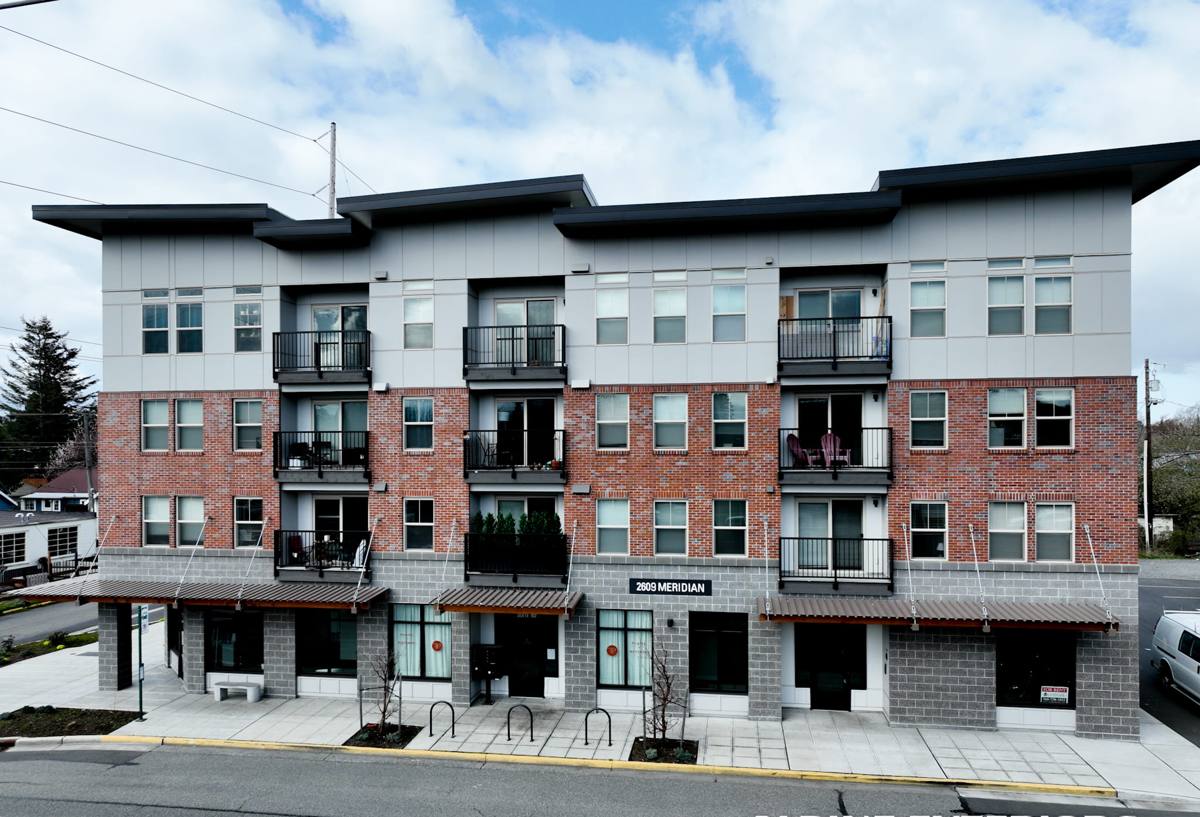
Why We Install Only James Hardie Fiber Cement
We don't carry vinyl, LP SmartSide, cedar, primed spruce, or other fiber cement brands like Cemplank or Allura. That's not a marketing position — it's a standard we settled on after watching how each of those products actually performs once it's been through a few Skagit County winters.
Vinyl expands and contracts with temperature swings and can bow or crack under sustained wind-driven rain. Cedar and primed spruce need repainting and caulk maintenance on a schedule most homeowners don't keep up with, and once moisture gets behind the paint film in a moss-prone climate like this one, rot follows close behind. LP SmartSide is an engineered wood product — still wood at its core — which means its performance depends on an intact factory coating and careful field sealing at every single cut edge to keep water out over the long run.
James Hardie fiber cement is cement, sand, and cellulose fiber — non-combustible, dimensionally stable, and available in HZ5 formulations engineered for Pacific Northwest humidity and rain exposure. The factory-applied ColorPlus finish is baked on rather than brushed on in the field, which matters in a climate where field-applied paint has a noticeably shorter useful life. That's the product we put on Lyman homes, and it's the only siding brand we install anywhere.
What Correct Fiber Cement Installation Involves
Fiber cement is only as good as the crew installing it. Most of the siding problems we get called to look at in Skagit County aren't material failures at all — they're installation shortcuts that let water get behind a product that was never designed to sit wet.
Flashing and Water Management
Every window, door, and roof-to-wall transition needs proper flashing and a weather-resistant barrier installed in correct shingle-lap sequence, so water is always directed outward and down and never trapped behind the cladding. This one detail is the biggest factor in whether a siding job lasts twenty-plus years or needs rework in five.
Clearances and Fastening
James Hardie's installation specifications call for minimum clearances from grade, roof lines, decks, and patios, along with specific fastener type, spacing, and placement. Skipping those clearances is one of the most common corner-cuts we find on older jobs — it looks fine the day it's installed and causes wicking, swelling, and paint failure two or three wet seasons later.
Joints, Caulking, and Field Cuts
Butt joints get flashed or backed correctly instead of just caulked over, and any factory edge that gets cut on site is sealed and, where it will show, touched up so the raw edge isn't left exposed to the weather. Small details like this are exactly the kind of thing that separates siding that lasts from siding that needs attention within a few years.
Signs Your Lyman Home's Siding Needs Attention
Because moss and moisture damage build slowly, a lot of homeowners don't notice a siding problem until it's well established. A few things worth checking, especially on north- and west-facing walls that stay shaded and damp longest:
- Dark streaking or a persistent green tint that pressure washing only knocks back temporarily
- Soft spots, bubbling, or a spongy feel when you press on wood or engineered-wood siding
- Visible gaps, cracking, or bowing at panel seams and corners
- Paint that's peeling or chalking faster than it used to, especially near ground level or under eaves
- A musty smell near exterior walls inside the house, which can point to moisture already working its way in
- Caulk that's shrunk, cracked, or pulled away from trim and window edges
Any one of these on its own isn't necessarily an emergency, but a combination of two or three is usually a sign the current siding is past the point where maintenance alone will fix it.
Comparing Siding Materials for a Skagit County Home
There's no shortage of siding options on the market, and each one makes sense for someone, somewhere. Here's how the main materials stack up against the specific conditions Lyman and Burlington homes deal with.
| Material | Rain & moisture handling | Moss/algae resistance | Maintenance | Typical lifespan |
|---|---|---|---|---|
| Vinyl | Sheds rain but can warp or gap in sustained wind-driven storms | Fair — surface can harbor growth in shaded areas | Low, but hard to repair invisibly | 15–25 years |
| Cedar / primed spruce | Absorbs moisture if paint film fails; prone to rot at joints | Poor without regular treatment | High — repainting and caulk upkeep on a set schedule | 10–20 years with upkeep |
| LP SmartSide (engineered wood) | Good if coating and cut edges stay sealed; vulnerable where they don't | Fair | Moderate — edge sealing and coating checks | 15–25 years |
| James Hardie fiber cement | Excellent — dimensionally stable, HZ5 formulated for wet climates | Good, especially with a factory ColorPlus finish | Low — occasional washing | 30+ years when installed to spec |
Cost factors move with the job, not just the material: how much of the old siding and any hidden sheathing damage needs to be removed, the home's trim and window detailing, the specific Hardie profile chosen (lap plank, panel, or shingle), and site access. We walk through all of that in person before giving a number — nobody should get a siding quote sight unseen.
Our Installation Process
We keep the process straightforward and don't skip the steps that determine whether the job holds up.
- On-site assessment. We look at the existing siding, sheathing, and trim, and check for any moisture or rot that needs to be addressed before new siding goes on — covering up a wet wall assembly is how future problems get built in.
- Prep and removal. Old siding comes off, sheathing gets inspected and repaired where needed, and a weather-resistant barrier goes on correctly lapped from the bottom up.
- Flashing and installation. Windows, doors, and roof transitions get flashed first, then Hardie panels or planks go on to spec — correct clearances, fastener placement, and joint treatment throughout.
- Finish work. Trim, caulking at appropriate joints, and a final walk-through so you know exactly what was done and what to expect going forward.
- Cleanup. Job site and yard cleared of debris and old material before we consider the job finished.
Why Local Experience in Lyman Matters
A crew that already works the Burlington and Lyman area knows what this valley does to a home over time — which walls take the worst of the driving rain, how long moss season really runs here compared to drier parts of the state, and what clearance and drainage details matter most given the local rainfall totals. That's not something you get from a national installer passing through, and it's not something you can fully judge from a written estimate alone. It shows up in how the flashing gets detailed, how the crew handles an unexpected patch of rotten sheathing once the old siding comes off, and whether the finished job still looks and performs the way it should five and ten years out.
We're also familiar with Skagit County permitting and the practical realities of scheduling exterior work around this region's wet season, which helps keep a project moving instead of stalling out waiting on a dry week that doesn't come.
What to Look for in Any Siding Quote
- Does the quote specify a named James Hardie product line and profile, not just "fiber cement siding"?
- Does it call out flashing and weather-barrier work explicitly, or just "siding installation"?
- Are clearances from grade, roofline, and decks addressed for your home's specific layout?
- Is sheathing repair, if needed, priced separately or built in as an allowance?
- Does the contractor stand behind their labor with a written warranty in addition to the manufacturer's material warranty?
If your Lyman home is due for new siding, we're glad to take a look and put together a free, no-pressure estimate — no obligation, just an honest read on what your home needs and what it would take to do the job right.