 Burlington
 Bow Sits in a Tougher Microclimate Than the Rest of Burlington
Bow doesn't get talked about much outside Skagit County, but anyone who has owned a home out here for more than a winter or two knows it takes a different kind of weather beating than a house in town. The community sits close to Samish Bay, which means homes catch salt-laden air off the water on top of the normal Pacific Northwest rain load. Add in the tree cover and low-lying, often shaded lots that are common around Bow, and you get siding that stays damp longer after every storm and grows moss and algae earlier in the season than siding just a few miles inland.
None of that means Bow homes need exotic solutions. It means the basics — drainage, material choice, and correct repair technique — matter more here than they do in a drier, more exposed location. When we get called out to a Bow property, we're looking at the same siding problems we'd see anywhere in Skagit County, but they tend to show up sooner and get worse faster if they're patched instead of properly fixed.
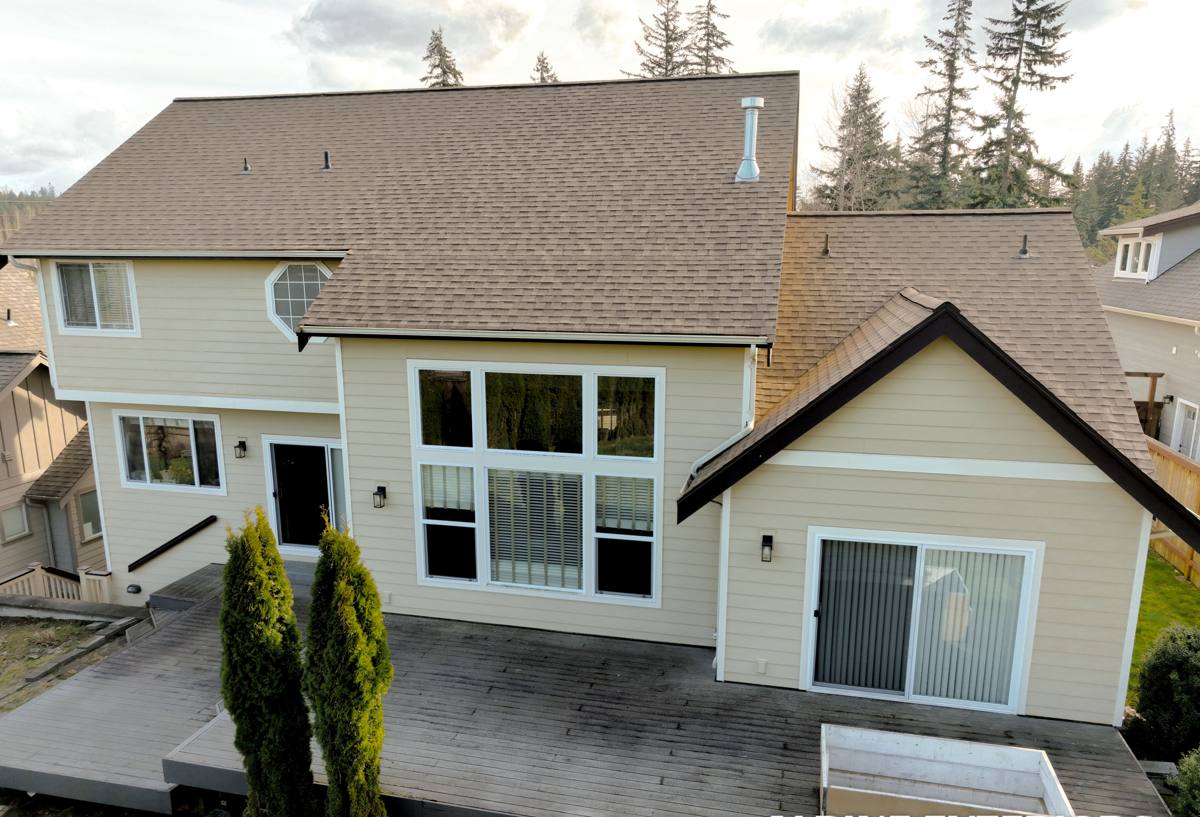
The Repair Calls We See Most Often Out Here
Moisture Intrusion and Soft or Rotting Siding
This is the big one in Bow. Wood-based siding products — cedar, primed spruce, some engineered wood panels — absorb moisture at cut edges, fastener holes, and anywhere the factory coating has worn through. In a climate with this much sustained dampness, that moisture doesn't get a chance to fully dry between rain events. The result is soft, spongy siding, usually first noticed near the bottom courses, around window trim, or under roof lines where water sheets down the wall.
Moss, Algae, and Lichen Staining
Shaded, damp walls in Bow can hold a green or black film for most of the year if nothing is done about it. On its own, surface growth is mostly a cosmetic problem, but it holds moisture against the siding surface and, on porous or degraded materials, can accelerate the deterioration underneath. It's often the first visible sign that a wall isn't drying out the way it should.
Impact Damage and Cracked Panels
Wind-driven branches, storm debris, and everyday accidents crack panels or knock corners loose. On fiber cement, a cracked panel is usually a clean, isolated repair. On more brittle or moisture-compromised materials, one cracked panel is often a sign that the surrounding panels aren't far behind.
Failed Caulking and Trim Separation
Caulking has a service life, and in a climate that swings between saturated and dry, it fails faster than manufacturers' best-case estimates suggest. Once a joint opens up around a window, door, or trim board, water gets behind the cladding — often well before it becomes visible as a stain on the surface.
Repair or Replace? How We Make That Call Honestly
Not every damaged section needs a full re-side, and we won't sell a Bow homeowner a whole-house job when a targeted repair will genuinely hold up. But we also won't patch over rot and call it done. Here's how we weigh it:
| Factor | Favors Repair | Favors Replacement |
|---|---|---|
| Extent of damage | Isolated to one or two sections | Spread across multiple elevations |
| Sheathing condition underneath | Dry, sound framing | Soft sheathing or visible rot at studs |
| Age of existing siding | Under 10-15 years, good condition elsewhere | Near or past expected service life |
| Material match | Compatible product still available | Discontinued profile or faded, unmatched color |
| Cost relative to full re-side | Repair is a fraction of replacement cost | Repair cost approaches replacement cost |
We open up the affected area before quoting anything final. You can't responsibly price a repair — or tell a homeowner it's "just a repair" — without first confirming what the sheathing and framing look like behind the visible damage.
What a Correct Siding Repair Actually Involves
Finding the Real Water Path, Not Just the Visible Damage
The stain or soft spot you can see is rarely the entry point. Water travels down framing members and along house wrap before it shows up as damage, so a repair that only addresses the visible board often leaves the actual leak path untouched. Our first step on any repair call is tracing that path back to its source — a gap in flashing, a failed sealant joint, a penetration that was never properly detailed — and fixing that, not just the symptom.
Matching Material and Profile
A repair that doesn't match the existing reveal, exposure, and color reads as a patch from across the street. Where we're repairing James Hardie siding we already installed, matching is straightforward. Where we're called in to repair a different product on an existing home, we'll be upfront about what can realistically be matched versus what will look like a repair no matter how it's done.
Flashing and Detailing Done Right
Most siding failures we open up in this area trace back to flashing — missing kick-out flashing at roof-to-wall intersections, house wrap that wasn't lapped correctly, or window flanges that were never properly integrated with the weather barrier. A repair that doesn't correct the underlying detailing is a repair that fails again in the same spot.
Why We Repair and Rebuild With James Hardie Fiber Cement
We install James Hardie fiber cement exclusively — we don't install vinyl, LP SmartSide, Cemplank, Allura, primed spruce, or cedar. That standard applies to repair work too. When a section of siding needs to come off and be replaced, we use Hardie product, matched to the existing HZ line and ColorPlus finish where the home already has it, or as the material of choice when we're asked to replace a full wall or elevation.
That's a deliberate call, not a sales pitch. Fiber cement doesn't absorb moisture and swell or soften the way wood-based products can in a climate that stays damp as long as Bow's does. It's non-combustible, it holds a factory-applied finish far longer than field-applied paint on wood siding, and it comes with a strong transferable warranty when installed to Hardie's specifications. We've seen enough sagging, swelling, and repeat callbacks on wood-based and vinyl products in wet coastal microclimates to know it's not worth cutting corners on the material, even for a repair that's only a few panels wide.
How a Bow Siding Repair Call Works With Us
- On-site inspection. We look at the damage, the surrounding siding, and — where accessible — what's happening behind it.
- Honest diagnosis. We tell you plainly whether this is a repair, a larger repair than it looks like, or something that should be handled as a partial or full re-side.
- Written scope and estimate. No surprise add-ons once work starts — if we find something new once we open the wall, we stop and talk to you before proceeding.
- The repair itself. Correct flashing and water management first, matched material second, clean finish work last.
- Final walkthrough. We show you what was done and why, including anything we found that's worth keeping an eye on going forward.
Maintenance That Buys You Time Between Repairs
A lot of siding repair calls in Bow are preventable, or at least delayable, with basic upkeep. None of this requires special equipment or a big time investment:
- Rinse moss and algae off siding surfaces at least once a year, more often on shaded north- or west-facing walls
- Keep gutters clear so overflow doesn't run directly down siding during heavy rain
- Trim back trees and shrubs so walls get some airflow and sun exposure to dry out between storms
- Re-caulk gaps around windows, doors, and trim before they visibly open up, not after
- Walk the exterior after major windstorms to catch cracked panels or loosened trim early
- Watch for soft spots near ground level, where splash-back and standing moisture do the most damage over time
Why Hiring a Crew That Already Works in Bow Matters
Siding problems in Bow aren't identical to siding problems in downtown Burlington or Mount Vernon, even though they're all close together in Skagit County. A crew that regularly works this specific stretch — near the water, under tree cover, exposed to that extra salt air — recognizes the moisture and moss patterns faster and knows which parts of a wall tend to fail first. That familiarity means less time spent diagnosing and more time spent fixing the actual problem, and it means a repair that accounts for how this particular location behaves, not a generic fix pulled from a drier part of the county.
If you've got a section of siding in Bow that's soft, cracked, stained, or just not sitting right anymore, we're glad to come take a look. The estimate is free, there's no pressure to turn a small repair into a bigger sale than it needs to be, and you'll get a straight answer about what your siding actually needs.